
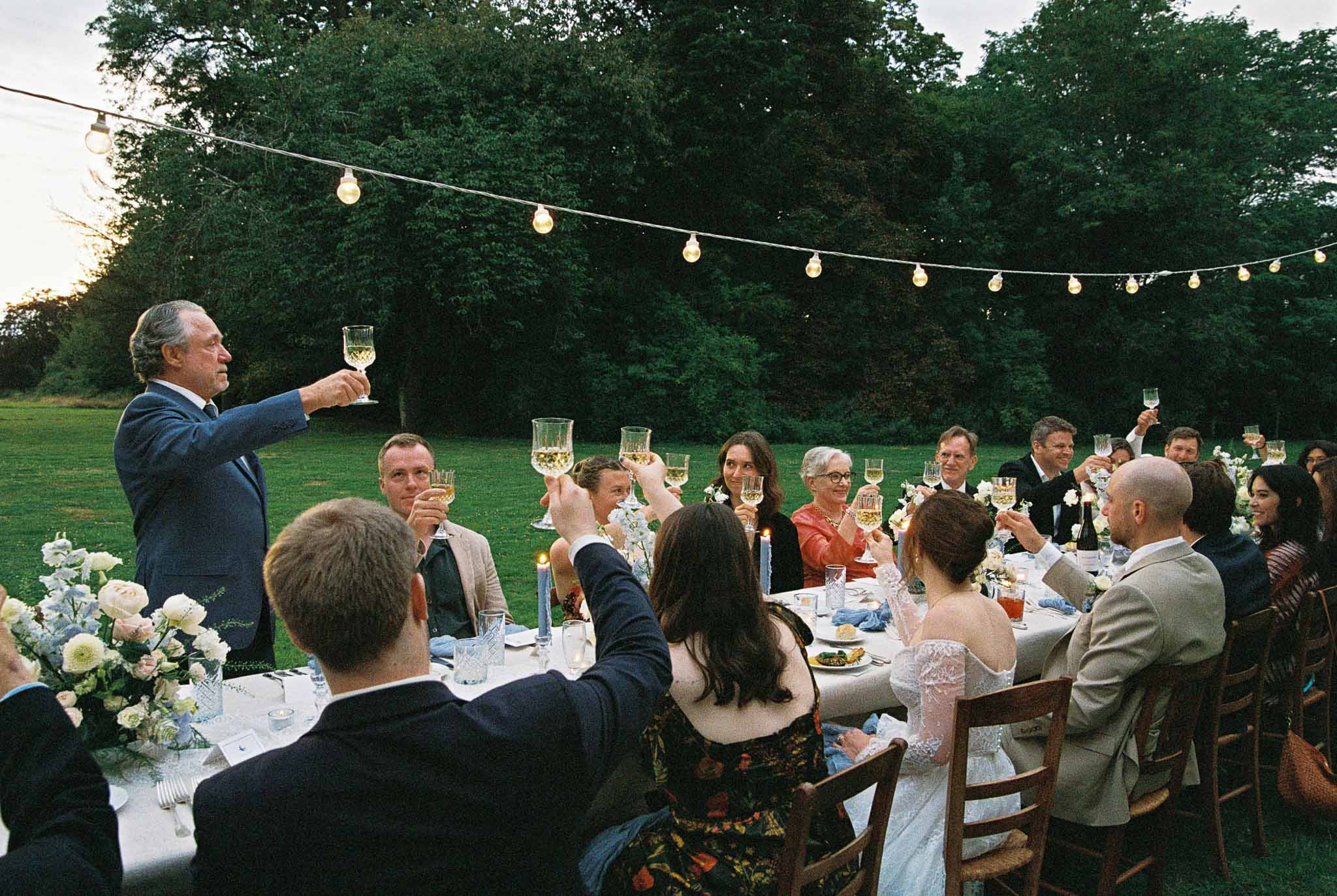
Wine Selection for a French Wedding
Wine at a French wedding is not a drinks menu decision. It is a cultural one. In a country that produces more wine regions than most nations have provinces, the wine you serve tells your guests where you are, what you value, and how well you understand the place you have chosen to marry. Côtes de Provence rosé at a Luberon bastide.
A Saint-Émilion with the entrecôte at a Bordeaux château. A Sancerre poured with pike-perch in the Loire Valley. The wine matches the food, the food matches the region, and the region matches the venue. How to choose, how much you need, how BYO works, what droit de bouchon means, and the mistakes that cost couples money and credibility. For the full food and drink chapter, see our complete food and drink guide. This article is part of our step-by-step guide to planning a destination wedding in France.
Key Takeaways
- French wedding wine is chosen by region first, then by menu pairing. The wine should come from the same area as the food whenever possible. A Provence caterer serving Provence wines creates a cohesive terroir experience.
- BYO (bring your own) wine is common in France. Of the venues listed on French Wedding Style that allow external caterers, approximately 74 percent charge zero corkage. Those that do charge typically apply a droit de bouchon of €5 to €12 per bottle.
- Budget 0.5 to 0.75 bottles per person for the seated dinner, plus champagne for the apéritif and the pièce montée toast. For 100 guests, plan for 60 to 80 bottles of still wine and 25 to 30 bottles of champagne or crémant.
- As of 2026, BYO wine costs €5 to €15 per bottle from a local cave coopérative or domaine, compared to €25 to €50 per bottle through a venue's drinks package. The saving for 100 guests can reach €1,500 to €3,000.
How Do You Choose Wine for a French Wedding?
Start with the region. Every wine-producing area of France has appellations that pair naturally with the local cuisine, because the food and the wine evolved together over centuries. A Provence menu built around olive oil, herbs, and grilled lamb calls for Provence wine: Côtes de Provence rosé for the apéritif and lighter courses, a Bandol rouge for the main. A Bordeaux menu centred on rich beef and duck calls for Médoc or Saint-Émilion reds. A Loire Valley fish course pairs with Sancerre or Vouvray. This is not snobbery. It is logic. The wine that grows next to the food tastes right with it. Your traiteur will recommend wines to match the menu. In many cases, the traiteur has an existing relationship with local vignerons (winemakers) and can source at wholesale prices. If your venue is a working vineyard or domaine, the estate wines are the natural choice and often included in the venue package at a significant discount.
The standard progression across a French wedding dinner runs: champagne or crémant for the apéritif dinatoire, a white or rosé with the entrée, a red with the plat principal, the same red or a different pairing with the fromage course, and champagne again with the pièce montée. Some menus add a sweet white (Sauternes, Monbazillac, Jurançon) with foie gras or the cheese course. Your traiteur or a local sommelier can map the exact pairings for your menu.
What Is the French Approach to Wine at a Wedding vs UK/US?
In the UK and US, wine at a wedding is typically ordered through the venue or caterer as a drinks package: a set number of bottles per table, or an open bar with house wine included. The wine is functional. It accompanies the meal. Guests rarely know or care about the specific bottles. In France, the wine is part of the menu design. Each course may have a different wine. The label matters. Guests notice. French guests will read the bottle, comment on the appellation, and form an opinion about the couple's taste based on what is poured. This sounds pressuring, but it is actually liberating: there is no expectation of expense, only of appropriateness. A €8 Côtes du Rhône from a respected coopérative will impress French guests more than a €30 Bordeaux from the wrong year.
Based on destination weddings we have featured over 15 years on French Wedding Style, the couples who receive the most wine compliments are those who chose locally, not expensively. A domaine visit with a tasting, a conversation with the vigneron, and a personal story about finding the wine add more to the wedding than a well-known label ordered online. This is the French approach: wine as connection to place, not status signal.
| Element | UK/US Approach | French Approach |
|---|---|---|
| Selection | Venue wine list or caterer recommendation | Chosen by region, paired course by course with the menu |
| Sourcing | Through the venue or a wine merchant | Direct from domaines, caves coopératives, or the venue's own production |
| Service | Bottles on table, self-pour | Waitstaff pour, half-glass maximum, different wine per course |
| Cost strategy | Fixed drinks package per head | BYO at bulk pricing, corkage (droit de bouchon) if applicable |
| Guest expectation | Wine is functional, brand less important | Wine is cultural, guests notice region and quality |
How Do You Match Wine to the Region and the Menu?
The regional wine map of France aligns almost perfectly with the regional cuisine map. This is not a coincidence. Centuries of agricultural co-evolution mean that the wines grown in each area are the ones that taste best with the food produced there. Your traiteur knows this instinctively. Your job is to give them the freedom to work within the local system rather than imposing preferences from another region. For the apéritif, champagne is the traditional choice. Crémant (sparkling wine made by the same method as champagne but from a different region) is an increasingly popular and entirely respectable alternative. Crémant de Loire, Crémant de Bourgogne, and Crémant d'Alsace are all excellent at one-third to one-half the price of champagne. No French guest will think less of crémant at the apéritif. Many actively prefer it for its lighter, more regional character.
Scroll →
| Region | White / Rosé | Red | Sweet / Sparkling | Pairs With |
|---|---|---|---|---|
| Provence | Côtes de Provence rosé, Cassis blanc | Bandol rouge, Coteaux d'Aix | Clairette de Die (sparkling) | Grilled lamb, goat cheese, Mediterranean vegetables |
| Bordeaux | Entre-Deux-Mers, Pessac-Léognan blanc | Saint-Émilion, Médoc, Pauillac | Sauternes, Loupiac | Entrecôte, duck, foie gras, canelés |
| Loire Valley | Sancerre, Vouvray, Muscadet | Chinon, Bourgueil, Saumur-Champigny | Vouvray moelleux, Crémant de Loire | Pike-perch, goat cheese, asparagus |
| Burgundy | Chablis, Meursault, Pouilly-Fuissé | Pommard, Gevrey-Chambertin, Mercurey | Crémant de Bourgogne | Boeuf bourguignon, Époisses, escargots |
| Dordogne / South-West | Bergerac sec, Jurançon sec | Cahors (Malbec), Bergerac rouge, Madiran | Monbazillac, Jurançon moelleux | Duck, foie gras, walnut, truffle |
| Champagne | Champagne (blanc de blancs, rosé) | Coteaux Champenois (rare) | Champagne (brut, demi-sec) | Apéritif, pièce montée toast, seafood |
How Much Wine Do You Need and What Does It Cost?
The quantity formula for a French wedding dinner is 0.5 to 0.75 bottles of still wine per person for the seated dinner, plus champagne or crémant for the apéritif (0.25 to 0.33 bottles per person) and the pièce montée toast (one glass per person, approximately 0.15 bottles). For 100 guests, this means 60 to 80 bottles of still wine and 25 to 35 bottles of champagne or crémant. Add 10 percent for contingency. The BYO saving is substantial. A couple serving BYO wine at €10 per bottle average versus a venue package at €35 per bottle saves €2,500 on 100 bottles. That saving often covers the entire floral budget. The key is sourcing: visit a local cave coopérative (wine cooperative) or domaine, taste, and buy in bulk. Most cooperatives offer 10 to 15 percent discount on orders above 50 bottles. Delivery to the venue is usually free within the department.
Scroll →
| Wine Type | Per Person | For 100 Guests | BYO Cost Range | Venue Package Cost Range |
|---|---|---|---|---|
| Still wine (white + red) | 0.5 to 0.75 bottles | 60 to 80 bottles | €5 to €15/bottle (€300 to €1,200) | €20 to €40/bottle (€1,200 to €3,200) |
| Champagne / crémant | 0.3 to 0.4 bottles | 30 to 40 bottles | €8 to €25/bottle (€240 to €1,000) | €30 to €60/bottle (€900 to €2,400) |
| Total | 0.8 to 1.15 bottles | 90 to 120 bottles | €540 to €2,200 | €2,100 to €5,600 |
Wine should be ordered 4 to 6 weeks before the wedding and delivered to the venue 1 to 2 weeks ahead. Your traiteur or venue coordinator will store it in appropriate conditions. Red wine for a summer wedding needs cool storage, not a hot barn. Whites and rosés need refrigeration on the day. Confirm storage logistics with your venue when you confirm the wine order.
What Is Droit de Bouchon and How Does Corkage Work?
Droit de bouchon (literally "right of the cork") is the French corkage fee: the charge a venue or traiteur levies per bottle when the couple provides their own wine rather than purchasing through the venue's stock. It covers service (opening, pouring, chilling, returning empties) and compensates for the margin the venue would have earned on its own wine sales. As of 2026, droit de bouchon at French wedding venues ranges from €0 to €12 per bottle. Of the venues listed on French Wedding Style that permit external caterers, approximately 74 percent charge zero corkage. The remaining venues charge €5 to €12 per bottle. This fee is per bottle opened, not per bottle delivered, so surplus bottles returned unopened are not charged. Even at the top end (€12 per bottle), the economics of BYO remain favourable. A bottle purchased at €10 from a domaine plus €12 corkage costs €22 total, still significantly less than the €35 to €50 per bottle in a venue drinks package.
Always confirm the droit de bouchon terms in writing before the wedding. Some venues charge corkage on wine only, not on champagne or spirits. Some charge a flat fee for the evening rather than per bottle. Some waive it entirely if the couple purchases a minimum quantity from the venue's own cellar. Your venue contract should specify the exact terms.
What Wine Mistakes Do International Couples Make?
Importing wine from home. Couples who ship wine from the UK, US, or Australia to France pay freight, customs duties, and import VAT, tripling the per-bottle cost. France produces wine at every quality level and every price point. There is no rational reason to import. If you have a sentimental attachment to a particular producer, bring one or two bottles for the top table and source the rest locally. Ordering by label rather than taste. A famous Bordeaux name on the bottle does not guarantee it suits your menu or your guests' palates. A €40 Pauillac served with a light fish entrée is a mismatch. A €7 Côtes du Rhône served with a herb-crusted lamb is a strong pairing. Taste first. Buy what works with the food. French guests respect a well-chosen modest wine far more than an expensive inappropriate one.
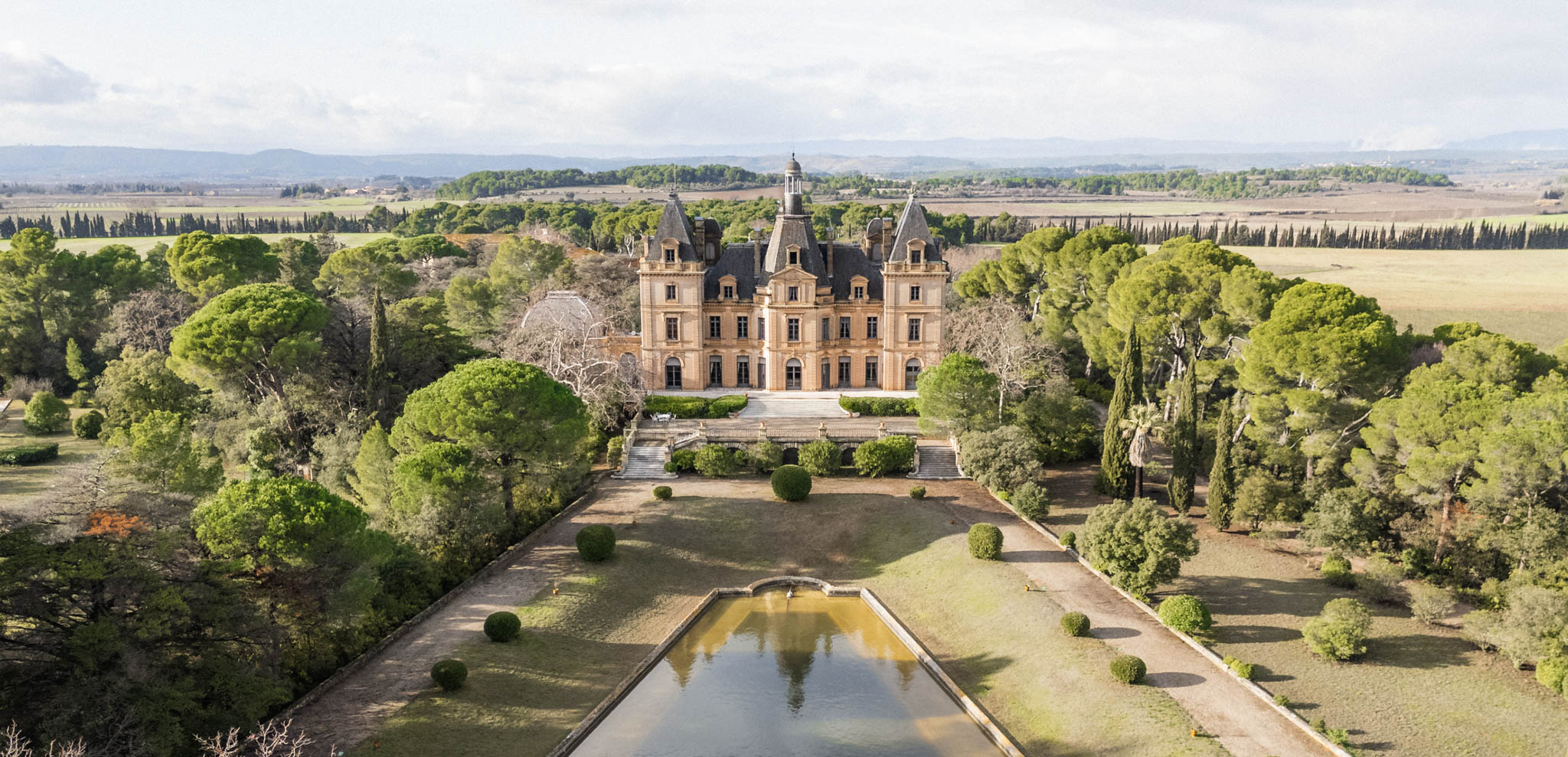
Underestimating quantities for the apéritif. The apéritif dinatoire lasts 1.5 to 2 hours and is when guests drink the most champagne. One glass per person is not enough. Budget 2 to 3 glasses per person for the apéritif alone. This is where crémant saves significant money: at €8 to €12 per bottle versus €25 to €50 for champagne, the saving on the highest-volume pouring window of the evening is substantial. See how this couple brought this to life at Château L'Hospitalet in Languedoc.
Ignoring the red-wine-with-cheese pairing. International couples often stop the wine service after the main course, assuming the meal is nearly over. The cheese course is a full course with its own wine pairing. A mature red (the same one served with the plat, or a different regional selection) accompanies the fromage. Cutting the wine before cheese is like stopping the music before the last dance. For more on how the cheese course and other dining traditions work at French weddings, see our dedicated guide.
Related Articles
- Food and drink for a French wedding: the complete guide
- Traditional French wedding menus: course by course
- Le trou normand, cheese course, and French dining traditions
- Dietary requirements at French wedding venues
- Late-night onion soup and after-party food
- Venue pricing explained
- Vineyard wedding venues in France
- Wedding venues in the south of France
- Browse all wedding venues in France
Frequently Asked Questions
Is crémant acceptable at a French wedding instead of champagne?
Absolutely. Crémant (sparkling wine made by the traditional method but outside the Champagne region) is widely served at French weddings, including formal ones. Crémant de Loire, Crémant de Bourgogne, and Crémant d'Alsace are all high quality and cost one-third to one-half the price of champagne. French guests will not view this as a budget choice. Many prefer crémant for its lighter, more regional character.
Can we visit wineries and buy wine directly for the wedding?
Yes, and this is the recommended approach for BYO weddings. Most domaines and caves coopératives welcome visitors, offer tastings (free or €5 to €10 per person), and sell directly at cellar-door prices. Bulk discounts of 10 to 15 percent are standard for orders above 50 bottles. Schedule visits during your venue planning trip. Your planner or venue coordinator can recommend local producers who supply weddings regularly.
How much champagne do we need for 100 guests?
For the apéritif (2 to 3 glasses per person) plus the pièce montée toast (1 glass per person), budget 30 to 40 bottles of champagne or crémant for 100 guests. Each bottle yields approximately 6 glasses. If serving champagne at the apéritif only and switching to still wine for the toast, 20 to 25 bottles suffice. Add 10 percent contingency for refills and spillage.
Should we hire a sommelier for the wedding?
Most traiteurs include wine service in their per-head quote: their staff open, pour, and manage the wine throughout the evening. A dedicated sommelier is an optional upgrade for couples who want tableside wine explanations, formal pairings announced per course, and professional decanting. Expect to pay €200 to €400 for the evening. For a wine-focused wedding at a vineyard venue, the investment is worthwhile. For a standard wedding, the traiteur's team handles the service well.
What happens to unopened bottles?
If you purchased the wine directly (BYO), unopened bottles remain yours. Store them, take them home, or gift them to guests. If the wine was part of a venue package, check the contract: some venues charge only for bottles opened, others for all bottles delivered. Clarify this before the wedding. With BYO, the only charge on unopened bottles is a potential storage fee if the venue holds them for you, though this is rare.
Do we need different wines for each course?
The traditional French approach is yes: a white or rosé with the entrée, a red with the plat, and a continuation or change with the fromage. In practice, many weddings simplify to two wines (one white, one red) plus champagne. This reduces complexity and cost while maintaining the French convention of matching wine to food. Discuss with your traiteur: a two-wine approach with well-chosen bottles is better than four wines of lower quality.
Explore Every Guide in This Chapter
Deep-dive into each topic covered above.