
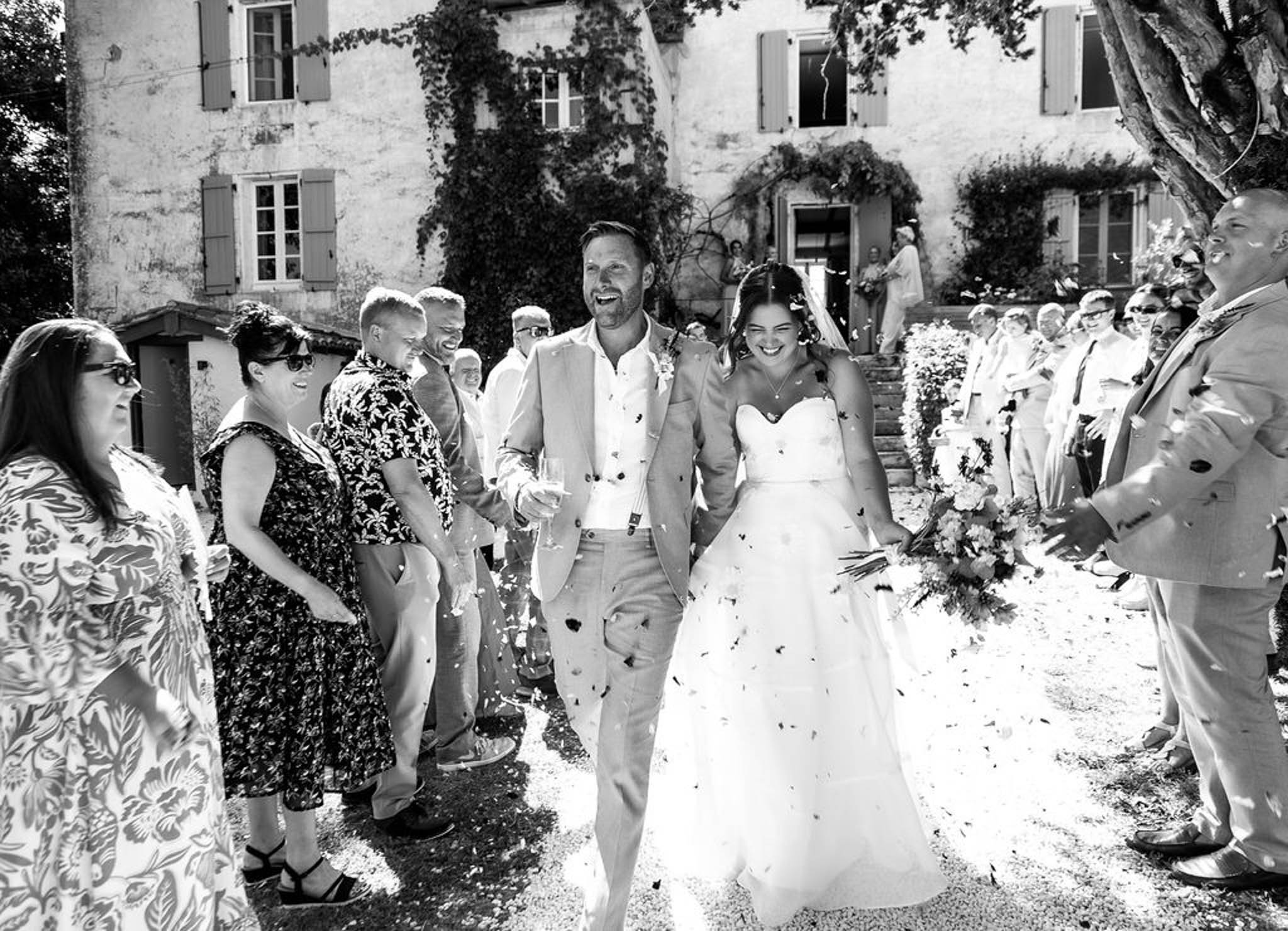
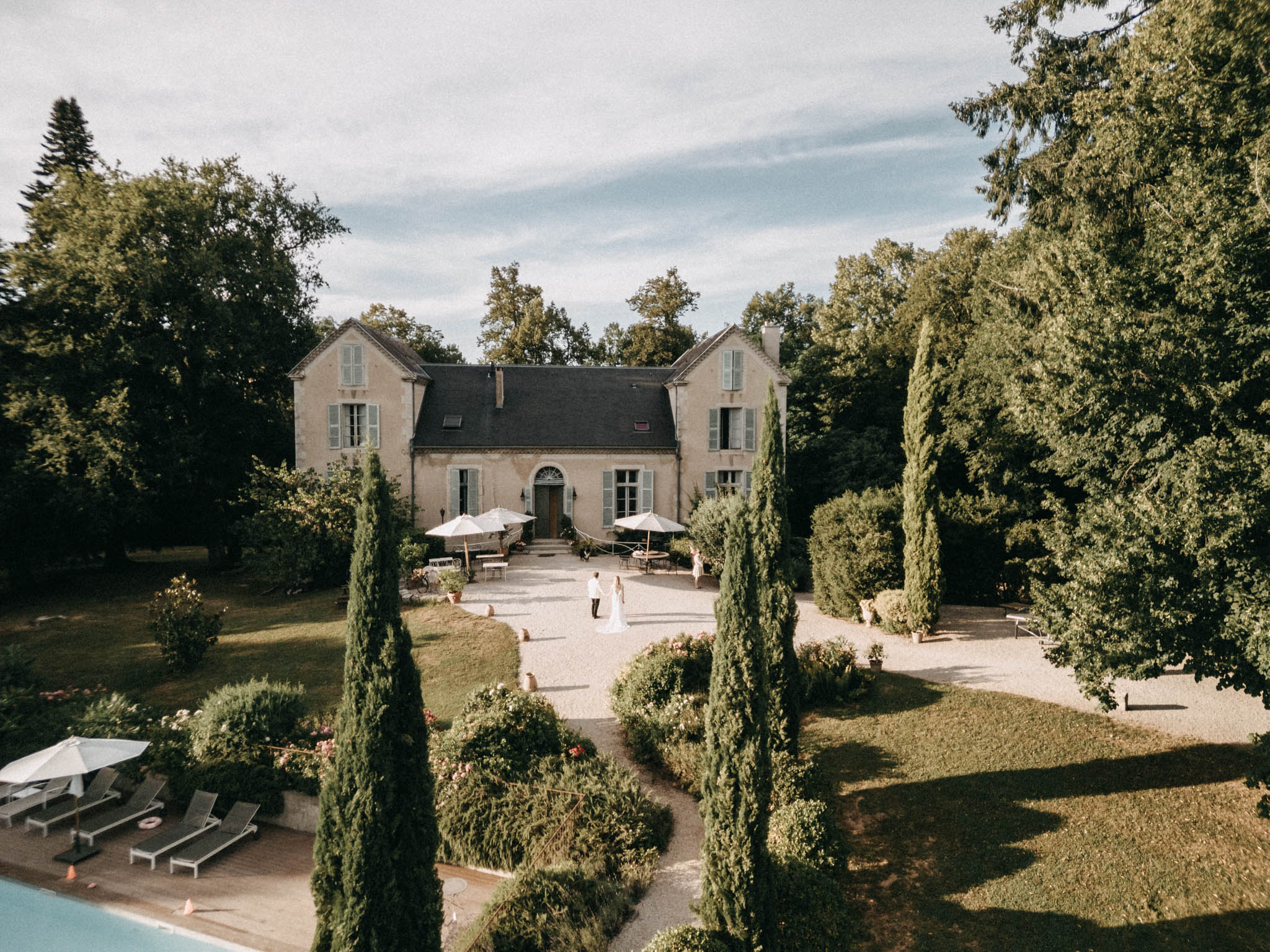
France stopped being an idea somewhere between the first château you saved and the third venue website you bookmarked at midnight. A courtyard turning amber in late light. A long table under plane trees, white linen catching the last of the sun, glasses of rosé so cold they bead in your hand. Your guests arriving on Friday, settling in, discovering that the weekend ahead is not just a wedding but a full, unhurried celebration. This chapter covers the practical and emotional case for choosing France: the reasons couples keep coming back, how France compares honestly to Italy and Spain, and the arguments that turn a hesitant partner or cautious parents into advocates. It is part of our complete guide to planning a wedding in France.
Why France Works for Destination Weddings
France is not the only country where you can host a destination wedding. It is the only country where venue diversity, food quality, wine at source, guest logistics, and the weekend celebration format all converge without asking you to compromise on any of them.
- Venue stock: Châteaux, mas, converted barns, hillside villas, and modern estates across 12+ distinct regions. No other country offers this range.
- Guest accessibility: Paris CDG plus five regional airports, TGV high-speed rail connecting Paris to every major wedding region in under three hours, and the Eurostar making London to the South of France possible in a single day.
- The weekend format: Exclusive-use venues are the standard. You hire the entire property from Friday through Sunday. Guests get 48 hours together, not a single afternoon.
- Supplier maturity: Bilingual planners, photographers, caterers, and florists in every major region. The industry has 20+ years of serving international couples.
- Outdoor reliability: The wedding season from May through September delivers consistent outdoor weather across the southern half of the country.
The result: guests who arrived with reservations leave saying it was the best wedding they have ever attended. That reversal happens so consistently it has become the defining pattern of French destination weddings.
What France Actually Costs
An 80-guest wedding at a French château or domaine costs €40,000 to €80,000 for a full weekend including venue hire, catering, wine, couple's accommodation, and core suppliers. That range spans from the Dordogne and Normandy (venue hire from €5,000) to Provence and the Riviera (premium properties reaching €25,000).
The comparison that matters most: a 150-guest wedding at a country house hotel in England or an estate venue in the US often costs the same or more, for a single-day event with less time together and wine marked up 200-400% over retail. In France, the smaller guest list (destination weddings naturally trim from 150 to 60-100 guests), inclusive venue pricing, and local wine at €7 to €15 per bottle combine to deliver more celebration for the same budget.
Wine alone saves €2,000 to €4,000 across an 80-guest weekend. A Côtes de Provence rosé that retails for €25 in London costs €7 to €9 at the domaine. Most venues either produce their own wine or source directly from local vignerons.
Budget allocation tends to follow a pattern across French weddings: roughly 40-50% on venue and catering (often bundled together), 10-15% on photography and videography, 8-12% on florals, and the remainder split among music, hair and makeup, stationery, and logistics. Couples who plan early enough to book a venue 12 to 18 months ahead typically secure better rates and avoid the 15-20% premium that last-minute peak-season bookings command in popular regions like Provence and the Loire Valley.
France vs Italy vs Spain
France, Italy, and Spain each have genuine strengths, but they are not interchangeable. The venue stock, cost structure, guest logistics, and supplier infrastructure differ in ways that shape every detail of the celebration.
Scroll →
| Factor | France | Italy | Spain |
|---|---|---|---|
| Cost (80 guests) | €40,000 to €80,000 | €45,000 to €90,000 | €30,000 to €65,000 |
| Venue diversity | Highest in Europe: 12+ regions | Concentrated: Tuscany, Lakes, Amalfi, Puglia | Growing: Mallorca, Ibiza, Andalusia |
| Guest access | Best in Europe. 6 airports, TGV, Eurostar | Strong north. Central and south harder | Strong for islands. Mainland requires drives |
| Food and wine | Multi-course traiteur dinner, wine at source | Exceptional pasta-led, 7-9 courses | Tapas sharing, late dining, strong wine value |
| Supplier maturity | Most developed. Bilingual everywhere | Strong in Tuscany/Lakes. Patchy elsewhere | Mallorca/Barcelona established. Mainland emerging |
| Weekend culture | Standard. Fri-Sun exclusive use | Growing. Some venues single-day default | Less common. Spanish tradition is one-day |
Italy's appeal is real but concentrated. Tuscan golden light, Lake Como estates, Amalfi cliff-top dining: each is striking but represents a narrower range. Italian VAT at 22% and surging Tuscany demand push costs 10-25% above equivalent French regions. Spain is the budget leader, with mainland venues at €3,000 to €8,000 for weekend hire, but the trade-off is less developed English-language supplier networks and extreme July/August heat inland. The full nine-factor comparison is in our France vs Italy vs Spain guide.
Making the Case to Family
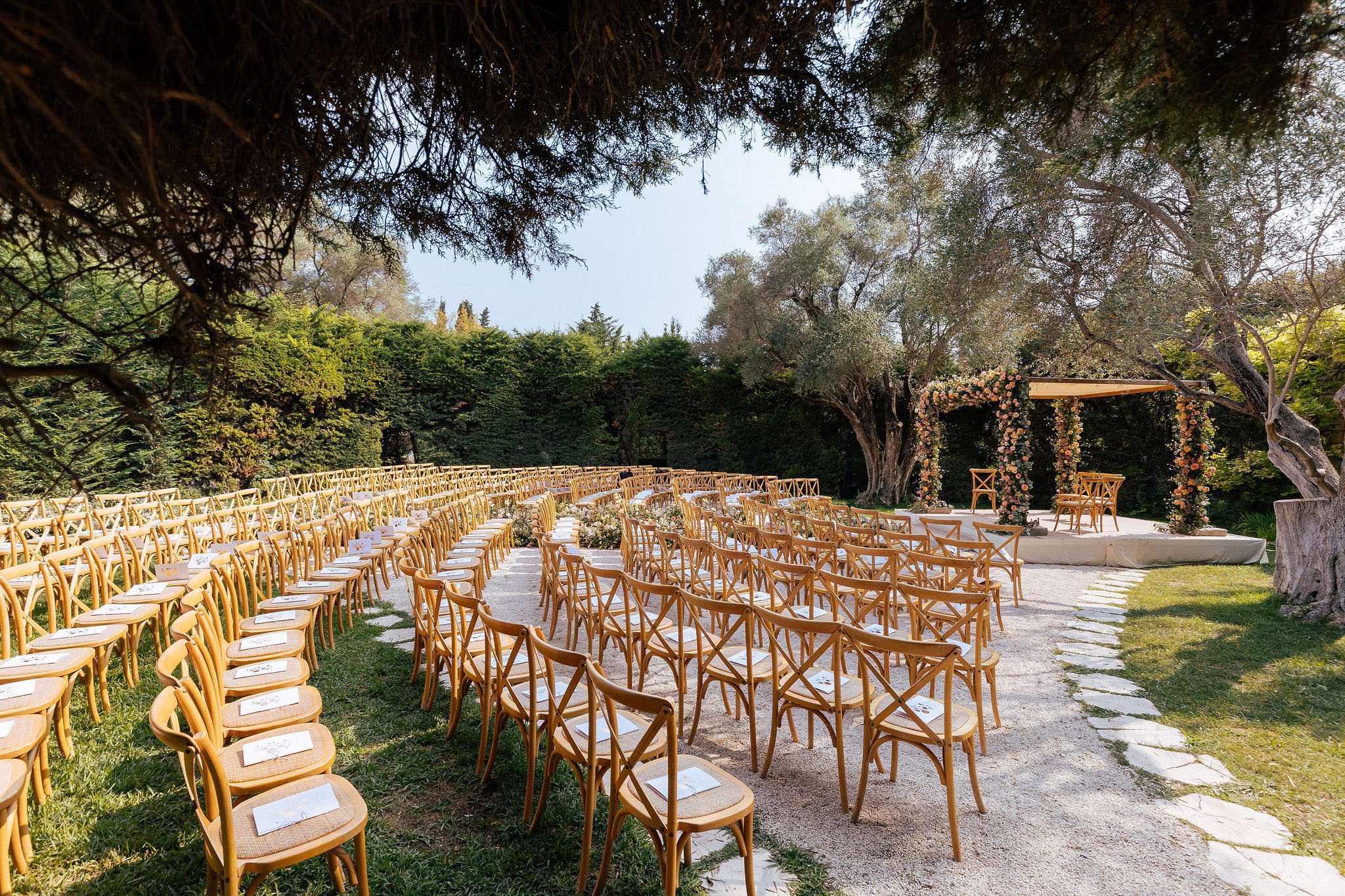
The strongest case for a French destination wedding is not emotional. It is structural. France offers a format most home weddings cannot replicate: a full weekend where the venue, the accommodation, the food, and the setting work together as a single experience.
The cost objection reverses on data. An 80-guest French weekend costs €40,000 to €80,000. A 150-guest home wedding in England costs £40,000 to £70,000 or more for a shorter event. Then the format finishes the argument: 48 hours together versus roughly six hours at a hotel reception where the couple gets 20 minutes of real conversation with any one group.
For parents, the time-together advantage is decisive. At a home wedding, parents get fragments between table visits, photo calls, and first dances. At a French weekend, they arrive Friday, have dinner together, share the celebration on Saturday, and say goodbye over Sunday brunch. Invite them into the planning: parents who choose the wine or organise the Friday dinner move from sceptics to advocates. The full strategy for handling every common objection is in our guide to convincing your partner or parents.

“The couples who struggle most are the ones who fall in love with the idea of France but underestimate what planning across time zones and a language barrier actually involves. The appeal is real, but it needs a structure behind it. The ones who build that structure early, with a local planner and a clear timeline, are the ones whose families arrive and say: this was worth every minute of the journey.”
Food and Wine at the Source
French wedding catering operates at a higher baseline than most countries. The traiteur system produces four to six-course seated dinners with local, seasonal ingredients as standard. The meal runs three to four hours and becomes the centrepiece of the evening, not something guests rush through before the band starts.
A typical wedding menu moves from canapés during the vin d'honneur to a starter (often a terrine or local seafood), a fish course, the main (rack of lamb, magret de canard, or slow-braised beef depending on the region), a cheese course served before dessert (the opposite of British convention), and a pièce montée or dessert table. Each course is paired with a different wine. In Provence, that might mean a local white for the fish, a Côtes du Rhône for the main, and a late-harvest Muscat with dessert. The traiteur handles not just the cooking but the full service staff, tableware rental, and kitchen logistics, which simplifies vendor management considerably.
Wine is sourced directly from neighbouring vignerons at €7 to €15 per bottle. A Bordeaux that sells for €40 in a New York restaurant costs €12 to €15 at the property. Many châteaux and domaines produce their own wine or maintain standing relationships with local producers, so tastings before the wedding double as vineyard visits. Guests consistently cite the food and wine as the most talked-about part of a French wedding weekend, ahead of the venue, the ceremony, and the dancing.
The Three Guides in This Chapter
- 15 Reasons to Get Married in France: The complete inventory, from golden-hour light to midnight Sisteron lamb, venue diversity across 12 regions, and the reversal effect on reluctant guests.
- France vs Italy vs Spain: An honest nine-factor comparison with 2026 pricing. France leads in five categories, Italy in brand recognition, Spain in cost.
- How to Convince Your Partner or Parents: The five objections every couple faces and the specific data, framing, and conversation structure that addresses each one.
Choosing France for the aesthetic without researching the practical realities of planning from abroad. Couples who commit to a venue based on Instagram photos, then discover they need a bilingual planner, a local caterer, and a 6-month legal timeline, lose months of lead time and pay rush fees they could have avoided. Research the logistics before you fall in love with a property. Start with the 15 reasons guide to separate the substance from the surface appeal.
Explore Every Guide in This Chapter
Deep-dive into each topic covered above.