
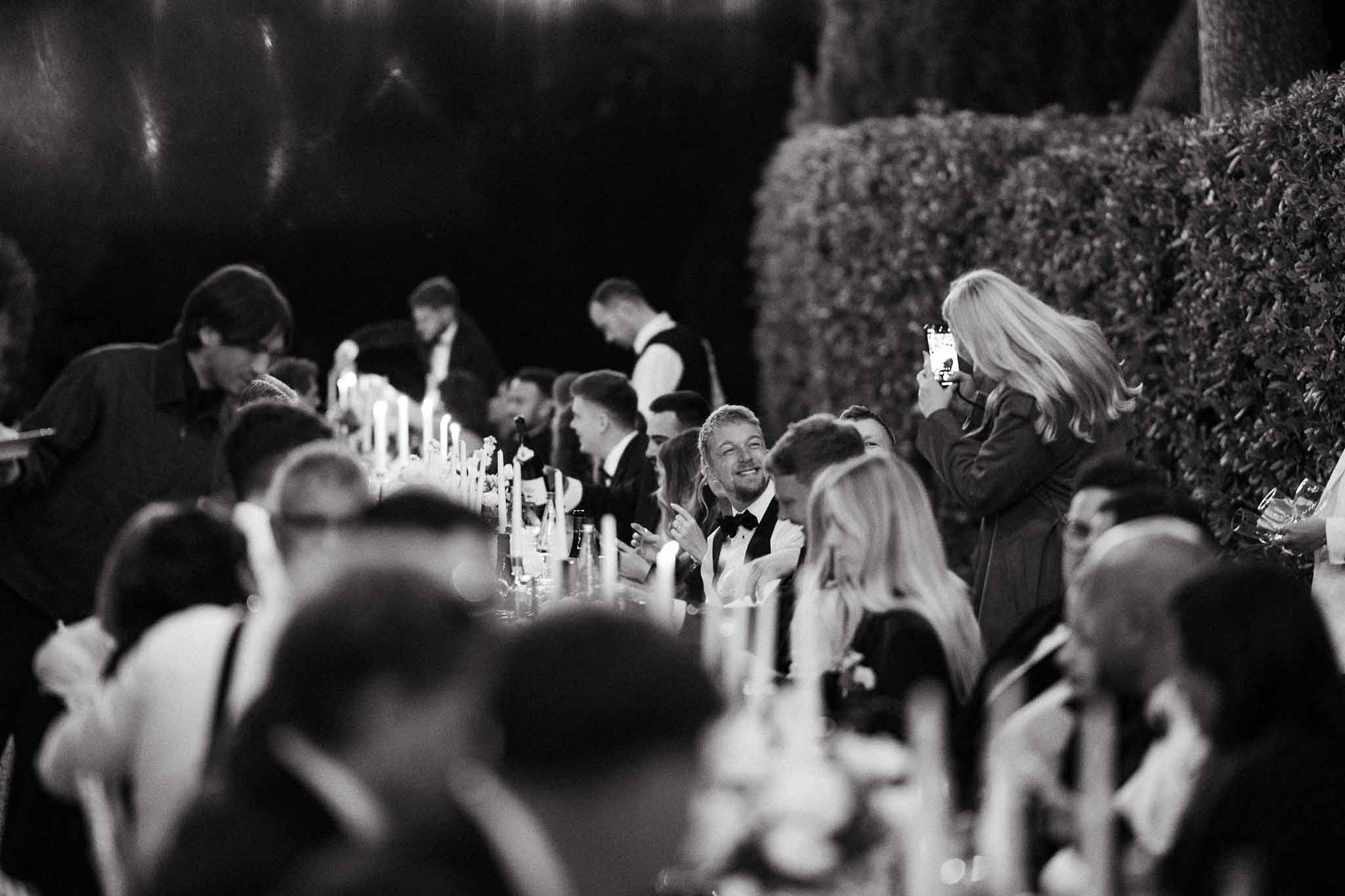
At a destination wedding in France, the welcome dinner is not a casual suggestion. It is expected. Your guests have flown across an ocean or driven across a country to be at your wedding. They arrive on Friday afternoon, often after a full day of travel, to a venue or village they have never visited.
The welcome dinner is where the wedding weekend begins: the first shared meal, the first introductions between friend groups, the first glass of local wine in the courtyard. The question is not whether to hold one but what format works best for your guest count, your budget, and the venue itself. Below is every option from a village restaurant buyout to a fully catered sit-down, with realistic costs as of 2026 and the logistical mistakes that trip up first-time planners. This forms part of the complete French destination wedding planning resource. For the full chapter, see our complete guest experience guide.
Key Takeaways
- A welcome dinner is expected at French destination weddings. Guests who have travelled internationally to attend will be disappointed by a "see you tomorrow" approach after their arrival.
- Three main formats work well: restaurant buyout (€50 to €90 per head), venue-catered dinner (€80 to €130 per head), and full sit-down dinner (€120 to €200+ per head). The right choice depends on guest count, venue setup, and how formal you want the evening.
- The welcome dinner should feel distinctly different from the wedding day itself. A more casual register, a different venue or space within the venue, and a simpler menu all help create contrast and build anticipation.
- Friday evening is the standard timing. Guests arrive in the afternoon, settle into their accommodation, and gather for the welcome dinner at 7:30 to 8pm.
- The biggest mistake is overproducing the welcome dinner. It should set the tone, not compete with Saturday. Keep speeches short, decorations simple, and the atmosphere relaxed.
Is a Welcome Dinner Expected at a French Destination Wedding?
Yes. At every destination wedding we have featured over the past 15 years on French Wedding Style, the welcome dinner is a fixture of the weekend structure. It is the social anchor of Friday evening, and its absence would leave a gap that guests notice. The reason is practical. Destination wedding guests do not have a hotel lobby restaurant or familiar neighbourhood takeaway to fall back on. They have arrived at a rural château or a Provençal domaine where the nearest restaurant may be a 20-minute drive away on roads they do not know. Providing a shared meal on the first evening is a hospitality obligation, not a formality. It is also the moment that transforms a collection of individuals from different countries and friend groups into a wedding party. By the time the cheese course is finished and the rosé is flowing, your university friends and your partner's work colleagues are talking to each other. That dynamic carries into Saturday.
For couples working with a wedding planner in France, the welcome dinner is typically the first event they plan after the ceremony and reception. Most planners will propose a format during the initial planning meeting.
What Format Works Best?
Restaurant buyout. Book out a local restaurant for the evening. This works for groups of 20 to 60 guests and is the simplest option logistically. The restaurant handles the food, service, and setting. You choose the menu (or a set menu is agreed in advance) and pay per head. Costs run €50 to €90 per person including a 3-course meal and house wine. The atmosphere is informal, convivial, and distinctly French. Village restaurants in Provence, the Dordogne, and the Loire Valley love hosting wedding groups because the booking fills an otherwise quiet Friday evening. In the Provence region, restaurants like L'Oustau de Baumanière and Capelongue offer group dining that doubles as a destination experience. Venue-catered dinner. If your venue allows catering on the Friday evening (not all do, as some restrict the kitchen to Saturday), a catered dinner on site is the most convenient option. Your traiteur or the venue's in-house kitchen prepares a simpler menu than the wedding day dinner.
Costs run €80 to €130 per head. The advantage is that guests do not need to travel anywhere. The disadvantage is that using the same space on both Friday and Saturday can reduce the sense of occasion on the wedding day. Use a different part of the venue if possible: the terrace for Friday, the formal dining room for Saturday.
Full sit-down dinner. For larger weddings (80+ guests) or couples who want the welcome dinner to be a significant event in its own right, a full sit-down dinner with a dedicated menu, seating plan, and table settings is appropriate. Costs run €120 to €200+ per head. This format blurs the line between welcome dinner and wedding reception, so keep the decorations, formality, and speeches lighter than Saturday. The visual register should be clearly different.
How Much Does a Welcome Dinner Cost?
Scroll →
| Format | Cost Per Head (2026) | Best For | Guest Count |
|---|---|---|---|
| Restaurant buyout | €50 to €90 | Intimate groups, casual tone, local experience | 20 to 60 |
| Venue-catered (casual) | €80 to €130 | Convenience, no guest transport needed | 30 to 100 |
| Full sit-down dinner | €120 to €200+ | Large weddings, formal weekend tone | 60 to 150+ |
| Pizza and wine (DIY-spirit) | €30 to €50 | Relaxed, budget-conscious, young guest list | 20 to 80 |
For a wedding of 80 guests, a welcome dinner adds €4,000 to €16,000 to the weekend budget depending on format. This is a significant line item. Couples on a tighter budget should not skip the welcome dinner entirely. Instead, choose the simpler format. A pizza evening with local wine in the venue courtyard costs €30 to €50 per head and creates a warmer atmosphere than a formal dinner that stretches the budget to breaking point. For a complete picture of venue pricing and what is included in the hire fee, see our dedicated guide.
Where Should You Hold It?
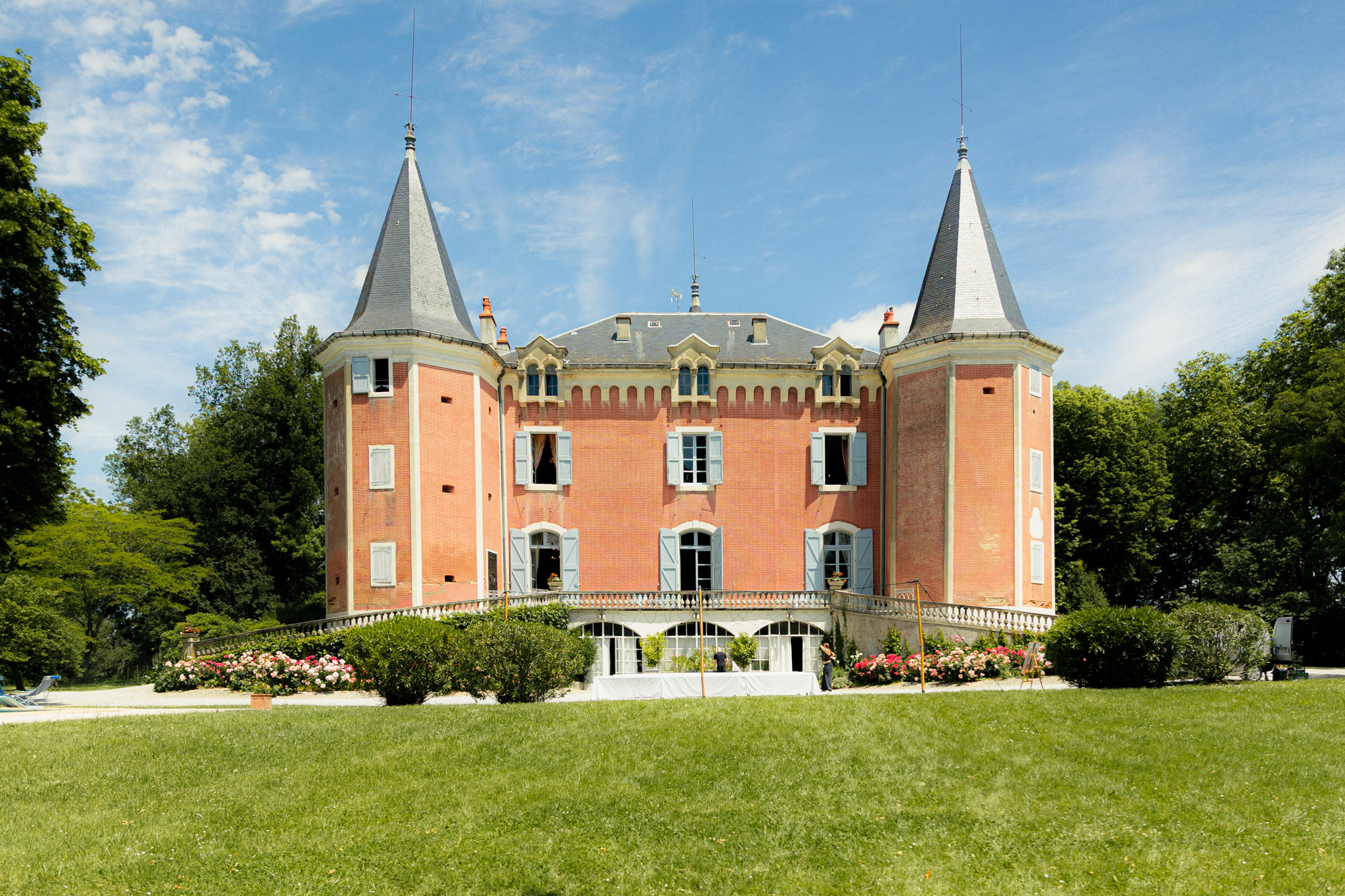
The best welcome dinners create a sense of place. They introduce guests to the region, the food, and the lifestyle before the wedding day adds its own formality. Choose a setting that achieves this without replicating Saturday. A village restaurant within 15 minutes of the venue is the classic choice. Guests get a taste of the local town, the food is authentic, and the logistics are simple: shuttle there, shuttle back. In Bordeaux, a wine bar with shared platters. In Provence, a mas restaurant with long tables under plane trees. In the Dordogne, a ferme-auberge serving duck and local wine. The restaurant does the work. You show up and enjoy it. An on-site alternative space works if the venue has distinct areas. Use the poolside terrace on Friday and the formal courtyard on Saturday. Use the farmhouse kitchen on Friday and the orangerie on Saturday. The principle is spatial separation: do not set up the wedding dinner space for the welcome dinner.
A nearby estate or partner property is a third option. Some venues in the French wine regions have arrangements with neighbouring châteaux or wine estates for Friday evening events. A wine tasting and dinner at a neighbouring domaine gives guests an additional experience and keeps the main venue fresh for Saturday. Château d'Estoublon in Provence, for example, hosts wine tastings and group dinners that work well as a welcome event for weddings at nearby venues.
What Mistakes Do Couples Make with the Welcome Dinner?
Overproducing is the number one error. Couples who pour the same energy into Friday as Saturday end up with two events that feel identical, and by Sunday, guests are exhausted rather than energised. The welcome dinner should feel like an overture, not Act 1. Keep speeches to 5 minutes total (a brief welcome from the couple, a thank-you for travelling). Skip the seating plan unless you have more than 60 guests. Let people mingle and sit where they choose. **Transport gaps.** Underestimating shuttle logistics is the next pitfall. If the dinner is at a restaurant 15 minutes away, you need shuttles. Do not assume guests will drive or find their own way through unfamiliar countryside at night. Arrange a minibus for each direction and communicate the departure times clearly. A shuttle leaving from the venue at 7pm and returning from the restaurant at 10:30pm and 11:30pm covers most needs. For more on transport logistics for wedding weekends, see our dedicated guide.
Forgetting dietary requirements at the welcome dinner is surprisingly common. Couples who have painstakingly managed dietary needs for the Saturday menu forget that the Friday dinner needs the same attention. Inform the restaurant or caterer of all dietary requirements when confirming the booking.
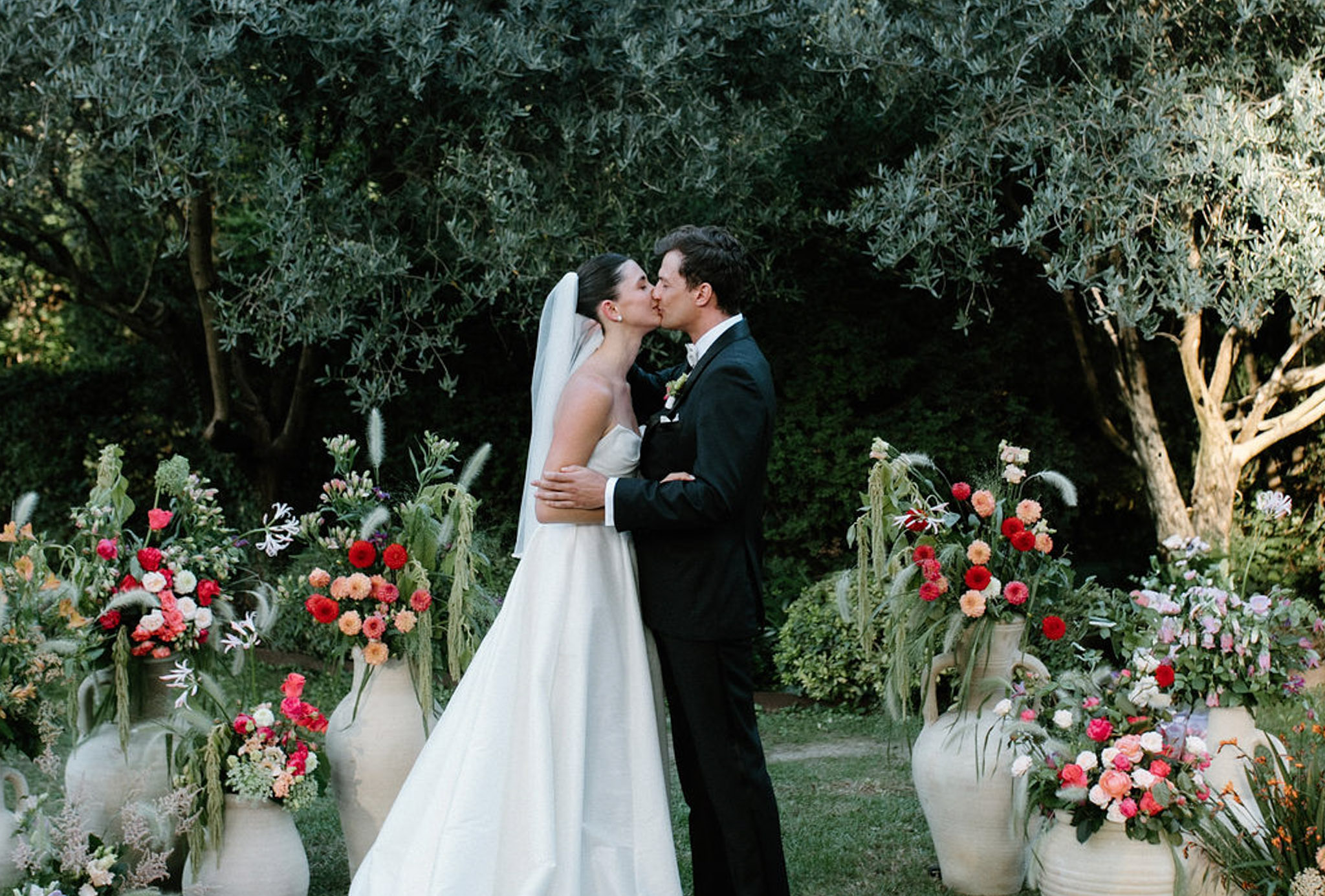
Starting too late catches tired travellers off guard. Guests who have been travelling since early morning do not want to wait until 9pm to eat. Aim for drinks at 7pm and food at 7:30 to 8pm. Finish by 10:30 to 11pm. The evening before the wedding is not the night for a 3am finish. See how this couple brought this to life at Château de Champlatreux near Paris.
Related Articles
- Guest experience at a French wedding: the complete guide
- Structuring a multi-day wedding weekend
- Guest activities between events
- Guest travel logistics
- Guest accommodation options
- Traditional French wedding menu
- Wine selection for your French wedding
- Venue pricing explained
- Destination wedding venues in France
- Browse all wedding venues in France
Frequently Asked Questions
Do all guests attend the welcome dinner, or just close family?
At most French destination weddings, all guests who have arrived by Friday evening are invited. The welcome dinner is an inclusive event, not an intimate family gathering. If budget constraints limit the dinner to a smaller group, communicate this clearly on the wedding website and provide restaurant recommendations for guests not included.
Can we hold the welcome dinner at the same venue as the wedding?
Yes, provided you use a different space within the venue. The terrace, poolside, or a secondary courtyard all work. Avoid setting up the main reception space for both events. Guests need the Saturday reveal to feel like a distinct occasion. If the venue has only one main entertaining space, a restaurant dinner off-site is the better choice.
Is a welcome brunch on Saturday morning an alternative to a Friday dinner?
A Saturday brunch works only if all guests arrive on Friday and have dinner independently. In practice, this is rare at destination weddings. Most couples find that the Friday evening dinner is necessary because guests have no local knowledge, no transport, and no easy way to feed themselves in a rural area on the night they arrive. A Sunday brunch is common in addition to the Friday dinner, not as a replacement.
Explore Every Guide in This Chapter
Deep-dive into each topic covered above.