
Your French Wedding Day Timeline: Morning to After Midnight
A French wedding day does not follow the schedule most international couples expect. The ceremony starts later. The dinner runs longer. The party reaches deeper into the night. And the morning unfolds with an unhurried calm that comes from knowing the ceremony is still six hours away. From the first coffee at 8am to the last song at 4am, a French wedding stretches across 18 hours and moves through distinct phases, each with its own rhythm and emotional register. This chapter maps how those phases connect, where the flex points sit, and why the French approach produces a fundamentally different kind of celebration. It is part of our complete guide to planning a wedding in France.
Why the French Wedding Day Feels Different
The difference starts with the clock. A British wedding ceremony at 1pm leaves six hours before the party wraps at 7pm. A French ceremony at 5pm leaves seven to ten hours before the dance floor empties at 3am. The entire arc of the day shifts later, which creates more space for morning preparation, a longer vin d'honneur, and a dinner that never feels rushed.
The second structural difference is pacing. French weddings do not compress the celebration into a single three-hour block. They spread it across distinct chapters: a slow morning, a personal ceremony, a long and social vin d'honneur, a seated dinner that builds through five or six courses, and a party that only starts after midnight. Each chapter has breathing room. Guests settle into one phase before the next begins.
The third difference is food. At a British or American wedding, dinner is a single course or a buffet, served quickly so the dancing can begin. At a French wedding, dinner is the main event: a multi-course gastronomic experience lasting three to four hours, with speeches woven between courses and the wine changing with each dish. The dancing is the encore, not the headline act. For the full gastronomic picture, read our guide to why France wins on food and wine at weddings.
The Shape of the Day: Hour by Hour
Below is the broad outline of a summer château wedding for 100 guests with a 5pm ceremony. This is the most common format across the properties listed on French Wedding Style. The day divides into five distinct phases, each with its own logistical requirements and common timing mistakes.
Scroll →
| Phase | Time | Duration | What Happens |
|---|---|---|---|
| Getting ready | 9am to 3pm | 6 hours | Hair, makeup, getting dressed, portraits, first look |
| Ceremony | 5pm to 5.30pm | 30 min | Symbolic or religious ceremony at the venue |
| vin d’honneur | 5.30pm to 8pm | 2.5 hours | Champagne, canapés, garden socialising, couple portraits |
| Dinner | 8.30pm to midnight | 3.5 hours | Five courses, speeches between courses, wine service |
| Dancing | Midnight to 3am+ | 3+ hours | DJ or band, late-night food, final songs |
Winter weddings and city celebrations compress this by starting at 2pm to 3pm. Elopements and micro-weddings for under 30 guests can run on a shorter schedule, blending the vin d'honneur and dinner into a single long meal. The three sample timelines in this chapter cover all three formats.
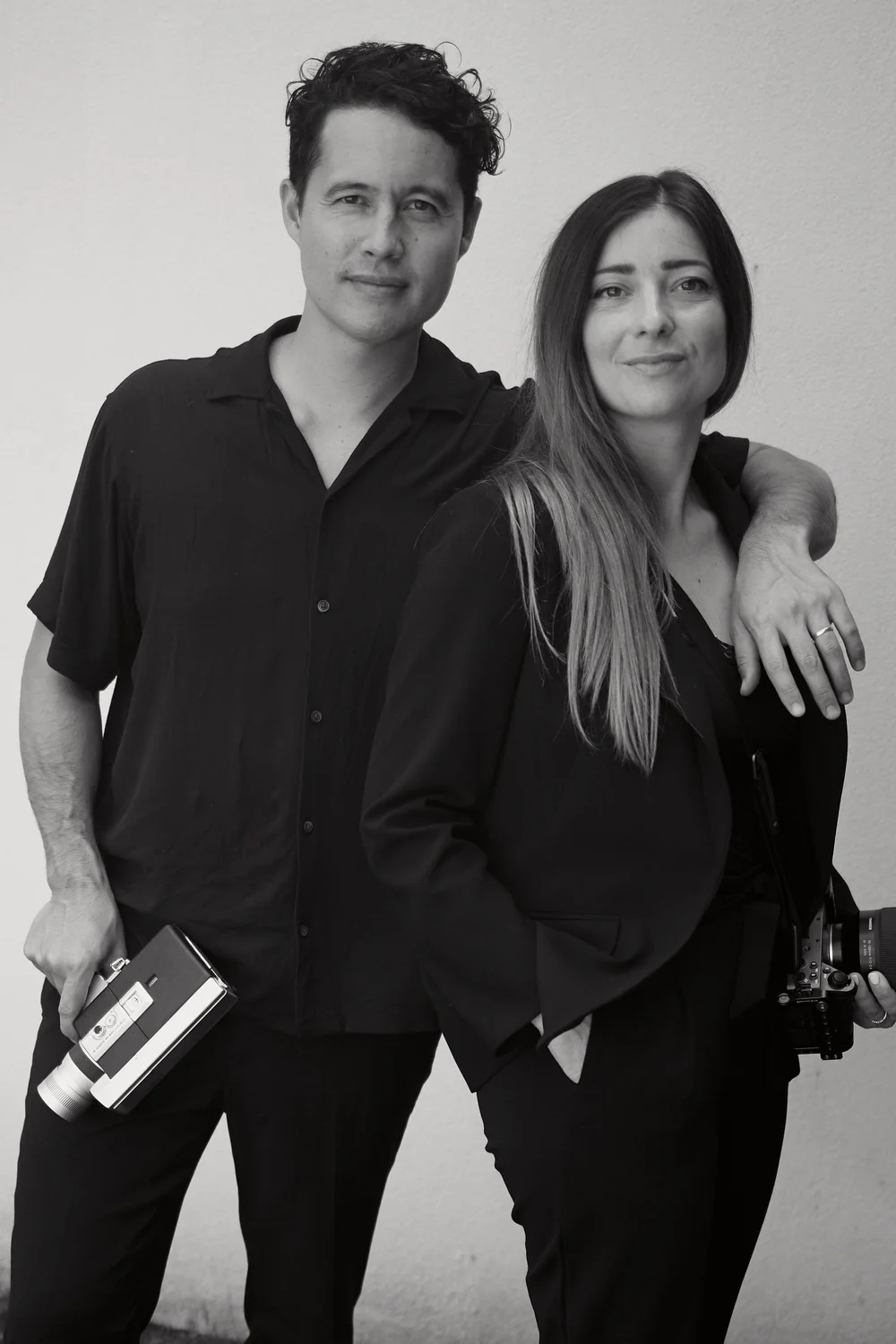
“The biggest timeline mistake I see is couples not building buffer into the morning. Hair and makeup overruns by 20 minutes, the first look gets pushed back, portraits feel rushed, and suddenly the ceremony is starting with everyone slightly on edge. Golden hour does not wait. If the schedule is tight, the couple's film and photographs suffer most, because that is the time that gets cut first.”
Morning and Ceremony
The morning starts slowly, and it should. With the ceremony not beginning until late afternoon, there is no reason to rush. Bridal preparation typically begins at 9am, the hair and makeup artist working through the bridal party one by one. The bride goes last, finishing around 2pm so her look is freshest for the ceremony. The groom gets ready in a separate space from 2pm onwards.
The atmosphere in the getting-ready room matters more than most couples realise. It is the first set piece of the wedding and it appears in dozens of photographs. Open the shutters. Clear the clutter. Keep the group small. The room should feel calm and personal, not crowded and chaotic. For the full morning breakdown, including a minute-by-minute schedule and the four common mistakes that disrupt the morning, read the complete morning getting-ready guide.
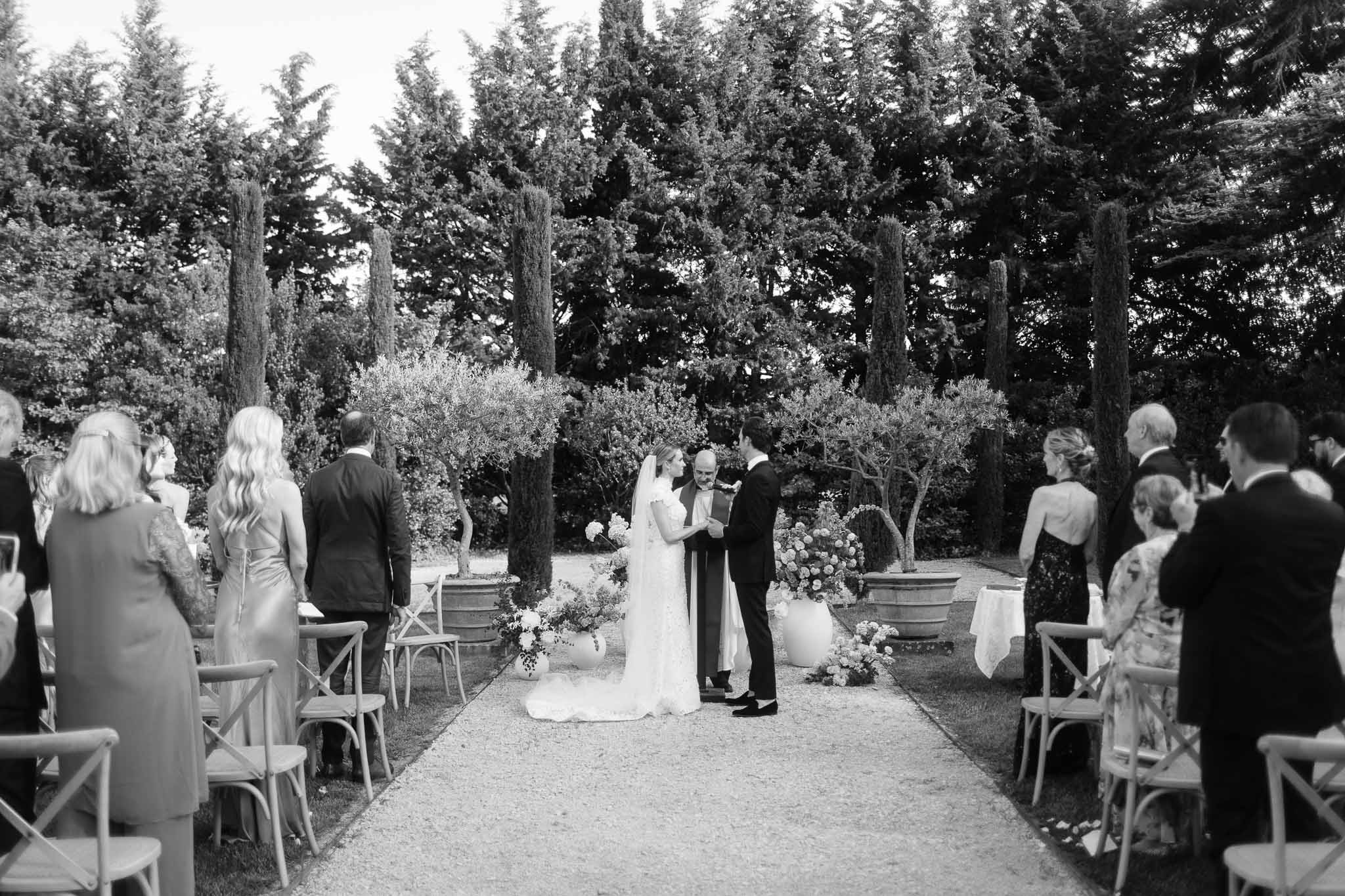
The ceremony itself is the still point of the day. In France, the legal and the emotional can happen separately. The civil ceremony at the mairie takes 15 to 30 minutes and is often completed the day before. The symbolic ceremony at the venue offers complete creative freedom: any location, any officiant, any language. It typically lasts 20 to 40 minutes. Religious ceremonies require the civil ceremony to have taken place first, as French law mandates. The ceremony setting does much of the work. The gardens of a Provencal bastide at 5pm in July. A vaulted chapel in the Dordogne with light through medieval glass. These settings provide atmosphere that no decoration can replicate. For bilingual ceremony advice and timeline specifics, read the full ceremony guide.
Vin d'Honneur: The Social Heart
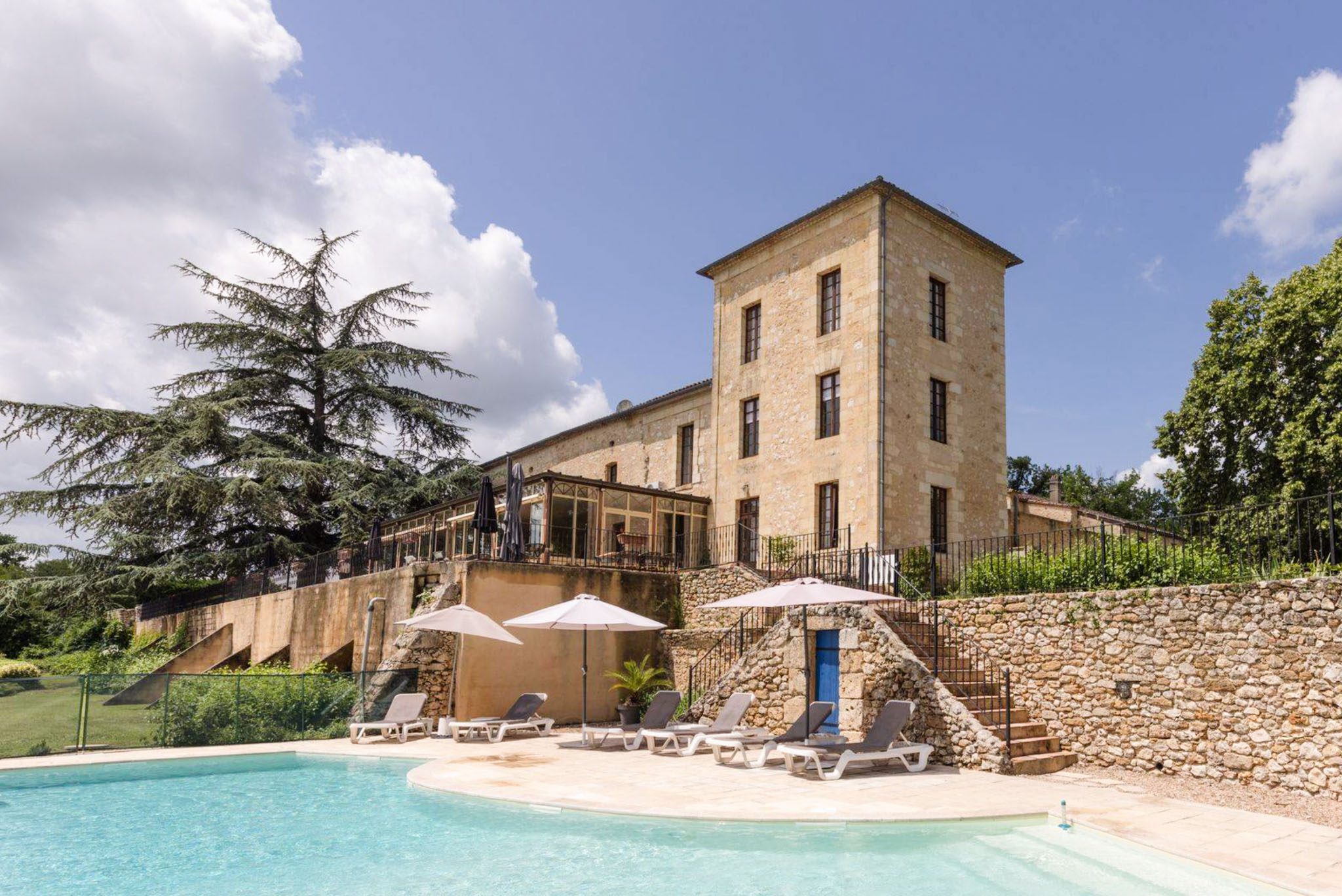
The vin d'honneur is what makes a French wedding distinctly French. It is not a cocktail hour. It is a celebration in its own right, lasting 1.5 to 3 hours against the golden light of a late-summer afternoon. Champagne flows. Canapes circulate. Guests drift across the lawn, settle into garden chairs, and reconnect with people they have not seen in months. The couple floats between groups while the photographer captures portraits in the venue grounds.
This is also where the transition to dinner requires the most care. Moving 100 guests from a garden into a dining room takes 15 to 20 minutes. If guests are enjoying themselves outside (which they will be), the move needs to be deliberate: an announcement, a musical shift, or the planner gently guiding the room. Plan for 6 to 8 canape pieces per guest and 3 to 4 drinks per person. For the full breakdown of quantities, timing, and transition logistics, read the dedicated vin d'honneur guide.
Dinner, Speeches, and Dancing
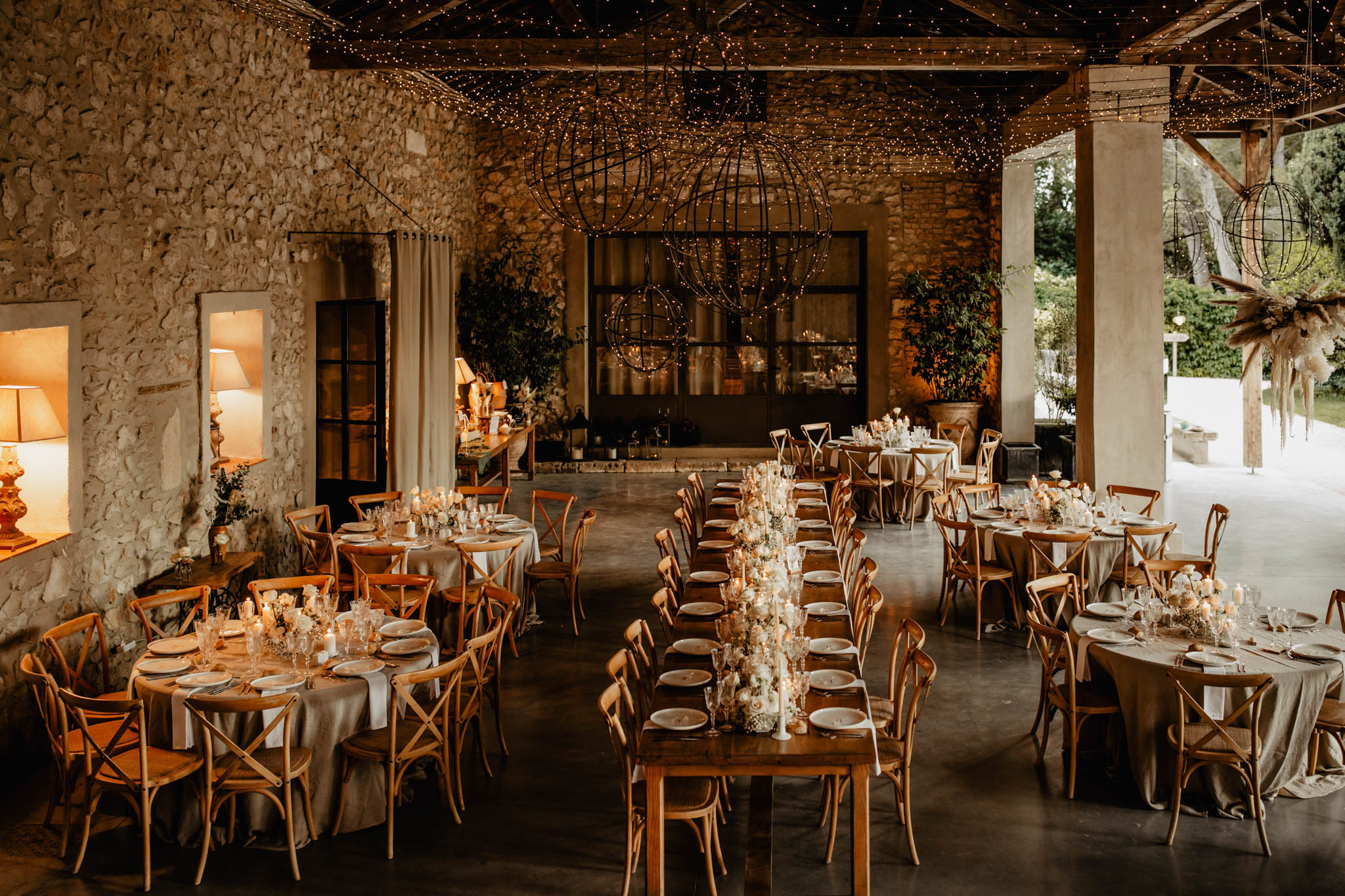
Dinner at a French wedding is a three-to-four-hour event that moves through five or six courses. It starts around 8.30pm and finishes close to midnight. Speeches are distributed between courses rather than grouped at the start: the best man after the starter, parents after the main, the couple before dessert. Wine changes colour with each dish. The room gets louder, warmer, and more animated with every hour.
| Moment | Typical Timing | Notes |
|---|---|---|
| Guests seated | 8.15pm to 8.30pm | Allow 15 to 20 minutes for the transition from garden |
| Starter served | 8.30pm | First wine pairing with the opening course |
| First speech | 9pm | Best man or close friend, 3 to 7 minutes |
| Main course | 9.30pm | Wine changes colour with the dish |
| Parent speeches | 10.15pm | Between main and cheese, the emotional high point |
| Cheese course | 10.30pm | A distinctly French moment, often with local selections |
| Wedding cake | 11.15pm | Piece montee or modern alternative, sparklers |
| First dance | 11.30pm to midnight | Signals the shift from dinner to party |
| Late-night food | 1.30am to 2.30am | Croque-monsieurs, crepes, or onion soup |
| Last song | 3am to 5am | Depends on venue curfew and guest stamina |
The hours between midnight and 4am are when a French wedding becomes its most honest: shoes off, ties loose, late-night croque-monsieurs arriving at 2am, and the people still on the dance floor are the ones who will remember this night for the rest of their lives. Noise curfews are set by each commune, not the venue. Outdoor music typically stops between 10pm and midnight. Indoor music can continue until 3am to 5am with doors and windows closed. Only 13% of venues on French Wedding Style are genuinely no-curfew properties. For full details on the evening dinner, after-midnight food, and curfew logistics, read the evening reception and after-midnight party guides.
Build 45 minutes of buffer into your morning timeline. Hair and makeup delays are the single most common cause of a late ceremony start. If the artist runs 20 minutes over on one bridesmaid, you still have margin. If everything runs on time, the couple gets extra minutes for portraits during the best light of the day.
The Six Guides in This Chapter
Getting Ready: Bridal Suite to First Look
The detailed minute-by-minute timeline for a 4.30pm ceremony. What the getting-ready room should look like for photographs. The four common morning mistakes: starting too late, inviting too many people, underestimating the dress, and neglecting the groom's preparation.
The Ceremony: Civil, Symbolic, and Religious
The legal distinction between ceremony types. Complete creative freedom in the symbolic ceremony. Bilingual ceremony techniques that avoid line-by-line repetition. Why the quality of light at 5pm in July makes a late-afternoon ceremony the strongest visual decision you can make.
vin d’honneur to Dinner
The 1.5-to-3-hour vin d'honneur explained: champagne volumes, canape counts, and the logistics of moving 100 guests from garden to dining room. The common mistake of under-catering, which leads to hungry guests and a flat start to dinner. Explore garden wedding venues with striking outdoor settings.
The Evening: Five Courses, Speeches, and the First Dance
The five-course dinner from starter to cheese. Where speeches sit in the meal. The piece montee tradition. How the transition from dinner to dancing works at venues with and without separate dance floors. Browse venues with on-site accommodation for late-night celebrations.
After Midnight: Curfews, Late-Night Food, and Winding Down
Commune noise curfews explained. Late-night food options that keep the energy going: croque-monsieurs, cheese boards, crepe stations, and onion soup at 3am. How to wind down gracefully when the DJ plays the last song. See no-curfew venues for maximum flexibility.
Three Sample Timelines
Hour-by-hour schedules drawn from real French weddings: a 150-guest summer château celebration, a 60-guest winter Paris wedding with a 2pm ceremony, and a two-person Provence elopement with a private dinner for 12. Each includes flex points where the schedule can absorb delays. Browse intimate venues for smaller celebrations.
Frequently Asked Questions
What time does a French wedding start?
Most French weddings begin the ceremony between 4pm and 6pm. This is later than the UK or US norm, but it follows the natural rhythm of the French day: it sets the vin d'honneur in golden afternoon light, positions dinner at the traditional French hour of 8.30pm or later, and allows the party to run well past midnight. Winter weddings sometimes start at 2pm to 3pm. Browse destination wedding venues in France to see ceremony settings.
How long does a French wedding last?
A full French wedding day runs 15 to 18 hours, from getting ready at 9am to the dance floor emptying between 3am and 5am. The seated dinner alone lasts 3 to 4 hours, which surprises couples used to the 90-minute UK or US reception format. See our sample timelines for three hour-by-hour schedules.
Do French weddings have a cocktail hour?
The French equivalent is the vin d'honneur, and it is much more than a cocktail hour. It typically lasts 1.5 to 3 hours and features champagne, regional wines, and canapes in the venue's gardens or courtyard. Plan for 6 to 8 canape pieces per guest and 3 to 4 drinks per person. Read the complete vin d'honneur guide for quantities and transition logistics.
When do speeches happen at a French wedding?
Speeches are distributed between courses during the seated dinner, not grouped at the start. This prevents speech fatigue and keeps the energy moving through the meal. A common order: best man after the starter, parents after the main course, the couple before or after dessert. Each speech typically runs 3 to 7 minutes. For the full dinner structure, read our evening reception guide.
What is the noise curfew at French wedding venues?
Noise curfews are set by each commune, not by the venue. Outdoor music typically stops between 10pm and midnight. Indoor music can continue until 3am to 5am with doors and windows closed. Only 13% of venues on French Wedding Style are genuinely no-curfew. Always confirm both outdoor and indoor curfews and check whether the commune requires prior notification. Read our after-midnight guide for full curfew details.
A French wedding day is not a compressed event. It is a day that builds, phase by phase, from the quiet of the morning to the warmth of a midnight dance floor. The structure exists to give every part of the celebration the space it deserves. Work through the six guides in this chapter to plan each phase, or start with the sample timelines to see the full day mapped out hour by hour. When you are ready to find the venue that shapes your timeline, browse the complete collection of wedding venues in France.
Explore Every Guide in This Chapter
Deep-dive into each topic covered above.