
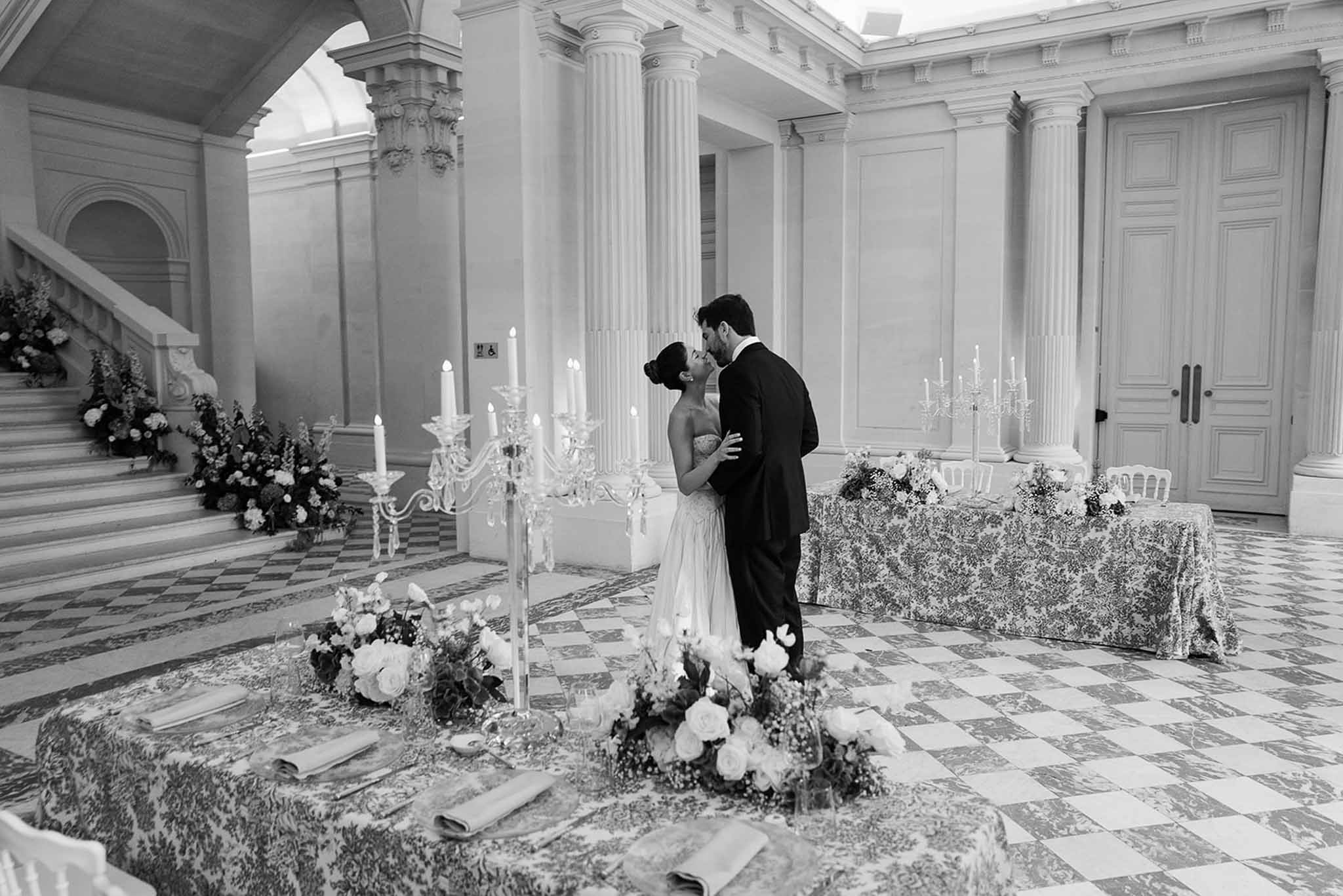
Symbolic Ceremonies: What They Are and Why Most Couples Choose Them
A symbolic ceremony is a fully personalised, non-legal wedding celebration held at the venue, and approximately 80 to 90% of international couples marrying in France choose one rather than completing the full French legal process. The ceremony has no required format, no mandated language, and no restrictions on content. The couple designs every element: vows, readings, music, rituals, and structure. This freedom is both its appeal and its challenge. What a symbolic ceremony involves, how to structure one, and how to find the right celebrant, as part of our complete guide to getting married legally in France. For a broader view of every step involved, see the complete French destination wedding planning resource.
Key Takeaways
- 80 to 90% of foreign couples in France hold a symbolic ceremony at the venue rather than a full French civil marriage. They typically marry legally at home before or after the trip.
- A symbolic ceremony has no legal standing in France, but it holds the same meaning for the couple and guests, and is the event everyone attends and remembers.
- The ceremony can be designed from scratch: custom vows, chosen readings, any language, any ritual, any length. There are no legal restrictions.
- Professional celebrants in France charge €800 to €3,000 and typically include pre-wedding consultations, script writing, a rehearsal, and the ceremony itself.
- A typical symbolic ceremony runs 30 to 75 minutes depending on the number of readings, musical interludes, and whether the ceremony is bilingual.
What Is a Symbolic Wedding Ceremony?
A symbolic ceremony is a personalised wedding celebration that is not legally binding under French law. It takes place at the couple's chosen venue, not at the mairie, and is conducted by a celebrant, officiant, or trusted friend rather than a French civil official. Because it has no legal requirements, every element is customisable: the couple writes their own vows, selects readings, chooses music, incorporates rituals from their own cultures or traditions, and decides the structure and length of the ceremony. The ceremony can be in any language or combination of languages. It can be religious, secular, spiritual, or entirely personal. There is no prescribed format and no restrictions on content. For international couples, the symbolic ceremony is almost always the centrepiece of the wedding day. It is the moment their guests witness, the event the photographer captures, and the experience that defines the celebration.
Why Do Most International Couples Choose a Symbolic Ceremony?
The primary reason is practical: the French legal marriage process requires substantial paperwork, a dossier de mariage submitted to the local mairie, sworn translations of every document, a 30-to-40-day residency connection, publication of banns, and a pre-wedding interview, all conducted in French. For UK couples post-Brexit, the process includes a CNI, FCDO apostille, and additional documentation that takes 4 to 5 months to complete sequentially. For US couples, the absence of a certificat de coutume from the Embassy adds a further layer of complexity and cost. Marrying legally at home and holding a symbolic ceremony in France eliminates this entire process. The couple arrives in France already legally married and focuses entirely on the celebration. The second reason is creative: a symbolic ceremony offers complete freedom to design the most personal, meaningful ceremony possible, without the fixed legal format of the civil ceremony at the mairie. The French civil ceremony requires the maire to read specific Civil Code articles in French, with no option for personal vows or customised content.
| Factor | Civil Ceremony (Mairie) | Symbolic Ceremony (Venue) |
|---|---|---|
| Legal status | Legally binding under French law | No legal standing. Marry legally at home or at the mairie separately. |
| Location | Must take place at the mairie in the commune | Anywhere: venue gardens, chapel, terrace, beach, indoors |
| Officiant | The maire or adjoint (no choice) | Professional celebrant, religious officiant, or trusted friend |
| Language | French only. Interpreter at couple's expense if needed. | Any language. Bilingual ceremonies common. |
| Duration | 15 to 30 minutes | 30 to 75 minutes (fully customisable) |
| Personalisation | Minimal. Fixed legal text read by the officier d'etat civil. | Complete freedom: personal vows, readings, rituals, music |
| Guest capacity | Limited by mairie room size (often 20 to 40) | No limit beyond venue capacity |
| Cost | Free (the ceremony itself) | €800 to €3,000 for a professional celebrant |
| Paperwork required | Full dossier de mariage, CNI/apostille, sworn translations | None |
| What 80-90% of international couples choose | Legal at home + symbolic in France | The main celebration at the venue |
What Is the Typical Structure of a Symbolic Ceremony?
A symbolic ceremony in France typically runs 30 to 75 minutes and follows a flexible structure that the couple designs with their celebrant. A streamlined ceremony with vows and rings takes 30 to 40 minutes, while a ceremony with multiple readings, musical interludes, and bilingual delivery runs 45 to 75 minutes. The duration depends on the number of readings, musical interludes, and whether the ceremony is conducted bilingually. For outdoor ceremonies in southern France between June and September, 30 to 45 minutes is the recommended maximum to account for heat and guest comfort. Based on the hundreds of destination weddings featured on French Wedding Style, the most common structure flows through ten stages that build emotional momentum from the processional to the recessional. The couple and celebrant work together in the weeks before the wedding to finalise the order, content, and timing of each element.
- Guest arrival and seating (15 minutes before): background music sets the atmosphere. Front rows reserved for immediate family. Officiant announces the ceremony is about to begin.
- Processional: in French tradition, the groom enters accompanied by his mother (not standing at the altar waiting, as in Anglo-American convention), followed by the bride with her father. Bridesmaids and groomsmen walk in pairs. Flower children scatter petals.
- Officiant's welcome: introduction, acknowledgment of absent loved ones (particularly meaningful at destination weddings where some guests cannot travel), and the couple's story.
- Readings and speeches: friends or family deliver chosen readings (poetry, prose, personal texts) or short speeches. Musical performances may be interspersed.
- Personal vows: each partner reads their vows, typically 90 seconds to 2 minutes per person (200 to 300 words). This is the emotional centrepiece of the ceremony.
- Declaration of intent: the officiant poses a formal question ("Do you take [name] to be your husband/wife?"). Each partner responds.
- Ring exchange: best man or designated person presents the rings. Soft instrumental music often accompanies this moment.
- Officiant's conclusion: final words reflecting on the commitment made.
- Pronouncement and kiss: the officiant formally presents the couple as married.
- Recessional: the couple walks back down the aisle to celebratory music. Petal toss or confetti. A brief stop midway and at the end for photographs.
How Do Bilingual Ceremonies Work?
Destination weddings in France frequently involve guests who speak different languages, and managing the bilingual element is one of the most important practical decisions in ceremony design. The dual officiant model pairs the main celebrant in one language with a second person (often a bilingual friend or the wedding planner) providing the equivalent in the other language, alternating throughout to keep the ceremony flowing rather than translating every line. The hybrid approach conducts the ceremony primarily in one language with key moments (vows, declaration of intent, pronouncement) delivered in both. Each partner may read their vows in their own language, though this doubles the vow duration and should be factored into the overall ceremony timing. Printed bilingual programmes help guests follow along regardless of which language is being spoken at any moment, and are a simple, effective solution that does not add ceremony length.
What Should You Look for in a Celebrant?
Professional celebrants in France charge €800 to €3,000 depending on experience, location, and the scope of service included. A standard celebrant package includes 2 to 3 pre-wedding consultations (usually by video call for destination couples), collaborative script writing, a ceremony rehearsal at the venue, and the ceremony itself. The celebrant market in France is unregulated, which means quality varies significantly and vetting is essential. Ask to see videos or testimonials from previous ceremonies, not just a portfolio of staged photographs. Confirm whether the celebrant has experience with bilingual ceremonies if your wedding requires one. Discuss their approach to personalisation: do they write a tailored script based on the couple's story, or do they work from a standard template? A celebrant who asks detailed questions about the couple's relationship during the initial consultation is usually a better fit than one who offers a fixed ceremony package.
Red flags include celebrants who cannot provide references from recent weddings, who offer a single fixed ceremony format without customisation, or who are unavailable for a rehearsal at the venue. The ceremony is the emotional centrepiece of the wedding day. Investing in a celebrant who treats it as a collaborative creative process, rather than a recitation of pre-written content, makes a significant difference to how the moment feels. For help finding the right person, see our guide to finding a celebrant or officiant in France.
Can a Friend Officiate Instead of a Professional?
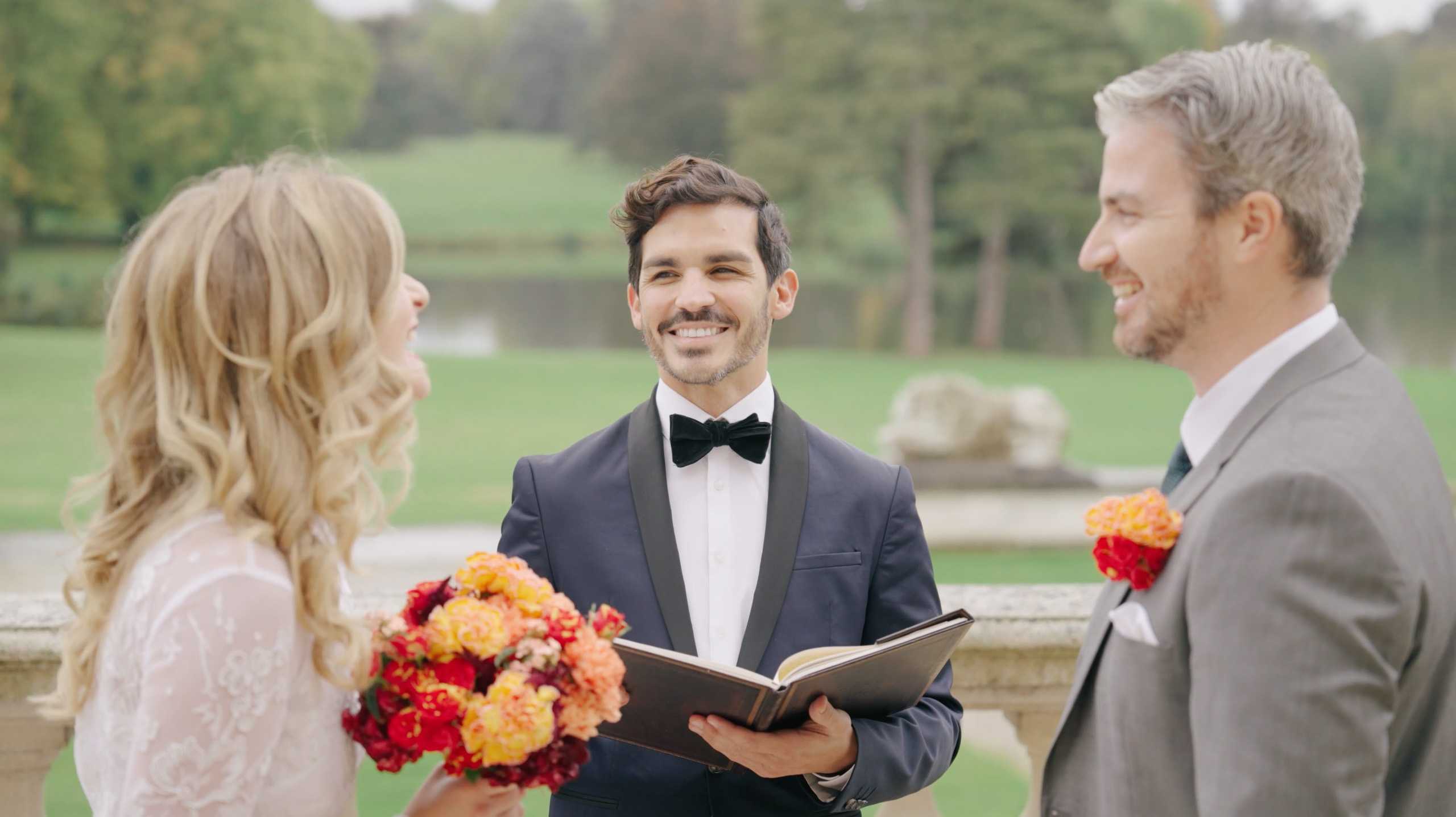
In France, no licence or certification is required to officiate a symbolic ceremony because the ceremony has no legal standing. Any person the couple trusts can conduct it. This makes friend-officiated ceremonies common and, when done well, deeply personal. The risk is that an inexperienced friend underestimates the preparation required. A symbolic ceremony that feels spontaneous and natural on the day is the product of weeks of scripting, rehearsal, and timing decisions. A friend who agrees to officiate in January and writes the script the week before the wedding will almost certainly deliver a ceremony that lacks structure, pacing, and emotional coherence. If a friend officiates, treat the role with the same seriousness as hiring a professional: begin preparation 3 to 4 months out, write a full script together, rehearse at the venue, and plan for the practical elements (microphone, positioning, timing with the photographer). The best friend-officiated ceremonies are those where the friend brings genuine knowledge of the couple's relationship and invests real time in crafting something worthy of the moment.
The Assumptions That Derail Symbolic Ceremony Planning
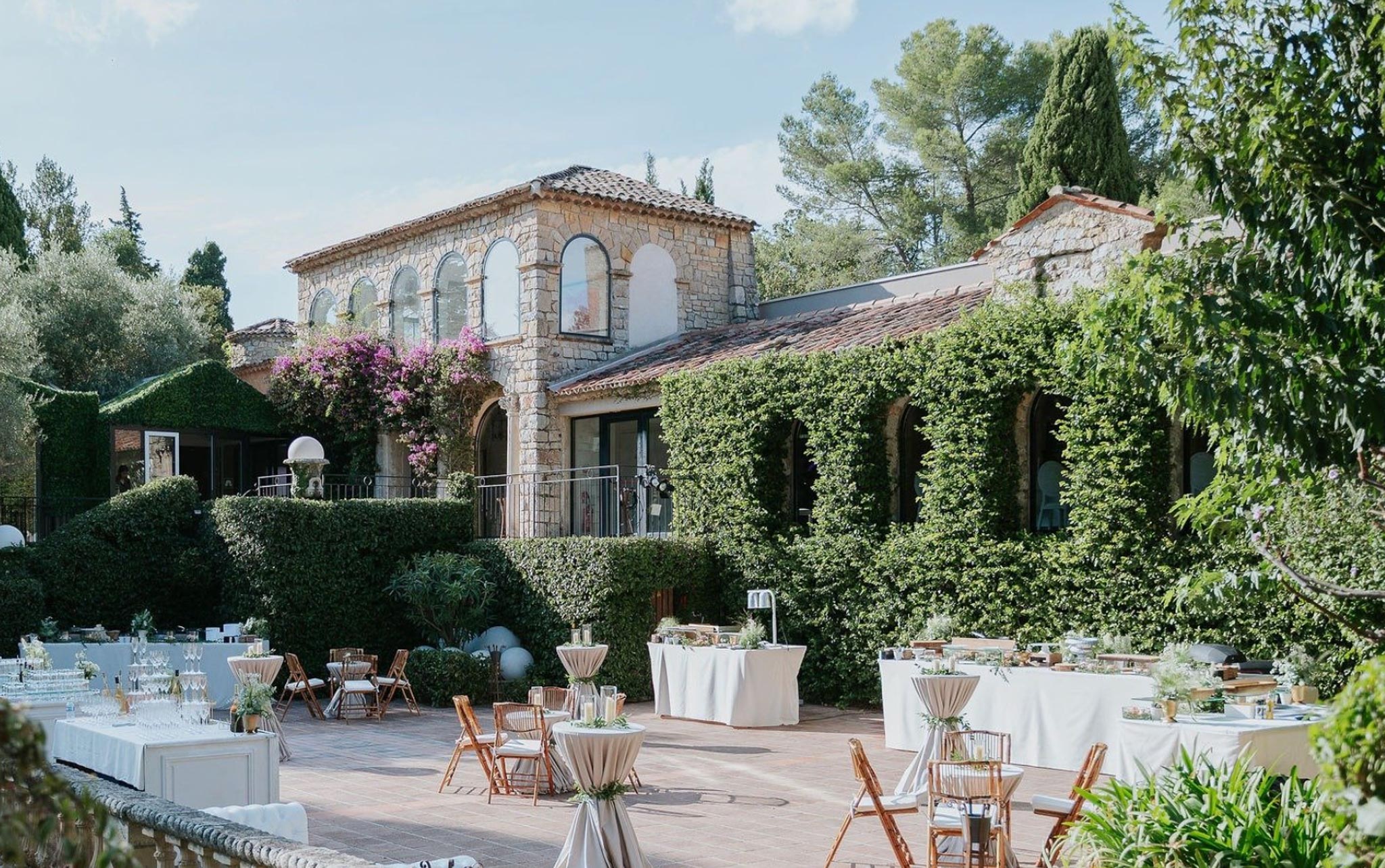
The miscalculation that reshapes budgets is not preparing enough. The total freedom of a symbolic ceremony creates a paradox: without a prescribed format, every decision falls on the couple, and that volume of decisions is larger than most expect. Vow writing alone takes 2 to 4 weeks if each partner wants something genuine rather than generic. Reading selection, music cues, processional order, bilingual transitions, and ritual choices each require discussion with the celebrant. Couples who wait until the final month to address ceremony content produce a ceremony that feels assembled rather than designed. Professional celebrants typically begin the creative process 3 to 4 months out, working through multiple script drafts before the final version. Start ceremony planning at least 3 months before the wedding, whether working with a professional celebrant or a friend officiant, and treat it with the same seriousness as venue selection or catering. See how this couple brought this to life at Château Grimaldi in Provence.
Where this gets worse is making the ceremony too long. A 75-minute ceremony with 6 readings, 3 musical interludes, and bilingual delivery tests the patience of even the most invested guests, particularly at an outdoor ceremony in southern France where heat and sun are factors. The strongest ceremonies run 30 to 45 minutes. Explore our guide to ceremony backdrop ideas for French wedding venues for the full picture. If the ceremony includes bilingual elements, plan for 45 to 60 minutes maximum. Every reading and musical piece should earn its place.
The assumption that does the most damage is worrying that a symbolic ceremony will not feel "real" because it is not legally binding. Across the destination weddings featured on French Wedding Style, couples who hold symbolic ceremonies consistently report that the emotional intensity matches or exceeds their expectations. The ceremony feels real because the vows are personal, the setting is chosen with intention, and the people present have travelled to be there. We cover this in our guide to choosing the right region and venue setting for your ceremony in France. The legal paperwork is administrative. The ceremony is where the commitment lives.
Related Articles
- Civil ceremony in France: what happens at the mairie
- Documents you need to get married in France
- Finding a celebrant or officiant in France
- UK couples getting married in France
Frequently Asked Questions
Is a symbolic ceremony legally binding in France?
A symbolic ceremony has no legal standing in France. Only the civil ceremony at the mairie creates a legally recognised marriage. Most international couples (80 to 90%) marry legally at home and hold the symbolic ceremony in France as the main celebration. The symbolic ceremony is the event that defines the day for everyone present.
How long does a symbolic ceremony last?
A typical symbolic ceremony runs 30 to 75 minutes. A streamlined ceremony with vows and rings takes 30 to 40 minutes. A ceremony with multiple readings, musical interludes, and bilingual delivery runs 45 to 75 minutes. For outdoor ceremonies in southern France, 30 to 45 minutes is the recommended maximum to account for heat and guest comfort.
How much does a celebrant cost in France?
Professional celebrants in France charge €800 to €3,000. The fee typically includes 2 to 3 pre-wedding consultations, collaborative script writing, a venue rehearsal, and the ceremony. Prices vary by experience, location, and whether the celebrant offers bilingual services. Book 6 to 12 months ahead for peak summer dates in popular regions.
Can a friend officiate a symbolic ceremony in France?
Yes. No licence or certification is required because the ceremony has no legal standing. Any trusted person can officiate. The risk is underestimating the preparation needed. Treat the role seriously: begin scripting 3 to 4 months out, rehearse at the venue, and plan for practical elements including microphone and positioning.
Will a symbolic ceremony feel as meaningful as a legal one?
Couples who hold symbolic ceremonies consistently report that the emotional intensity matches or exceeds their expectations. The ceremony feels real because the vows are personal, the setting is intentional, and the guests have travelled to be there. Many couples describe the symbolic ceremony as more meaningful than the legal one precisely because every element was chosen rather than prescribed.
What is the difference between the French processional and the Anglo-American tradition?
In French tradition, the groom enters accompanied by his mother, not standing alone at the altar waiting for the bride. The bride then enters with her father. This differs from the Anglo-American convention where the groom waits at the front. International couples may follow either tradition or blend both. Discuss the processional order with your celebrant during ceremony planning.
To explore the legal alternative, read our guide to the French civil ceremony at the mairie. For help writing your vows, see the ceremony section of our legal and ceremony planning guide.
Explore Every Guide in This Chapter
Deep-dive into each topic covered above.