
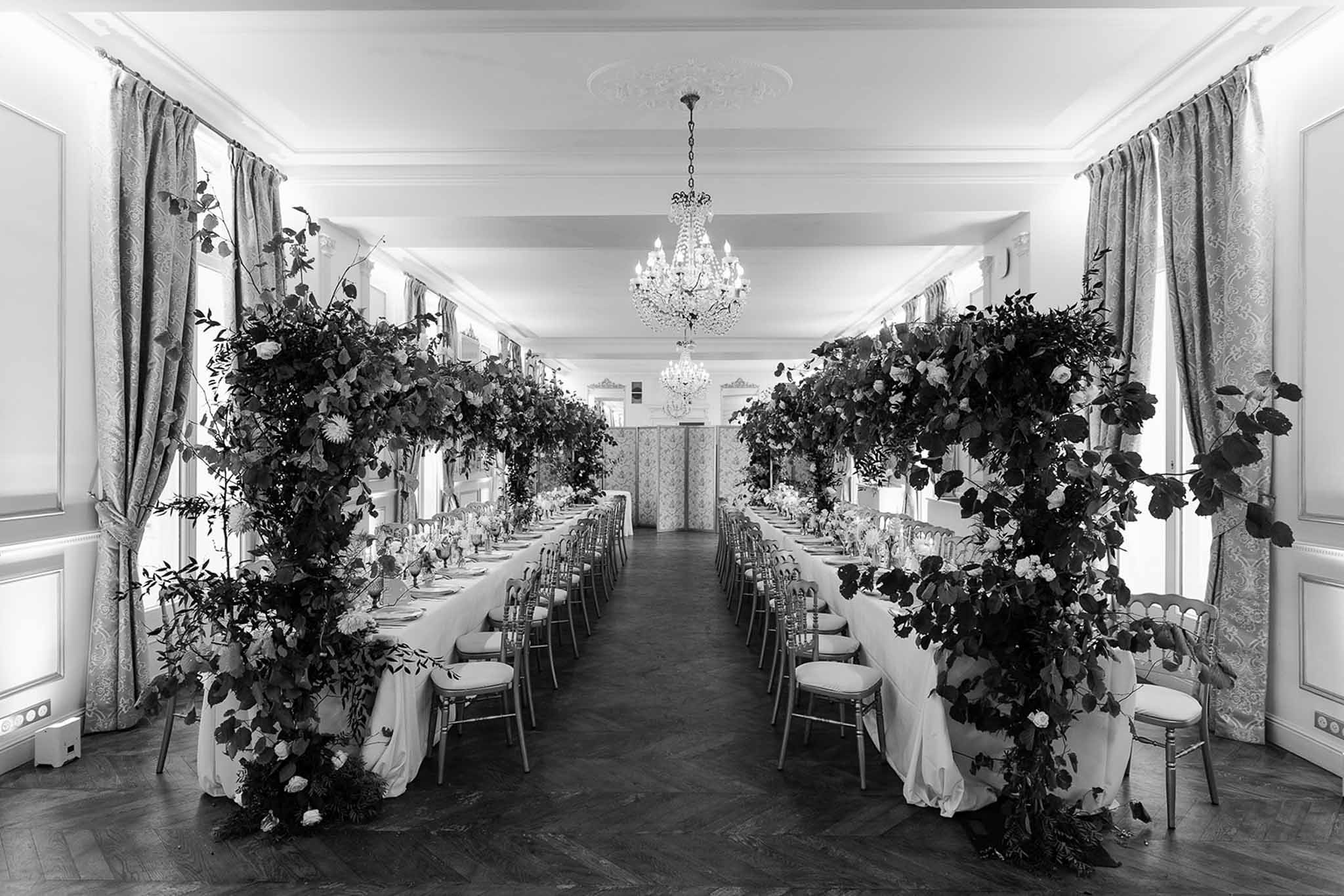
Styling a wedding in France starts with a question most design guides skip: what does the venue look like without anything added? A courtyard of warm stone catching late afternoon light. A dining room where a five-metre ceiling draws the eye upward to painted beams. A garden where old roses climb a crumbling wall. The answer determines everything that follows, because the French approach to wedding design works with the setting rather than layering over it.
This chapter covers ten styling guides, from the philosophy that separates French weddings from their Anglo-American counterparts through four style directions, colour, fashion, tables, ceremony spaces, and lighting. It is part of our complete guide to planning a wedding in France.
The French Approach to Wedding Design
The difference is not minimalism. It is priority. French couples spend proportionally less on decoration and proportionally more on food, wine, and the three-day weekend that defines how guests experience the celebration. The styling that remains is chosen to complement the setting, not compete with it.
In practice, this means loose garden roses in a stone urn rather than a structured floral wall. Linen napkins rather than satin chair covers. Candles in brass holders rather than colour-changing uplighters. A colour palette drawn from the venue's stone tone and the season's natural light rather than a mood board assembled from five different weddings on five different continents.
This is not a rule against decoration. It is a principle of proportion. A Loire Valley château with coffered ceilings and original parquet needs less. A converted barn with clean stone walls invites more. A modern loft space in Paris might call for bold architectural arrangements that would overwhelm a rural property. The venue sets the brief. The styling fulfils it. The full aesthetics guide explains the philosophy and the practical reasons behind it.

“The biggest styling mistake I see is couples who bring too much to a beautiful French venue. They spend thousands on floral arches and draping, then the stone walls, the garden, the light disappear behind it all. The weddings that photograph best are the ones where the couple trusted the space and added just enough to make it feel like theirs.”
Four Style Directions for French Venues
Four distinct design directions work across French venues. Each starts from the same principle, letting the setting carry weight, but arrives at a different visual identity.
Classic French. Cream linen, garden roses, candlelight, vintage glassware, calligraphy place cards. This is the style most associated with formal château celebrations. The classic French style guide covers table settings, flower choices, and the details that separate the look from generic "vintage."
Provencal rustic. Terracotta, olive wood, dried herbs, mismatched ceramics, and the earthy tones of southern stone. The Provencal guide covers which materials genuinely survive 35°C heat and how to stay authentic without the novelty shop version of Provence.
Modern minimalist. Clean lines, monochrome palettes, geometric arrangements, and the tension between contemporary restraint and historical architecture. The minimalist style guide explains which venue types suit the look and how to keep clean design from feeling cold.
Boho chic. The French version looks nothing like a UK festival wedding. Flowing fabrics, wild flowers, outdoor seating on rugs and cushions, but with structure underneath. The French boho guide covers the practical challenges of outdoor styling in the French climate.
Scroll →
| Style | Best Venue Types | Key Materials | Budget Impact |
|---|---|---|---|
| Classic French | Châteaux, manoirs, formal estates | Cream linen, garden roses, brass, calligraphy | Moderate (flowers + stationery) |
| Provencal rustic | Mas, bastides, domaines, barns | Terracotta, olive wood, dried herbs, ceramics | Lower (local sourcing) |
| Modern minimalist | Châteaux with clean interiors, lofts, galleries | Single-tone palette, geometric vessels, minimal greenery | Moderate (fewer items, higher quality) |
| Boho chic | Outdoor-focused: gardens, meadows, vineyards | Wild flowers, flowing fabric, cushions, lanterns | Variable (venue setup dependent) |
Which Colours Work Against French Architecture?
Colour is the decision that connects every other styling choice. Flowers, linen, stationery, bridesmaid dresses, and table details all flow from the palette. In France, the palette starts with the walls.
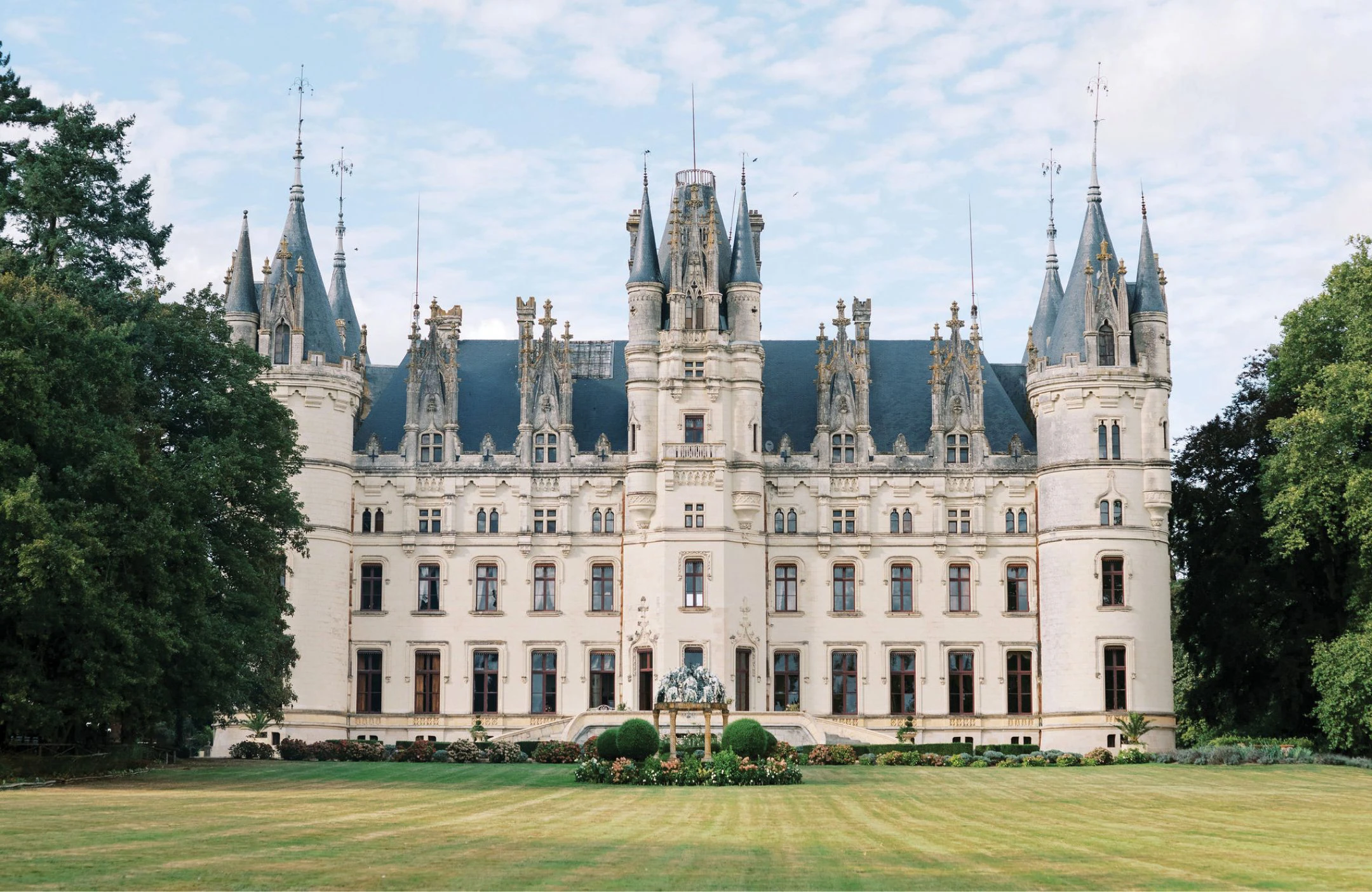
French venue stone varies dramatically by region. Loire Valley tuffeau is cool white. Provence stone runs warm ochre to golden honey. Dordogne limestone sits in golden to amber tones. Normandy granite reads grey-blue. The general principle: warm palettes (blush, terracotta, soft gold, sage green) harmonise with warm-toned stone. Cool palettes (lavender, dusty blue, silver) complement grey and white stone. Mixing warm against cool, a terracotta scheme inside a grey Normandy manor, for instance, creates tension that reads as a clash in photographs.
Golden hour light complicates everything in the best way. Fifteen minutes before sunset, blush goes warmer, blue reads greyer, white turns cream, green intensifies. If your ceremony is timed for golden hour, your colour choices will shift. The colour palette guide includes season-by-season recommendations for each major stone type.
How Lighting Transforms the Evening
After sunset, lighting replaces architecture as the primary visual element. The stone that carried the day disappears. What you see instead is what you light: candles on a long table, festoon bulbs strung across a courtyard, fairy lights woven through the branches of a plane tree.
Festoon lights (the large, exposed-filament bulbs) create warmth and structure across outdoor spaces. Fairy lights work at shorter distances, wrapped around columns or threaded through foliage. Candles, the lowest-cost and most atmospheric option, need attention to French ERP fire safety regulations: no naked flame within 50cm of curtains, fabric, or timber beams. Some châteaux prohibit all open flame. Others permit table candles but not floor-standing candelabra.
Cost ranges: festoon installation runs €800 to €3,000, fairy lights €400 to €1,500, candles €200 to €600 for a full table setting. The complete lighting guide covers fire regulations by venue type, LED alternatives, and the common mistakes that flatten an evening. For outdoor venue celebrations, lighting is not a finishing touch. It is the design.
Ask your venue for a photograph of the reception space after dark, with and without existing lighting. This single image will tell you more about what you need than any mood board. If the space looks warm with the permanent fixtures alone, you may need only candles and a few accent strings. If it looks flat, budget for a professional lighting installation. Wedding decor specialists in France often handle lighting as part of their service.
The Ten Guides in This Chapter
What makes French wedding design different
The foundational guide. Why French couples approach styling differently, how the budget shifts from decoration to food and wine, and why international couples most often fail by adding rather than subtracting.
Classic French style guide
Cream linen, garden roses, and candlelight. Palette, materials, table settings, and stationery for formal château celebrations.
Provencal rustic style guide
Terracotta, olive wood, and herbs that survive the heat. Local sourcing across Provence and the south.
Modern minimalist style guide
Clean contemporary design against old architecture. Which venue types suit the look, and how to keep minimalism from feeling cold.
French boho style guide
The refined French version. Practical challenges of outdoor styling and furniture hire at boho-friendly venues in France.
Colour palettes by stone type and season
Stone-tone mapping by region, golden hour colour behaviour, and ready-to-use palette combinations.
French bridal designers
Laure de Sagazan, Rime Arodaky, and three more. Price ranges (€2,500 to €6,000), stockists outside Paris, and trunk show schedules.
Château table decor
Table layout for tall rooms, centrepiece scale, candelabra rules, and the visual tricks that bring a grand space down to human proportion.
Ceremony backdrops
When to build a ceremony arch and when to let the stone wall, garden, or vineyard row speak for itself.
Lighting guide
Festoon, fairy lights, candles, and lanterns. Costs, fire safety, LED alternatives, and the most underestimated design decision at a French wedding.
Related Chapters
- Planning a Destination Wedding in France: The Complete Guide (pillar page)
- French Wedding Traditions and Culture: the customs and ceremony traditions that influence every design decision
- Finding Your Venue: your venue type determines your entire design direction
- Building Your Vendor Team: finding the florists, decor specialists, and lighting professionals who bring your design to life
Frequently Asked Questions
What is the French approach to wedding styling?
French wedding design starts with the venue. The stone, the ceiling height, the courtyard proportions, and the natural light do the visual work. Decoration fills gaps rather than covering surfaces. The budget shifts toward food, wine, and the weekend experience. In practice: loose garden roses rather than architectural walls, linen rather than satin, candles rather than uplighters, and a palette drawn from the stone and the season.
How do I choose a colour palette that works with a French venue?
Start with the stone. Loire tuffeau is cool white. Provence stone is warm ochre. Dordogne limestone runs golden. Normandy granite reads grey-blue. Warm palettes (blush, terracotta, gold) harmonise with warm stone. Cool palettes (lavender, dusty blue, silver) complement grey and white stone. The full colour palette guide maps stone tones against seasonal recommendations.
Do I need a ceremony arch at a French venue?
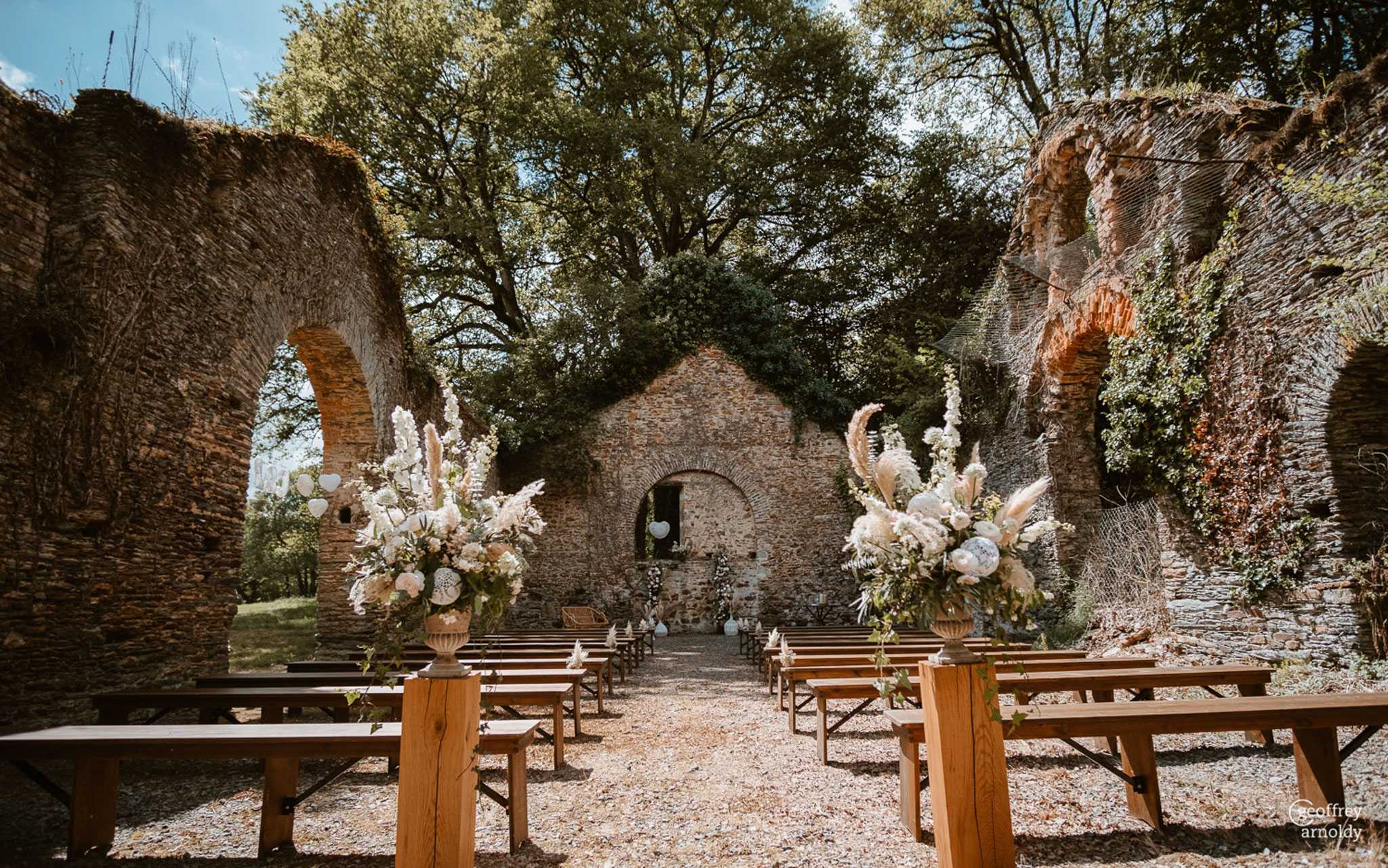
Often, no. French venues provide ceremony backdrops that arches are designed to replace: stone chapel walls, walled garden entrances, vineyard rows. Adding a structure in front of these features doubles the visual information. If the space is a blank lawn, build an arch. If it is a 300-year-old stone wall covered in climbing roses, step back.
What are the fire safety rules for candles and lighting?
French ERP regulations require no naked flame within 50cm of curtains, fabric, or timber beams. Candles must sit in non-combustible holders. Electrical installations need a certificat de conformite. Some historic venues prohibit all open flame. Confirm restrictions in writing at least three months before the wedding. The lighting guide covers costs and regulations by venue type.
Which French bridal designers should I consider?
Laure de Sagazan (€2,500 to €5,000) creates flowing, vintage-inflected gowns. Rime Arodaky (€3,000 to €6,000) designs modern, architectural pieces. Delphine Manivet offers romantic Parisian silhouettes. Cymbeline provides classic French bridal with wide retail availability. All have stockists outside France, with trunk shows in Paris and London offering the widest selection.
Explore Every Guide in This Chapter
Deep-dive into each topic covered above.