
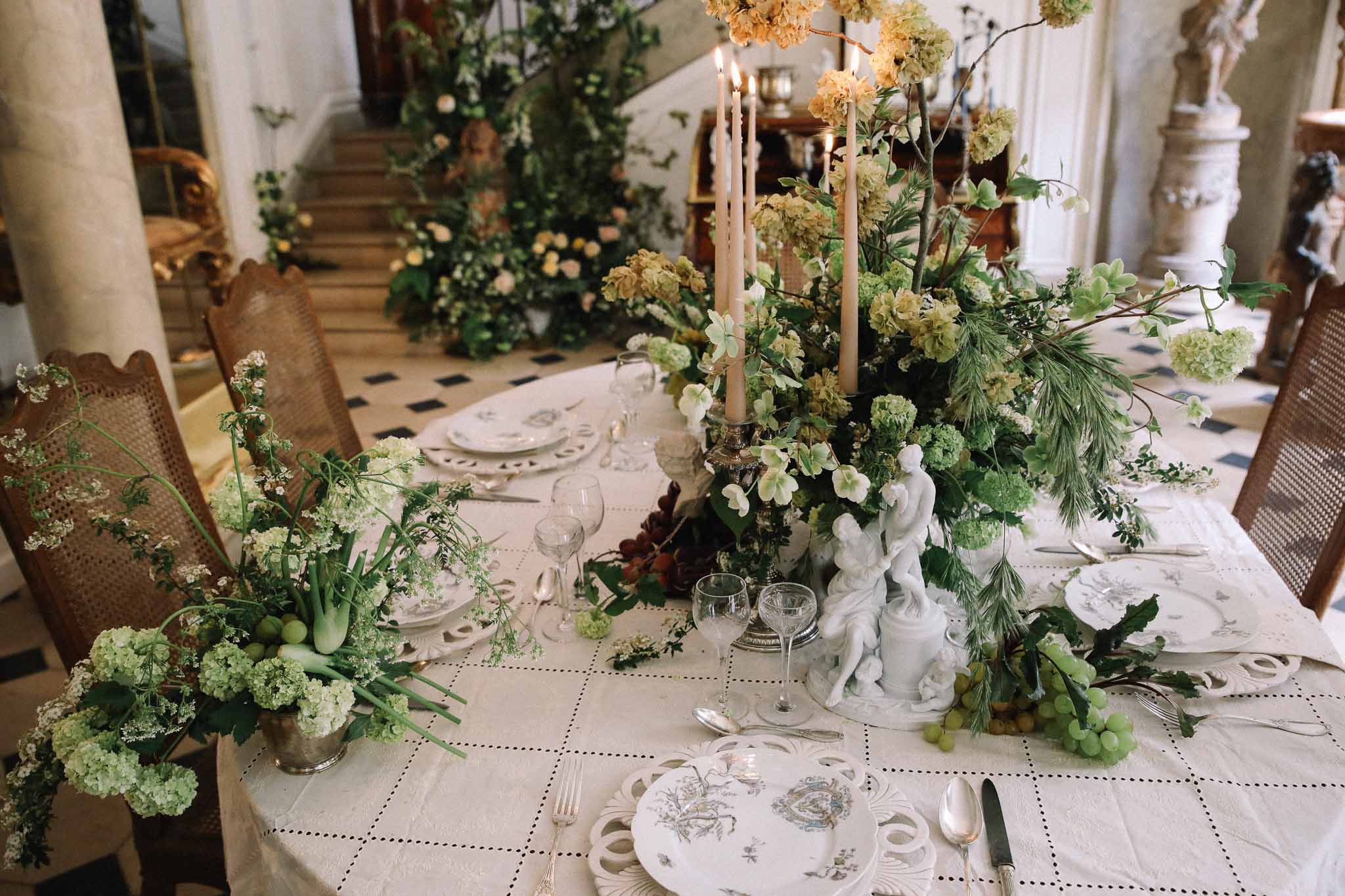
French Wedding Flowers: Seasonal Blooms by Region
Every French region grows on its own calendar. Peonies that flood Parisian ateliers in late May have already faded in Provence by the time your June ceremony arrives. Lavender that photographs in deep violet across the Luberon in early July is still green and closed in Normandy.
The flowers available for your wedding depend not just on the month but on where in France you are getting married, the altitude of your venue, and whether the summer has arrived early or late. This is the most visual of all your planning decisions, and it starts with understanding what the land actually produces. Across the destination weddings featured on French Wedding Style, the couples who achieve the most natural, photogenic floristry are the ones who design around their region and their month rather than importing a vision from another climate. For the full picture on every floral element of your celebration, see our complete wedding flowers chapter. For a broader view of every step involved, see the full planning guide for destination weddings in France.
Key Takeaways
- Peonies are available May to mid-June only. Garden roses (David Austin varieties like Juliet, Keira, Patience) run June through September and offer a similar fullness with far greater reliability.
- Provence runs 3 to 4 weeks ahead of northern France. A flower that peaks in June in the south may not appear until late June or July in Normandy or the Loire.
- Hydrangeas collapse in sustained heat above 30°C. For southern summer weddings, substitute with dahlias, zinnias, lisianthus, or protea.
- Seasonal flowers cost 30 to 50% less than imported out-of-season stems. A June peony bouquet in Paris costs roughly half what it would in October.
- French florists quote per arrangement, not per stem. Share your venue photographs and ceremony timing rather than a Pinterest board of individual flowers.
What Flowers Are in Season for Each Month in France?
The French growing season opens properly in April with ranunculus, anemones, and the first narcissus. It peaks between June and September when the widest variety of garden flowers, field blooms, and cultivated stems overlap. By November, the season narrows to foliage, dried elements, berries, and imported stems. The table below maps what is genuinely available, region by region, across the wedding calendar. "Available" means grown in France or sourced within the country at competitive prices. Out-of-season stems can always be imported from the Netherlands, Kenya, or Colombia, but they arrive without scent, often without the softness of a field-grown bloom, and at a significant markup. Note on chrysanthemums: traditional round chrysanthemums (chrysanthèmes boule) are associated with Toussaint (All Saints' Day, 1 November) and cemetery visits in France. Decorative varieties, spider mums, and modern cultivars do not carry the same connotation. Discuss your preference openly with your florist. They will know which varieties work for wedding settings and can suggest alternatives if needed.
Scroll →
| Month | Provence | Loire Valley | Paris / Île-de-France | Normandy | Key Blooms |
|---|---|---|---|---|---|
| April | Ranunculus, anemones, freesia | Narcissus, tulips, hellebores | Tulips, ranunculus, lily of the valley | Narcissus, muscari, blossom branches | Ranunculus, anemones, tulips |
| May | Peonies (early), garden roses (first flush), iris | Peonies (mid-month), lilac, wisteria | Peonies, muguet (lily of the valley), lilac | Lilac, apple blossom, cow parsley | Peonies, lilac, lily of the valley |
| June | Lavender (late), garden roses, jasmine | Peonies (final weeks), roses, sweet peas | Garden roses, sweet peas, delphiniums | Roses (first flush), foxgloves, sweet peas | Garden roses, sweet peas, peonies (north) |
| July | Lavender (peak), sunflowers, dahlias (early) | Hydrangeas, delphiniums, cornflowers | Dahlias (early), lisianthus, scabiosa | Hydrangeas (peak), agapanthus, cornflowers | Lavender, hydrangeas, dahlias |
| August | Dahlias (peak), zinnias, sunflowers | Dahlias, gladioli, cosmos | Dahlias, zinnias, rudbeckia | Dahlias, gladioli, late hydrangeas | Dahlias, zinnias, sunflowers |
| September | Dahlias (late), grasses, sedum | Late roses, dahlias, amaranth | Chrysanthemums (early), asters, dahlias | Asters, sedum, rosehips | Dahlias, asters, ornamental grasses |
| October | Foliage, rosehips, dried lavender | Autumn foliage, chrysanthemums, berries | Chrysanthemums, autumn foliage, heather | Foliage, berries, dried seed heads | Foliage, chrysanthemums, berries |
| Nov to Mar | Mimosa (Jan to Feb), hellebores, evergreens | Evergreens, dried elements, amaryllis | Imported stems, evergreens, winter berries | Evergreens, holly, dried grasses | Evergreens, hellebores, imported stems |
How Does Regional Climate Affect Flower Availability?
France spans three distinct climate zones, and those zones dictate what grows, when it blooms, and how long it holds. Provence and the Côte d'Azur sit in the Mediterranean zone: hot, dry summers, mild winters, and an early spring that begins in March. The Loire Valley, Paris, and Burgundy occupy the oceanic-continental middle: moderate summers, cooler springs, and a growing season that runs roughly four weeks behind the south. Normandy, Brittany, and the north sit in the Atlantic zone: cool, damp summers, mild but grey winters, and flowers that peak later and hold longer in the absence of scorching heat. This means a couple getting married at a southern French venue in late June will have lavender, jasmine, and the last garden roses of the first flush. The same couple getting married the same weekend at a venue in Normandy will find roses just opening, sweet peas at their peak, and foxgloves in full height. Neither is better.
Altitude matters too. A château at 400 metres in the Luberon runs two weeks behind a bastide at sea level near Marseille. A domaine in the Pyrenean foothills has a shorter growing window than a property on the Languedoc plain. Share your venue's exact location with your florist, not just the region.
What Blooms in Provence vs the Loire vs Normandy?
Provence is the region of scent and texture. Lavender fields produce that deep purple-violet from late June through mid-July. Olive branches, rosemary sprigs, and dried grasses grow wild on most properties. Garden roses from local growers around Grasse and the Var produce intensely fragrant blooms in coral, apricot, cream, and deep pink. Jasmine flowers from June and fills the air at evening ceremonies. Provençal arrangements tend toward warm, desaturated tones: terracotta, sage, blush, cream, and deep plum, drawn from the colours of the landscape itself. The Loire Valley is a garden region. Château grounds maintain formal rose gardens, wisteria-covered pergolas, and long herbaceous borders that produce foxgloves, delphiniums, lupins, and sweet peas through the summer months. The palette here runs cooler and softer: blush, lavender, soft white, pale blue, and the silver-green of Loire Valley wisteria foliage.
Florists in the Loire often work directly from château gardens, cutting blooms the morning of the wedding. The peony season here runs later than Provence and peaks in the first two weeks of June. If peonies are non-negotiable, a Loire Valley château in early June gives you the best chance.
Normandy produces an entirely different palette. Cool light, damp air, and rich soil create conditions for hydrangeas (the signature Norman flower), apple blossom in spring, cow parsley along every lane, and fat garden roses that hold their shape longer in the absence of intense heat. Normandy wedding flowers tend toward soft whites, pale pinks, and muted greens. The region also grows exceptional dahlias from August onwards, in varieties from plate-sized dinner plates to tight pompons in burgundy, peach, and wine. For couples planning a Normandy wedding venue, late summer offers the widest seasonal palette.
Which Flowers Survive 35°C Heat in Southern France?
Southern France regularly reaches 35°C and above between late June and mid-September. At these temperatures, certain popular wedding flowers collapse within hours of being arranged. Hydrangeas are the most consistent casualty. They wilt rapidly in dry heat, even when conditioned properly, and by mid-afternoon in a Provençal courtyard they look exhausted. Peonies past their peak will shatter. Sweet peas droop. Ranunculus is a spring flower that has no business being at an August wedding in the south. The flowers that hold in serious heat are the ones adapted to Mediterranean conditions or bred for resilience. Dahlias are the workhorse of summer weddings in the south, available in every colour from blush to burgundy to flame orange, with forms ranging from tight balls to loose, dinner-plate-sized blooms. Zinnias hold their colour and structure in full sun.
Lisianthus (also called eustoma) produces rose-like blooms in white, cream, pink, and lavender that tolerate heat far better than actual roses. Protea and leucospermum bring architectural shapes and hold without water for hours. Bougainvillea, which grows wild on southern properties, adds vivid magenta, coral, or white and costs nothing if your venue has it on the walls.
Foliage matters as much as flowers in the heat. Olive branches stay fresh in 38°C. Eucalyptus (both silver dollar and seeded varieties) holds its shape and scent. Rosemary and thyme produce texture and fragrance without wilting. The most successful summer arrangements in Provence use 60% foliage and 40% heat-hardy blooms, which also happens to be the most cost-effective ratio. Ask your florist specifically: "Which of these flowers will still look good at 5pm in direct sun?"
How Does Seasonality Affect Your Flower Budget?
As of 2026, flower budgets for French weddings typically range from €1,000 to €3,500 for the florals themselves, with installation (arbours, hanging arrangements, large-scale ceremony pieces) adding 30 to 50% on top. Seasonality is the single biggest lever you have on that number. French florists quote per arrangement, not per stem. This is a fundamental difference from UK and US pricing models. You will receive a quote for "bridal bouquet, 6 bridesmaid bouquets, 12 table centres, ceremony arch, 2 large entrance urns" rather than an itemised stem count. This makes it easier to stay within budget because the florist selects the most cost-effective seasonal stems to achieve the look. Share photographs of your venue, tell them your colour direction, give them your budget, and let them work within the season. The florists who produce the most striking wedding work in France do so by responding to what the month and the region actually offer.
- In-season, locally grown flowers cost 30 to 50% less than imported or out-of-season stems
- A bridal bouquet of garden roses, sweet peas, and jasmine in June costs roughly €120 to €180
- For more on bouquet styles and pricing by region, see our dedicated guide
- The same-sized bouquet using imported peonies in October costs €250 to €400 because the stems are flown in from the southern hemisphere
- Centrepieces follow the same logic
- A table arrangement of dahlias, grasses, and olive branches in September runs €40 to €70 per table
- Replace those dahlias with imported tulips and the price doubles
The exception is out-of-season requests. Asking for peonies at a September wedding or hydrangeas at a July wedding in Aix-en-Provence means importing. Importing means a significant price jump and, often, a visual compromise because shipped flowers rarely have the softness or scent of locally grown stems. The strongest floral designs in France lean into the season rather than fighting it. Our team at French Wedding Style has reviewed hundreds of real wedding galleries, and the arrangements that photograph most compellingly are consistently the ones built from what the month and the region naturally produce.
Related Articles
- Bouquet ideas for a French countryside wedding
- How to source locally grown flowers for a French wedding
- Colour palettes that work with French venue stone
- Ceremony backdrop ideas for outdoor French weddings
- How to choose a wedding florist in France
- Hidden costs that catch international couples in France
- Understanding French wedding aesthetics and design
Frequently Asked Questions
When is peony season in France?
Peony season in France runs from early May to mid-June. In Provence, the first peonies appear in late April and peak in mid-May. In the Loire Valley and Paris, they arrive in mid-May and last until the second week of June. Normandy sees a slightly later season, sometimes extending to late June. After that window, peonies are only available as imports from the Netherlands or southern hemisphere growers at two to three times the local price. If peonies are central to your vision, schedule your wedding within this window or ask your florist about garden roses (Juliet, Keira, Patience) as alternatives with a similar rounded, full-petalled form.
What are the best flowers for a July wedding in Provence?
Lavender is the signature July bloom in Provence, peaking in the first two weeks of the month. Garden roses from local growers around Grasse are in their second flush. Dahlias begin appearing from mid-July. Jasmine is in full flower and adds evening scent. For table arrangements, combine these with olive branches, rosemary, and dried grasses for a palette that belongs to the landscape. Avoid hydrangeas, which collapse in Provençal heat above 30°C, and ranunculus, which is a spring flower not suited to summer conditions in the south.
Are hydrangeas a good choice for a French summer wedding?
Hydrangeas are a strong choice in Normandy and Brittany, where cooler temperatures and higher humidity keep them fresh through July and August. In southern France (Provence, Languedoc, Côte d'Azur), they wilt quickly in temperatures above 30°C and are not recommended for outdoor arrangements during summer months. A florist working in the south will suggest dahlias, lisianthus, or protea as heat-tolerant alternatives with a similar visual volume.
How much do wedding flowers cost in France?
Wedding flower budgets in France typically range from €1,000 to €3,500 for arrangements (bridal bouquet, bridesmaid bouquets, table centres, ceremony pieces). Installation work such as flower arches, hanging arrangements, and large-scale entrance displays adds 30 to 50% on top. Seasonal, locally sourced flowers reduce costs by 30 to 50% compared to imported or out-of-season stems. French florists quote per arrangement rather than per stem, so the final price depends on the scope and scale of your brief rather than specific flower choices.
Can I use wildflowers at my French wedding?
Wild and foraged flowers are increasingly popular in French wedding floristry, particularly in Provence and the Dordogne where meadow flowers, herbs, and wild grasses grow abundantly. Some florists specialise in foraged and locally grown arrangements. Practical limitations include availability (you cannot guarantee specific wildflowers on a specific date), legal restrictions on picking protected species, and the shorter vase life of unculturated stems. The best approach is to work with a florist who grows their own cutting garden or sources from local cooperative growers, supplementing wild elements with cultivated stems that provide reliability and structure.
What flowers work for a winter wedding in France?
Winter weddings in France (November through March) rely on a combination of imported stems, evergreen foliage, and the few winter-flowering plants available locally. Mimosa blooms along the Côte d'Azur from January to February and produces bright yellow clusters with an intense honey scent. Hellebores (Christmas roses) flower from December through February. Amaryllis provides dramatic form in white, red, and pink. Evergreen branches (pine, eucalyptus, bay), berries, dried seed heads, and foraged moss create texture. Imported roses, ranunculus, and anemones from the Netherlands fill colour gaps. Winter floristry costs more per stem but arrangements tend to be smaller, so total budgets often match spring or summer weddings.
Start with our complete guide to wedding flowers in France for every floral decision from florist selection to installation. Browse garden wedding venues across France for properties with grounds that shape the floral design from the start, or explore wedding venues in the south of France where the Provençal palette sets the tone.
Explore Every Guide in This Chapter
Deep-dive into each topic covered above.