
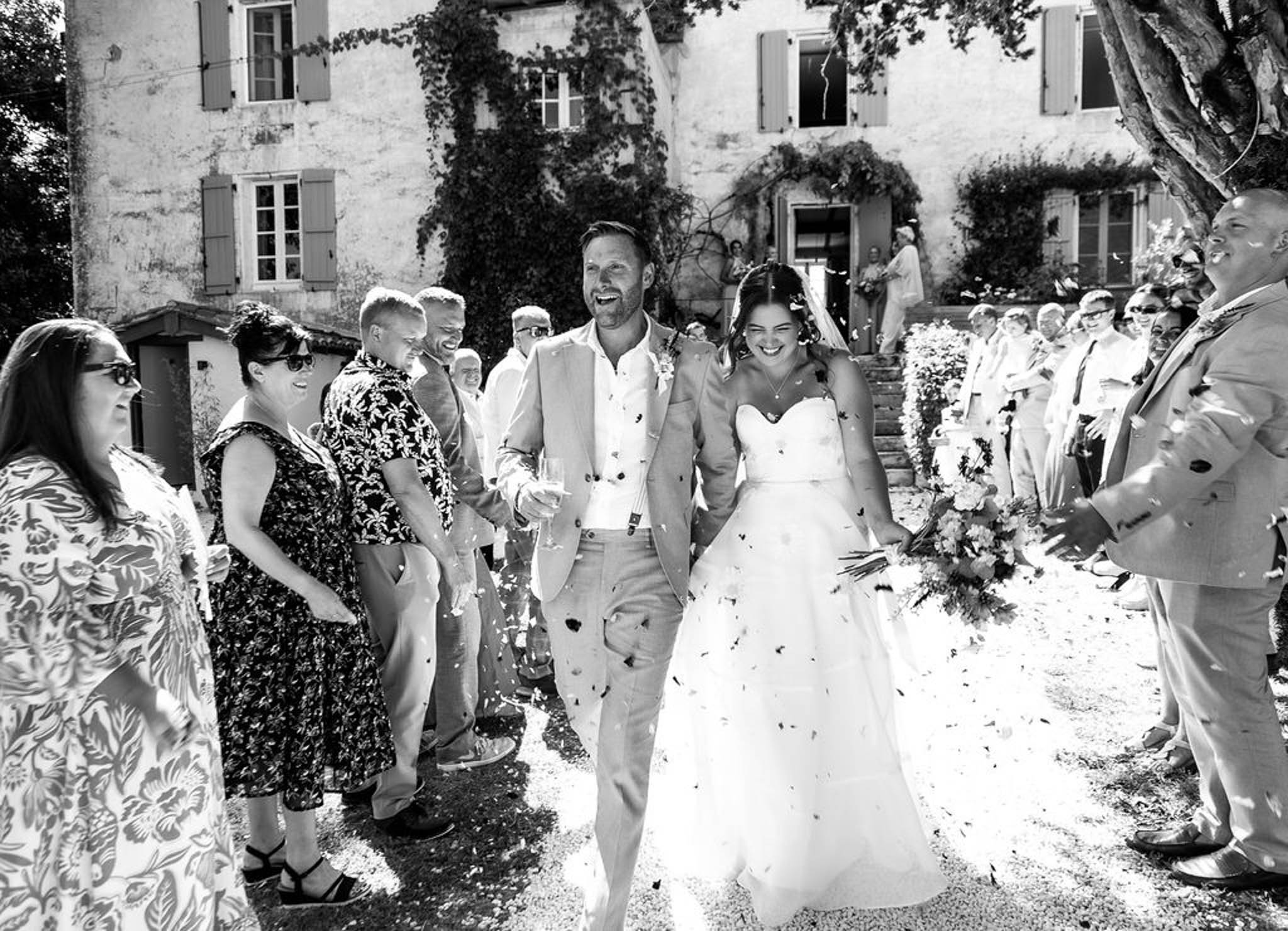
15 Reasons to Get Married in France
France is not just a place to get married. It is a feeling. The warm stone of a 15th-century courtyard under your feet, late-afternoon light turning everything gold, your guests discovering a local Côtes du Rhône they will talk about for years.
Across the 400+ venues listed on French Wedding Style, couples from more than 30 countries return to the same conclusion: France delivers on the promise that a wedding should be more than a ceremony and a party. It should be a full weekend where everything, the food, the setting, the wine, the company, works in concert. The 15 reasons that keep pulling couples back, connecting to our broader overview of why France leads as a destination wedding choice in Europe. For a broader view of every step involved, see the complete French destination wedding planning resource.
Key Takeaways
- France combines food, wine, architecture, landscape, and celebration culture in a single destination. You do not have to choose between a striking venue and an exceptional meal.
- Guest accessibility is unmatched in Europe: direct flights from most international hubs, the TGV network connecting Paris to Provence in under three hours, and London to Avignon in under six hours by train.
- The venue stock spans 15th-century châteaux, converted stone barns, Provençal mas properties, coastal villas, and modernist estates. No other European country offers this range within driving distance.
- A mature, bilingual supplier ecosystem means English-speaking planners, photographers, florists, and caterers operate in every major wedding region.
- The French wedding weekend format, typically Friday through Sunday, gives guests more time with the couple than a single-day celebration back home.
Why Does France Keep Pulling Couples Back?
France keeps pulling couples back because it combines everything that matters for a wedding into one place. The food is exceptional without needing a Michelin-star budget. The wine is world-class and costs a fraction of what you would pay for equivalent quality anywhere else. The architecture provides backdrops that range from Renaissance stone façades to contemporary glass-and-steel pavilions. The landscape shifts from Atlantic coastline to lavender fields to Alpine foothills within a few hours of driving. And the French approach to celebration, long dinners, generous portions, unhurried conversation, creates exactly the atmosphere most couples want but struggle to engineer artificially. Based on destination weddings featured on French Wedding Style over 15 years, France is the only country where couples rarely have to compromise. A château in the Loire Valley gives you honey-coloured stone walls, original parquet floors, and a kitchen that can produce a five-course dinner for 120 without blinking.
What Makes French Food and Wine the Heart of the Celebration?
French food and wine form the heart of a wedding celebration because the baseline quality is so high that the meal almost solves itself. A standard traiteur (wedding caterer) in Provence or the South-West produces food that would pass as a fine-dining restaurant meal in most other countries. The ingredients are local and seasonal by default, not by marketing decision. Your guests will remember the Sisteron lamb carved at midnight, the goat cheese they discovered at the Saturday morning market, the Sancerre that tasted different because they were drinking it in the garden where the grapes were probably grown. The wine advantage is financial as well as experiential. A bottle of Côtes de Provence rosé that retails for €25 in London costs €7 to €9 at the domaine. A Bordeaux that sells for €40 in New York restaurants costs €12 to €15 at the property. Across the full breakdown of French wedding costs, wine is the line item where France delivers the most dramatic saving.
The meal structure also differs. French wedding dinners run four to six courses over three to four hours. Guests are seated, served, and fed properly. There is no buffet queue, no plate balancing, no awkward standing-with-fork routine. The meal becomes the entertainment. By the time the cheese course arrives and the dancing begins, your guests have spent three hours talking, laughing, and eating together in a way that a 90-minute hotel dinner simply cannot replicate.
How Does the Light in France Change Everything?
The light in France, particularly in the southern half of the country from May through October, produces wedding photography and a guest experience that no amount of lighting design can replicate. Provence, the Riviera, and the South-West receive a quality of late-afternoon sunlight that turns limestone walls amber, warms skin tones in photographs, and creates the specific golden-hour glow that couples reference when they say they want their wedding to "feel like France." Photographers who have shot weddings across Europe consistently identify southern France as the region with the most reliable and flattering natural light. This is not an abstract aesthetic point. It affects every decision. The French wedding climate means outdoor ceremonies are reliable from May through September across the southern regions. Cocktail hours happen on stone terraces as the sun drops. Dinner moves outdoors as the temperature stays comfortable well into the night.
Why Do Guests Love French Destination Weddings?
Guests love French destination weddings because France sells itself as a holiday before it even begins as a wedding. The combination of accessible flights, well-connected rail, rental car ease, and the promise of good food and wine means guests arrive delighted before the wedding day starts. Based on couples featured on French Wedding Style, attendance at French destination weddings is consistently higher than expected. The "too far" objection reverses the moment someone books a flight. France is not an imposition on your guests. It is a gift. The weekend format amplifies this. A French wedding typically runs from Friday evening through Sunday brunch. Guests who travel for a single-day UK or US wedding get roughly six hours with the couple. Guests at a French wedding weekend get 48 hours. They arrive on Friday, settle into the venue or nearby accommodation, share an informal dinner or apéritif. Saturday is the main event. Sunday is a relaxed brunch before departures.
Accessibility makes it work logistically. France is the most accessible major European wedding destination. Direct flights connect London, Dublin, New York, Sydney, Dubai, and most European capitals to Paris, Lyon, Marseille, Nice, Bordeaux, and Toulouse. The TGV takes passengers from Paris to Avignon in 2 hours 40 minutes, to Bordeaux in 2 hours, to Lyon in under 2 hours. London to Avignon is under 6 hours by Eurostar and TGV. No other European wedding destination matches this combination of air and rail connections.
What Makes the French Venue Stock Unmatched in Europe?
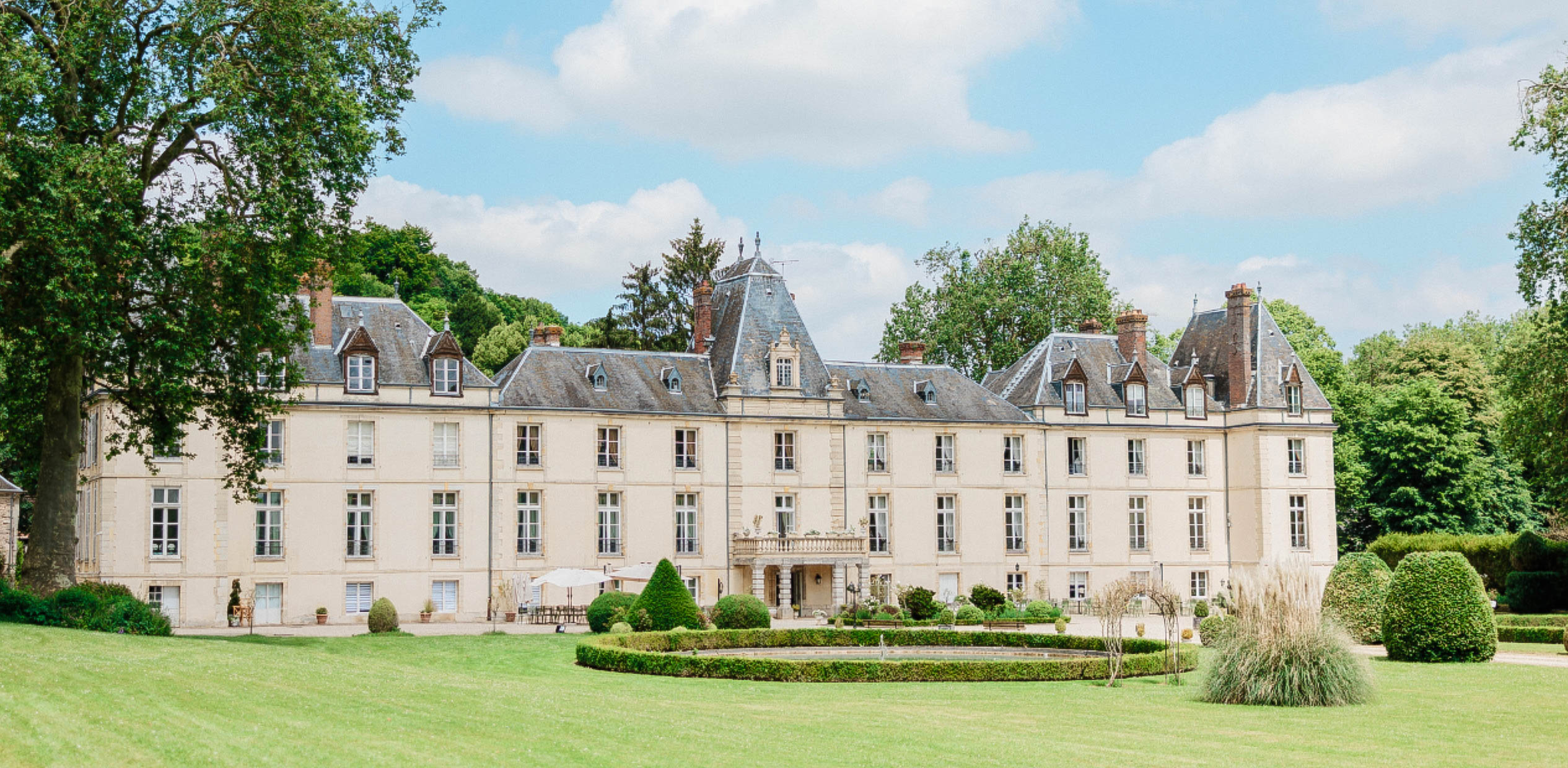
The French venue stock is unmatched in Europe because France offers more architectural diversity within its borders than any comparable destination. Italy has villas, hilltop towns, and lakes. Spain has fincas and coastal estates. France has all of those equivalents, plus châteaux spanning five centuries of construction, converted stone barns in Normandy and the Dordogne, Provençal mas properties surrounded by olive groves, modernist estates in the Languedoc, Art Deco mansions on the Riviera, and medieval abbeys in Burgundy. The full collection of wedding venues in France listed on French Wedding Style includes properties across 12 distinct regions, each with its own architectural vocabulary. Consider the range within a single decision. A couple who wants stone walls and history can choose between a Loire Valley château with formal gardens, a Dordogne manor with a river running through the grounds, or a Provençal bastide surrounded by lavender.
This diversity also extends to capacity and format. Intimate venues for 20 guests sit alongside properties that host 300. Exclusive-use estates where you hire the entire property for the weekend are the norm, not the exception. Venues with swimming pools, on-site chapels, working vineyards, and accommodation for 40 guests in converted outbuildings. The infrastructure for hosting a multi-day celebration is built into the French venue market in a way it simply is not in neighbouring countries.
How Does the French Wedding Weekend Format Change the Experience?
The French wedding weekend format changes the experience by replacing a single-day event with a three-day celebration where the wedding ceremony is the centrepiece, not the entirety. A typical French wedding weekend begins with an informal welcome dinner or drinks on Friday evening, allowing guests who have travelled to settle in, meet each other, and adjust to the setting. Saturday is the main event: ceremony, cocktail hour, dinner, and dancing that often continues until 3 or 4am. Sunday morning is a slow, communal brunch before departures. This structure transforms the guest experience. At a single-day wedding, guests arrive, sit, eat, dance, and leave within six hours. At a French wedding weekend, they have two full evenings and a morning together. Friendships form between the couple's separate friend groups. Parents who have never met spend Saturday morning walking the grounds together. Children play in the gardens while adults drink coffee. By the time the ceremony starts on Saturday afternoon, everyone already feels connected.
For the couple, the weekend format eliminates the single biggest regret reported after traditional weddings: "I did not get to speak to everyone." With Friday evening and Sunday morning as buffers, the couple can focus on each other during Saturday's celebration knowing they had Friday to welcome arrivals and will have Sunday to say goodbye. Across weddings featured on French Wedding Style, the weekend format is the structural element couples mention most often when asked what made their wedding feel different from others they have attended.
What Practical Advantages Does France Offer Over Other Destinations?
France offers four practical advantages over other European destination wedding countries: a mature bilingual supplier ecosystem, unmatched transport connections, legal simplicity for symbolic ceremonies, and a high baseline of service quality that reduces planning risk. As of 2026, every major French wedding region has English-speaking wedding planners, photographers, florists, caterers, and celebrants. The bilingual infrastructure in Provence, the Riviera, Bordeaux, and the Loire Valley is deeper than in any comparable region of Italy or Spain. Transport connections give France a structural advantage. Paris CDG is the second-busiest airport in Europe. Nice, Lyon, Marseille, Bordeaux, and Toulouse all receive direct international flights. The TGV high-speed rail network connects Paris to every major wedding region in under three hours. For UK couples, the Eurostar removes the need to fly entirely. No other European wedding destination offers this density of air and rail access across so many regions.
Legal simplicity also favours France for international couples. Most destination couples in France choose a symbolic ceremony at the venue and complete the legal paperwork in their home country. This avoids the bureaucratic complexity of a French civil ceremony (which requires 40 days' residency or a family connection to the commune). By contrast, Italy and Spain have legal requirements that many international couples find more time-consuming to navigate. See our complete legal guide for destination weddings in France.
Service quality in France benefits from a catering and hospitality industry that operates at a higher baseline than most countries. A mid-range traiteur in France produces food that matches an above-average caterer in the UK or US. A local florist in Provence works with garden roses, olive branches, and seasonal blooms as standard materials, not premium upgrades. The quality floor is simply higher, which means couples do not need to spend at the top of every category to get a result that feels considered.
Is France Actually Affordable for a Destination Wedding?
France is more affordable for a destination wedding than most couples expect, particularly when compared to equivalent celebrations in their home countries. An 80-guest wedding at a French château or domaine costs between €40,000 and €80,000 for a full weekend including venue hire, catering, wine, accommodation for the couple, and core suppliers. A comparable 80-guest wedding at a country house hotel in England or an estate in the Hamptons often exceeds that range once food, drink, and accommodation are factored separately. The key difference: in France, the venue typically includes exclusive use, accommodation for 20 to 40 guests, and often outdoor ceremony space at no additional charge. The smaller guest list effect compounds the saving. Most destination weddings naturally trim the guest count from 150 (a typical UK or US home wedding) to 60 to 100. Fewer guests means lower catering costs, less stationery, a smaller cake, and a venue that does not need to hold 200. The per-guest experience improves while the total budget decreases.
Wine is the most visible saving.
- Local wine served at the venue costs €7 to €15 per bottle
- The same quality imported to a UK or US venue costs €25 to €45
- For an 80-guest wedding consuming 80 to 120 bottles across the weekend, the difference is €2,000 to €4,000 in wine alone
- This single saving can cover the couple's flights and transfers, or subsidise a group shuttle from the nearest airport
The 15 Reasons: A Complete List
- Food quality baseline. Even a mid-range traiteur produces restaurant-quality meals with local, seasonal ingredients as standard.
- Wine at source prices. Local wine costs a fraction of imported equivalents, saving €2,000 to €4,000 on an 80-guest wedding.
- Unmatched venue diversity. Châteaux, mas, bastides, barns, villas, coastal estates, and modern spaces across 12 regions.
- The light. Southern France produces golden-hour conditions that transform photography and guest experience from May through October.
- Weekend format. Three days together, not six hours. Friday welcome, Saturday celebration, Sunday brunch.
- Guest accessibility. Direct flights from most international hubs, TGV connections, Eurostar from London. No European destination is easier to reach.
- Exclusive-use venues. Hiring the entire property for the weekend is standard, giving couples complete privacy and creative control.
- Bilingual suppliers. English-speaking planners, photographers, florists, and caterers in every major wedding region.
- Outdoor reliability. Southern regions offer dependable outdoor ceremony weather from May through September.
- Accommodation included. Most château and domaine venues sleep 20 to 40 guests on-site, reducing logistics and cost.
- Cultural richness. Markets, villages, vineyards, and historical sites give guests a holiday alongside the wedding.
- Legal simplicity. Symbolic ceremonies avoid French bureaucracy entirely. Complete legal paperwork at home.
- Natural backdrop variety. Lavender fields, Atlantic coast, Alpine foothills, river valleys, and Mediterranean shoreline within a few hours' drive.
- Value for money. A French destination wedding for 80 guests can cost less than a 150-guest celebration at home, with a higher per-guest experience.
- The reversal effect. Guests who were hesitant about travelling consistently describe it as the best wedding they have ever attended.
What International Couples Get Wrong About France as a Wedding Destination
The pattern we see repeated constantly is assuming France is only for large budgets. The association between France and big-budget weddings exists because the most-photographed French weddings tend to be the most expensive ones. In reality, the market serves every budget level. Couples who look beyond Provence and the Riviera find properties in the Dordogne, Normandy, and the Loire Valley that offer the same stone-wall, garden-dinner, weekend-format experience at 30 to 50% lower cost. The countryside wedding venues across France are where the best value often sits. A related error is planning France like a home wedding held abroad. France works differently. Venues expect a weekend booking, not a single day. Caterers serve sit-down meals, not buffets. The timeline runs later: dinner at 8pm, dancing at midnight, the party continuing until 3am or later. Couples who impose a home-country format on a French wedding miss the structural advantages that make France work so well as a destination.
Finally, many couples underestimate how much their guests will enjoy the experience. Anxiety about asking people to travel is almost always disproportionate. Once guests commit, the combination of a French setting, good food, generous wine, and a weekend together creates something that a single-evening reception at home cannot match. The couples who trust the format and lean into the French approach consistently report the highest satisfaction, both from themselves and from their guests.
Related Articles
- Why get married in France: the complete case for choosing France
- Destination wedding comparison: France, Italy, and Spain side by side
- How to convince your partner or parents about a French destination wedding
- The complete guide to French wedding costs in 2026
- Browse destination wedding venues across France
Frequently Asked Questions
What is the best time of year to get married in France?
June through September is peak wedding season across France, with July and August offering the warmest temperatures and longest daylight hours. May and October are increasingly popular as shoulder-season months with lower venue prices and comfortable weather in the south. Provence and the Riviera are reliable from late April through mid-October. Northern regions including Normandy and Brittany are best from June through early September. For detailed climate data by region, see our seasonal climate guide for French weddings.
How far in advance should you book a French wedding venue?
Book 12 to 18 months ahead for peak-season dates (June through September) at popular venues in Provence, the Riviera, and the Loire Valley. Properties in the Dordogne, South-West, and Normandy can often be secured 9 to 12 months in advance. Off-season dates (October through April) may be available 6 to 9 months ahead. Start your search early and secure your first-choice venue before booking other suppliers, as the venue determines region, budget, and vendor shortlist.
Do you need to speak French to plan a wedding in France?
No. Every major French wedding region has a well-established network of bilingual suppliers, including planners, caterers, florists, and photographers who work regularly with English-speaking couples. A bilingual wedding planner handles all communication with French-only suppliers, venue staff, and local authorities. The destination wedding market in France has been serving international clients for over two decades, and the supplier infrastructure reflects that.
Is a destination wedding in France legal?
A legal civil ceremony in France requires one party to have 40 consecutive days of residency in the commune or a direct family connection to it. Most international couples choose a symbolic ceremony at their French venue and complete the legal marriage in their home country before or after the celebration. This approach avoids French bureaucratic requirements entirely while allowing complete creative freedom with the ceremony format. See our complete legal requirements guide for details.
How many guests typically attend a destination wedding in France?
Destination weddings in France typically host 60 to 100 guests, compared to 120 to 180 for a traditional home wedding. The smaller guest count is a feature, not a limitation: it reduces total cost, improves the per-guest experience, and fits the exclusive-use venue format that defines French wedding properties. Across weddings featured on French Wedding Style, 80 guests is the most common count, though intimate celebrations of 20 to 40 guests and large weddings of 150 or more are both well-served by the French venue market.
Start building your vision with a region. Browse wedding venues in the South of France for warm-weather properties, or explore château wedding venues across France for the full range of historical estates. Every venue listed on French Wedding Style has been individually reviewed.
Explore Every Guide in This Chapter
Deep-dive into each topic covered above.