
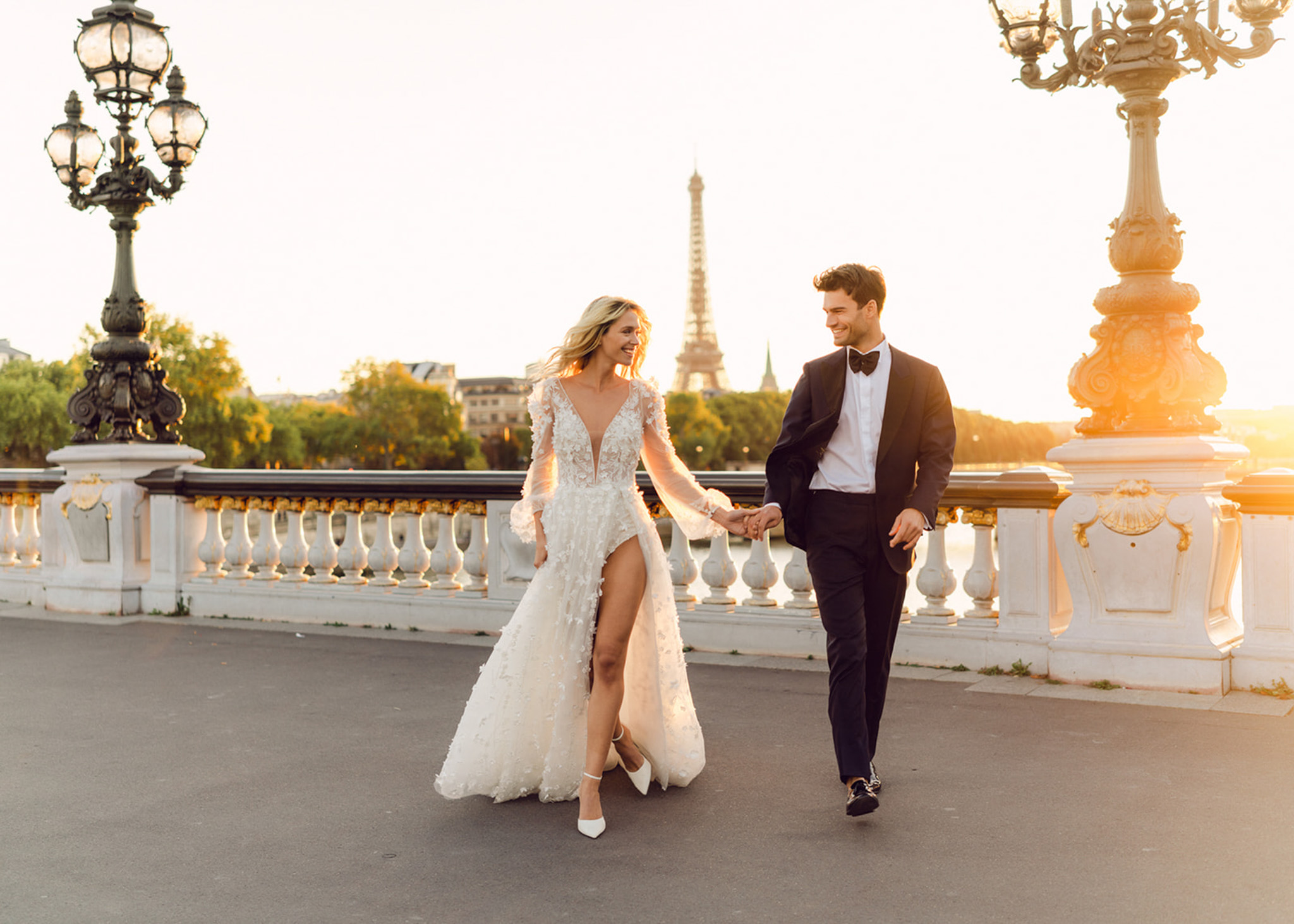
Getting Married in Provence
Provence is the most requested destination wedding region in France and, for many international couples, the default starting point. That reputation is earned. The light, the stone, the olive groves, and the food culture create a setting that few places in Europe can match.
It is also a region where assumptions cost money. Lavender blooms for roughly two weeks, the Mistral wind disrupts 30 to 40% of spring and autumn outdoor celebrations, and an 80-guest wedding at a mid-range château starts at €83,000. What a Provence wedding actually involves, region by region and euro by euro, as part of our complete guide to choosing your wedding region in France. For a broader view of every step involved, see the full planning guide for destination weddings in France.
Key Takeaways
Provence consistently ranks as the most requested and most expensive destination wedding region in France, with mid-range 80-guest celebrations costing €83,000 to €144,000 all-in as of 2026. The region divides into three distinct sub-markets: the Luberon commands the highest prices and longest lead times at 18 to 24 months, the Alpilles delivers the most dramatic landscapes with the greatest Mistral exposure, and the Var offers 15 to 25% lower pricing with reduced wind risk and closer proximity to Nice airport. Lavender blooms for roughly 10 days from late June to early July, September couples will not see full colour, and the Mistral wind partially disrupts 30 to 40% of spring and autumn outdoor celebrations. These seven points summarise the essential planning facts every couple considering Provence should understand before contacting a single venue.
- A mid-range Provence wedding for 80 to 100 guests costs €83,000 to €144,000 all-in as of 2026. Rustic farmhouse weddings start at €50,000. Prestige properties exceed €250,000.
- The Luberon is the most famous and most expensive sub-region. The Var offers 15 to 25% lower pricing with reduced Mistral exposure and closer access to Nice airport.
- Lavender peaks for roughly 10 days from late June to early July. September couples will not see full bloom unless they specifically confirm with their venue.
- The Mistral wind fully disrupts 10 to 15% of outdoor ceremonies and partially affects 30 to 40% of spring and autumn weddings. August is the calmest month.
- Booking 12 to 18 months ahead is standard for peak season. Top Luberon venues require 18 to 24 months.
What Does a Provence Wedding Actually Look Like?
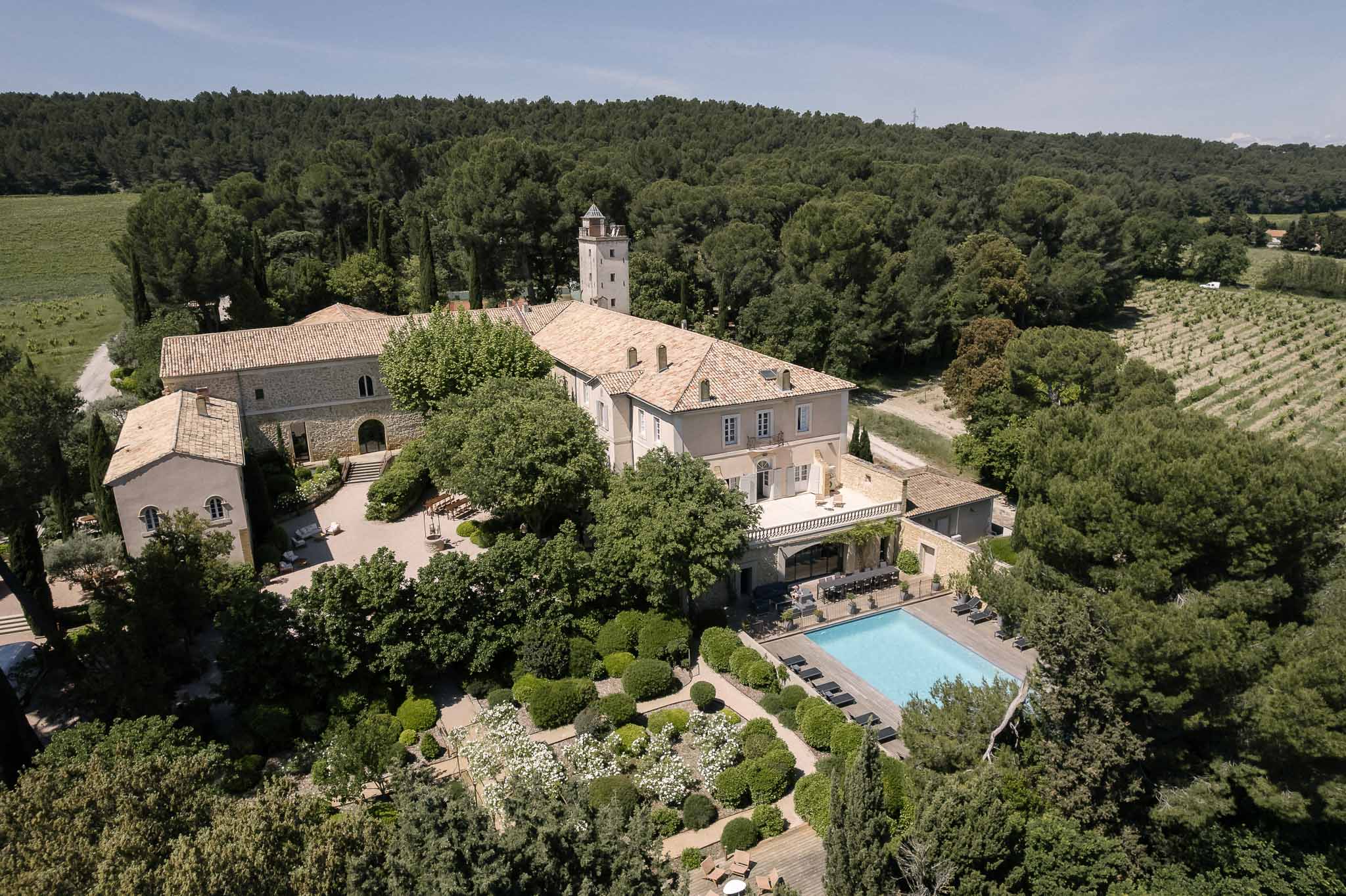
A Provence wedding centres on the outdoors, the table, and the stone. Most celebrations take place at a private property, typically a mas, bastide, domaine, or château, where guests gather for a full weekend.
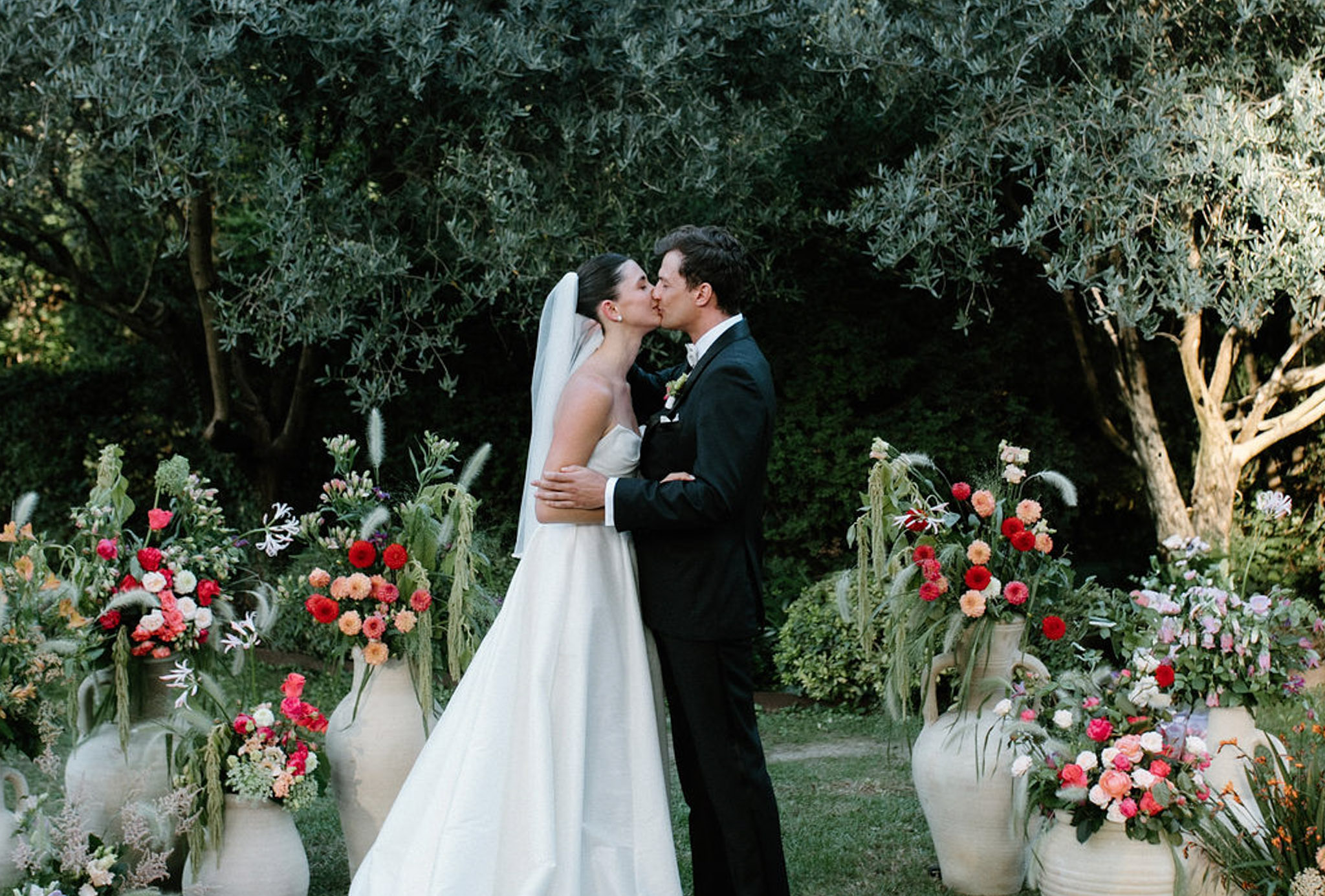
The ceremony is almost always outdoors, set against olive trees, lavender, or vineyard rows, with a seated dinner beneath string lights on a gravel courtyard or a stone terrace. The rhythm follows a distinctly Provençal pattern: a late-afternoon ceremony once the heat breaks (usually 6:00 to 7:30 pm from June to September), followed by an apéritif dinatoire. An apéritif dinatoire is an extended cocktail reception, typically 1.5 to 2 hours of tapenade, socca, and petits farcis, before the long seated dinner anchored by local wine and seasonal produce. A mas is a Provençal farmhouse: low-slung stone with thick walls, built by farming families. A bastide is a country manor with more formal gardens. A domaine typically includes vineyards or agricultural land. A château carries the most formal architecture.
The colour palette of Provence itself does much of the design work. Ochre stone, silver-green olive leaves, terracotta, and the blue-violet of lavender reduce the need for heavy floral styling. Many couples find that Provence requires less decoration than they initially planned, because the landscape and architecture provide the visual framework. The best Provence weddings lean into this rather than fighting it. Explore destination wedding venues across southern France to see the range of properties available across all sub-regions.
How Much Does a Provence Wedding Cost for 80 to 100 Guests?
A Provence wedding for 80 to 100 guests costs between €50,000 and €263,000 or more, depending on venue tier, vendor selection, and the scope of the multi-day celebration. As of 2026, the mid-range tier (a boutique château or domaine with a curated vendor list) runs €83,000 to €144,000 all-in. That figure includes venue hire, catering at €150 to €280 per head before drinks, a full vendor team, guest accommodation, and a 10 to 15% contingency buffer.
VAT at 20% is sometimes excluded from initial quotes, so confirm whether each figure is TTC (toutes taxes comprises) or HT (hors taxes) before comparing. Across the 400+ venues listed on French Wedding Style, Provence consistently ranks as the most expensive region for destination weddings. Couples who assume rural France means affordable pricing discover the opposite once the quotes arrive.
Scroll →
| Budget Tier | Venue Type | Total Cost (80-100 Guests) | Key Characteristics |
|---|---|---|---|
| Rustic | Farmhouse / mas | €50,000 to €85,000 | Dry-hire, bring own vendors, minimal on-site infrastructure |
| Mid-range | Boutique château / domaine | €83,000 to €144,000 | Mandatory vendor lists common, wine buy-out clauses, on-site accommodation |
| Prestige | 5-star estate / high-tier domaine | €148,000 to €263,000+ | Full event production, florals and styling drive cost upward significantly |
Guest accommodation is a separate line item that couples frequently underestimate. Provence venues with on-site rooms rarely sleep more than 30 to 40 guests. The remainder need local hotels, gîtes, or rental houses, adding €20,000 to €50,000 to the total depending on proximity and standard.
Catering alone, before any other vendor, costs €12,000 to €28,000 for 80 guests at mid-range rates. Add the venue fee, a planner, photographer, florist, and entertainment, and the numbers climb quickly. Build in a 10 to 15% contingency from day one. For a full breakdown of how these costs compare to other regions, see our guide to regional price differences across France.
How Do the Luberon, the Alpilles, and the Var Compare?
Provence is not one market. The three main wedding sub-regions, the Luberon, the Alpilles, and the Var, differ in price, landscape, Mistral exposure, accessibility, and vendor density. The Luberon (Gordes, Bonnieux, Ménerbes, Lourmarin) is the most famous and the most saturated, commanding the highest prices and requiring 18 to 24 months of lead time for top venues.
The Alpilles (Les Baux-de-Provence, Saint-Rémy-de-Provence, Maussane-les-Alpilles) offers more dramatic, rugged terrain with silvery olive groves against white limestone, but carries the highest Mistral exposure in Provence. The Var (Cotignac, Tourtour, Lorgues) is the least talked-about of the three, which is precisely its advantage: 15 to 25% lower pricing than the Luberon, reduced Mistral risk, and closer proximity to Nice airport for international guests arriving by air. Each sub-region shapes the wedding differently, and the right choice depends on your priorities around budget, aesthetics, weather risk, and guest logistics.
Scroll →
| Factor | Luberon | Alpilles | Var |
|---|---|---|---|
| Key towns | Gordes, Bonnieux, Ménerbes, Lourmarin | Les Baux, Saint-Rémy, Maussane | Cotignac, Tourtour, Lorgues |
| Landscape | Ochre villages, perched hilltops, lavender | White limestone, olive groves, dramatic ridges | Lush Mediterranean woodland, green valleys |
| Pricing vs Luberon | Baseline (highest) | Similar to slightly lower | 15 to 25% lower |
| Booking lead time | 18 to 24 months | 12 to 18 months | 12 to 15 months |
| Mistral exposure | Moderate | Highest in Provence | Reduced (more sheltered) |
| Nearest major airport | Marseille (1h) or Avignon TGV | Marseille (45min) or Avignon TGV | Nice (1h15) or Toulon |
| Vendor density | Highest: full ecosystem | Good, slightly fewer options | Thinner: plan vendor sourcing early |
| Peak season roads | Heavily congested July to August | Moderate congestion | Light traffic year-round |
The Luberon carries a clear price premium driven by international recognition rather than inherently superior venues. Couples who prioritise value without sacrificing Provençal character should investigate the Var seriously. Its lush, green Mediterranean landscape contrasts with the ochre dryness of the western sub-regions and offers a version of Provence that most international guests will not have seen before. The thinner vendor network in the Var makes a good local planner essential. Find a recommended wedding planner in France to ensure you have someone who knows the Var market specifically.
Underrated Alternatives: Drôme Provençale and Haut-Var
Two areas deserve attention from couples who want Provence at a fraction of the Luberon price. The Drôme Provençale (Grignan, Montbrun-les-Bains, Saou), technically just north of Provence, delivers everything the Luberon offers, including lavender fields that bloom slightly later, at a fraction of the tourist traffic. The Haut-Var interior around Cotignac, Tourtour, and Lorgues is lush and wooded, with a thriving local wine scene and low Mistral exposure. Both areas benefit from Provence-level sunshine with pricing that reflects their lower international profile.
When Is the Best Time to Get Married in Provence?
The best months for a Provence wedding are June, July, and September. August is the calmest for wind but the hottest (regularly 38 to 40°C) and the most congested with tourists. June offers the intersection of warm weather and lavender approaching bloom, though evenings can still be cool enough to need wraps.
July is peak season in every sense: full lavender, long days, highest prices, and tightest availability. September brings softer light, cooler evenings (still 25 to 30°C), and lower pricing, but lavender will be harvested and the fields will be bare or dusty grey-violet. May is warm but carries a higher Mistral risk (30 to 40% of spring weddings experience partial wind disruption) and evenings drop to 14 to 16°C. October is a gamble: some years deliver golden Indian summer warmth, others bring the first autumn Mistral episodes.
Couples who specifically want lavender in their photographs need to marry in the last 10 days of June through the first 10 days of July. The Plateau de Valensole, Sénanque Abbey, and Sault (where lavender lingers to mid-July at altitude) are the most reliable locations for peak colour. September couples who want any hint of lavender should ask their venue directly whether the estate harvests its fields or leaves them. Some properties retain unharvested lavender into early autumn, but the colour shifts from vivid purple to dusty grey-violet. For broader seasonal guidance, consult our seasonal climate guide for French weddings.
How Does the Mistral Wind Affect Outdoor Weddings?
The Mistral is a cold, dry wind that funnels down the Rhône corridor and can reach 80 to 100 km/h within an hour, with episodes lasting 3 to 6 days. It fully disrupts 10 to 15% of outdoor ceremonies in Provence and partially affects 30 to 40% of spring and autumn celebrations, bringing down installations, extinguishing candles, and overwhelming outdoor sound systems. The Mistral is not a rain event. It reshapes the day rather than washing it out.
A ceremony may need to move indoors or behind a sheltered wall, but the sky will typically be clear and intensely blue. Exposure varies sharply by geography: the Rhône corridor around Avignon and the Alpilles is the most exposed zone, the Luberon sits in a moderate zone, and the Var, further east and sheltered by the Maures massif, receives significantly less activity. Seasonally, the Mistral peaks in spring (March to May) and autumn (October to November), with August the calmest month. Every outdoor ceremony in Provence needs a Plan B: a covered terrace, an interior courtyard, or an indoor space that can absorb the full guest count at short notice. Confirm this with your venue before signing the contract.
Practical precautions go beyond the ceremony itself. Tall floral installations, votive candles, and lightweight paper signage are the first casualties of a Mistral episode. Brief your florist and stylist on wind-resistant designs. Use weighted lanterns instead of open candles. Anchor any fabric runners, table linens, or trailing decorations. These adjustments are standard practice for experienced Provence vendors. If your supplier has not mentioned the Mistral unprompted, ask how they handle it.
What Makes Provençal Food and Wine Central to the Celebration?
Food is not a service line in Provence. It is the centrepiece of the wedding experience, and the apéritif dinatoire alone sets the tone for the entire evening. A traditional Provençal apéritif runs 1.5 to 2 hours and features tapenade, socca (chickpea flatbread from Nice), petits farcis (stuffed vegetables), and local charcuterie. This is not cocktail hour as most international couples understand it.
It is a full grazing event that transitions into the seated dinner. The wine choice matters more here than in most French regions. Côtes de Provence rosé or Bandol rosé is expected. Generic rosé will be noticed by French guests and by any guest who has spent time in the south. Sisteron lamb, local goat cheese, tarte Tropézienne (a brioche cream cake from Saint-Tropez), and herbs picked from the venue garden are the building blocks of a Provençal wedding menu.
Catering costs in Provence run €150 to €280 per head before drinks, making food the single largest variable cost after the venue fee. A traiteur (caterer) who sources locally, using olive oil from a nearby press and vegetables from the village market, delivers an authentically Provençal meal that mass-catering operations cannot replicate.
Ask for a menu tasting at the venue itself, not in the traiteur's showroom, to understand how the food works in context. For couples considering all-inclusive versus dry-hire venues, the catering arrangement is often the deciding factor in Provence, where mandatory vendor lists and wine buy-out clauses are common at mid-range and prestige venues.
For August weddings, buttercream cakes will not survive outdoor service in 38°C heat. Discuss alternatives with your pâtissier. Ganache-based or mousse cakes, served from a shaded station, are the standard warm-weather solution. Heat-hardy florals are equally important. Your florist should be specifying varieties that hold up in direct Provençal sun, not importing delicate blooms that wilt within an hour.
How Much Do Provence Wedding Vendors Cost?
Vendor pricing in Provence reflects its position as France's most sought-after destination wedding market, with rates consistently 30 to 50% higher than comparable professionals in the Dordogne or Normandy. As of 2026, a full-service wedding planner charges €5,000 to €18,000 or more, a photographer €3,000 to €10,000 or more, a florist €4,000 to €15,000 or more depending on installation scale, and a videographer €3,000 to €6,000 or more as demand for cinematic wedding films has driven the sharpest price increases of any vendor category. French Wedding Style lists 35 venues in Provence, the largest regional collection in the database, with site fees ranging from under €10,000 for a rural mas to over €45,000 for a prestige estate. Booking 12 to 18 months ahead is standard for peak season from June to September, with top-tier planners and photographers in the Luberon filling their calendars 18 months out. Many Provence vendors now require a 30 to 50% deposit at booking, with the balance due 30 days before the wedding date.
Scroll →
| Vendor Category | Entry Level | Mid-Range | Premium |
|---|---|---|---|
| Wedding planner (full service) | €5,000 | €10,000 | €18,000+ |
| Photographer (full day) | €3,000 | €5,000 | €10,000+ |
| Videographer | €3,000 | €5,000 | €6,000+ |
| Florist and styling | €4,000 | €8,000 | €15,000+ |
| Catering per head (before drinks) | €150 | €200 | €280+ |
The vendor fee is only part of the equation. Many Provence venues operate mandatory vendor lists, meaning couples must choose from a pre-approved roster of caterers and sometimes florists. Wine buy-out clauses are also common: the venue supplies the wine at a per-bottle markup, and external supply is either prohibited or subject to a corkage fee. These clauses can add €3,000 to €8,000 to the catering line, depending on guest count and drinking volume. Ask about these policies before signing any venue contract. For context on how these costs compare nationally, see venue pricing explained for French weddings.
The Assumptions That Derail Provence Wedding Planning
The three most common mistakes international couples make when planning a Provence wedding are getting the season wrong, underestimating the budget, and planning remotely without local expertise. Getting the season wrong means booking September and expecting lavender, or booking May and expecting warm evenings. Lavender peaks for roughly 10 days from late June to early July and is harvested across most of Provence by mid-July. May evenings drop to 14 to 16°C, cold enough that an outdoor dinner without heating becomes uncomfortable.
The Plateau de Valensole is the most reliable location for peak colour, but even there the window is narrow. Couples who arrive expecting the warmth of their August holiday discover a different reality. Based on French Wedding Style's experience, roughly 40% of international couples who book Provence have never visited the region in the month of their wedding, leading to mismatched expectations around weather and evening temperatures. Check the specific conditions for your chosen month in our seasonal climate guide for French weddings.
Underestimating the budget is the second critical error. Rural France does not mean affordable France. Provence is an international premium market, and pricing reflects global demand rather than the local cost of living.
Couples who set a €50,000 budget and begin searching in the Luberon will find that the venue fee alone consumes €15,000 to €30,000, leaving inadequate room for a full vendor team and multi-day guest programme. If €50,000 is your ceiling, a rustic mas in the Var or a property in the Drôme Provençale will stretch further than anything in the Luberon. For couples weighing Provence against other regions on budget grounds, the Dordogne and South-West France for destination weddings offers comparable stone architecture at 40 to 60% lower cost.
Planning remotely without local help is the third trap. French vendors communicate in French, respond on French business timelines, and close for August. A local wedding planner is not an indulgence in Provence.
It is the most effective investment for international couples who do not speak fluent French and cannot visit regularly. The planner handles vendor communication, contract negotiation, timeline management, and the on-the-day logistics that make the difference between a smooth celebration and a stressful one. For a step-by-step approach, see our guide to how to build your vendor team for a destination wedding in France. Browse rustic wedding venues in Provence and the south or château wedding venues across France to start comparing properties.
Related Articles
These guides connect directly to the decisions covered in this Provence planning article, from choosing between French wedding regions to understanding how venue pricing, seasonal weather, and vendor costs vary across the country. The regional price comparison maps costs across all nine major wedding areas, the seasonal climate guide provides month-by-month data for outdoor ceremony confidence, and the venue pricing guide explains how site fees, all-inclusive packages, and hidden extras work at French properties. Each article builds on the Provence-specific data above with national context that helps couples evaluate whether the Luberon, the Var, or a different region entirely is the right match for their budget and vision.
- Choosing your wedding region in France: the complete guide
- Planning a wedding on the French Riviera
- Regional price differences across France
- Seasonal climate guide for French weddings
- How venue pricing works in France
Frequently Asked Questions
How much does a wedding in Provence cost for 80 guests?
A mid-range Provence wedding for 80 to 100 guests costs €83,000 to €144,000 all-in, including venue, catering, full vendor team, and guest accommodation. Rustic farmhouse weddings at a mas start at €50,000 to €85,000. Prestige 5-star estates run €148,000 to €263,000 or more, with florals and event production driving the upper range. VAT at 20% is sometimes excluded from initial quotes. For a smaller celebration of 40 to 50 guests, the mid-range drops to roughly €55,000 to €90,000: the venue fee and planner costs remain similar, but catering scales down by 40 to 50% and you may not need overflow accommodation at all, since many venues sleep 30 to 40 guests in-house.
When does lavender bloom in Provence?
Lavender peaks during the last 10 days of June through the first 10 days of July. The Plateau de Valensole, Sénanque Abbey, and Sault (which retains colour to mid-July at altitude) are the most reliable locations for full bloom. By late July most fields are harvested. September couples may find unharvested lavender in a dusty grey-violet rather than vivid purple. Confirm directly with your venue. For couples set on lavender portraits, ask your photographer to schedule a dedicated session at Valensole or Sault the morning before the wedding. The fields are empty of tourists at sunrise and the soft early light produces the strongest colour saturation.
Is the Mistral wind a real risk for outdoor weddings?
The Mistral fully disrupts 10 to 15% of outdoor ceremonies in Provence, with partial disruption (installations down, candles out, sound issues) affecting 30 to 40% of spring and autumn weddings. It reaches 80 to 100 km/h within an hour and lasts 3 to 6 days. The Rhône corridor and Alpilles are most exposed. The Var is more sheltered. August is the calmest month. Every outdoor Provence wedding needs a confirmed Plan B venue.
What is the difference between a mas, a bastide, and a château?
A mas is a Provençal farmhouse: low-slung stone construction with thick walls, built by farming families. It is the most rustic venue type. A bastide is a country manor, larger and more formal, typically with structured gardens. A château is the most grand, with formal architecture and often historical significance. A domaine refers to an estate with agricultural land, frequently vineyards. Each shapes the tone and formality of the wedding day differently.
Which Provence sub-region is best for a destination wedding?
The Luberon (Gordes, Bonnieux) is the most famous but also the most expensive and congested. The Var (Cotignac, Tourtour) offers 15 to 25% lower pricing, reduced Mistral exposure, and proximity to Nice airport. The Alpilles (Les Baux, Saint-Rémy) delivers the most dramatic landscape but the highest wind exposure. The Var is the strongest choice for couples who want Provence character with better value and lower weather risk.
Do I need a wedding planner for a Provence wedding?
For international couples who do not speak fluent French, a local planner is far and away the most effective investment. French vendors communicate in French and operate on French business timelines. Many close entirely in August. A full-service planner in Provence costs €5,000 to €18,000 and handles vendor sourcing, contract negotiation, and day-of coordination. The return on that investment, in reduced stress, avoided mistakes, and better vendor rates, consistently exceeds the fee. Start your search 14 to 18 months before your date, as the most established planners book out during peak season well in advance.
Is Provence worth the premium over other French regions?
Provence delivers a combination of light, landscape, food culture, and international infrastructure that no other French region matches. Whether the premium is worth it depends on budget flexibility. A comparable château wedding costs 40 to 60% more in Provence than in the Dordogne or Normandy. Couples with €80,000 or more will find Provence delivers on its promise. Couples closer to €50,000 will get significantly more from the Dordogne, the Var, or the Drôme Provençale.
If lavender photographs matter to you, the last week of June through the first week of July is the only reliable window. Build your entire timeline around that date range or accept that September offers better pricing and softer light without the bloom. Browse outdoor destination wedding venues in France to find the sub-region and property that fits your budget and season.
Explore Every Guide in This Chapter
Deep-dive into each topic covered above.