
Style Guide: Provençal Rustic
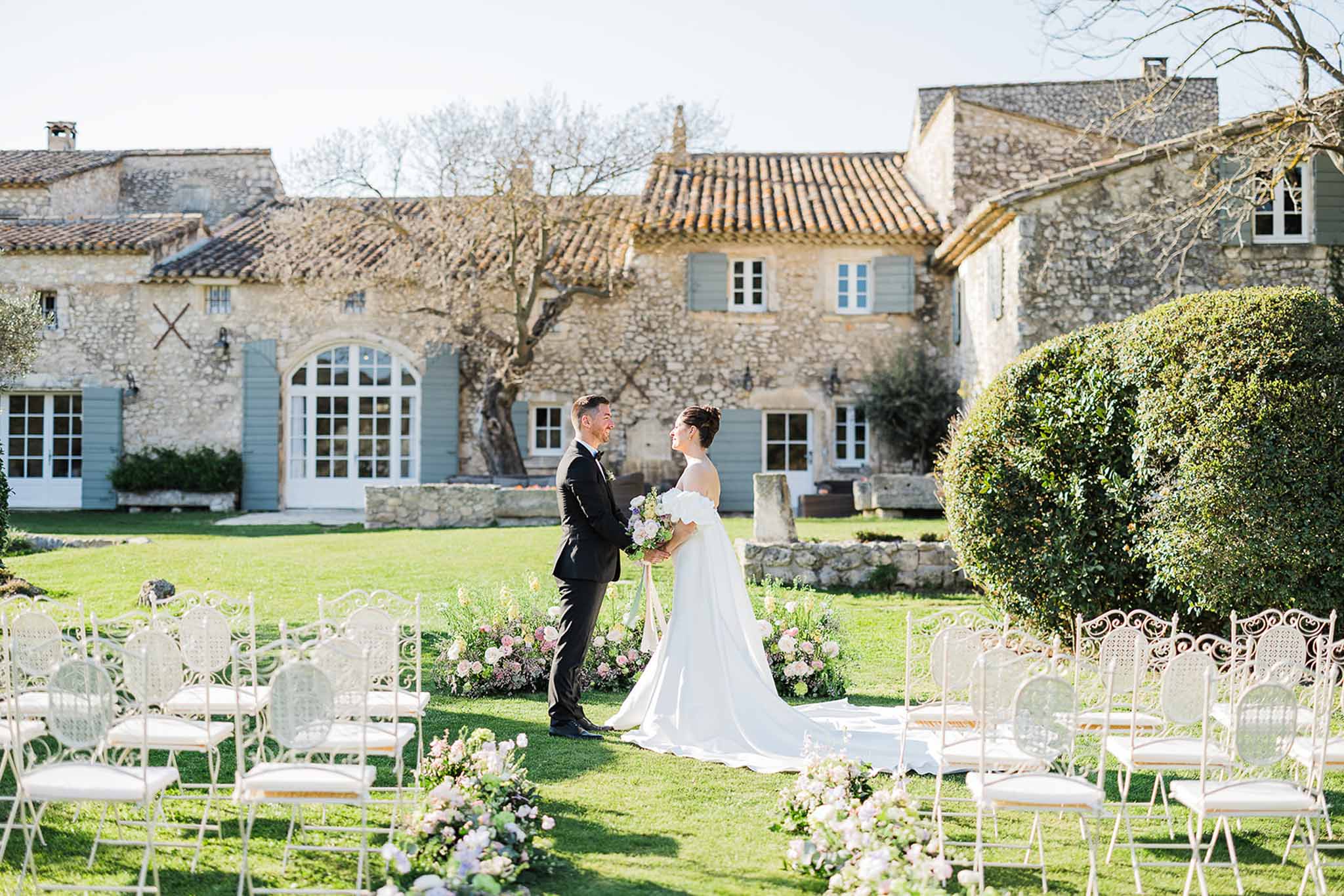
Provençal rustic is the most requested and the most misunderstood wedding style in France. Couples arrive with boards full of mason jars, burlap runners, and lavender bundles tied with twine, and they land somewhere between a craft fair and a Pinterest screenshot. Authentic Provençal rustic looks nothing like that. It is warmer, rougher, and more grounded. Terracotta pots that have actually held plants.
Olive wood boards with knife marks. Dried herb bundles that smell of the hillside, not of a candle shop. The difference between real and performed sits in the materials: where they come from, how they have been used, and whether they belong to the landscape or were imported to decorate it. This guide draws the line between authentic Provençal styling and its overdone imitation, with practical sourcing, flower choices, and material guidance that helps you get the real thing. For the foundational principles behind all French wedding design, start with our guide to French wedding aesthetics. For a broader view of every step involved, see planning your destination wedding in France from start to finish.
Key Takeaways
- Authentic Provençal rustic draws from the local landscape: terracotta, olive wood, dried herbs, sun-faded linen, and stone. If the material does not exist naturally in Provence, it probably does not belong in the décor.
- The line between rustic and overdone is the number of "rustic" elements competing on the same surface. One texture per object. Two or three materials per table. Restraint is what separates character from costume.
- Provence's summer heat kills delicate flowers within hours. Hardy, heat-tolerant varieties like garden roses, olive branches, rosemary, and dried grasses perform better and look more authentic than imported blooms wilting in 38°C.
- Source locally. Brocante markets, local potters, olive oil producers, and antique dealers in Apt, L'Isle-sur-la-Sorgue, and Aix-en-Provence stock the genuine articles that no rental catalogue can replicate.
What Defines Authentic Provençal Rustic Beyond the Clichés?
The cliché version of Provençal rustic is easy to spot: burlap, mason jars, chalk signs, lavender in everything, wooden crates stacked as décor. It borrows the idea of rusticity from American farmhouse aesthetics and pastes it onto a French setting. The result is generic. It could be a barn wedding in Texas or a vineyard wedding in Napa. The specific character of Provence disappears under a layer of imported styling. Authentic Provençal rustic does not borrow. It belongs. The colours are the colours of the landscape: terracotta from the clay soil, ochre from the quarries of Roussillon, sage green from the garrigue scrubland, the bleached gold of dried wheat. The textures are sun-damaged and weather-worn: stone smoothed by centuries of hands, wood dried pale by the Mistral, iron rusted to a deep orange-brown, linen washed so many times it has become as soft as cotton. Nothing is new. Nothing is pristine. Every surface has been touched by the climate.
The domestic reference point is the Provençal farmhouse kitchen, not the Provençal gift shop. A long wooden table with a bench on one side. Ceramic plates in different patterns, none matching. A terracotta jug holding whatever is growing in the garden. Bread torn on a wooden board. Wine poured from an unlabelled bottle. The feeling is generous, informal, and deeply rooted in the daily life of the region. That is what the best Provençal rustic weddings capture: the sense that this meal, this table, this gathering, is simply a larger version of how people in this house eat every Sunday.
When Does Rustic Tip into Overdone?
The tipping point is accumulation. One burlap element can work: a simple runner on a stone table, left unadorned. Two burlap elements feel deliberate. Three feel like a theme. By the time burlap appears on the table runner, the chair backs, the menu wrapping, the favour bags, and the ceremony aisle, the word "rustic" has become a costume rather than a character. The same applies to every rustic staple. Mason jars work as casual drink glasses at a welcome apéritif. Line them up the centre of a dining table filled with wildflowers and they look like a craft project. Wooden crates work as a prop in a cheese display. Stack them at the entrance with a chalk sign and an arrangement of lavender and they look like a set from a lifestyle photo shoot. The question to ask about every single décor element is: would this be here if it were not a wedding? Would someone in this house actually use this object? If the answer is no, remove it.
The most reliable safeguard against overdone is limiting the number of different "rustic" textures on any one surface. A table should carry one or two materials that signal the style, not five. Terracotta plates on a wooden table with linen napkins: three materials, all genuine, all consistent. Add a burlap runner, a wooden charger, a twine-wrapped votive, and a kraft paper menu, and the surface becomes a mood board rather than a table setting. Restraint is the most underrated design decision in Provençal rustic styling.
What Materials, Colours, and Textures Create Authenticity?
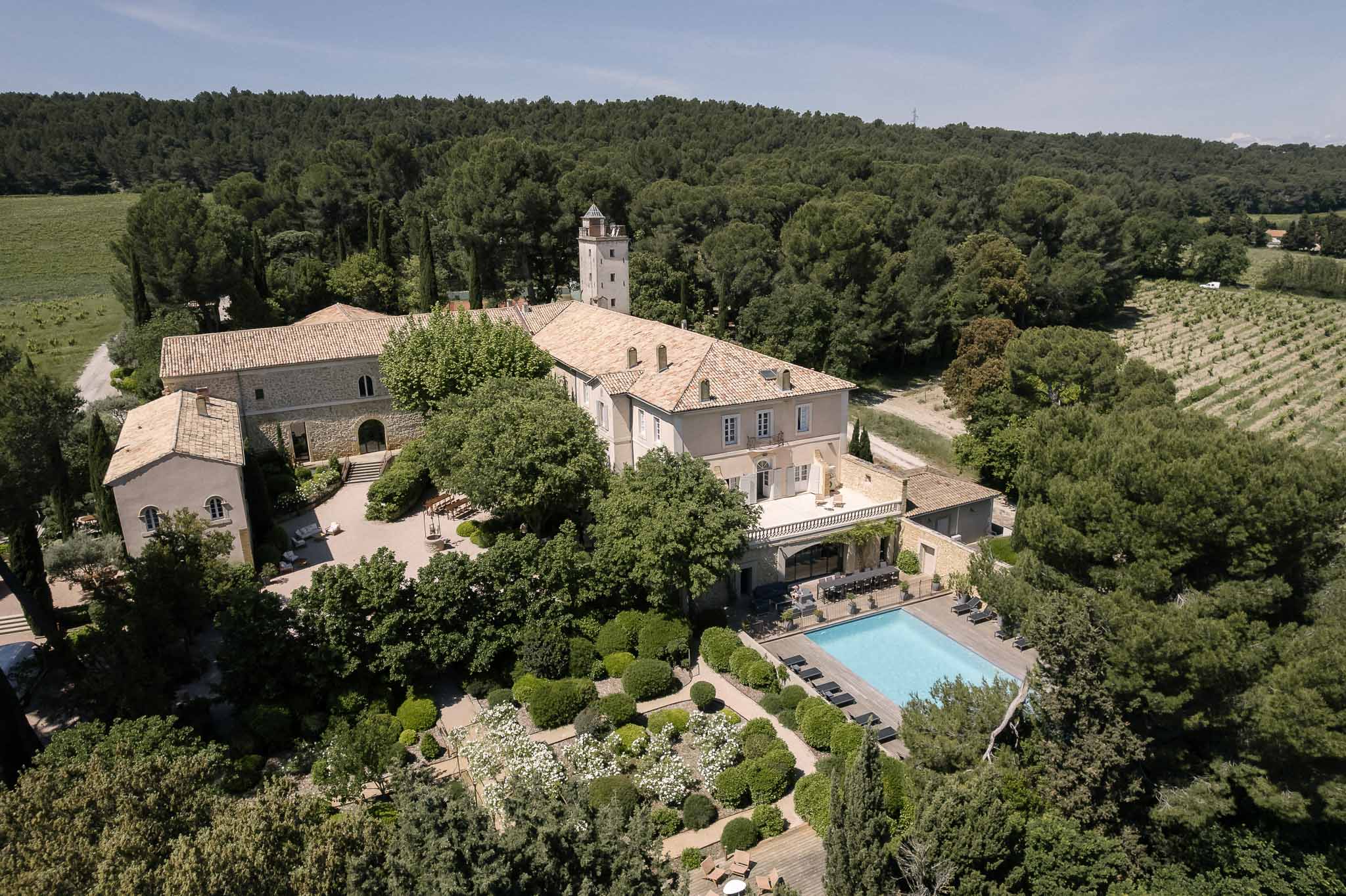
Every material in an authentic Provençal scheme should pass a simple test: does this exist naturally in the landscape? The palette and material list that follows is drawn from what you would find walking through a Provençal village, a local marché, and the surrounding countryside. The colour palette stays within the warm spectrum. No cool greys. No bright whites. No pastel pinks. Everything leans toward the warmth of sun-baked clay and dried grass. Accent colours, when they appear, come from the garden: the purple of lavender, the green-grey of sage, the deep yellow of sunflower centres. These are not chosen from a Pantone chart. They are observed from the landscape and brought to the table in their natural form. The textures must be tangible. Heavy ceramic that you feel the weight of. Linen that wrinkles within minutes of being laid. Wood with visible grain and tool marks. Iron with visible forge marks or rust patina.
| Material | Colour | Where It Appears |
|---|---|---|
| Terracotta | Burnt orange, sienna, dusty rose | Plates, pots, floor tiles, vessels for herbs |
| Olive wood | Warm brown with dark grain | Serving boards, salad servers, cheese platters |
| Sun-faded linen | Cream, oatmeal, palest blue | Table runners, napkins, chair cushions |
| Local stone | Pale ochre, warm grey | Walls, tables, pathway, boundary walls |
| Wrought iron | Black, rusted brown | Candleholders, garden furniture, railings |
| Dried herbs | Grey-green, silver, straw | Table décor: lavender, rosemary, thyme bundles |
| Woven rattan or wicker | Honey, straw | Bread baskets, trays, lanterns |
| Glazed ceramic | Blue-green, mustard, cream | Plates, jugs, serving bowls (mix patterns freely) |
Which Flowers Survive Provence's Heat and Light?
Provence in July and August is not kind to flowers. Afternoon temperatures reach 35 to 38°C. The Mistral strips moisture from petals. Direct sunlight bleaches colour within hours. A centrepiece of garden roses and peonies that looked full and lush at midday will be wilting by the time guests sit for dinner at eight. Any florist working a summer Provençal wedding must plan for heat, not just beauty. The flowers that survive are the flowers that grow here. Locally adapted varieties have developed tolerance for the conditions. They last longer, look better, and cost less because they have not been imported from a climate-controlled Dutch greenhouse. The flowers to avoid in a summer Provençal wedding: peonies (done by late June), ranunculus (spring only), sweet peas (wilt in hours above 30°C), and hydrangeas (need constant water). A good Provençal florist will steer you toward what grows in their garden that week. Trust that guidance. It is the fastest route to arrangements that look like they belong.
- Garden roses (June to September): the backbone of most Provençal arrangements. Locally grown varieties handle heat better than imported ones. Cream, blush, and apricot tones harmonise with terracotta and olive wood.
- Olive branches: year-round, abundant, and free from most Provençal venue gardens. Silver-green foliage that reads as unmistakably regional.
- Rosemary and thyme: aromatic, hardy, and visually interesting. Work as greenery in table arrangements and as scented bundles at each place setting.
- Dried lavender: peaks in late June to early July. Dried bundles last indefinitely. Fresh lavender wilts quickly in heat, so dry is actually the better choice for table décor.
- Grasses and seed heads: dried pampas, wheat sheaves, and local grasses add height and movement without wilting. They suit the warm, sun-bleached palette.
- Dahlias (August to October): rich autumn tones in burnt orange, deep pink, and burgundy. Heat-tolerant and locally grown across Provence.
How Do You Source Authentic Provençal Décor?
The best Provençal wedding décor is not rented from a catalogue. It is found. The region has one of the richest brocante and antique markets in Europe, and the objects available there carry a patina and character that no rental company can replicate. Start with L'Isle-sur-la-Sorgue, the antique capital of Provence. Its Sunday market and permanent dealer showrooms stock terracotta pots, glazed ceramics, wrought iron candelabras, olive wood boards, and linen by the metre. Prices range from a few euros for a ceramic jug to several hundred for a large wrought iron garden piece. Aix-en-Provence, Apt, and Uzès each have weekly markets with similar stock. The key is to go early, bring measurements, and know what you need rather than browsing without a plan. For ceramic tableware, consider commissioning directly from a local potter. Provençal poteries (pottery workshops) in Aubagne, Moustiers-Sainte-Marie, and Apt produce hand-glazed plates, bowls, and serving dishes that are made for daily use, not decoration.
For linen, Provençal fabric houses in Saint-Rémy-de-Provence, Avignon, and Arles sell table runners, napkins, and yardage in traditional Provençal prints or plain weaves. The prints are a deliberate choice: they either anchor the Provençal character (used sparingly) or overwhelm it (used everywhere). One printed element per table, maximum. A printed runner on a plain table with plain napkins. Or plain everything with a single printed cushion on the ceremony chairs.
Related Articles
- Styling and Design: the complete chapter guide
- French wedding aesthetics: what makes them different
- Style guide: classic French weddings
- Style guide: modern minimalist weddings in France
- Style guide: boho chic weddings in France
- French wedding florist: costs and seasonal guide
- Rustic wedding venues across France
- Destination wedding venues in Provence and southern France
- Colour palettes for French wedding venues
- Ceremony backdrops at French venues
- Lighting guide: fairy lights, candles, and lanterns
Frequently Asked Questions
Can Provençal rustic work outside Provence?
The materials and palette are specific to the region's landscape, clay soil, and Mediterranean light. Transplanting them to Normandy or Brittany, where the stone is grey and the light is cool, creates a visual mismatch. However, the principle of using local, weathered materials applies everywhere. In the Dordogne, the rustic palette shifts to golden stone, walnut wood, and deep greens. In the Languedoc, ochre and vine-leaf green take the lead. Each region has its own version of rustic. Taking the Provençal palette to a non-Mediterranean venue is like wearing a linen suit to a Scottish winter wedding. The item is fine. The context is wrong. Our regional climate guide helps match styling to location.
Is lavender essential for a Provençal rustic wedding?
No, and using it badly is worse than omitting it. Fresh lavender wilts within hours in summer heat and turns brown quickly once cut. Dried lavender lasts well but should appear as a deliberate accent, not in every corner of the venue. A small bundle at each place setting or a bowl of dried buds as a table scatter works. Lavender in the bouquet, the centrepieces, the ceremony arch, the favour bags, and the cocktail garnish crosses into theme territory. One lavender moment per wedding is the right number.
How do I stop Provençal rustic from looking like a Pinterest project?
Buy real things and use fewer of them. One genuine terracotta pot with a rosemary plant says more than ten craft-store terracotta pots filled with forced lavender. Real olive wood boards from a Provençal market have knife marks, oil stains, and grain patterns that no mass-produced version can match. The shortcut to authenticity is provenance. Where did this object come from? Has it been used before? Would someone in this region recognise it as their own? If you can answer yes, it belongs. If it came from a wedding décor website, it probably does not.
What does Provençal rustic bridal fashion look like?
Relaxed, warm, and textured. Fabrics lean toward raw silk, cotton lace, or crinkled chiffon rather than structured satin or heavy beading. The silhouette is often flowing: an A-line skirt, an empire waist, or a column dress with movement. Sleeves in delicate lace are common. Hair is loose or in a low, undone chignon with dried flower or greenery accents. Shoes are often flat sandals or espadrilles. The bride looks like she walked through a garden on her way to the table, not like she stepped off a salon floor. The groom wears light linen or cotton in cream, sand, or pale blue, often without a jacket. Leather belt, rolled sleeves, a boutonniere of rosemary and a single garden rose.
What is the approximate cost of a Provençal rustic table setup?
A Provençal rustic table costs less in décor than most other styles because the materials are simpler and many can be sourced locally. Mismatched ceramic plates from local potters: €3 to €8 each (purchased, not rented). Terracotta pots for table flowers: €2 to €5 each from a brocante market. Linen runners from a Provençal fabric house: €8 to €15 per table. The flowers are seasonal and local, which keeps arrangements to €50 to €120 per table for a mix of garden roses, olive branches, and dried herbs. For 12 tables seating 100 guests, the total table décor budget typically falls between €1,500 and €3,000, significantly less than the €3,000 to €5,500 a formal château setup commands. The savings come from using found and purchased objects rather than rentals, and from the seasonal, local flower palette.
Provençal rustic is the easiest French style to get wrong and the most rewarding to get right. Start with the landscape. Use what the region gives you. Let the terracotta, the olive wood, the dried herbs, and the sun-faded linen build the atmosphere. Then stop adding. The restraint is the design.
Explore Every Guide in This Chapter
Deep-dive into each topic covered above.