
Planning Your French Wedding Without Visiting
Not every couple can fly to France before their wedding day. Work schedules, budgets, visa restrictions, young children, or simply living on the other side of the world can make a pre-wedding visit impractical or impossible. That does not mean planning a wedding in France from a distance is reckless. It means the approach is different, the planner relationship is more important, and the technology you use actually matters. This article sits within our guide to hiring a destination wedding planner, part of our complete guide to planning a destination wedding in France.
Key Takeaways
- Thousands of international couples marry in France each year without a single pre-wedding visit. A strong planner relationship makes this possible.
- Virtual venue tours are useful but not sufficient on their own. Your planner should provide video walkthroughs, drone footage, and honest commentary about what the camera does not show.
- Remote vendor meetings, tastings, and design sessions are now standard practice for destination wedding planners in France.
- If you can only visit once, the most valuable trip is four to six months before the wedding, after vendors are booked but before final details are locked.
- The technology stack matters less than the planner's willingness to use it. Shared planning boards, video calls, and real-time photo updates replace the in-person meetings that local couples take for granted.
Why Some Couples Cannot Visit Before the Wedding
The reasons are more varied than people assume. Australian and Asian couples face 20-plus hours of travel each way, plus the cost of flights and accommodation for what amounts to a venue viewing and a few vendor meetings. Couples in the United States often cannot take time off work outside their allocated holiday, which they are saving for the wedding itself. Some couples hold passports that require a Schengen visa for every entry into France, making casual "let's go look at venues" trips a bureaucratic exercise. Others have young children and cannot easily travel internationally for a weekend.
None of these situations means a couple should abandon their plans for a French wedding. The destination wedding industry in France has adapted to remote planning. Planners who work with international clients, and most listed on French Wedding Style do, have built their entire workflow around the reality that couples may not set foot in France until the week of the wedding. The question is not whether remote planning is possible. It is how to do it well.
How Your Planner Becomes Your Eyes on the Ground
When you hire a wedding planner in France, you are hiring someone to see what you cannot see. That statement is true for all destination couples, but it carries particular weight when you will not visit in advance. Your planner visits the venue on your behalf, walks the grounds at the time of day your ceremony will take place, checks the condition of the accommodation, tests the acoustics of the reception space, and measures the terrace to confirm it seats 80 for dinner. They photograph the view from the bridal suite, the parking situation, the kitchen facilities, and the backup indoor space in case of rain.
This goes beyond a sales tour. A good planner knows what to look for because they have seen what goes wrong. They check whether the path from the ceremony site to the cocktail area is navigable in heels. They note whether the venue's outdoor lighting is adequate or whether you will need to hire additional fixtures. They test the mobile signal strength because your DJ needs a reliable connection. These are details that venue websites and promotional videos never address.
Virtual Venue Tours: What Works and What to Watch For
Most French wedding venues now offer some form of virtual tour, ranging from a set of professional photographs to a 360-degree walkthrough on their website. These are marketing tools. They show the property at its best, in ideal light, with styled table settings and flower arrangements that are not included in the hire fee. They are a useful starting point, but they are not a substitute for a live walkthrough with someone who is working for you.
What actually works is a live video call with your planner on-site at the venue. They walk through the property in real time while you ask questions. Where would the bar go? How far is it from the car park to the ceremony area? What does the indoor backup space look like? Is the bridal suite actually large enough for a getting-ready session with four bridesmaids? A 45-minute live walkthrough with your planner tells you more than every professional photograph on the venue's website combined.
Drone footage is increasingly common and genuinely useful for understanding the scale and setting of a property. It shows the surrounding landscape, the relationship between different areas of the grounds, and the access roads. Ask your planner whether they can commission drone footage of your shortlisted venues. The cost is typically €200 to €400 per property and is well worth it for a venue you are considering booking at €5,000 to €15,000.
What to watch for: venues that resist live video tours or discourage your planner from visiting independently. A venue confident in its product welcomes scrutiny. A venue that controls the narrative by only providing polished marketing materials may be concealing maintenance issues, noise from a nearby road, or a renovation project that will not be complete by your wedding date.
Remote Vendor Tastings and Meetings
Tasting menus, floral mock-ups, and vendor chemistry cannot be fully replicated over a screen. But the French wedding industry has developed practical workarounds that get close. Traiteurs in France now routinely offer tasting boxes shipped to international clients, typically three to four courses prepared and vacuum-sealed, with wine pairings included. The cost ranges from €150 to €400 depending on the traiteur and the number of courses. You eat the food at home while your planner joins a video call with the traiteur to discuss adjustments. It is not the same as sitting in a Provençal garden while someone serves you duck confit, but it gives you a genuine sense of flavour profiles, portion sizes, and presentation standards.
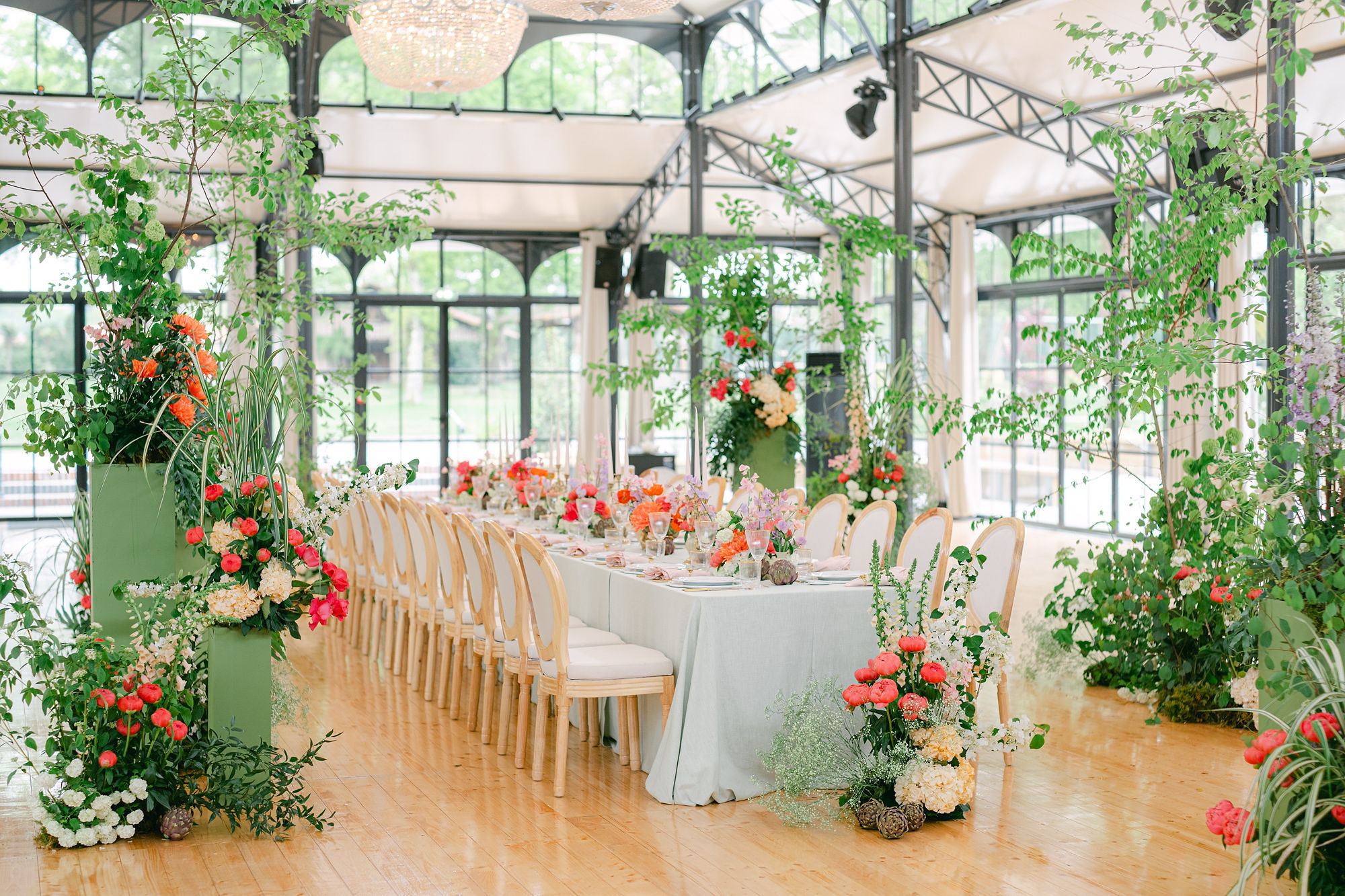
Florists work from mood boards and material samples. Your planner photographs seasonal flowers available in your wedding month, and the florist creates a sample centrepiece or bouquet that your planner photographs and films from multiple angles. Some florists will prepare a sample arrangement for a site visit so you can see it in context at the venue. Musicians and DJs typically provide playlists, demo recordings, and video from recent events. A 15-minute video call with your band leader or DJ gives you a strong sense of their personality and professionalism. Photographers are the easiest vendor to evaluate remotely: their portfolio is their product. Focus on full wedding galleries, not polished highlight reels, and ask for two or three complete sets from weddings similar in size and style to yours.
The one vendor relationship that benefits most from meeting in person is the planner or coordinator. If you can only meet one vendor face-to-face before the wedding, make it this person. A coffee in London, a video call from Sydney, or a meeting at a wedding fair in New York can establish the personal connection that makes remote planning work.
The One Visit That Matters Most
If you can make one trip to France before your wedding, time it four to six months before the date. By this point, your venue is booked, your key vendors are contracted, and your planner has been working on the design concept. The purpose of this visit is not to make decisions. It is to confirm them.
Walk the venue yourself. Stand where your ceremony will take place. Sit in the reception space. Sleep in the bridal suite. Meet your traiteur and attend a tasting in person. Meet your florist and look at real flowers in the colours you have discussed. Drive the route from the nearest airport to the venue so you understand what your guests will experience on arrival. Visit the mairie if you are having a civil ceremony in France.
This trip typically lasts three to four days. Your planner should coordinate it so that every meeting is scheduled efficiently, with travel time between appointments built in. Expect to see the venue, meet two to three vendors, finalise the floral and design direction, and resolve any outstanding questions about the timeline. Couples who make this trip consistently report that it transforms their confidence level. You leave France knowing exactly what your wedding will feel and look like.
If you genuinely cannot visit at all, that is still manageable. But be prepared to invest more time in video calls, more trust in your planner, and more detail in your written briefs. The planner's role shifts from collaborator to proxy, and the communication volume increases accordingly.
Technology Tools for Remote Planning
The tools themselves are less important than the discipline of using them consistently. That said, certain categories of technology make remote planning materially easier.
Shared project boards. Platforms like Trello, Airtable, or Monday.com give both you and your planner a single view of every task, deadline, and decision. Your planner updates the board after every vendor meeting, uploads contracts and proposals, and flags items that need your input. You check the board on your schedule and respond without the back-and-forth of email chains. Most professional planners in France already use a project management platform. Ask which one before you sign.
Video calls with screen sharing. Zoom, Google Meet, or WhatsApp video are the backbone of remote planning. Schedule regular check-ins, typically fortnightly during the early months and weekly in the final two months. Use screen sharing to review floor plans, table layouts, lighting designs, and stationery proofs together. Record the calls if your planner agrees, so you can revisit decisions without relying on memory.
Photo and video updates. Ask your planner to send regular visual updates: progress photos from the venue if renovations are underway, photos of floral samples, screenshots of the table layout in their design software. A quick 60-second video message from your planner after a vendor meeting gives you context that a written summary cannot match.
Cloud-based document sharing. Google Drive or Dropbox for contracts, mood boards, vendor proposals, and planning documents. Every document in one place, accessible from any time zone. No attachments lost in email threads.
What does not work: trying to manage the planning through WhatsApp messages alone. WhatsApp is excellent for quick updates and photo sharing, but it is a poor substitute for structured project management. Important decisions get buried in message threads, documents are hard to find, and there is no task tracking. Use WhatsApp for communication. Use a dedicated platform for project management.
What Can Go Wrong and How Planners Prevent It
The risks of remote planning are real but manageable. The most common problems are expectation gaps: the venue looks different in person than it did on screen, the colour palette that looked right on a laptop does not work in natural light, or the walk from the ceremony to the reception is longer than the floor plan suggested. A planner who has done this before anticipates these gaps. They send photos in different lighting conditions, not just golden hour. They measure distances and quote them in minutes of walking time. They bring fabric swatches to the venue and photograph them in the actual setting.
Vendor reliability is another risk. When you are not in the country, you cannot pop in to check that the rental company has the chairs you ordered or that the florist understood your brief. Your planner does this for you. They schedule confirmation meetings with every vendor four to six weeks before the wedding, review delivery schedules, and walk through the setup plan at the venue. A planner who manages remote weddings regularly will have a checklist for this process that covers every detail from power supply locations to where the refrigerated van parks.
The third risk is the couple's own stress. Planning from a distance can feel like handing control to someone you have never met in person, in a country where you do not speak the language, for the most important event of your lives. This is where the planner relationship matters most. Regular communication, visual proof of progress, and a planner who proactively shares updates rather than waiting to be asked. Trust is built through small, consistent actions over months, not through a single reassuring conversation.
For couples weighing up the costs involved, our guide to planner costs by region breaks down what to budget across different parts of France.
Related Articles
- Wedding planner in France: costs and how to choose
- Planner vs coordinator vs day-of: which service level do you need?
- Questions to ask a French wedding planner before signing
- How to brief your wedding planner effectively
- Finding your wedding venue in France
- How much does a destination wedding in France cost?
Frequently Asked Questions
Is it risky to book a French wedding venue without visiting in person?
It is manageable with the right support. A planner who visits the venue on your behalf, provides live video walkthroughs, and gives honest feedback about the property reduces the risk substantially. Ask your planner to photograph the venue in different weather and lighting conditions, not just the promotional shots. The real risk is booking a venue based solely on its website without any independent assessment.
How do remote tastings with a French traiteur work?
Most traiteurs who work with international couples offer tasting boxes that are prepared and shipped to your home address. Expect three to four courses with wine pairings, costing €150 to €400. You taste the food at home while joining a video call with the traiteur and your planner to discuss seasoning, portion sizes, and presentation. Some traiteurs instead invite your planner to taste on your behalf and send detailed notes and photos.
What if I cannot visit France at all before the wedding?
Plan to arrive three to four days before the wedding instead of one or two. Use those extra days for a venue walkthrough, a final meeting with your planner, and a run-through of the timeline on site. Your planner should have a detailed arrival-week schedule prepared so every remaining decision is resolved before the rehearsal. Couples who cannot visit in advance should also budget for more planner hours, as the planner takes on additional site visits and vendor meetings that would otherwise happen with the couple present.
How many video calls should I expect during remote planning?
A typical remote planning schedule includes fortnightly calls during months 12 to 6, weekly calls during months 6 to 2, and twice-weekly calls in the final month. Each call runs 30 to 60 minutes. In addition, expect ad-hoc calls for vendor introductions, design reviews, and tasting debriefs. Budget 40 to 60 hours of video call time across a 12-month planning period.
Browse our directory of wedding planners in France to find professionals experienced in remote planning with international couples. For more on choosing the right venue from a distance, explore our guide to the best destination wedding venues in France.
Explore Every Guide in This Chapter
Deep-dive into each topic covered above.