
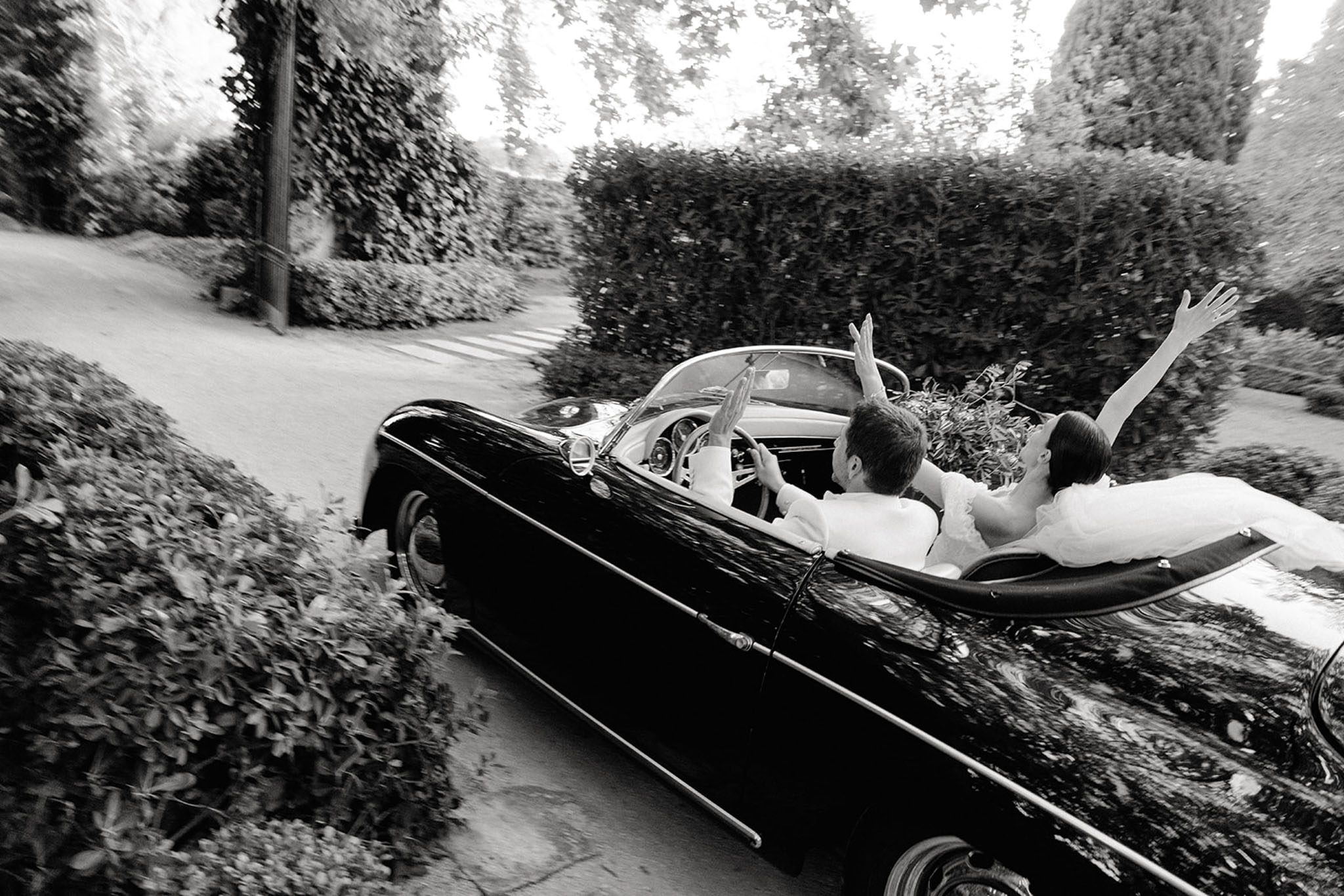
Packing for Your French Wedding
Packing for your own wedding in France is not the same as packing for someone else's. The dress, the suit, the rings, the vows, the shoes you will dance in, the shoes you will walk on gravel in, the emergency kit, the printed timeline, the gifts for the bridal party, the power adapters for every device, the steamer for every garment. And then there is everything you need for a 3-day weekend that includes a welcome dinner, the wedding itself, a brunch, and possibly a day of activities either side. The suitcase situation gets serious quickly.
This guide is the comprehensive checklist: what you need, what is wedding-specific, and what every couple forgets. Print it. Check it off. Arrive in France with everything. This forms part of the complete French destination wedding planning resource. For the full chapter, see our complete final details guide.
Key Takeaways
- Start packing 2 weeks before departure, not 2 days. The wedding dress, suit, and accessories need to be organised first because they dictate how everything else fits around them in the luggage.
- The wedding dress travels as cabin luggage on most airlines if packed in a garment bag that fits the overhead bin. Call the airline 48 hours before departure to confirm their policy and request priority boarding so you can stow it before the bins fill up.
- Split essentials between two bags. If one checked bag is lost, the other contains enough to get through the wedding. Rings, vows, marriage documents, and medications travel in hand luggage. Always.
- The items couples most commonly forget: the marriage licence or required documents, European power adapters, a steamer for the dress and suit, comfortable flat shoes for the evening, and the printed emergency contact list for the day coordinator.
- Pack the emergency kit (see our emergency kit guide) as a separate, clearly labelled bag that stays with the couple or the wedding coordinator throughout the day.
What Should the Couple Pack for a French Wedding Weekend?
The couple's packing list for a French destination wedding splits into five categories: wedding day clothing and accessories, outfits for the welcome dinner and morning brunch, personal care and comfort essentials, documents and travel items, and wedding-specific equipment that would not appear on any standard holiday checklist. A typical French wedding weekend spans three days (Friday arrival through Sunday brunch), which means three distinct outfits for each partner plus the wedding day attire. The most common packing mistake is underestimating how much the couple needs beyond the dress and the suit. A garment steamer, the emergency kit, bridal party gifts, printed timelines, and ceremony readings all need space in checked luggage. Pack wedding-critical items across two bags so that a single lost suitcase does not leave you without a dress, shoes, or rings on the morning of the wedding.
Wedding day clothing and accessories.
- Wedding dress (in a breathable garment bag, padded with tissue at the folds)
- Veil, headpiece, or hair accessories
- Wedding shoes (ceremony pair and a second pair for dancing)
- Undergarments specific to the dress (strapless bra, shapewear, corset)
- Suit or tuxedo (in a garment bag, steamed or pressed on arrival)
- Shirt, tie or bow tie, pocket square, cufflinks
- Suit shoes (polished before packing; pack shoe trees to maintain shape)
- Jewellery for the day (keep in hand luggage)
- Perfume / cologne
Weekend clothing.
- Welcome dinner outfit (Friday evening, smart casual)
- Sunday brunch outfit (relaxed but presentable)
- Daytime clothing for activities, travel, and downtime
- Swimwear (if the venue has a pool or the schedule includes a beach or river)
- Light jacket or wrap for evening temperature drops
- Comfortable walking shoes for the venue grounds and local villages
- Sleepwear
Documents and essentials.
- Passports (check expiry dates: France requires 3+ months validity beyond your stay)
- Marriage licence and required documents (see our required documents guide)
- Wedding rings (carry in hand luggage, not checked bags)
- Printed vows or ceremony readings
- Flight and train tickets (digital and printed backups)
- Venue confirmation and contact details (printed)
- Printed day-of timeline and vendor contact list
- European power adapters (Type C / Type E) and multi-outlet extension lead
- Phone chargers and a portable power bank
- Travel insurance documents
- Prescription medications (in hand luggage, enough for the trip plus 2 spare days)
What Wedding-Specific Items Do You Need?
Beyond the dress and the suit, a destination wedding generates its own packing category: items that would not appear on any holiday checklist. A compact garment steamer is essential because the dress and suit will crease in transit regardless of how carefully they are packed, and not every French venue provides one. Bridal party gifts need to travel in checked luggage wrapped in tissue rather than gift wrap, which adds bulk and gets crushed. Welcome bag contents for guest rooms should be shipped to the venue two to three weeks in advance via international courier rather than packed in suitcases. Printed seating materials, place cards, and the plan de table from a UK or US stationer need a rigid folder to prevent bending. The dedicated emergency kit bag, a card box for monetary gifts, and any personal decorative items like cake toppers or table number holders all require their own protected space in checked luggage.
- Garment steamer. Essential. The dress and suit will crease in transit regardless of how carefully they are packed. A compact travel steamer (€25 to €40) removes wrinkles on arrival without the risk of ironing delicate fabric. Some venues provide one. Do not assume.
- Bridal party gifts. If you are giving gifts to attendants, parents, or the wedding party, pack them in checked luggage wrapped in tissue (not gift wrap, which adds bulk and gets crushed).
- Welcome bags for guests. If you are preparing welcome bags for guest rooms, ship non-perishable items to the venue in advance rather than packing them. Coordinate with the venue or planner for delivery and distribution.
- Card box or gift receptacle. Some couples bring a decorative box for cards and monetary gifts. If this is your plan, choose one that is flat-packable.
- Place cards and plan de table. If your stationer is in the UK or US, the printed seating materials need to travel with you. Pack them flat in a rigid folder or between two pieces of cardboard to prevent bending.
- Emergency kit. A dedicated bag containing safety pins, double-sided fashion tape, stain remover pen, sewing kit, painkillers, plasters, breath mints, tissues, deodorant, blotting papers, and all the items listed in our emergency kit guide. This bag stays with the maid of honour or coordinator on the day.
- Cake topper or decorative personal items. If you have a specific cake topper, table number holders, or decorative elements that are personal (not hired from the rental company), pack them carefully in your checked luggage surrounded by soft clothing.

What Do Couples Always Forget?
The marriage documents. Couples who have been focused on dresses, flowers, and seating plans for months leave the legal requirements in a drawer at home. If you are having a legal ceremony in France, the required documents (see our required documents guide) must travel with you. For symbolic ceremonies, your finding a celebrant may need the couple's personal information, readings, or signed declarations. Confirm what is needed and pack it in hand luggage. European power adapters. France uses Type C and Type E plugs. UK, US, and Australian plugs do not fit. You need adapters for phone chargers, the garment steamer, hair styling tools, and portable speakers. Pack at least 3 adapters and a multi-outlet extension lead so the getting-ready room can run a hairdryer, a curling iron, and a steamer simultaneously. Comfortable shoes for dancing. The ceremony shoes are packed. The gravel-appropriate block heels are packed. The flat shoes for the after-party at 2am are not. Pack them.
The printed day-of timeline. The digital version is on your phone, but phone signal at rural French venues is unreliable, and battery dies by 3pm on a day of constant use. Print the timeline, the vendor contact list, and the emergency numbers. Give a copy to the coordinator, the best man, and the maid of honour.
Sunscreen and insect repellent. For summer weddings, the couple needs these for the morning before the ceremony. Sunburn on the shoulders before a strapless dress, or mosquito bites on the neck during a 7am walk in the garden, are avoidable with a 30-second application. Choose a non-greasy, fragrance-free formula that will not interfere with makeup.

Related Articles
- Final details: the complete guide
- French wedding emergency kit
- Hair, makeup and getting ready
- Choosing a wedding dress for your venue type
- Guest packing list
- Required documents for marrying in France
- Day-of stationery
- Destination wedding venues in France
- Browse all wedding venues in France
Frequently Asked Questions
Can the wedding dress travel as cabin luggage?
On most airlines, yes. A wedding dress packed in a garment bag that fits the overhead bin is accepted as cabin luggage, sometimes in addition to your regular hand luggage allowance. Call the airline 48 hours before departure to confirm their specific policy and request priority or early boarding so you can stow the dress before the bins are full. If the dress is too voluminous for the overhead bin (ball gowns, heavy beaded designs), some airlines offer a seat purchase for the garment bag or can hang it in a first-class closet on request.
Should we bring backup outfits?
Not a full backup wedding dress, but a clean white or cream blouse or top is a sensible precaution if the dress is damaged in transit. For the suit, a backup shirt and tie take minimal space and cover a coffee spill or a lost button. The steamer is more important than a backup outfit: 90 percent of garment issues after travel are wrinkles, not damage.
How do we transport the rings safely?
Carry the rings in hand luggage, in a hard-sided ring box inside a zipped pocket. Never put rings in checked luggage. If you are travelling separately, the person with the rings communicates their arrival status to the other. Some couples give the rings to the best man or maid of honour on arrival at the venue so that responsibility is shared and the rings are in the hands of the person who will hold them during the ceremony.
Explore Every Guide in This Chapter
Deep-dive into each topic covered above.