
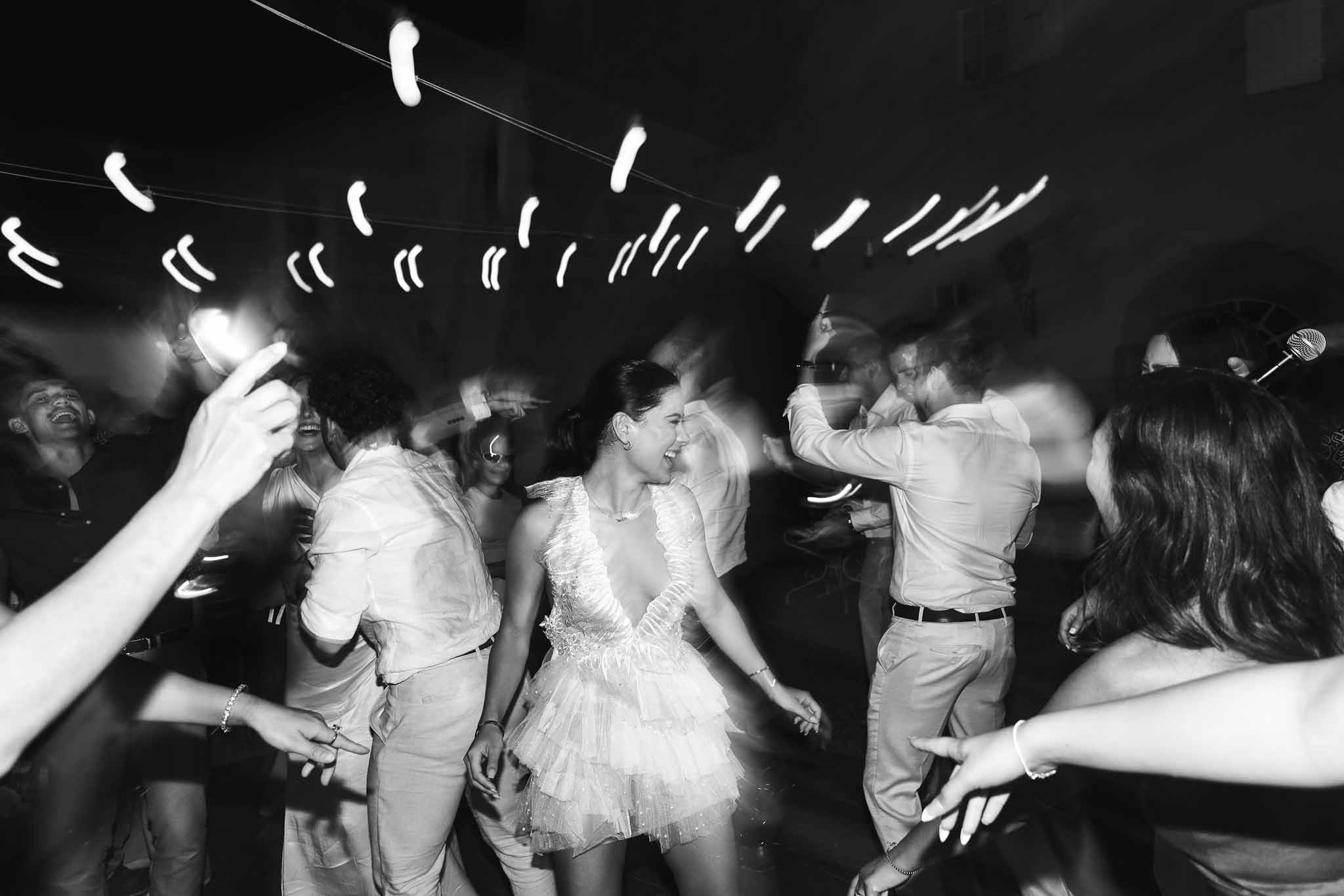
French Wedding Music: Traditional & Modern
Music at a French wedding does more than fill silence. It marks transitions, builds collective energy, and carries cultural meaning that shapes the entire evening. The ouverture de bal is not just a first dance. The guest singing tradition is not just entertainment. The playlist is not just background. For a broader view of every step involved, see our step-by-step destination wedding planning guide for France.
Each musical moment has a role in the architecture of the day. And the way French weddings handle sound, from ceremony to the 3am dance floor, differs in texture and rhythm from what British or American couples know. The traditions, the songs, and the cultural context, so you can plan music that honours France while reflecting your own story. For vendor hiring and cost guidance, see our separate guide to wedding bands and DJs in France. This article sits within our French wedding traditions chapter.
Key Takeaways
- The ouverture de bal (first dance) in France is a communal moment: family joins the couple within 30 to 60 seconds, transforming it from spotlight performance to shared celebration.
- Guest singing is a genuine French tradition where friends and family prepare original songs, skits, and performances for the couple, often rehearsed for weeks.
- French wedding playlists blend romantic chansons (Cabrel, Bruni, Gainsbourg) with high-energy dancefloor tracks (Stromae, Daft Punk, Angèle) and international classics.
- Sound culture at French weddings prioritises conversation during dinner and reserves high-energy music for after 11pm, a fundamentally different rhythm from UK or US receptions.
- Music at French weddings serves six distinct phases: ceremony, cocktail hour, dinner background, speeches, the opening dance, and the late-night party.
What Music Traditions Define a French Wedding?
Three music traditions distinguish a French wedding from its Anglo-American counterpart. The ouverture de bal reframes the first dance as a collective moment. The guest singing tradition makes the audience part of the performance. And the deliberate separation of dinner music (quiet, conversational) from party music (loud, communal) creates two distinct sonic worlds within a single evening. Understanding all three helps international couples design a celebration that feels authentically French without losing elements that matter to them. For a full timeline of how these phases fit into the day, see our guide to the vin d'honneur and French wedding day structure. French weddings treat music as a supporting actor, not the lead, for the first five hours of the evening. From ceremony through dinner, sound stays in the background. Acoustic guitar during the processional. Jazz piano during the vin d'honneur. Soft playlists during the meal. Conversation is the soundtrack of dinner. Wine glasses clink.
Laughter carries across linen-covered tables. The DJ or band waits. Then, after the pièce montée, after the sparklers, the room shifts. Lights dim. Bass drops. The party begins at 11pm and builds for hours. This contrast, quiet restraint followed by explosive energy, is the emotional arc that defines French wedding sound culture.
Based on destination weddings featured on French Wedding Style over 15 years, the six musical phases of a French wedding day look like this:
Scroll →
| Phase | Time | Sound Character | Typical Source |
|---|---|---|---|
| Ceremony | 4 to 6pm | Acoustic, emotional, intentional | String duo, acoustic guitar, solo vocalist, or carefully chosen playlist |
| vin d’honneur | 5 to 8pm | Light, social, warm | Jazz trio, acoustic ensemble, lounge playlist |
| Dinner | 8pm to 11pm | Background, conversational | DJ at low volume, carefully selected playlist, occasional live set |
| Speeches and performances | Between courses | Silence between, applause after | No music during speeches. Guest performances self-accompanied. |
| Ouverture de bal | 11pm to midnight | Romantic, building | Couple's chosen song, DJ or band |
| La soirée | Midnight to 4am+ | High-energy, celebratory, communal | DJ, live band, or both in rotation |
What Is the Ouverture de Bal?
The ouverture de bal (literally "opening of the ball") is the French first dance tradition, and it operates on a fundamentally different principle from the Anglo-American version. In Britain or the United States, the first dance is a performance. The couple takes the floor alone. Guests watch. The song plays to completion. There may be choreography. There is always an audience. In France, the ouverture de bal begins the same way, couple on the floor, chosen song playing, but family members join within 30 to 60 seconds. The bride's father steps in. The groom's mother follows. Siblings, grandparents, close friends. By the end of the first song, the floor is full. The transition from couple to crowd is quick, natural, and warm. The first dance becomes a communal doorway into the party rather than a spectator event.
This tradition reflects a deeper cultural attitude. French weddings belong to the community, not just the couple. The ouverture de bal makes that philosophy physical. Everyone dances. Everyone is included from the first bar of music. International couples who want a private first dance moment can still have one. Ask your DJ to hold the floor for the first 60 to 90 seconds before inviting family to join. Most experienced DJs and band leaders at château venues and destination estates manage this transition instinctively.
Song Choices for the Ouverture de Bal
The song choice for the ouverture de bal tends toward warmth and accessibility rather than grand romance. French couples favour songs that invite movement, not songs that demand a choreographed waltz.
Mid-tempo classics work well because they accommodate both the couple's initial moment alone and the natural transition to a full floor. Popular choices include Francis Cabrel's "Je l'aime à mourir," Edith Piaf's "La Vie en Rose," and more contemporary options like Ben Mazué's "Quand je marche" or Vianney's "Je m'en vais." International couples often choose a song that bridges both cultures: a French classic followed by their own favourite, or a bilingual medley arranged by their band.
Which French Songs Belong on Every Wedding Playlist?
A French wedding playlist weaves two threads: romantic chansons that carry the earlier hours, and high-energy dancefloor tracks that power the party after midnight. The best playlists balance both, with French classics sitting comfortably beside international hits. From interviews with experienced DJs and planners working with international couples in France, these are the songs that consistently appear on wedding playlists. For the ceremony and vin d'honneur, classic chansons from Edith Piaf, Jacques Brel, Charles Trenet, and Francoise Hardy set a distinctly French atmosphere without alienating non-French-speaking guests. For the dancefloor, French house and pop tracks from Daft Punk, Stromae, Angele, and Christine and the Queens blend seamlessly with international hits and reliably fill the dance floor after midnight. The selection below is drawn from real playlists used at French destination weddings and organised by moment: ceremony, cocktail hour, first dance, and late-night party.
Romantic Chansons (Ceremony, vin d’honneur, First Dance)
| Artist | Song | Best Moment |
|---|---|---|
| Francis Cabrel | "Je l'aime à mourir" | Ouverture de bal, ceremony exit |
| Carla Bruni | "Quelqu'un m'a dit" | vin d’honneur, first dance |
| Serge Gainsbourg & Jane Birkin | "Je t'aime... moi non plus" | Late evening, intimate moment |
| Françoise Hardy | "Tous les garçons et les filles" | Ceremony, cocktail hour |
| Charles Aznavour | "La Bohème" | Dinner background, parent dance |
| Edith Piaf | "La Vie en Rose" | Processional, first dance |
| Jacques Brel | "Ne me quitte pas" | Ceremony reading accompaniment |
| Georges Brassens | "Les Copains d'abord" | Guest gathering, vin d'honneur |
Dancefloor Anthems (La Soirée, Midnight Onward)
| Artist | Song | Why It Works |
|---|---|---|
| Stromae | "Alors on danse" | Guaranteed floor-filler. Every French guest knows every word. |
| Daft Punk | "One More Time" / "Get Lucky" | French electronic royalty. Bridges French and international guests. |
| David Guetta | "Titanium" / "Play Hard" | High energy. Works for peak midnight energy. |
| Angèle | "Tout oublier" | Contemporary French pop. Appeals to younger guests. |
| Aya Nakamura | "Djadja" | Biggest French hit of recent years. Infectious rhythm. |
| Claude François | "Comme d'habitude" | The original "My Way." French guests will sing every word. |
| Jean-Jacques Goldman | "Je te donne" | Group singalong classic. Builds unity on the floor. |
| Indila | "Dernière Danse" | Cinematic energy. Dramatic. Works for peak moments. |
The key is sequencing. French DJs typically open the dance floor with crowd-pleasers that everyone knows (Stromae, Daft Punk), build through high-energy sets at no-curfew venues, then gradually ease toward slower, more emotional tracks as the night winds down. A 2am Cabrel song feels different from a 6pm one. The playlist is the same. The emotional context transforms it.
What Is the Guest Singing Tradition?
One of the most distinctive and genuinely moving French wedding traditions involves guests preparing original songs, skits, and performances for the couple. This is not karaoke. It is not spontaneous. Friends and family spend weeks, sometimes months, writing lyrics, rehearsing choreography, and preparing surprises. A group of university friends might rewrite the words to a classic Brassens song. Siblings might produce a video montage. Work colleagues might choreograph a dance to Stromae. The emotional commitment is real, and the results are often the most talked-about moments of the entire wedding. Guest performances are woven into the dinner service, typically between the second and fourth courses, alongside formal speeches. Each performance lasts three to eight minutes. At a large French wedding, four to six different groups may perform across the evening, with the MC or DJ managing transitions and timing. The couple sits together, receiving each performance like a gift, which is precisely what it is.
For international couples, this tradition offers a way to involve guests beyond simply attending. Include a note on your wedding website: "If you or a group of friends would like to prepare a song, toast, skit, or performance for us, we would love it. Please let our MC know in advance so we can plan the evening timing." Providing three to four weeks' notice gives groups time to prepare.
For LGBTQ+ couples, our guide to inclusive weddings in France covers how these traditions adapt naturally. Do not worry about quality. The imperfection is the point. A slightly off-key rendition of "La Vie en Rose" by your best friends carries more emotional weight than any professional performance could.
How Does Sound Culture Differ from UK and US Weddings?
The fundamental difference is philosophy. British and American weddings use music as continuous entertainment from ceremony through departure. Background playlists, cocktail hour bands, dinner music, DJ sets, and last songs create an unbroken audio thread. French weddings use silence as intentionally as sound. The gaps matter. Conversation during dinner is not a failure of entertainment planning. It is the entertainment. The practical implication for international couples: do not over-programme the dinner hours. French guests expect to talk across the table, not shout over a band. A DJ at ambient volume during dinner is fine. A full band set is not. Save the high-energy performance for after the pièce montée, when the room is ready to shift gears. The contrast between the quiet, candlelit dinner and the explosion of sound at the ouverture de bal is one of the most powerful emotional arcs in any wedding format. Protect it.
| Element | UK / US Approach | French Approach |
|---|---|---|
| Dinner music | Background playlist or live band throughout | Minimal or none. Conversation takes priority. |
| Speech accompaniment | Sometimes underscored with quiet music | Complete silence. Speeches stand alone. |
| Party start time | 8 to 9pm | 11pm to midnight |
| Volume arc | Gradual build from afternoon to evening | Quiet until 11pm, then dramatic increase |
| Last song | 10:30 to 11:30pm | 3 to 5am |
| Guest participation | Requests via DJ, occasional speeches | Prepared performances, group singing between courses |
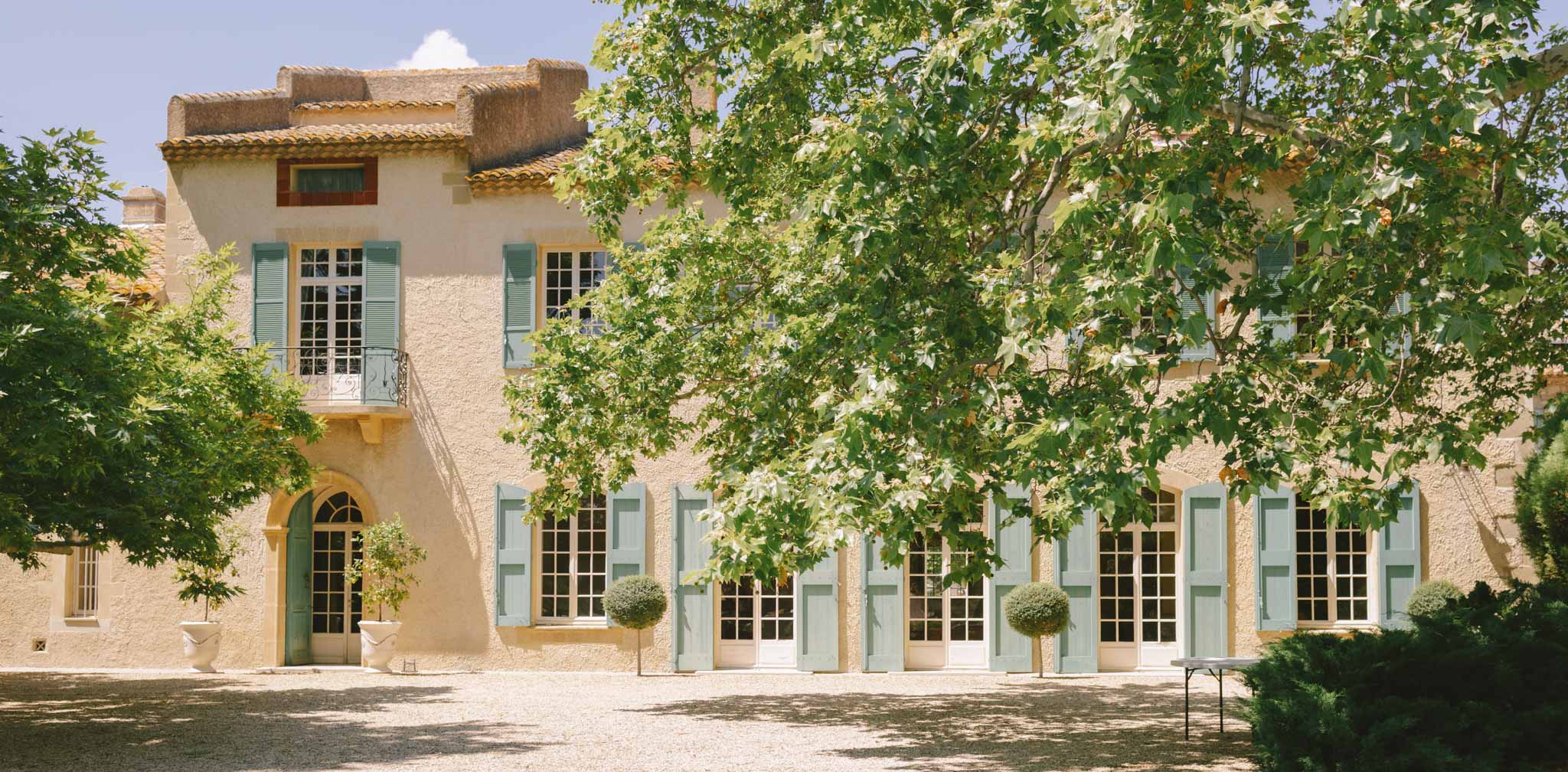
For venues, this means the sound curfew question is not about when music starts. It is about when music can be loud. Most exclusive-use wedding venues in France allow ambient music from mid-afternoon and high-volume music from 10 or 11pm onward. The curfew, typically 2 to 5am depending on isolation, determines how long the high-energy phase lasts. A late curfew is worth prioritising if the party matters to you.
What Do International Couples Get Wrong About French Wedding Music?
The biggest mistake is treating the DJ or band as background entertainment from start to finish. Playing dance music during a four-hour French dinner is a cultural mismatch that frustrates both French and international guests. French guests cannot hear each other talk. International guests wonder why no one is dancing. Keep dinner music ambient. Let the party happen at the right time. A second mistake is overlooking the guest performance tradition. International couples who do not mention the option in their communications miss out on one of the most personal and expressive elements of a French wedding. Even if only one group of friends prepares something, the result is always more meaningful than a professional set. Encourage it. A third mistake is choosing only English-language music for the playlist. Even if the majority of guests are English-speaking, French songs connect the celebration to its setting.
Frequently Asked Questions
Do French weddings always have a DJ?
DJs are the most common entertainment choice at French weddings, used at an estimated 80 to 85 percent of celebrations. Live bands are growing in popularity, particularly at higher-budget destination weddings, but the DJ remains the standard. Some couples combine both: a small band for the ceremony and vin d'honneur, then a DJ for the dinner and party. Your wedding planner can recommend trusted local performers.
Can we skip the ouverture de bal if we do not want a first dance?
You can, though it removes a natural transition point from dinner to dancing. An alternative is to open the dance floor with a group song rather than a couple's dance. The DJ invites everyone to the floor for the first track, bypassing the spotlight entirely. This works well for couples who feel self-conscious about dancing alone but still want a defined moment when the party begins.
How do we handle music for a bilingual ceremony?
Choose instrumental music for the processional and recessional, which transcends language. For any sung pieces during the ceremony, select songs in the language that carries the most emotional weight for the couple. If readings happen in two languages, consider a musical interlude between them to reset the emotional register. A solo guitarist or cellist can bridge the transition smoothly.
Are there French songs that work for the ceremony processional?
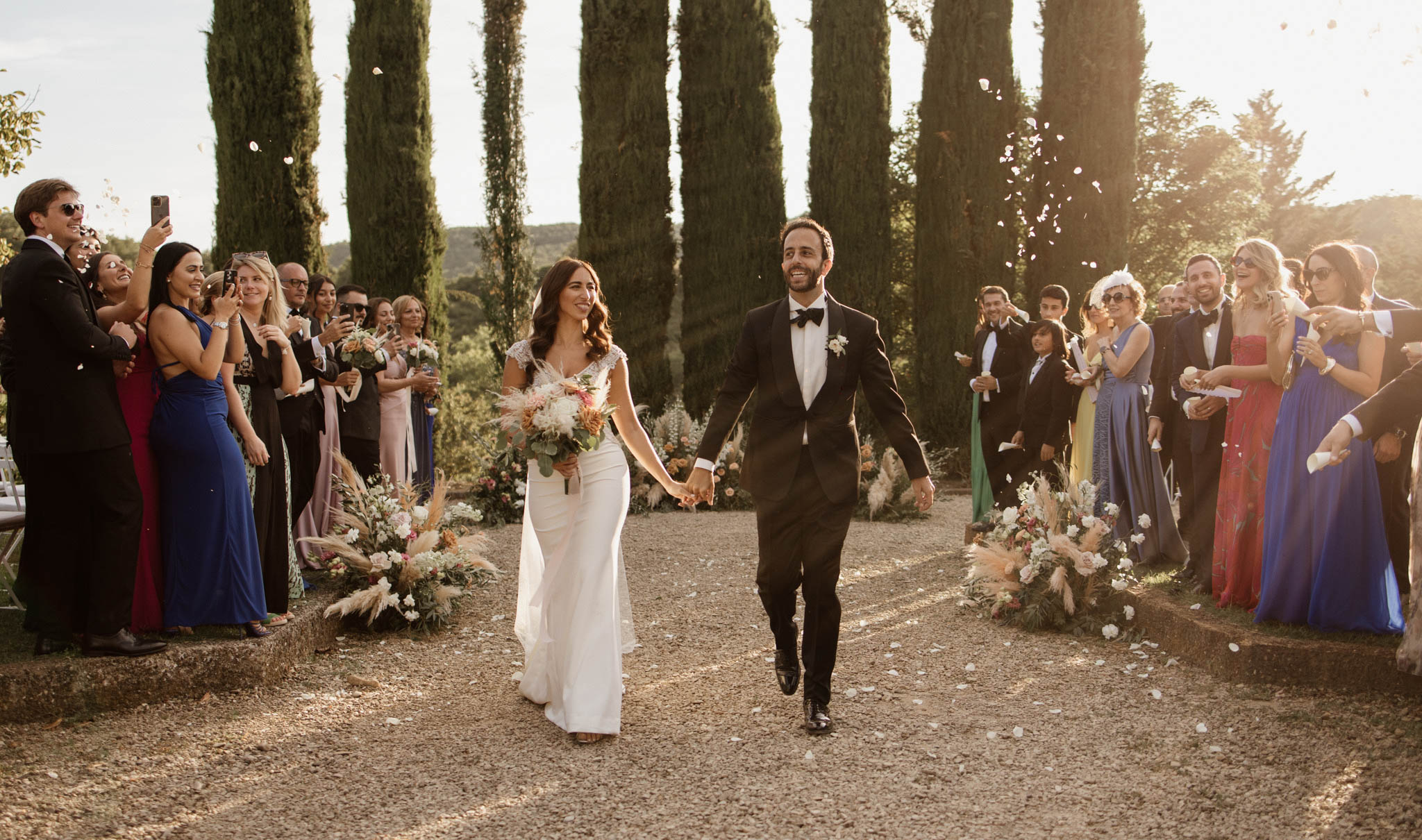
Debussy's "Clair de Lune" and Satie's "Gymnopédie No. 1" are instrumental French classics often used for the processional. For vocal options, Carla Bruni's "Quelqu'un m'a dit" and Françoise Hardy's "Comment te dire adieu" both work in acoustic arrangements. Charles Trenet's "La Mer" suits an outdoor coastal ceremony. Your ceremony musician can arrange any of these for guitar, piano, or strings. For guidance on writing the words that sit alongside the music, see our complete guide to wedding vows in France.
How loud is too loud for an outdoor ceremony?
Outdoor ceremony music should be audible from the back row without overwhelming the front. A small PA system with one speaker on each side of the aisle, set to conversational volume, is standard. Acoustic musicians (guitar, violin, cello) rarely need amplification for ceremonies under 80 guests. For larger ceremonies, a discreet wireless lapel microphone on the officiant ensures vows carry without competing with wind or ambient sound.
Should we create a "do not play" list for the DJ?
A short "do not play" list (five to ten songs maximum) is more useful than a detailed playlist request. Professional DJs read the room, especially at château venues where the acoustics change between stone halls and open courtyards. Restricting a handful of songs you strongly dislike gives them creative freedom while protecting against unwanted surprises. Common French wedding "do not play" entries include novelty tracks (Macarena, Cha-Cha Slide) and songs with personal associations the couple prefers to avoid.
Explore Every Guide in This Chapter
Deep-dive into each topic covered above.