
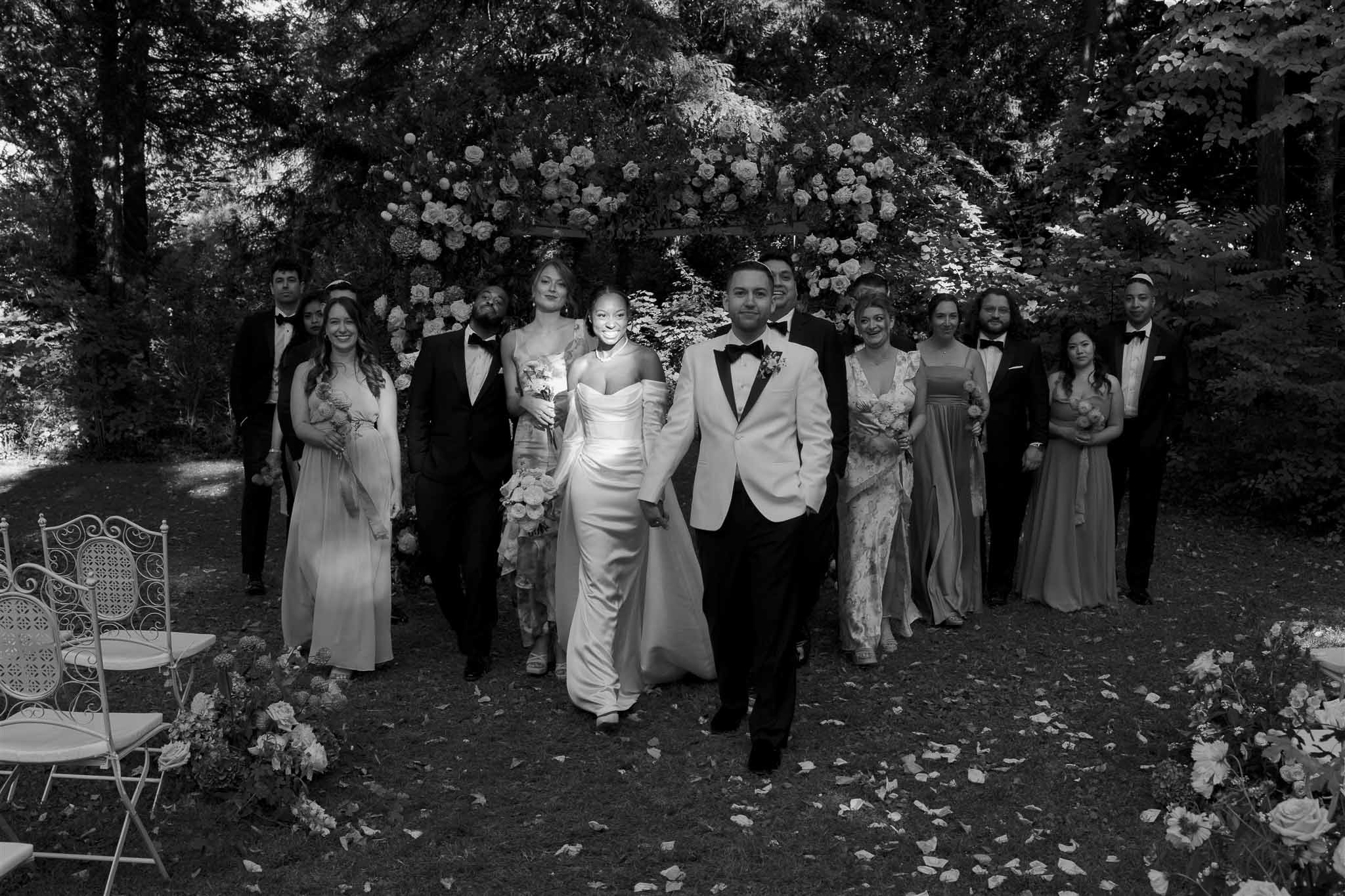
Multi-Cultural Weddings in France
France draws couples from everywhere. A British-Indian pair in Provence. A Franco-Lebanese celebration in Bordeaux. A Japanese-American wedding in the Loire Valley. The country's position at the crossroads of Europe, its long history of cultural exchange, and the sheer adaptability of its venue infrastructure make it a natural setting for weddings where two or more cultures share the same stage.
The practical question is not whether France can accommodate a multi-cultural wedding. It can. The question is how to plan one well: how to manage ceremonies in multiple traditions, feed guests with different dietary requirements, navigate three languages in one evening, and ensure that every cultural element feels honoured rather than compressed. The logistics, as part of our French wedding traditions chapter. For a broader view of every step involved, see the full planning guide for destination weddings in France.
Key Takeaways
- France has no restrictions on symbolic religious ceremonies at private venues. Jewish chuppahs, Hindu mandaps, and Muslim nikah ceremonies can all take place at your chosen wedding location.
- Multi-language ceremonies work best with alternating languages rather than line-by-line translation. A printed bilingual programme ensures every guest can follow along.
- Halal, kosher, vegetarian, and vegan catering is available from specialist traiteurs across France, particularly in Paris, Marseille, Lyon, and the Côte d'Azur.
- The most successful multi-cultural weddings choose two or three meaningful traditions from each culture rather than trying to include everything.
- A bilingual wedding planner experienced with cross-cultural celebrations is the most valuable investment for complex multi-cultural logistics.
Why Is France a Natural Setting for Multi-Cultural Weddings?
France has been a meeting point for cultures for centuries. Paris alone hosts one of the largest Jewish communities in Europe, a significant North African community with deep Islamic traditions, a growing South Asian diaspora, and established Chinese, Vietnamese, and West African communities. This cultural diversity means the infrastructure for multi-cultural celebrations, from specialist caterers to multilingual officiants to venues experienced with non-Western ceremonies, already exists. International couples are not asking France to accommodate something new. They are plugging into a system that has handled cultural complexity for generations. The venue landscape helps. French châteaux, domaines, and mas properties are typically exclusive-use estates where the couple controls every detail. There is no hotel management to negotiate with, no competing events, no restrictions on ceremony format. An outdoor Hindu ceremony under a mandap draped in marigolds works in the same courtyard that hosts a civil blessing in the morning and a French dinner in the evening.
Across the venues listed on French Wedding Style, the majority have hosted weddings that blend two or more cultural traditions. The most common combinations: British-French, American-French, Franco-Moroccan, British-Indian, Franco-Lebanese, and American-Jewish. Venue coordinators in regions like Provence, Bordeaux, and the French Riviera are experienced with diverse ceremony requirements, dietary needs, and the logistical choreography of multi-faith celebrations.
How Do Jewish, Hindu, and Muslim Ceremonies Work at French Venues?
France separates legal marriage (which must happen at the mairie) from religious and symbolic ceremonies. This separation means that any religious ceremony at a private venue is classified as symbolic and carries no legal restrictions. No registration required. No government approval. No constraints on format, language, or officiant. A rabbi, pandit, imam, or any religious leader can conduct a ceremony at a French venue without any French administrative process. Jewish weddings in France follow the standard Ashkenazi or Sephardic order: ketubah signing, bedeken (veiling), chuppah ceremony with seven blessings, ring exchange, glass breaking, and yichud (private moment). The chuppah structure travels easily to any venue. Garden ceremonies under a floral chuppah are common at Provençal estates, where the olive trees and golden stone create a natural frame for the canopy. Practical considerations: a rabbi based in Paris or Marseille can travel to most venue regions. For orthodox ceremonies, verify that the venue can accommodate Shabbat requirements if the wedding falls on Saturday evening (havdalah timing).
Jewish Ceremonies
Hindu Ceremonies
Hindu wedding ceremonies involve specific structural requirements: a mandap (canopy), a sacred fire (agni) for the saptapadi (seven steps), and often a priest who conducts the ceremony in Sanskrit with explanations in English or the couple's language. The mandap can be constructed at any outdoor or indoor venue space. Fire ceremonies require discussion with the venue coordinator, as some historic properties have restrictions on open flames indoors.
Most outdoor venues accommodate the sacred fire without issue. Indoor alternatives include electric or symbolic flame options, which many priests accept for destination weddings. Mandap decoration (flowers, fabric, lighting) can be arranged through French florists experienced with Indian weddings, particularly in Paris, the Riviera, and Provence. A full Hindu ceremony lasts 60 to 90 minutes, which fits within the standard French wedding timeline when scheduled at 3 to 4pm, before the vin d'honneur.
Muslim Ceremonies
A nikah ceremony is typically brief (20 to 30 minutes) and requires an imam, two witnesses, a mahr (bridal gift), and the couple's consent. It can take place at any venue. The simplicity of the nikah format means it integrates easily into a broader wedding programme, often held in a private room before the main celebration, or incorporated into the symbolic ceremony as one segment of a blended event.
Halal catering is widely available across France, particularly in the south (Marseille, Montpellier, Toulouse, Nice) and Paris. Many mainstream traiteurs offer halal options alongside their standard menu. Dedicated halal caterers provide full wedding service including canapés, multi-course dinner, and late-night food. Alcohol-free reception options are straightforward: French venues are accustomed to adapting their beverage service, offering mocktail bars, artisanal juices, and premium soft drinks alongside or instead of wine.
How Do You Manage Multiple Languages During the Ceremony?
Multi-cultural weddings often involve three or more languages: the couple's two native languages plus French for local administrative or cultural elements. The most effective approach is layered language management, where religious texts are delivered in their original liturgical language (Hebrew, Sanskrit, Arabic), readings and personal reflections alternate between the two primary guest languages in substantial two-to-three-minute blocks rather than sentence-by-sentence translation, and a printed bilingual or trilingual ceremony programme gives every guest the full text in all relevant languages. The printed programme is the most effective tool for inclusive multi-language ceremonies, because guests can follow along regardless of which language is being spoken at any moment. A bilingual celebrant who can move naturally between languages is worth the additional investment of €200 to €500 over a monolingual officiant. The principles from our blending traditions guide apply here, and our vow writing guide covers bilingual vow options in depth.
- Liturgical language: Religious texts (blessings, prayers, vows prescribed by tradition) are delivered in the original language. This preserves their spiritual integrity. The officiant provides a brief contextual explanation in the primary spoken language before or after each segment.
- Alternating spoken languages: Readings, personal reflections, and celebrant commentary alternate between the two primary guest languages. Each block of content is substantial (two to three minutes) rather than sentence-by-sentence translation.
- Printed programme: A bilingual or trilingual ceremony programme includes the full text of readings, blessings, and vows in all relevant languages. Guests follow along regardless of which language is being spoken. This is the most effective tool for inclusive multi-language ceremonies.
- MC or interpreter: For ceremonies with elderly family members who speak only one language, a discreet live interpreter sitting with them can whisper translations of key moments. This is more respectful than making the entire ceremony bilingual for the benefit of a few guests.
The key principle: do not translate everything. Translate the moments that carry emotional weight. A Hebrew blessing delivered in Hebrew, followed by a brief English explanation, lands with more power than the same blessing delivered in both languages consecutively. Trust the emotional register of the moment to communicate across language barriers.
What Catering Considerations Apply to Multi-Cultural Celebrations?
Dietary diversity is the primary catering challenge at multi-cultural weddings. A celebration that includes Muslim, Hindu, Jewish, and secular European guests may need to accommodate halal, vegetarian, kosher, and standard French cuisine at the same table. This is not as complex as it sounds, but it requires planning that starts with the caterer selection, not the menu tasting. Two catering strategies work well for complex dietary requirements. The first is a single-menu approach: design one menu that satisfies the most restrictive dietary requirement and serves everyone. A halal or kosher menu with vegetarian options can feed every guest at the table without separate dishes, labels, or awkward "who ordered the restricted meal?" moments. French cuisine adapts well to this approach. A Provençal menu built around vegetables, grains, seafood, and fruit satisfies most dietary frameworks naturally.
Scroll →
| Dietary Requirement | Availability in France | Budget Impact | Planning Lead Time |
|---|---|---|---|
| Halal | Widely available. Specialist caterers in all major regions. | Comparable to standard catering (€100 to €200/head) | 3 to 4 months |
| Kosher | Available via specialist caterers. Strongest in Paris, Marseille, Lyon, Nice. | 20 to 40% premium over standard (€150 to €300/head) | 4 to 6 months |
| Vegetarian / Vegan | Increasingly mainstream. Most traiteurs offer full vegetarian menus. | Comparable or slightly less than standard | 2 to 3 months |
| Gluten-free | Widely accommodated. French cuisine naturally offers many gluten-free options. | Minimal impact | 2 to 3 months |
| Multi-requirement (e.g., halal + vegetarian) | Requires specialist caterer or collaborative approach. | 10 to 25% premium for complexity | 4 to 6 months |
The second is a dual-service approach: two caterers working in parallel, each responsible for their dietary stream. This is common at large Franco-Moroccan or British-Indian weddings where the volume of guests in each dietary category justifies the investment. The two caterers share the venue kitchen (confirm logistics with the venue in advance) and service happens simultaneously. Guests choose from clearly labelled stations or buffet lines.
How Do French Venues Accommodate Different Cultural Requirements?
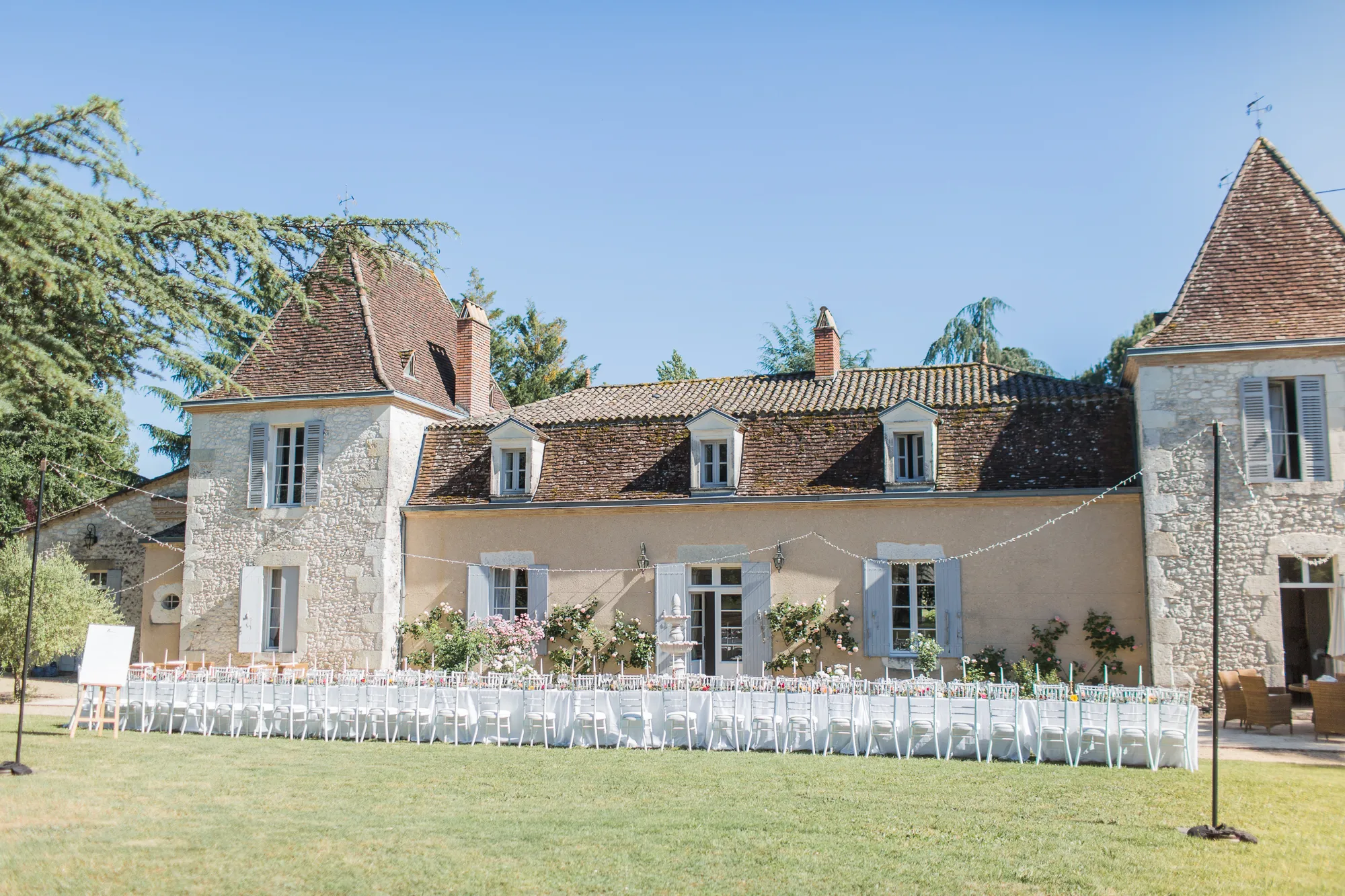
French wedding venues, particularly the exclusive-use properties that dominate the destination market, are designed for flexibility. The spaces are large, adaptable, and operated by coordinators who have seen hundreds of different wedding formats. Specific accommodations that venues routinely handle include: Ceremony space transformation. A courtyard that hosts a Hindu mandap ceremony at 3pm can be reset for a French apéritif at 5pm. Venues with multiple outdoor areas (a garden, a terrace, a courtyard) allow simultaneous or sequential use for different ceremony segments. Discuss your ceremony flow during the first venue visit. The coordinator will map the physical transitions. Prayer and preparation rooms. Most château and domaine properties have multiple private rooms that can serve as prayer rooms, meditation spaces, or preparation areas for religious rituals that require privacy. Ask about availability and proximity to the main ceremony area. See how this couple brought this to life at their Paris venue.
Kitchen capacity for multiple caterers. Venues that allow external caterers typically have commercial or semi-commercial kitchens. Confirm the kitchen size, the number of independent prep stations, and the power supply if you plan to have two caterers working simultaneously.
Sound and timing for multiple ceremonies. If your wedding includes a pre-dinner religious ceremony and a post-dinner party, the venue's sound system and curfew rules apply to both. Confirm that the ceremony space has adequate sound equipment (or that you can hire it) and that the overall timeline fits within the venue's operating hours. Our guide to managing halal, kosher, and other dietary requirements at a French wedding breaks this down further.
Guest accommodation logistics. Multi-cultural weddings often involve guests travelling from multiple countries with different arrival dates. Venues with substantial on-site accommodation simplify logistics enormously. Proximity between guest rooms, ceremony spaces, and dining areas means guests can move between events without transport coordination.
What Do International Couples Get Wrong About Multi-Cultural Weddings in France?
The planning mistake that surfaces again and again is assuming French vendors will not understand their cultural requirements. The opposite is usually true. France's own cultural diversity means that traiteurs in Marseille have cooked halal wedding meals for decades. Florists in Paris have built Hindu mandaps. Celebrants on the Riviera have conducted Jewish ceremonies under chuppahs overlooking the Mediterranean. Ask vendors about their experience rather than assuming they have none. A second mistake is trying to give equal time to every cultural tradition. A three-hour ceremony that includes complete Hindu, Christian, and French civil elements exhausts everyone. Our guide to French wedding regions most welcoming to multicultural celebrations explains the specifics. Choose the traditions that carry the most meaning for the couple and their immediate families. A 20-minute nikah, a 45-minute symbolic ceremony with readings from both traditions, and a French dinner format is more effective than attempting four distinct ceremonies in sequence.
A third mistake is not communicating dietary requirements clearly or early enough. A casual "some guests are vegetarian" mentioned two months before the wedding is not adequate. Provide your caterer with exact numbers by dietary category at least three months in advance. For kosher requirements, the lead time is four to six months because sourcing and logistics are more complex. Your wedding planner should manage this communication as a standard part of their coordination role.
Frequently Asked Questions
Can a rabbi, imam, or priest legally marry us in France?
No. Only the maire (or deputy) can perform a legally binding marriage in France. A religious ceremony at your venue is classified as symbolic and has no legal standing. Most international couples complete the legal marriage either at the French mairie or in their home country, then hold the religious and symbolic celebration at the venue. This separation actually works in your favour: it removes all administrative restrictions from the ceremony itself. Our vow writing guide covers how to personalise the symbolic ceremony completely.
Are there venues that specialise in multi-cultural weddings?
While no venue formally specialises, many have extensive experience. Venues in Provence, the French Riviera, and the Paris region host the highest volume of international and multi-cultural weddings. Ask the venue coordinator directly: "How many multi-cultural or multi-faith weddings have you hosted in the past two years?" Their answer, and their comfort level with the question, tells you everything.
How do we handle alcohol at a wedding with guests who do not drink?
Offer a full non-alcoholic programme alongside the wine. Premium mocktails during the vin d'honneur, artisanal juices, French sparkling water, and non-alcoholic champagne alternatives (several excellent French brands exist as of 2026) ensure non-drinking guests feel as celebrated as everyone else. Brief your venue and caterer on the proportions: if 40 percent of your guests do not drink alcohol, the beverage order should reflect that.
Is it possible to have a fire ceremony (agni) at a French château?
Many outdoor venues accommodate fire ceremonies without issue. The fire is contained in a copper or brass vessel (havan kund) and managed by the priest. Indoor fire ceremonies require discussion with the venue, as historic properties may have restrictions. Alternatives include battery-operated flame elements or conducting the fire ceremony outdoors while the rest of the wedding takes place inside. Confirm with your venue coordinator during the first visit.
Can we find a bilingual officiant who understands our specific cultural traditions?
Yes, though you may need to look beyond your venue's standard vendor list. The community of bilingual celebrants in France includes officiants with Jewish, Hindu, Muslim, Buddhist, and humanist backgrounds. Your wedding planner is the best resource for these connections. For specialist requirements, allow three to four months for finding and booking an officiant who understands both the cultural traditions and the logistics of a French venue celebration.
How do we seat guests from different cultures who may not share a language?
Mixed tables work better than cultural blocks. Seat guests by connection to the couple rather than by nationality or language. Place bilingual friends strategically as informal interpreters. Round tables of 8 to 10 work well because multiple conversations can happen simultaneously. Long banquet tables, while visually striking, make cross-language communication harder because guests can only speak to their immediate neighbours. For how music traditions bridge language gaps on the dance floor, see our separate guide.
Explore Every Guide in This Chapter
Deep-dive into each topic covered above.