
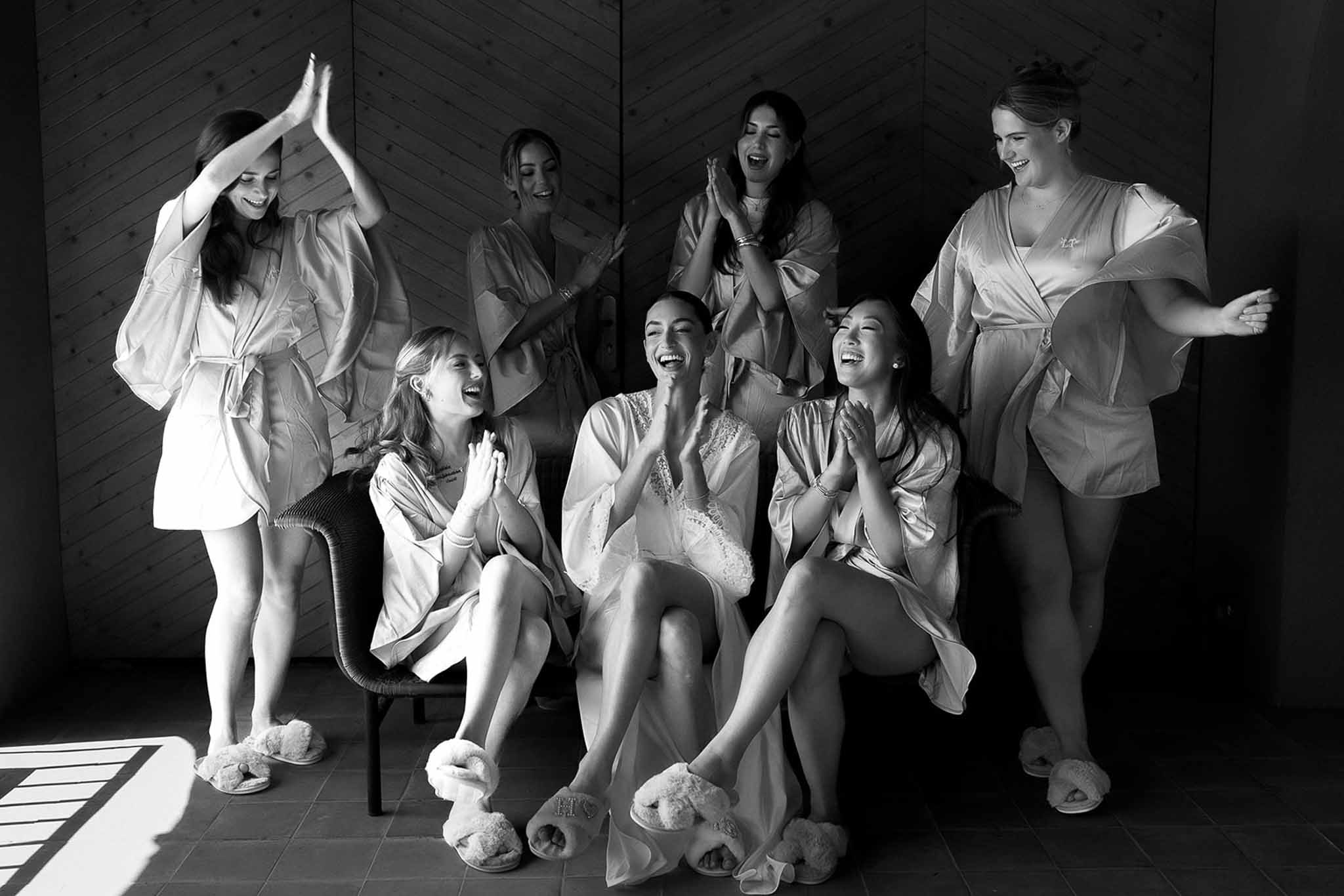
Getting Ready on Your French Wedding Morning
The morning of a French wedding starts slowly. Light falls through tall shuttered windows. Coffee is poured from a ceramic pot, and someone has already set croissants on a tray in the hallway. This is not the frantic, alarm-clock-at-5am scene couples sometimes expect. At most French venues, the ceremony does not begin until late afternoon, which means the morning stretches out in a way that feels generous, almost leisurely.
The hours between waking and walking down the aisle are some of the most personal of the entire day. They set the emotional tone for everything that follows. Rushed mornings produce anxious brides and flustered grooms. Calm mornings produce couples who arrive at their ceremony feeling like themselves. Below are the practical timing, the atmosphere decisions, and the pitfalls that catch couples off guard on the morning of a French wedding. For the full timeline chapter, see our complete wedding day timeline guide. For a broader view of every step involved, see our step-by-step destination wedding planning guide for France.
Key Takeaways
- With French ceremonies typically starting at 4pm to 6pm, couples have a long morning to prepare. Most bridal getting-ready sessions begin between 9am and 10am, with the couple aiming to be fully dressed by 2pm to 3pm.
- Hair and makeup for the bride takes 1.5 to 2 hours. Each bridesmaid takes 30 to 45 minutes. A bridal party of 4 to 6 needs a staggered schedule starting by 9am at the latest.
- The morning atmosphere matters as much as the timeline. A cluttered room, loud music from the start, or too many people in the space creates visual and emotional noise that undermines the calm couples want in their photographs and memories.
- The two most common morning mistakes are starting too late (leaving no buffer for delays) and inviting too many people into the getting-ready room (creating chaos when the hairstylist needs quiet and the photographer needs clean backgrounds).
- The groom's preparation is often under-planned. Allocate a separate space, schedule detail shots, and allow at least 1 hour for getting dressed, accessorising, and first look or groomsmen portraits.
How Early Does the Morning Start?
Earlier than you think, but not as early as you fear. The starting time depends on the ceremony time, the size of the bridal party, and whether hair and makeup is done by one artist or two. Here is the working calculation: take the ceremony start time, subtract 1 hour for a pre-ceremony first look or portraits (if planned), subtract 30 minutes for travel to the ceremony location (if it is not at the venue), subtract 1 hour for getting dressed and final details. That gives you the time the bride needs to be finished with hair and makeup. Then count backwards: 1.5 to 2 hours for bridal hair and makeup, plus 30 to 45 minutes per bridesmaid. For a 4pm ceremony with 4 bridesmaids and one hair and makeup artist, the session starts at approximately 9am. The bride goes last (so her look is freshest), which means bridesmaids start at 9am, the bride is in the chair by 12pm, and finished by 2pm.
If you have two artists working simultaneously, you gain roughly 90 minutes. The session can start at 10.30am instead. This is one of the strongest arguments for hiring a second hair and makeup artist at a French wedding, where the choice of beauty team affects the entire morning schedule.
For the groom and groomsmen, getting dressed takes less time but still deserves a dedicated window. Allow 1 hour from the moment the groom begins getting ready to the moment he is photographed and ready. Schedule this for 2pm to 3pm, in a separate room or building from the bridal preparation.
What Does the Getting-Ready Timeline Look Like?
A practical morning timeline anchors every other element of the wedding day. For a 4.30pm ceremony at a château venue with four bridesmaids and one hair and makeup artist, the morning needs to start no later than 8am, giving eight and a half hours for breakfast, hair and makeup for five people, detail photography, getting dressed, a first look (if planned), and travel to the ceremony location. The oversight that blindsides international couples is underestimating how long hair and makeup takes when only one artist is working. At 45 to 60 minutes per person, five people require four to five hours, which means the artist must begin immediately after breakfast. Adding a second artist compresses this to two and a half hours and gives the bride a meaningful buffer. The timeline below is built for a single-artist scenario. If you have two artists, shift the finish time forward by 90 minutes and use the extra time for portraits or a relaxed lunch.
| Time | Activity | Who |
|---|---|---|
| 8.00am | Breakfast delivered to the bridal suite. Coffee, fruit, pastries, water. | Bride, bridesmaids, mother |
| 8.30am | Photographer arrives. Detail shots: dress on hanger, shoes, jewellery, perfume, invitation suite, rings. | Photographer |
| 9.00am | Hair and makeup artist begins. Bridesmaid 1 in the chair. | HMU artist, BM1 |
| 9.45am | Bridesmaid 2 starts hair and makeup. BM1 gets dressed. | HMU artist, BM2 |
| 10.30am | Bridesmaid 3 starts. Mother of the bride may have her hair styled during this window. | HMU artist, BM3, MOB |
| 11.15am | Bridesmaid 4 starts. Light snacks replenished. | HMU artist, BM4 |
| 12.00pm | Bride begins hair and makeup. Room calms down. Photographer documents the process. | HMU artist, bride |
| 1.45pm | Bride's hair and makeup complete. Short break, water, moment of quiet. | Bride |
| 2.00pm | Bride gets into the dress. Mother or MOH assists. Photographer captures. | Bride, MOH, photographer |
| 2.00pm | Groom begins getting dressed in separate space. Groomsmen portraits. | Groom, groomsmen, second photographer or videographer |
| 2.30pm | Bride fully dressed. Veil, earrings, shoes. Final mirror moment. | Bride, photographer |
| 2.45pm | First look (if planned) or private moment with parent. | Couple or bride + parent |
| 3.15pm | Couple portraits in the venue grounds. | Couple, photographer |
| 4.00pm | Guests arrive. Ceremony musicians or playlist begins. | Guests |
| 4.30pm | Ceremony starts. | Everyone |
This timeline includes 45 minutes of buffer. If the hair and makeup artist runs 20 minutes late on one bridesmaid (which happens frequently), the bride still starts on time. If getting dressed takes longer than expected (bustles, buttons, a veil that needs pinning), the first look can shift by 15 minutes without affecting the ceremony. Build the buffer in. Do not schedule the morning with zero margin.
How Do You Create the Right Atmosphere?
The getting-ready room is the first set piece of the wedding day, and it shows up in dozens of photographs. Think of it as a stage. Start with the light. French château bedrooms typically have tall windows with white or cream curtains that diffuse soft, even light across the room. Open the curtains fully. Turn off overhead lights, which cast flat, unflattering shadows. If the room faces east, the morning light will be warm and golden. If it faces north, the light will be cool and steady. Either works. What does not work is a dark room where the photographer has to use flash, which strips the atmosphere from every image. Next, the space itself. Clear the room of suitcases, plastic garment bags, cardboard boxes, and anything that is not visually part of the story. Hang the dress on a wooden or padded hanger near a window. Lay the shoes, jewellery, and perfume on a clean surface with good light.
Sound sets the emotional register. A quiet playlist of acoustic music or soft French jazz in the first few hours. Nothing too energetic too early. The energy builds naturally as the morning progresses, and by the time the bride is getting into her dress, the room has its own momentum. Save the dancing-in-robes moment (if that is your thing) for the window between makeup finishing and dress going on.
The colour of the robes or pyjamas the bridal party wears during preparation shows up in every morning photograph. White, cream, soft blush, and pale blue photograph consistently well against the honey-coloured stone and neutral interiors of most French venues. Avoid bold prints or neon colours that dominate the frame. Silk or cotton robes in a single colour create a cohesive visual that your photographer will thank you for.
What Do Couples Get Wrong About the Morning?
The first and most common mistake is inviting too many people into the getting-ready room. The bride, the bridesmaids having their hair and makeup done, the mother of the bride, and the photographer. That is the core group. Children, partners, extended family, and friends who are "just popping in to say hello" fragment attention, fill the room with noise, and create backgrounds in photographs that look crowded rather than composed. Set expectations the night before. The getting-ready room is a working space from 9am to 2pm. Visitors are welcome for 15 minutes around 11am. After that, the room needs to be calm for the bride's session. Your wedding planner can manage this boundary so you do not have to. **Underestimating transition time.** The gap between "makeup done" and "walking down the aisle" catches couples off guard. Getting into a wedding dress with a corset back or a row of fabric-covered buttons takes 15 to 20 minutes. Pinning a cathedral veil takes another 10 minutes.
The third mistake is neglecting the groom's preparation. At a château venue where both partners are getting ready on-site, the groom needs a designated space that is not a corridor or a bathroom. A separate bedroom, a library, or a ground-floor salon works well. Schedule the photographer (or second photographer) to spend 20 to 30 minutes with the groom: cufflinks, tie or bowtie, jacket on, a moment with the best man. These are photographs the couple keeps for decades, and they do not happen by accident.
The fourth mistake is emotional scheduling, or the lack of it. Build in one quiet moment between the bride being fully dressed and the ceremony starting. Five minutes alone, or five minutes with the person who matters most. No photographer, no bridesmaids, no schedule pressure. This pause is where the day shifts from preparation to presence, and couples who skip it often say the morning felt like it happened to them rather than with them.
French wedding mornings have a natural advantage over their British or American counterparts: time. A ceremony at 4.30pm instead of 1pm gives the morning room to breathe. Use that time well. Do not fill it with more activities. Fill it with less pressure, better food, and the kind of quiet that turns a stressful countdown into the first chapter of a day your body remembers as calm, grounded, and yours.
For choosing a dress that suits your venue's architecture and setting, see our dedicated guide. The dress you pick affects the getting-ready timeline. A simple slip dress takes five minutes. A couture gown with a corset and cathedral train takes thirty.
Related Articles
- Wedding day timeline: the complete guide
- The ceremony at a French wedding
- From vin d'honneur to dinner
- Sample wedding day timelines
- Hair and makeup for a French wedding
- Choosing your dress to suit the venue
- The wedding weekend packing list
- The wedding day emergency kit
- Why hire a French wedding planner
- Choosing your wedding photographer in France
- Château wedding venues in France
- Exclusive-use wedding venues in France
- Destination wedding venues in France
- Intimate wedding venues in France
- Browse all wedding venues in France
Frequently Asked Questions
Should the groom see the bride before the ceremony?
A first look, where the couple sees each other privately before the ceremony, is increasingly popular at French weddings. It gives the photographer 20 to 30 minutes of natural, emotional couple portraits in the best light of the day. It also reduces the post-ceremony portrait time, which means guests are not waiting during the vin d'honneur. Traditionalists prefer the ceremony reveal. Both work. The logistical advantage of a first look is that it shortens the gap between the ceremony and dinner.
What if it rains on the morning and the portraits were planned outside?
French châteaux and domaines are built with covered spaces: stone arcades, vaulted hallways, covered terraces, and grand staircases. Your photographer will have scouted indoor backup locations during the venue visit. Rain produces soft, even light that is flattering for portraits, and covered exterior spaces (a stone cloister, a glass orangery) give you outdoor atmosphere without the weather. Do not reschedule the timeline. Move the locations.
How many people should be in the getting-ready room?
No more than 8 at any one time: the bride, 3 to 4 bridesmaids, the mother of the bride, the hair and makeup artist, and the photographer. More bodies mean more noise, more background clutter, and less space for the photographer to work. If you have a large bridal party (6+ bridesmaids), stagger their arrival so that only 2 to 3 are being styled at once while others get ready in an adjacent room.
Explore Every Guide in This Chapter
Deep-dive into each topic covered above.