
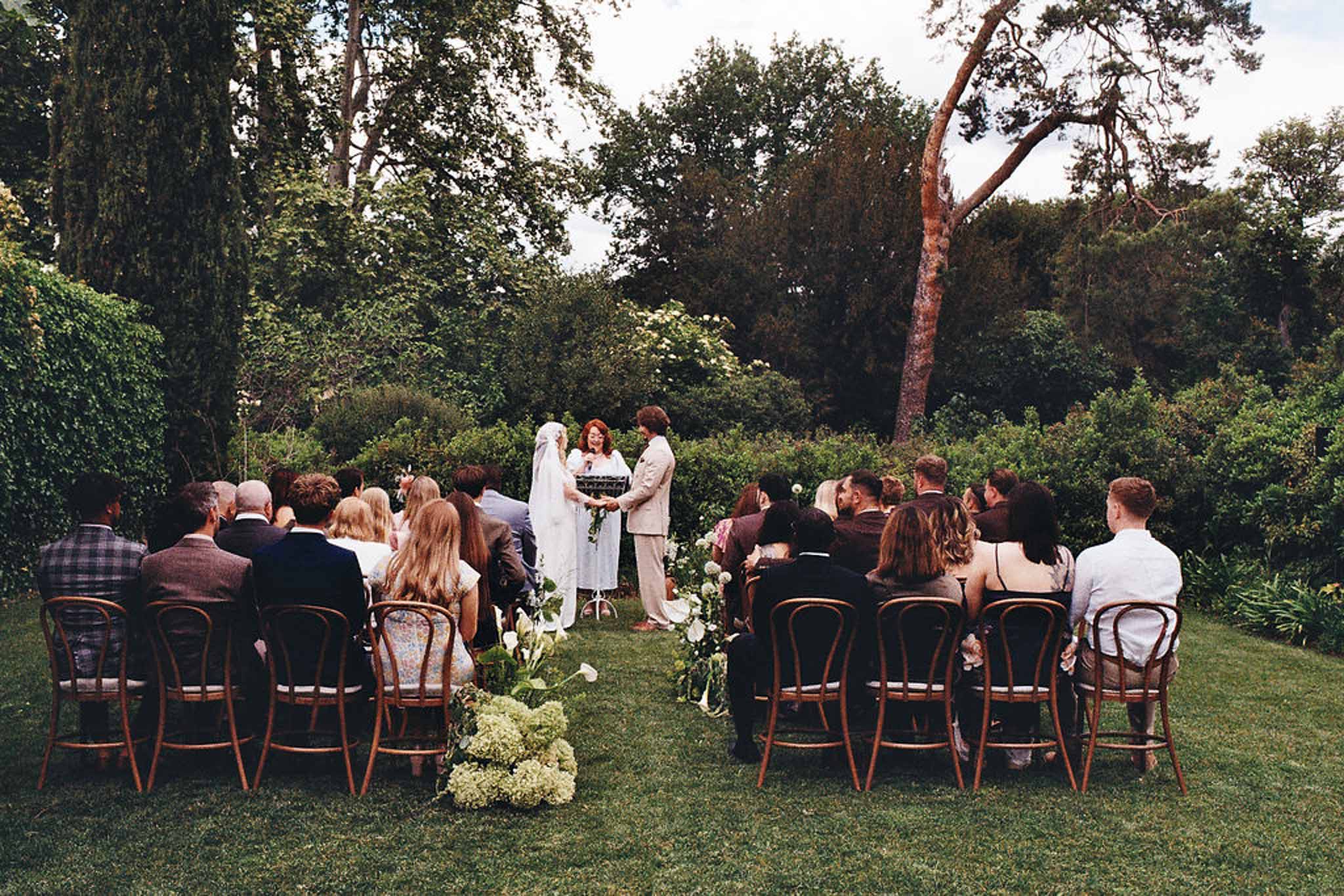
Style Guide: Modern Minimalist
Modern minimalism inside a 17th-century French château sounds like a contradiction. Clean lines against carved stone. Empty space in rooms built for gilded furniture. White geometric vessels on tables designed for silver candelabras.
But the tension is precisely what makes it work. The most striking minimalist weddings in France do not fight the architecture. They use it as contrast, letting centuries of texture and patina become the backdrop against which a few carefully chosen modern elements stand out in sharp relief. How to make minimalism feel warm in a French setting, which venue types give you the best canvas, and where the common mistakes land. For the broader principles behind all French wedding design, see our guide to French wedding aesthetics. For a broader view of every step involved, see our step-by-step destination wedding planning guide for France.
Key Takeaways
- Minimalist weddings in France work best when the venue provides the visual richness that the décor deliberately withholds. The stone, the age, and the imperfection of a historic building create warmth that a modern event space cannot.
- The minimalist palette in France is not white-on-white. It is pared-back neutrals that respond to the venue's stone: warm ivory against limestone, cool grey against slate, with one accent colour in muted tone.
- Warmth comes from three sources: candlelight, natural fabric, and the human presence of abundant food and wine. Remove one of these and minimalism tips into clinical.
- The oversight every planner warns about is treating minimalism as absence. Good minimalist design is not about having less. It is about every element earning its place.
How Does Modern Minimalism Work Inside a Historic French Venue?
The pairing works because of contrast. A clean white tablescape inside a rough stone barn creates tension between the controlled and the organic. A single architectural flower arrangement on a marble mantelpiece draws the eye precisely because the mantelpiece is ornate and the arrangement is not. Modern minimalism needs something to push against, and French historic venues provide that resistance in abundance. Consider a reception in a converted 18th-century orangerie. The walls are raw stone with remnants of original plaster. The floor is worn terracotta tile. The ceiling is iron-framed glass, flooding the space with natural light. Now place long tables of bleached oak, each set with white ceramic plates, clear glass stemware, and a single stem of white phalaenopsis orchid in a clear cylinder vase at each setting. No tablecloth. No runner. No centrepiece. The stone provides all the colour. The terracotta provides all the warmth. The glass ceiling provides all the light. The table provides all the precision.
This is why minimalist weddings in France succeed where minimalist weddings in purpose-built modern venues often struggle. A white room with a white table produces flatness. A 400-year-old stone room with a white table produces drama. The history of the building becomes a material in the design, and that material does the emotional work that the minimalist décor consciously avoids doing.
Which French Venue Types Suit Minimalist Styling Best?
Not all historic venues suit minimalism equally. The best candidates share specific qualities: raw or exposed architectural surfaces, large open-plan rooms, strong natural light, and a material palette that provides visual warmth without decoration. Converted barns and agricultural buildings in the south-west and Languedoc offer exposed stone walls, timber beams, and concrete floors that serve as a ready-made minimalist backdrop requiring almost no additional styling. Contemporary art spaces and galleries in Paris and Lyon provide the clean lines and neutral surfaces that minimalism demands. Traditional châteaux can work, but only when the reception spaces have been renovated with restraint rather than filled with ornate furniture and heavy drapery. The properties to avoid are those with so much decorative character (frescoes, gilded mouldings, patterned tile floors) that any minimalist addition competes with the existing visual noise rather than complementing it.
| Venue Type | Why It Works | Watch Out For |
|---|---|---|
| Converted barn or grange | Raw stone, exposed beams, open floor plan. The roughness of agricultural architecture creates the strongest contrast with clean modern styling. | Lighting can be challenging. Ensure sufficient power for supplementary fixtures. |
| Orangerie or verrière | Glass ceilings, iron frameworks, terracotta floors. Maximum natural light. The industrial bones suit a modern aesthetic. | Temperature in summer. Glass structures heat rapidly and need ventilation planning. |
| Contemporary domaine | Purpose-designed event spaces with clean lines, concrete, glass. No historical constraints on styling. | Can lack the textural contrast that gives minimalism warmth. Add natural materials carefully. |
| Industrial space (urban) | Concrete, steel, brick. Loft spaces in Paris, Lyon, Marseille. The raw urban fabric complements spare styling. | Acoustics. Hard surfaces amplify sound. Plan for music and speech carefully. |
| Formal château (selectively) | Ornate rooms provide maximum contrast with minimal décor. One statement piece per room reads as intentional. | Over-decorated rooms fight minimalism. Choose a château with at least some stripped-back spaces. |
The venues that struggle with minimalism are those already heavily decorated: wallpapered rooms, ornate mouldings, gilded furniture, and patterned upholstery. Minimalism layered on top of existing decoration creates confusion rather than contrast. If the room says "more" and the table says "less," the two messages compete. Look for venues where the bones are strong but the surfaces are raw. Couples browsing destination wedding venues across France should ask specifically about event spaces with exposed stone, concrete, or glass features.
What Does the Minimalist Colour Palette Look Like Against French Stone?
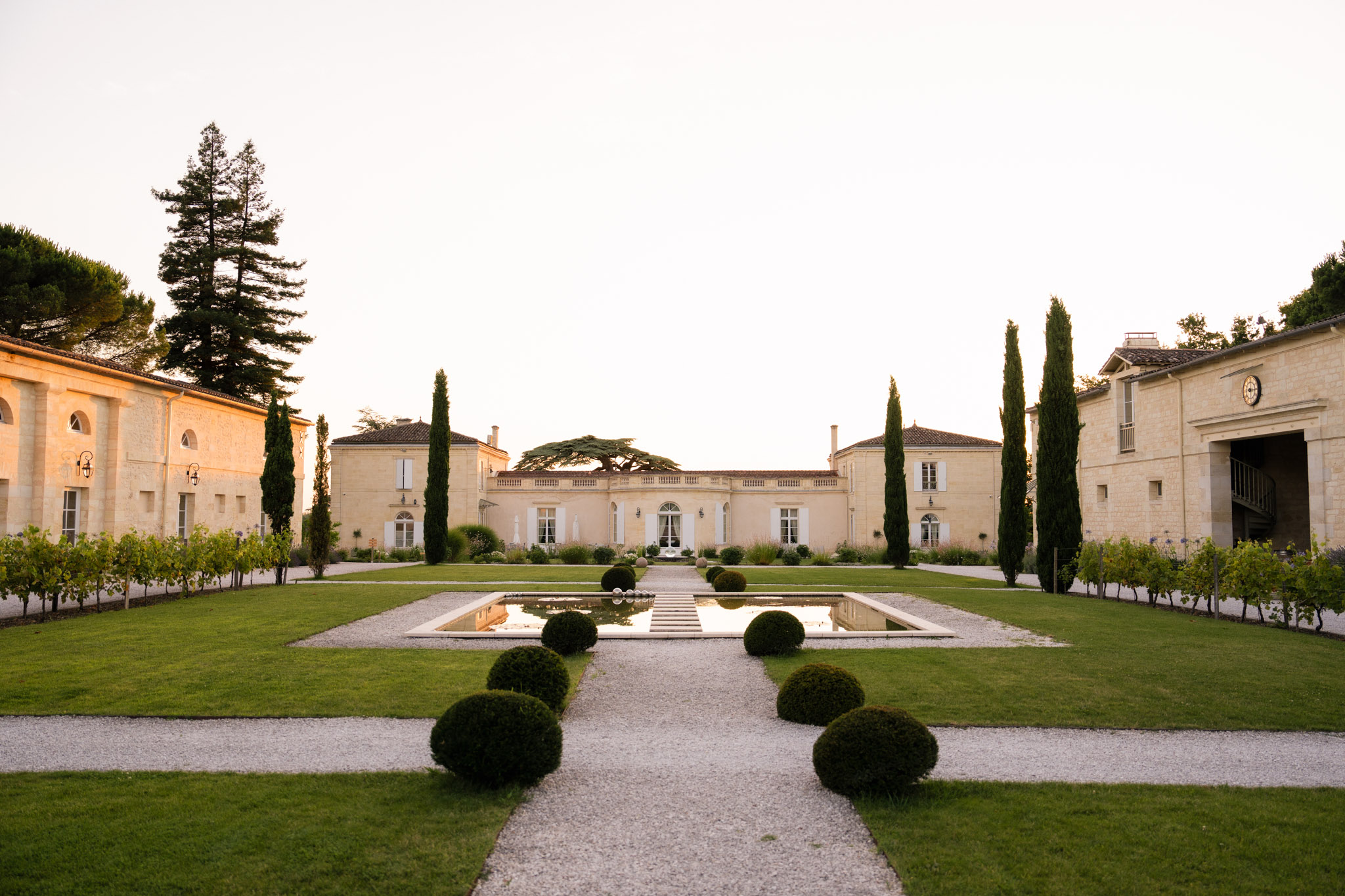
Minimalist does not mean monochrome, and it definitely does not mean bright white. A bright white tablescape against warm-toned French limestone creates a jarring temperature clash. The white looks blue-tinged. The stone looks yellow. Neither flatters the other. The minimalist palette in France must respond to the venue's specific stone colour, just as every other French style does. Against warm limestone (Provence, Loire Valley, Burgundy): ivory, cream, warm grey, with accents in terracotta, muted olive, or the faintest blush. Metals in brushed brass or gold. Against cool stone (Normandy, Brittany, northern France): pure white works better here, paired with cool grey, soft blue-grey, or pale sage. Metals in brushed silver or matte black. Against concrete and steel (urban and contemporary venues): true white, charcoal, and black create the graphic contrast that suits industrial materials. Metals in matte black, chrome, or raw steel.
The accent colour in a minimalist scheme appears once, not throughout. A terracotta candle. A single green leaf in a clear vase. A charcoal ribbon on a white napkin. The restraint is not just in quantity of objects but in quantity of colour. One accent, repeated sparingly, creates rhythm. Two accents compete. Three accents make it a colour scheme rather than a minimalist one.
How Do You Keep Minimalism from Feeling Cold at a Wedding?
This is the central challenge. Minimalism strips away the visual signals that conventionally say "celebration." No abundance of flowers. No draped fabric. No cascading candles. The risk is an environment that reads as a gallery opening rather than a wedding dinner. The warmth has to come from somewhere else. Three sources provide it reliably. First, candlelight. Nothing else transforms a minimal space like flame. Tapered candles in simple holders, pillar candles on bare surfaces, tea lights in clear glass. The quantity can be generous, even abundant, because candles are one of the few elements that increase warmth as they multiply without cluttering. A minimalist table with 30 candles of varying heights feels warm. The same table with three candles feels sparse. In a style that limits most other elements, candlelight is the permitted excess.
Second, natural fabric with texture. Even in a minimalist scheme, the tactile quality of the table matters. Heavy linen napkins in a neutral tone, folded simply. A single linen runner if the table needs it. The weave, the weight, the slight imperfection of handwoven fabric introduces softness that hard surfaces alone cannot provide. The napkin someone picks up should feel substantial. That physical warmth translates to visual warmth in photographs.
Third, the food and wine. A minimalist table that fills with sharing plates, bread boards, wine bottles, and water carafes once service begins transforms completely. The French dining tradition of abundance on the table creates visual richness that the décor deliberately withheld. This is why minimalist styling works particularly well with family-style or sharing-plate service. The food becomes the centrepiece. The design creates the frame. For guidance on the French dining format and how to work with a French caterer, see our vendor guide.
What Are the Common Mistakes with Minimalist Styling in France?
The first is confusing minimalism with cheapness. Minimalist styling costs less in some categories (flowers, décor items, rentals) but demands higher quality in everything that remains. When there are only four objects on a table, each one is scrutinised. A cheap ceramic plate looks cheap on a bare surface in a way it never would surrounded by flowers and linen and candles. The budget saved on quantity must be redirected to quality. Better ceramics. Heavier linen. Proper stemware. Each item carries the full visual weight of the place setting. The second is forgetting scale. A single flower arrangement in a small room is a statement. A single flower arrangement in a vaulted stone hall is invisible. Minimalism requires adjusting the scale of each element to the volume of the space. In a large room, that means larger candles, taller stems, wider vessels. The number of elements stays low, but the size of each one must fill the visual field.
The third is neglecting the ceremony. Couples who invest in a minimalist reception often under-style the ceremony space, assuming the venue handles it. A bare aisle and an empty altar in a large stone chapel feels abandoned, not minimal. One architectural element works: a single large-scale floral arrangement on the altar, a row of pillar candles lining the aisle, or a sheer fabric panel framing the ceremony point. The ceremony needs one visual anchor, clearly chosen. Explore château wedding venues across Europe to see how different architectural scales demand different approaches to ceremony design.
The fourth is fighting the venue. If the room already has ornate furniture, patterned floors, or painted ceilings, minimalist styling does not override it. The two aesthetics clash. Rather than stripping the room back (which most venues will not allow), choose a different space within the venue: a courtyard, an outbuilding, or a garden terrace where the surfaces are neutral. See how this editorial brought this to life at a contemporary French venue in France.
Related Articles
- Styling and Design: the complete chapter guide
- French wedding aesthetics: what makes them different
- Style guide: classic French weddings
- Style guide: Provençal rustic weddings
- Style guide: boho chic weddings in France
- French wedding florist: costs and seasonal guide
- Destination wedding venues across France
- Colour palettes for French wedding venues
- Lighting guide: fairy lights, candles, and lanterns
- Ceremony backdrops at French venues
Frequently Asked Questions
Does minimalist mean no flowers at all?
Not at all. Minimalist flower design is about selection, not elimination. A single variety in a clear vessel. One structural branch in a tall cylinder. Three white phalaenopsis orchid stems in a low ceramic tray. The arrangements are deliberate and architectural rather than abundant and garden-style. What minimalism removes is the layered, mixed-variety approach of classic or rustic schemes. Each flower earns its place by shape, colour, or scale rather than contributing to a mass of blooms. Some of the most striking floral moments on French Wedding Style have been a single magnolia branch on a stone mantelpiece or a row of white tulips in identical glass cylinders down the centre of a table.
Can minimalism work for a large wedding of 150 guests or more?
It works, but it requires careful spatial planning. Long communal tables suit minimalism better than round tables for large numbers because the continuous line creates visual order. In a large venue, scale the few design elements up rather than adding more elements: taller candles, larger vessels, more dramatic single arrangements at key focal points. The risk with large minimalist weddings is not coldness but emptiness. The space between tables and zones needs something: a row of potted olive trees, a draped linen installation, or a series of lanterns on the floor. Use structural elements to define zones rather than decorating each surface. For capacity and layout considerations, our guide to exclusive-use versus shared venues covers practical space planning.
What does minimalist bridal fashion look like?
Column silhouettes in heavy silk crepe or structured mikado. No lace, no embellishment, no beading. The fabric and the cut do all the work. Necklines tend toward high, square, or asymmetric. Sleeves, when present, are clean and unadorned. Hair is slicked, low, or a sharp bob. Makeup is skin-focused with a bold lip or a defined brow as the single accent. Jewellery is one piece: a sculptural earring, a single gold cuff, an architectural ring. The minimalist bride dresses like a piece of modern design walking through an ancient building. The contrast is the point. The groom follows the same principle: a tailored suit in black, charcoal, or navy, with no waistcoat, no pocket square, no tie, or exactly one of those elements done well.
Is minimalist styling cheaper than other approaches?
The décor budget is typically lower because there are fewer items to buy or rent: fewer flowers, no elaborate centrepieces, no fabric draping, no extensive signage. But the items that remain must be higher quality. A single ceramic plate at each setting is the centrepiece of the visual experience and cannot be a budget option. Quality linen, good stemware, and professional candlelight design cost money. The net saving compared to a classic or rustic scheme is moderate: perhaps 20 to 30% less on total décor and floristry. The real value of minimalism is not cost reduction. It is precision. Every franc spent is visible and intentional. For budget guidance across all styling approaches, see our destination wedding cost guide.
Which photographers suit a minimalist wedding?
Documentary-style and editorial photographers both suit minimalism, but for different reasons. Documentary photographers capture the clean lines and negative space as part of the broader day, treating the design as context rather than subject. Editorial photographers actively compose shots that use the minimalist elements as graphic features: a single stem against a stone wall, a bare table receding into a vaulted room. Ask to see full galleries, not highlights, from venues with similar architectural scale. The photographer who shows you 400 images from a château wedding, where the empty space is as composed as the populated frames, understands how to photograph restraint.
Minimalism in a French setting is not about doing less. It is about choosing with more precision. The venue provides the history. The stone provides the texture. The candlelight provides the warmth. Your role is to place a few considered objects in that context and let the building do the rest.
Explore Every Guide in This Chapter
Deep-dive into each topic covered above.