
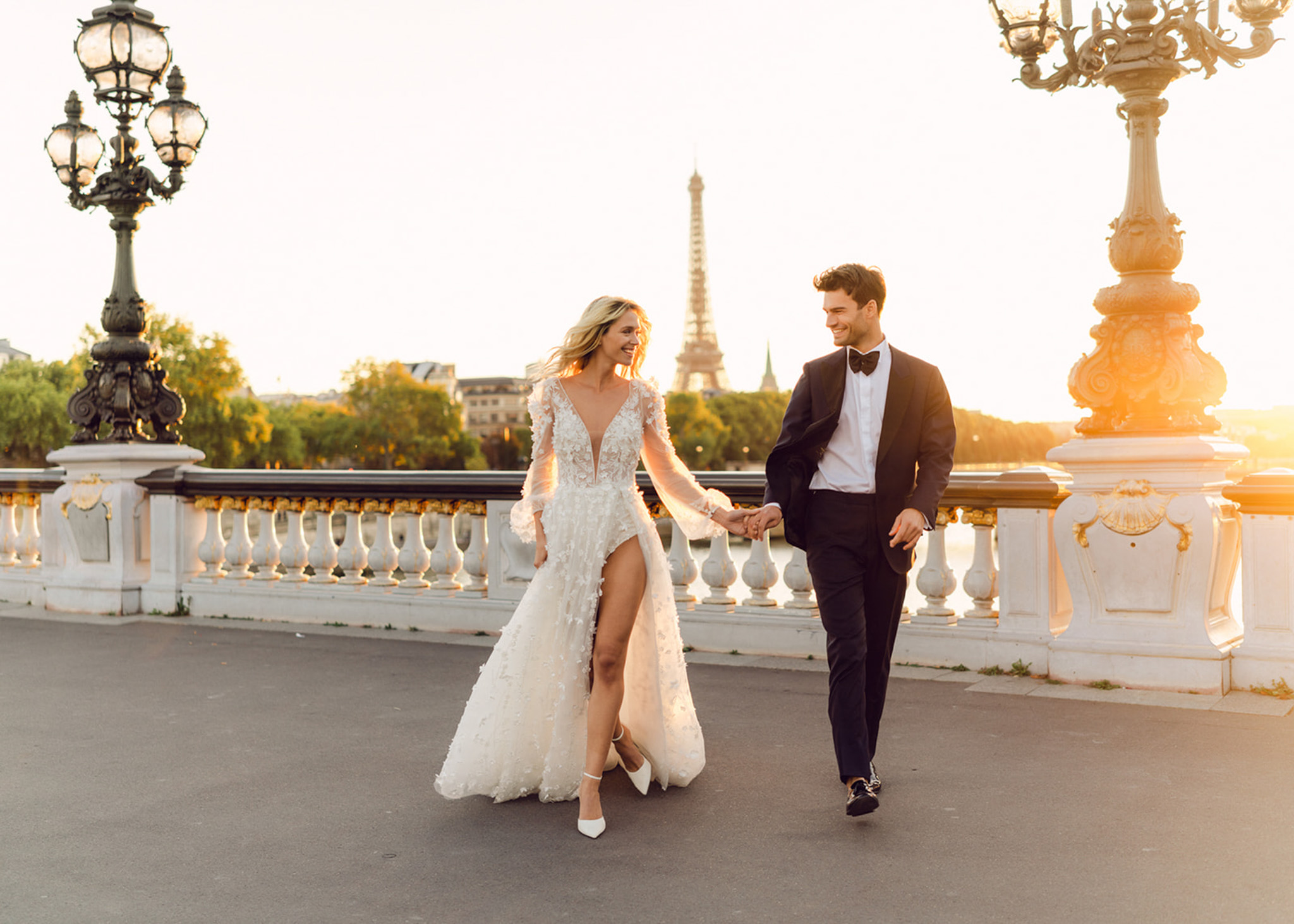
The Loire Valley is the birthplace of French Renaissance architecture, the valley where kings built their country palaces and the cultural identity of France took shape. François I constructed Chambord here. Catherine de Médicis held court at Chenonceau. The UNESCO World Heritage landscape stretches 280 kilometres along the river from Sully-sur-Loire to Chalonnes-sur-Loire, and the concentration of Renaissance and medieval châteaux within that corridor is unmatched anywhere in Europe.
For couples who want a classic château wedding, it is the most natural starting point. The private château stock runs from intimate 20-guest manor houses to grand 200-guest estates with ballrooms, formal gardens, and on-site chapels. It is also 25 to 40% more affordable than Provence for comparable properties, and Paris is under two hours away by TGV. Those advantages come with trade-offs. The climate is cooler and wetter than the south, evening temperatures drop noticeably after sunset, and the vendor market is thinner in some areas. The Loire Valley as a wedding destination, euro by euro and season by season, as part of our complete guide to choosing your wedding region in France. For a broader view of every step involved, see planning your destination wedding in France from start to finish.
Key Takeaways
- A mid-range Loire Valley château wedding for 80 guests costs €55,000 to €100,000 all-in as of 2026, roughly 25 to 40% less than a comparable Provence wedding at €83,000 to €144,000.
- Paris CDG to Tours or Angers by TGV takes 1.5 to 2 hours. Guests can be in château country within 30 minutes of stepping off the train.
- The Loire has a moderate Atlantic-influenced climate. Summers reach 25 to 30°C but without the 38 to 40°C extremes of Provence. Rain is more likely, so every outdoor ceremony needs a confirmed indoor backup.
- Most Loire châteaux are privately owned family estates, not tourist landmarks. Availability is broader and negotiation flexibility is higher than in Provence or the Riviera.
- Local wine (Vouvray, Sancerre, Chinon) and lighter Loire cuisine deliver a refined food experience that shapes the wedding menu in a distinct way from southern France.
What Makes the Loire Valley the Classic French Château Wedding Destination?
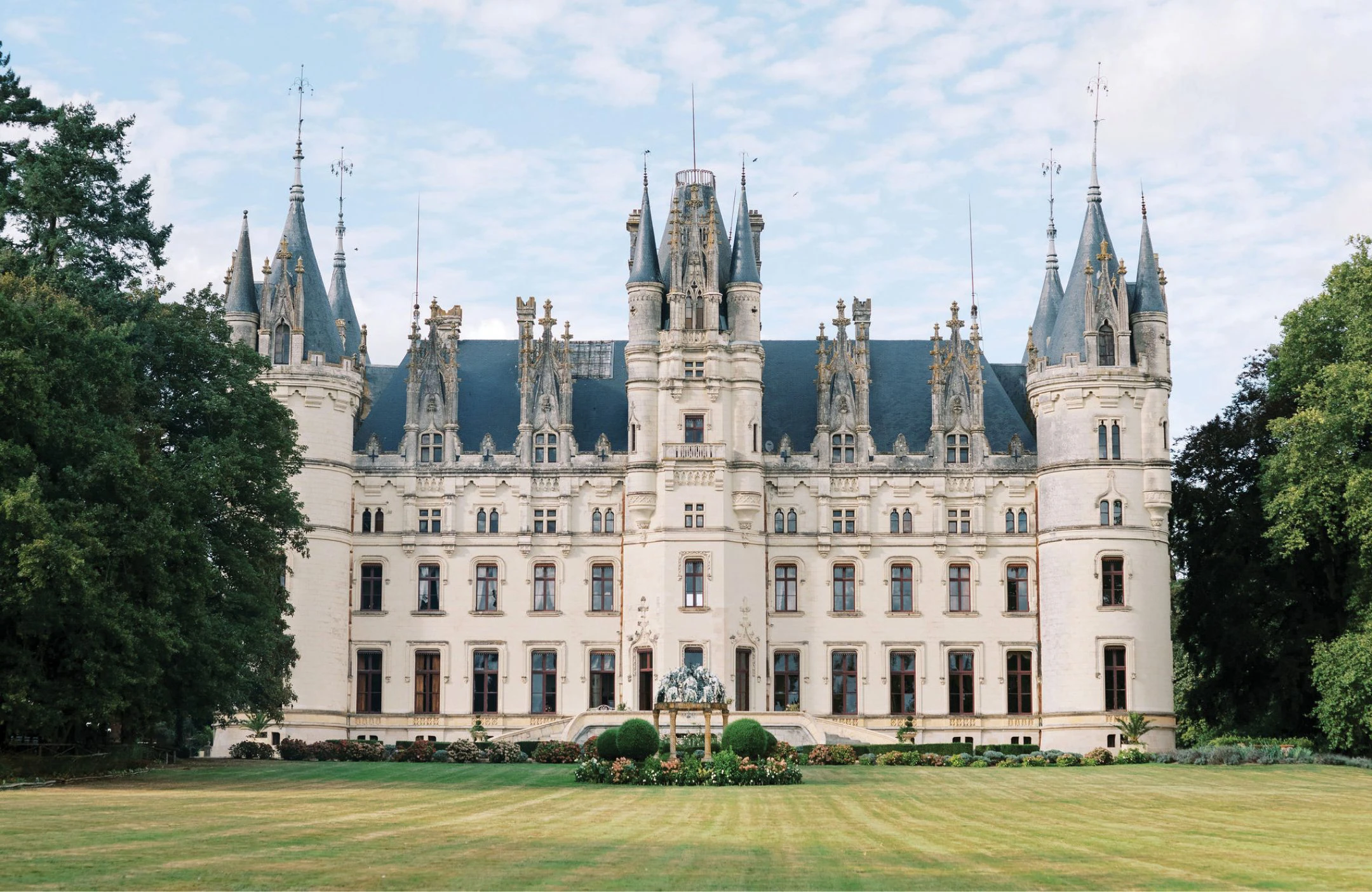
The Loire Valley earned its UNESCO World Heritage status for good reason. The region stretches roughly 280 kilometres along the Loire river from Sully-sur-Loire to Chalonnes-sur-Loire, and the density of Renaissance architecture within that corridor is unmatched anywhere in Europe. Iconic properties like Chenonceau and Chambord set the visual expectation for international couples, but weddings do not take place at those tourist landmarks. They happen at the hundreds of privately owned châteaux scattered across Touraine, Anjou, and the Sologne, many held by the same families for generations. These range from compact gentilhommières (a gentilhommière is a country manor house, typically with 10 bedrooms and intimate grounds) to full-scale estates with orangeries, formal parterre gardens, interior chapels, and ballrooms that seat 200 guests for dinner. The Valois kings chose this valley over all of France, and the private wedding stock they left behind is one of the richest concentrations of rentable heritage architecture in Europe.
Loire architecture carries a formal, symmetrical quality rooted in the Renaissance period, when the Valois kings built their country residences along the river. Pale tuffeau walls (tuffeau is the soft white limestone quarried from the Loire riverbanks, prized for its luminous quality), slate roofs, pointed turrets, and long gravel allées define the visual language. This shapes the tone of the wedding: Loire celebrations tend toward a slightly more formal register than relaxed, outdoor-focused celebrations in the south.
That does not mean stiff or traditional. It means the architecture itself provides a structured backdrop that works equally well for intimate 40-guest dinners and 150-guest celebrations with dancing in a vaulted salle de réception. Explore château wedding venues across France to see the full range of properties available.
How Much Does a Loire Valley Wedding Cost?
A Loire Valley wedding for 80 guests costs between €35,000 and €140,000 depending on venue tier, vendor selection, and the scope of the multi-day programme As of 2026, the mid-range tier, a well-maintained private château with on-site accommodation and gardens, runs €55,000 to €100,000 all-in That includes venue hire at €3,000 to €25,000 for a weekend, catering at €120 to €220 per head before drinks, a full vendor team, guest accommodation, and a 10% contingency Compare this directly to Provence, where the equivalent mid-range bracket is €83,000 to €144,000 and venue hire alone consumes €15,000 to €45,000 The Loire's lower international demand means more date availability, greater willingness to negotiate on minimums, and fewer mandatory vendor list restrictions On-site accommodation is often more generous than in the south: many Loire châteaux sleep 40 to 80 guests across the main house and outbuildings, reducing the overflow hotel costs that inflate southern budgets Venue hire in the Loire ranges from €3,000 to €8,000 for a weekend at the budget end, rising to €10,000 to €25,000 for top-tier properties with full estate access.
- A Loire Valley wedding for 80 guests costs between €35,000 and €140,000 depending on venue tier, vendor selection, and the scope of the multi-day programme
- As of 2026, the mid-range tier, a well-maintained private château with on-site accommodation and gardens, runs €55,000 to €100,000 all-in
- That includes venue hire at €3,000 to €25,000 for a weekend, catering at €120 to €220 per head before drinks, a full vendor team, guest accommodation, and a 10% contingency
- Compare this directly to Provence, where the equivalent mid-range bracket is €83,000 to €144,000 and venue hire alone consumes €15,000 to €45,000
- The Loire's lower international demand means more date availability, greater willingness to negotiate on minimums, and fewer mandatory vendor list restrictions
- On-site accommodation is often more generous than in the south: many Loire châteaux sleep 40 to 80 guests across the main house and outbuildings, reducing the overflow hotel costs that inflate southern budgets
Scroll →
| Budget Tier | Venue Type | Total Cost (80 Guests) | Key Characteristics |
|---|---|---|---|
| Budget-friendly | Small manor / gentilhommière | €35,000 to €55,000 | Dry-hire, limited on-site rooms, bring own vendors |
| Mid-range | Private château with grounds | €55,000 to €100,000 | On-site accommodation for 30 to 60 guests, gardens, some vendor flexibility |
| Prestige | Grand estate / historic château | €100,000 to €140,000+ | Full event production, ballroom, chapel, extensive grounds, concierge service |
Venue hire in the Loire ranges from €3,000 to €8,000 for a weekend at the budget end, rising to €10,000 to €25,000 for top-tier properties with full estate access. Catering runs €120 to €220 per head before drinks, lower than Provence's €150 to €280 range.
On-site accommodation is often more generous than in the south: many Loire châteaux sleep 40 to 80 guests across the main house and outbuildings, reducing the overflow hotel costs that inflate budgets elsewhere. For a full comparison of how these numbers stack up nationally, see our guide to regional price differences across France. For detail on what drives the venue fee specifically, read venue pricing explained for French weddings.
How Does Paris Proximity Change Guest Logistics?
The Loire Valley's position relative to Paris is its single greatest logistical advantage over every other French wedding region. The TGV from Paris Gare Montparnasse reaches Tours in 1 hour 15 minutes, Angers in 1 hour 30 minutes, and Saint-Pierre-des-Corps (the main Loire hub) in just over an hour. International guests fly into Charles de Gaulle, clear the terminal, and board a train that delivers them to château country the same afternoon. No connecting flights, no three-hour motorway transfers, no overnight stop required. From the TGV station, most château venues sit within a 20 to 40 minute drive. A guest landing at CDG at noon can be at a Loire Valley château by 3:30 pm. No other château region in France offers that same-day journey from an international airport. For UK guests, the Eurostar to Paris plus TGV to Tours takes under 3.5 hours centre to centre.
This proximity creates planning options that other regions cannot offer. Some couples host a pre-wedding dinner in Paris on Thursday or Friday evening, then move the entire group to the Loire by train the following morning. Paris hotels serve as genuine overflow accommodation for guests who prefer not to stay at the venue.
Older relatives or guests with mobility concerns have a shorter, simpler journey than any southern route. For UK guests flying into CDG or using the Eurostar, the onward connection to Tours adds roughly 75 minutes. The Amboise corridor alone puts guests within walking distance of the château where Leonardo da Vinci spent his final years. For couples weighing Paris and Île-de-France weddings against the Loire, the calculus is clear: the Loire delivers château grounds and countryside at a fraction of Parisian venue pricing, with Paris still within easy reach.
Car hire from Tours or Angers opens up the full region within 30 to 45 minutes. Arrange a group shuttle or private minibus from the TGV station to the venue, costing €300 to €600 for a single transfer depending on group size. That compact geography keeps transfers short and affordable. Build the transfer logistics into your welcome booklet and send TGV booking instructions with the save-the-date rather than waiting for the invitation.
What Is the Loire Valley Climate Like for Weddings?
The Loire Valley has a moderate Atlantic-influenced climate that differs meaningfully from the Mediterranean south. July and August daytime temperatures reach 25 to 30°C, warm and comfortable for outdoor ceremonies without the extreme heat that forces southern celebrations indoors during the afternoon. Evening temperatures are the key difference: expect 15 to 18°C after sunset in July, dropping further to 12 to 15°C in June and September. This matters for outdoor dining. Blankets, pashminas, or patio heaters (€500 to €800 for rental) are standard provisions at Loire evening receptions from June onwards. Rain is possible on any summer day, with the Loire averaging 8 to 10 rainy days per month from June to August. The trade-off is the absence of extreme heat: couples and guests are comfortable outdoors all day without seeking shade, and the soft, golden northern light flatters photographs without the harsh midday shadows of the south.
Rain is the trade-off for gentler heat. Showers are possible on any day between June and September. These are typically brief afternoon showers rather than sustained downpours, but they require a genuine Plan B for every outdoor element.
Every Loire château ceremony, cocktail hour, and dinner service needs an indoor alternative that can absorb the full guest count at short notice. The best Loire venues have this built into their layout: a covered orangerie, a vaulted salle, or a tented courtyard that works regardless of weather. Ask your venue directly what happens if it rains at 4 pm on ceremony day. If the answer is vague, reconsider.
The light in the Loire is different from the south. It is softer, less contrasty, with a gentle golden quality during the long summer evenings. Photographers often describe Loire light as naturally flattering, without the harsh midday shadows of the south. The golden hour stretches later in the day this far north (sunset at 9:45 pm in late June), giving photographers an extended window for portraits. For broader seasonal detail across all regions, consult our seasonal climate guide for French weddings.
How Does Loire Food and Wine Shape the Celebration?
Loire cuisine is lighter and more refined than the robust food of Provence or the Périgord, and it matches the setting of a château wedding in a way that heavier regional menus cannot. The local specialities anchor the wedding menu without overwhelming guests: rillettes de Tours as part of the apéritif, goat cheese from Sainte-Maure de Touraine, Selles-sur-Cher, or Valençay on the cheese course, river fish like sandre (pike-perch) or brochet (pike) as a main course option, and tarte Tatin for dessert. Catering costs in the Loire run €120 to €220 per head before drinks, lower than Provence's €150 to €280 range. The food is seasonal, produce-driven, and built around the river and the dairy farms rather than the olive groves and herb gardens of the Mediterranean. France's finest goat cheeses come from this region, and a carefully selected cheese board of three or four local varieties is often the highlight of the meal.
The wine list is where a Loire wedding truly distinguishes itself. The valley produces an extraordinary variety within a compact geography: Vouvray (sparkling and still white from Chenin Blanc), Sancerre (Sauvignon Blanc), Chinon (Cabernet Franc red), Bourgueil, Muscadet, and Crémant de Loire.
A wine-pairing menu at a Loire wedding can feature entirely local bottles across every course, from a Crémant de Loire toast through a Sancerre with the fish course to a Chinon with the meat and a late-harvest Vouvray with dessert. Few French regions offer this range from a single appellation corridor. The wines are approachable, food-friendly, and significantly less expensive per bottle than Burgundy or Champagne equivalents.
Catering in the Loire tends to run €120 to €220 per head before drinks. Traiteurs (caterers) who source from local markets and producers deliver menus with genuine terroir character. The cheese course is particularly important at a Loire wedding. France's finest goat cheeses come from this region, and a well-chosen cheese board featuring three or four local varieties is a highlight that guests remember. For couples comparing budget-conscious options across France, the Loire's lower catering baseline combined with affordable local wine makes it one of the most cost-effective regions for food-focused celebrations.
Which Part of the Loire Valley Is Best for Weddings?
The Loire Valley wedding market divides into three main zones: Touraine (centred on Tours), Anjou (centred on Angers and Saumur), and the Sologne and Blésois (centred on Blois and Chambord). Each has a different character, price point, and relationship to Paris transport links. Touraine is the most established wedding market with the highest density of reception-ready châteaux, the best vendor network, and the fastest TGV access from Paris (1 hour 15 minutes to Tours). The Amboise to Villandry corridor alone contains dozens of reception-ready properties within 30 minutes of Tours station. Anjou offers a slightly more rural, less touristic character with 10 to 15% lower pricing than Touraine and excellent Crémant de Loire and Saumur wine production. The abbey of Fontevraud, one of the largest monastic complexes in Europe, anchors the Saumur area. The Sologne, east of Tours toward Blois, delivers more intimate, woodland-set properties with a quieter atmosphere and pricing 15 to 25% below Touraine.
Scroll →
| Factor | Touraine (Tours) | Anjou (Angers/Saumur) | Sologne/Blésois (Blois) |
|---|---|---|---|
| Key towns | Tours, Amboise, Villandry, Azay-le-Rideau | Angers, Saumur, Fontevraud | Blois, Chambord, Cheverny |
| Landscape | River valley, tuffeau villages, vineyards | Wider river plains, troglodyte caves, vineyards | Forests, lakes, hunting estates |
| Pricing vs Touraine | Baseline | 10 to 15% lower | 15 to 25% lower |
| TGV from Paris | 1h15 to Tours | 1h30 to Angers | 1h40 to Blois (via Vendôme TGV) |
| Château density | Highest: largest selection | Good: strong mid-range stock | Moderate: more intimate properties |
| Vendor network | Deepest in the Loire | Good, some gaps in specialist vendors | Thinner: source vendors from Tours |
| Character | Classic Renaissance, well-touristed | Quieter, wine-focused, abbey heritage | Woodland, hunting lodges, privacy |
Touraine is the default choice for couples who want the widest selection and the simplest logistics. The Amboise to Villandry corridor alone contains dozens of reception-ready châteaux within 30 minutes of Tours TGV station. Anjou suits couples drawn to the wine culture of Saumur, the monastic grandeur of Fontevraud Abbey (one of the largest monastic complexes in Europe, where Eleanor of Aquitaine is buried), and a slightly more intimate feel.
The troglodyte wine caves near Vouvray, carved into the tuffeau cliffs along the river, add an unexpected dimension for pre-wedding tastings. The Sologne appeals to couples who want woodland seclusion, with properties set among forests and lakes rather than along the river. The scale ranges from intimate manoirs near Chinon that sleep 20 guests to grand estates on the scale of Château de Chambord's surrounding parkland. For couples comparing the Loire to neighbouring regions, Bordeaux wine country offers a warmer climate with comparable château architecture, while getting married in Provence trades the Loire's formality for Mediterranean outdoor living at a higher price point.
The Mistakes That Cost Couples Time and Money in the Loire
Expecting southern France outdoors. The Loire is a northern French region with an Atlantic climate. July and August daytime temperatures reach 25 to 30°C, but evenings drop to 15 to 18°C, and rain is possible on any summer day. Outdoor ceremonies work well from June to September, but the landscape is green and lush rather than sun-baked and dry. Couples who arrive expecting Provence with châteaux are disappointed. Couples who embrace the Loire on its own terms, as a region of formal gardens, river light, and gentle summer warmth, find something that the south cannot offer. Treating the interior as Plan B. A Loire château wedding lives or dies by the quality of its interior reception rooms. Our guide to decorating a Loire Valley château for your French wedding breaks this down further. A vaulted salle de réception with stone walls and candlelight is often the most atmospheric part of the celebration, not a concession to bad weather. When visiting châteaux, evaluate the interior as carefully as the gardens.
Skipping a local planner. Paris proximity creates an illusion of simplicity. Read our guide to how Loire Valley châteaux compare to other French venue types for the full breakdown. Vendors in the Loire still operate in French, and coordination across a multi-day château weekend requires someone who knows the local market. A planner who coordinates TGV arrival logistics with venue access windows and knows which châteaux allow rehearsal dinners the evening before is worth the investment.
Ask about heating, lighting, acoustics, and capacity when visiting any Loire château. A property with a mediocre garden but a spectacular interior room will serve you better than the reverse.
Across the hundreds of real weddings featured on French Wedding Style, the couples who report the smoothest Loire experiences are those who hired a local planner from the start. A full-service planner in the Loire costs €4,000 to €12,000, less than in Provence, and the return on that investment is equally significant. Find a recommended wedding planner who knows the Loire market specifically. Browse château wedding venues across France to compare Loire properties against other regions before committing.
Related Articles
- Choosing your wedding region in France: the complete guide
- Getting married in Provence
- Planning a wedding in Paris and Île-de-France
- Bordeaux wine country weddings
- Regional price differences across France
- Seasonal climate guide for French weddings
Frequently Asked Questions
How much does a château wedding in the Loire Valley cost for 80 guests?
A mid-range Loire Valley château wedding for 80 guests costs €55,000 to €100,000 all-in. This includes venue hire, catering at €120 to €220 per head, a full vendor team, guest accommodation, and a contingency buffer. Budget-tier manor weddings start at €35,000 to €55,000. Prestige estates with ballrooms and chapels run €100,000 to €140,000 or more. These figures sit 25 to 40% below comparable Provence pricing.
How long does it take to get from Paris to the Loire Valley?
The TGV from Paris Gare Montparnasse reaches Tours in 1 hour 15 minutes and Angers in 1 hour 30 minutes. From the TGV station, most château venues are within a 20 to 40 minute drive. Book TGV tickets on SNCF Connect as soon as the schedule opens (typically 4 months ahead): advance fares run €19 to €39 versus €60 to €80 on the day. Send booking instructions with your save-the-date rather than with the invitation, so guests can lock in group pricing.
Is the Loire Valley warm enough for an outdoor wedding?
Daytime temperatures in July and August reach 25 to 30°C, comfortable for outdoor ceremonies from June to September. Evenings drop to 15 to 18°C after sunset in July. Outdoor dinner service works well with patio heaters (€500 to €800 hire) and a blanket station for guests. Request that your venue set up the outdoor ceremony space with a backup in the orangerie or vaulted salle that can absorb the full guest count within 10 minutes. Many Loire châteaux have both spaces adjoining, which makes the switch seamless. Tell guests to bring a light jacket or wrap for evening.
What wines are served at a Loire Valley wedding?
The Loire produces an extraordinary range: Vouvray (sparkling and still Chenin Blanc), Sancerre (Sauvignon Blanc), Chinon and Bourgueil (Cabernet Franc reds), Muscadet, and Crémant de Loire. A full wine-pairing menu using entirely Loire bottles is possible across every course. Local wines are approachable, food-friendly, and significantly less expensive per bottle than Burgundy or Champagne equivalents. A Crémant de Loire at €8 to €12 per bottle makes an excellent toast wine that rivals Champagne in quality for sparkling receptions.
How does the Loire Valley compare to Provence for a destination wedding?
The Loire is 25 to 40% more affordable than Provence for comparable château properties. Paris proximity (under 2 hours by TGV) simplifies guest logistics significantly. The climate is cooler, with more rainfall but without extreme heat. The trade-off is a less dramatic landscape, cooler evenings, and a thinner international vendor network. Couples who prioritise château architecture and value over Mediterranean climate choose the Loire. Those who want outdoor-focused celebrations in dry heat choose Provence.
Do I need a wedding planner for a Loire Valley wedding?
A local planner is strongly recommended for international couples. A full-service Loire planner costs €4,000 to €12,000 as of 2026. The value goes beyond day-of coordination: many Loire châteaux are family-owned with no dedicated event manager, so your planner becomes the primary liaison with the owners, the caterer, and the local mairie. Because the vendor network is thinner in parts of the valley (particularly the Sologne and western Anjou), a planner with established local relationships is the fastest route to reliable florists, musicians, and hair and makeup artists who know the properties.
Which is the best area within the Loire Valley for a wedding?
Touraine (around Tours and Amboise) has the highest density of reception-ready châteaux, the deepest vendor network, and the fastest TGV connection from Paris. Anjou (Angers and Saumur) offers a quieter wine-country feel at 10 to 15% lower pricing. The Sologne (near Blois) delivers woodland seclusion at 15 to 25% below Touraine pricing, with more intimate properties. Your choice depends on guest count, budget, and the atmosphere you want.
The Loire's strongest practical advantage is the TGV connection: guests who land at CDG can reach a château near Tours in under three hours, with no connecting flights, no rental car, and no overnight stop. For international guest lists, that ease of access changes the RSVP rate. Browse exclusive-use château venues in France to find the property that fits your guest count and weekend format.
Explore Every Guide in This Chapter
Deep-dive into each topic covered above.