
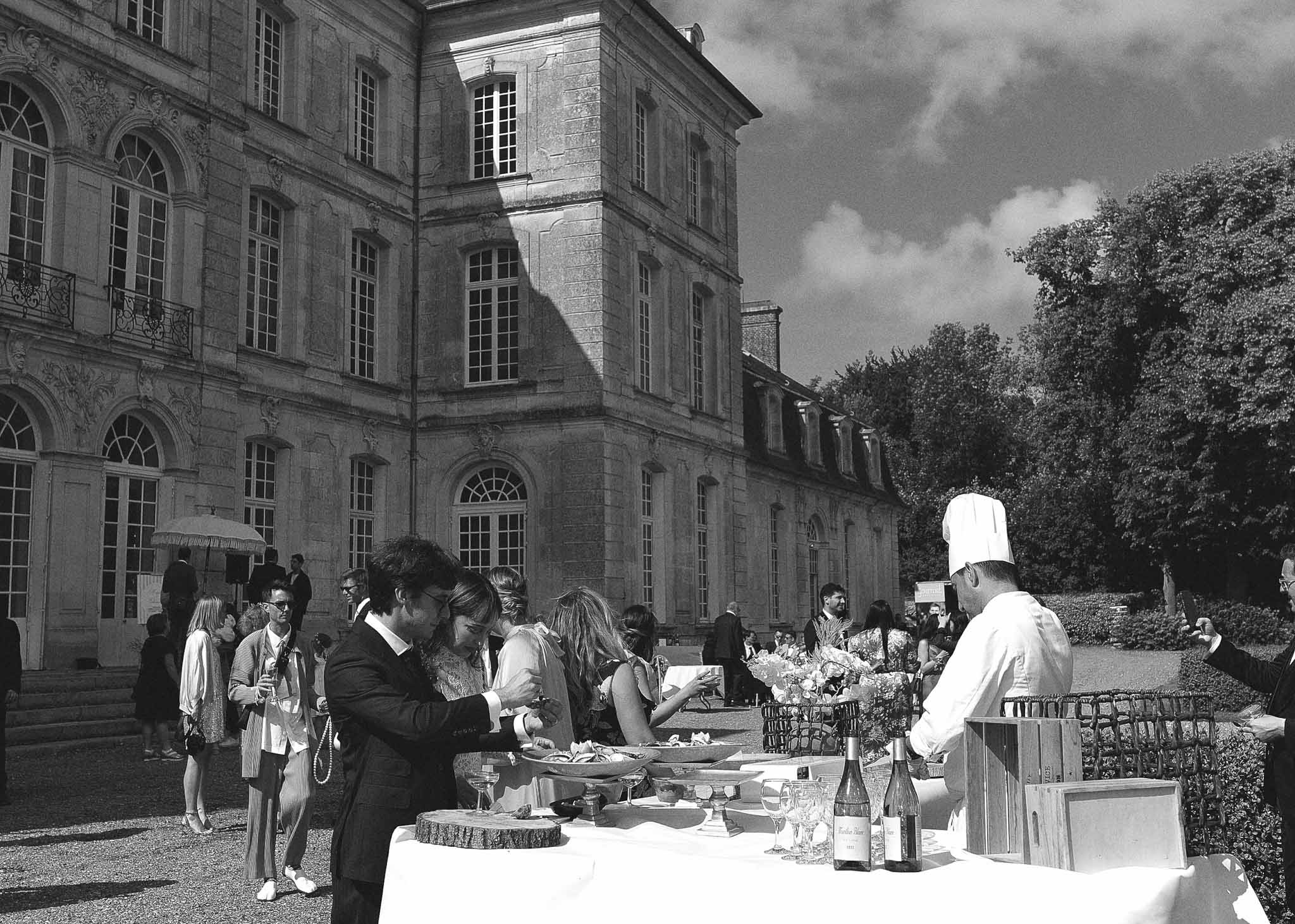
Late-Night Onion Soup & After-Party Food
At 2am, the dance floor is thinning. Heels have been kicked off. Ties are loosened. The dinner ended three hours ago, the champagne is flowing, and the energy is starting to dip. Then the kitchen doors open and the smell hits: rich, golden, caramelised onion soup.
Bowls of soupe à l'oignon are carried out on trays, each one topped with a raft of melted Gruyère on toasted bread. The dance floor empties to the food. Guests refuel. Twenty minutes later, they are back dancing, and the party continues until dawn. This is the French late-night wedding food tradition, and it is one of the simplest, cheapest, and most effective ideas you can steal for your own celebration. For the full food and drink chapter, see our complete food and drink guide. For a broader view of every step involved, see the full planning guide for destination weddings in France.
Key Takeaways
- Soupe à l'oignon (French onion soup) served between 2am and 3am is a longstanding French wedding tradition. It refuels guests after hours of dancing and extends the party until dawn.
- Late-night food costs €8 to €20 per head depending on the option chosen. Onion soup is at the low end. Croque-monsieurs, burger stations, and crêpe bars cost more but add variety.
- Most traiteurs include late-night food as an optional add-on to the per-head quote. Confirm whether your traiteur handles it or whether you need a separate provider.
- French guests expect late-night food at a wedding. Its absence is noticed. International guests are surprised and delighted by it. Either way, it works.
What Is the French Tradition of Late-Night Wedding Food?
Late-night food at a French wedding is not an afterthought or a trend. It is a tradition rooted in the practical reality that French wedding celebrations run from late afternoon until 4am, 5am, or even sunrise. The dinner ends around midnight with the pièce montée. Dancing begins immediately. Three hours later, guests who have been dancing, drinking, and celebrating since the vin d'honneur at 6pm are genuinely hungry again. The late-night food service, typically between 2am and 3am, provides the fuel that keeps the party going. The tradition is particularly strong in the south-west, Provence, and rural France, where weddings have historically been all-night affairs. In the Dordogne, the Lot, and the Gers, guests expect to dance until sunrise. The late-night food is the second wind. Without it, the party fades around 1am as energy drops. With it, the dance floor refills, the laughter returns, and the couple gets the dawn photographs that become the most candid images of the wedding.
Across destination weddings featured on French Wedding Style, approximately 70 percent include some form of late-night food service. The format varies from traditional onion soup to modern food stations, but the principle is the same: refuel the guests, extend the celebration, create one more communal moment before the night ends. It is one of the most cost-effective investments in the entire wedding. For €8 to €15 per head, you buy two to three more hours of dancing.
Why Do French Weddings Serve Soupe à l'Oignon at 2am?
Soupe à l'oignon is the classic choice because it is hot, salty, rich, and restorative. After hours of champagne and dancing, the body wants carbohydrates, salt, and warmth. Onion soup delivers all three. The broth is made from slowly caramelised onions (cooking time: 45 minutes to an hour for proper caramelisation), beef or vegetable stock, white wine, and a touch of cognac. It is served in individual bowls or crocks, each topped with a slice of toasted baguette and a thick layer of melted Gruyère or Comté cheese. The cheese melts into the broth. The bread soaks it up. The combination is deeply satisfying at 2am in a way that no canapé or cake slice can replicate. A soupe à l'oignon is a classic French onion soup: a rich broth of slowly caramelised onions, beef or vegetable stock, and white wine, served in a crock with a toasted bread cap smothered in melted Gruyère. At weddings, it is the traditional late-night restorative, served between 2am and 3am to refuel dancing guests.
The practical advantages are significant. Onion soup is cheap to produce in volume (€3 to €5 per serving for ingredients). It can be prepared in advance and reheated. It serves quickly. It is filling without being heavy. And it creates a visual, aromatic moment: the kitchen doors open, the smell of onion and cheese fills the room, and every guest gravitates toward the serving point. The late-night soup service is as much a social moment as a food one. Guests gather, eat together, compare the state of their dance-floor stamina, and return to the party refreshed.
The tradition also carries a folk belief that onion soup "absorbs" alcohol and helps prevent hangovers. The science is debatable. The perception is universal. Whether or not the soup actually counteracts champagne, the combination of carbohydrates, liquid, and salt at 2am unquestionably makes guests feel better and more energised than they did 20 minutes earlier. The tradition persists because it works.
What Other Late-Night Options Work at French Celebrations?
While soupe à l'oignon remains the traditional choice, modern French weddings offer a growing range of late-night food options. The principle stays the same: hot, salty, satisfying, quick to serve. The format expands to suit different styles and guest preferences. Croque-monsieurs. A croque-monsieur is a grilled ham and cheese sandwich, béchamel-sauced and toasted until golden and bubbling. Served whole or cut into triangles, it is the second most popular late-night option at French weddings. Production is fast (assembled in advance, grilled to order in 3 to 4 minutes), and the format is universally loved. A croque-madame variation adds a fried egg on top. Cost: €5 to €8 per serving. Crêpe station. A crêpier sets up a portable griddle and makes crêpes to order: Nutella, sugar and lemon, salted caramel, ham and cheese for a savoury option. The live cooking is part of the entertainment. Guests queue, watch their crêpe being made, and eat standing up. Cost: €8 to €12 per head for a 1-hour station.
Burger bar. Mini burgers (sliders) with regional variations: duck burger in the Dordogne, lamb burger in Provence, classic beef in Bordeaux. Served from a stationed bar with condiments. This is the most popular modern alternative at destination weddings with an international guest list. Cost: €10 to €15 per head.
Cheese and charcuterie boards. A late-night cheese display with bread, charcuterie, olives, and fruit. Lighter than soup but satisfying. Works well when the formal dinner already included a full cheese course and a second cheese moment feels indulgent rather than repetitive. Cost: €8 to €12 per head.
Pizza oven. Some venues with outdoor spaces can arrange a portable wood-fired pizza oven. Pizzas cooked to order in 90 seconds. Theatrical, delicious, and universally popular. Cost: €12 to €18 per head including the oven hire and a pizzaiolo. Best suited to rustic and outdoor weddings at outdoor wedding venues across France.
Scroll →
| Option | Cost Per Head | Prep Complexity | Best For |
|---|---|---|---|
| Soupe à l'oignon (gratinée) | €8 to €10 | Low (pre-made, reheated) | Traditional French celebrations, formal châteaux |
| Croque-monsieurs | €5 to €8 | Low (assembled, grilled to order) | Any style, universally popular |
| Crêpe station | €8 to €12 | Medium (live cooking) | Outdoor, rustic, Normandy/Brittany |
| Burger bar (sliders) | €10 to €15 | Medium | International guest lists, casual modern |
| Cheese and charcuterie | €8 to €12 | Low (display, no cooking) | Light option, wine-focused evenings |
| Pizza oven | €12 to €18 | High (oven hire + operator) | Outdoor rustic, garden parties |
How Do You Budget and Plan for After-Party Food?
Late-night food is an add-on to the main catering quote. Most traiteurs offer it as a line item: "Service de nuit: soupe à l'oignon gratinée, €10/personne." It is charged per head based on the full guest count, though in practice only 60 to 80 percent of guests are still present at 2am. Some traiteurs quote for the actual number present and adjust after the event. Clarify this when booking. If your traiteur does not handle late-night food (some end their service after the pièce montée), you have two options. First, arrange a separate provider: a crêpier, a pizza oven operator, or a food truck. These are booked independently and typically charge a flat fee plus per-head cost. Second, self-cater with help from family or the couple's friends. Croque-monsieurs assembled in advance and grilled in the venue kitchen, or a cheese board arranged by a family member, are both achievable with minimal effort. Confirm with your venue that the kitchen is accessible at 2am.
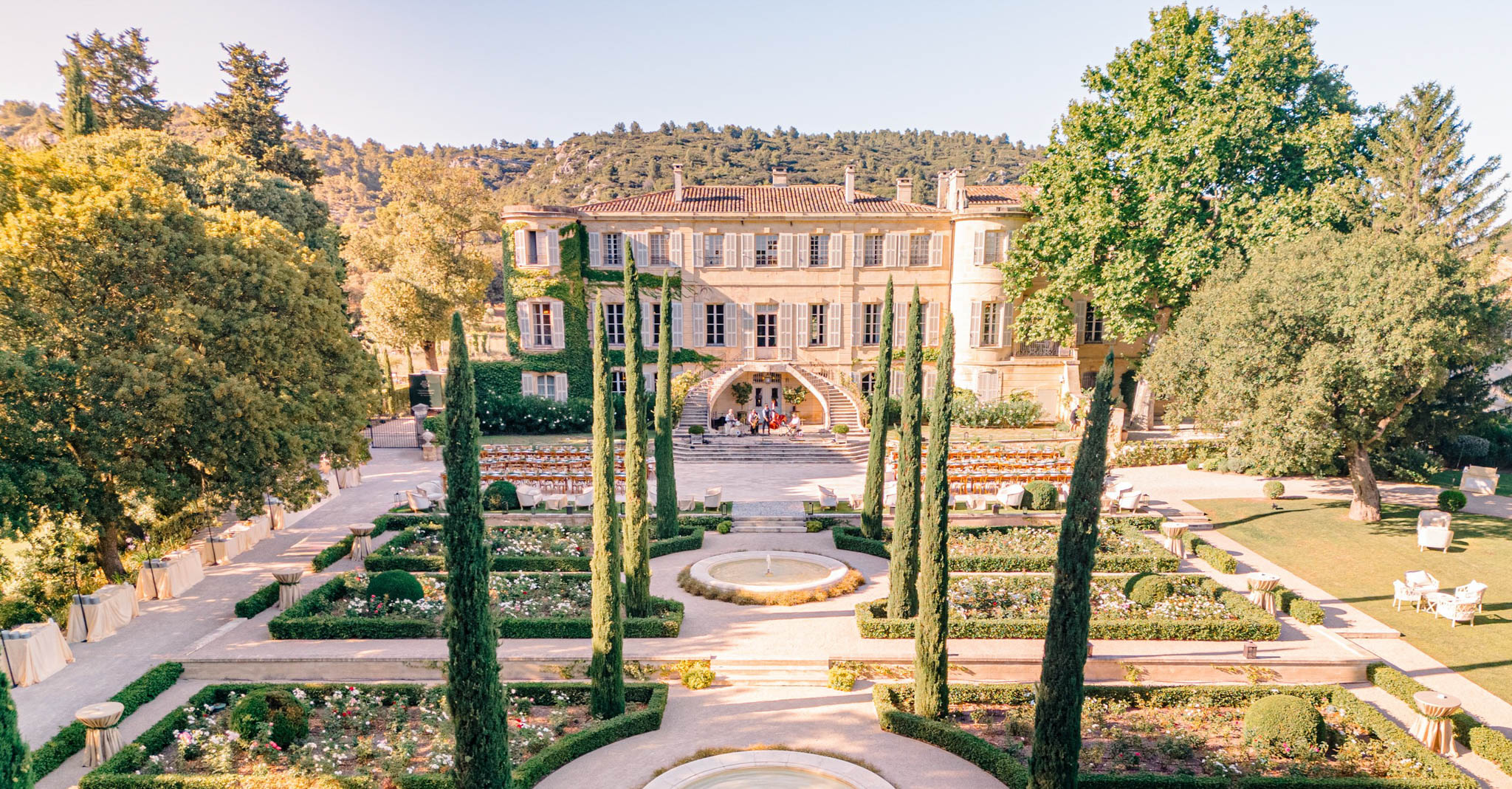
Budget the late-night food at 5 to 8 percent of your total catering spend. For a 100-guest wedding with a catering budget of €18,000, that is €900 to €1,400. This is a fraction of the total but delivers outsized impact on the guest experience. The alternative, no food after midnight, means guests leave earlier, the dance floor empties by 1am, and you lose the final hours that many couples describe as the best part of the night. See how this couple brought this to life at Domaine d'Essendieras in the Dordogne.
Timing is straightforward. Coordinate with your DJ or band to announce the food at 2am or 2:30am. The music pauses briefly or drops to background level. The food is served for 20 to 30 minutes. The music ramps back up. This is the same rhythm as the earlier trou normand or cheese course: a deliberate pause that refreshes the room before the next wave of energy. Your DJ or band will know this timing if they regularly work French weddings.
For couples marrying at no-curfew wedding venues in France, the late-night food is particularly important. Without a curfew forcing an endpoint, the party continues as long as the energy sustains it. Late-night food is the mechanism that sustains it. Plan for one service at 2am. If the party is still going strong at 4am, have a backup: a second cheese board, a fruit and chocolate display, or simply ensuring the bar has soft drinks and water available alongside spirits.
Related Articles
- Food and drink for a French wedding: the complete guide
- Traditional French wedding menus: course by course
- Le trou normand, cheese course, and French dining traditions
- Wine selection for your French wedding
- The croquembouche: France's wedding dessert
- The vin d'honneur and French wedding day structure
- Choosing a caterer (traiteur) in France
- No-curfew wedding venues in France
- Browse all wedding venues in France
Frequently Asked Questions
Do French guests expect late-night food at a wedding?
Yes. At traditional French weddings, late-night food is expected, not optional. French guests who have been celebrating since 6pm and dancing since midnight anticipate a food service around 2am. Its absence is noticed and commented on. For an international guest list, the expectation is lower, but the positive reaction when it appears is consistently strong. It is one of the most appreciated details at destination weddings in France.
Can we do late-night food ourselves?
Simple options work well as self-catered late-night food. Croque-monsieurs assembled in advance and grilled in the venue kitchen by a willing family member. A cheese and charcuterie board arranged on the dining table. Pre-made mini quiches reheated in the oven. Confirm with your venue that you have kitchen access at 2am and that you are permitted to prepare food independently (some venues require all food to come from the contracted traiteur for insurance reasons).
What time should late-night food be served?
Between 2am and 3am is standard. This is approximately 2 to 3 hours after dinner ends and the pièce montée is served. The timing coincides with the natural energy dip after sustained dancing. Serving earlier (midnight or 1am) feels too close to dinner. Serving later (4am) misses most guests. Coordinate the timing with your DJ or band for a smooth transition.
Is onion soup the only traditional option?
Onion soup is the most iconic, but regional traditions vary. In the south-west, a garbure (thick vegetable and duck soup) sometimes replaces it. In Alsace, a choucroute garnie (sauerkraut with sausages) may appear. In Brittany, galettes (buckwheat crêpes). The unifying principle is hot, salty, restorative food served in the small hours. The specific dish reflects the region. Your traiteur will know the local tradition.
How much late-night food should we order?
Plan for 60 to 80 percent of your guest count. Not all guests will still be present at 2am. Some will have gone to bed. Others will be at the bar rather than the food station. For 100 guests, order late-night food for 60 to 80 people. It is better to have surplus soup than to run out with 20 hungry guests still dancing. Leftover onion soup tastes even better the next day at the recovery brunch.
Explore Every Guide in This Chapter
Deep-dive into each topic covered above.