
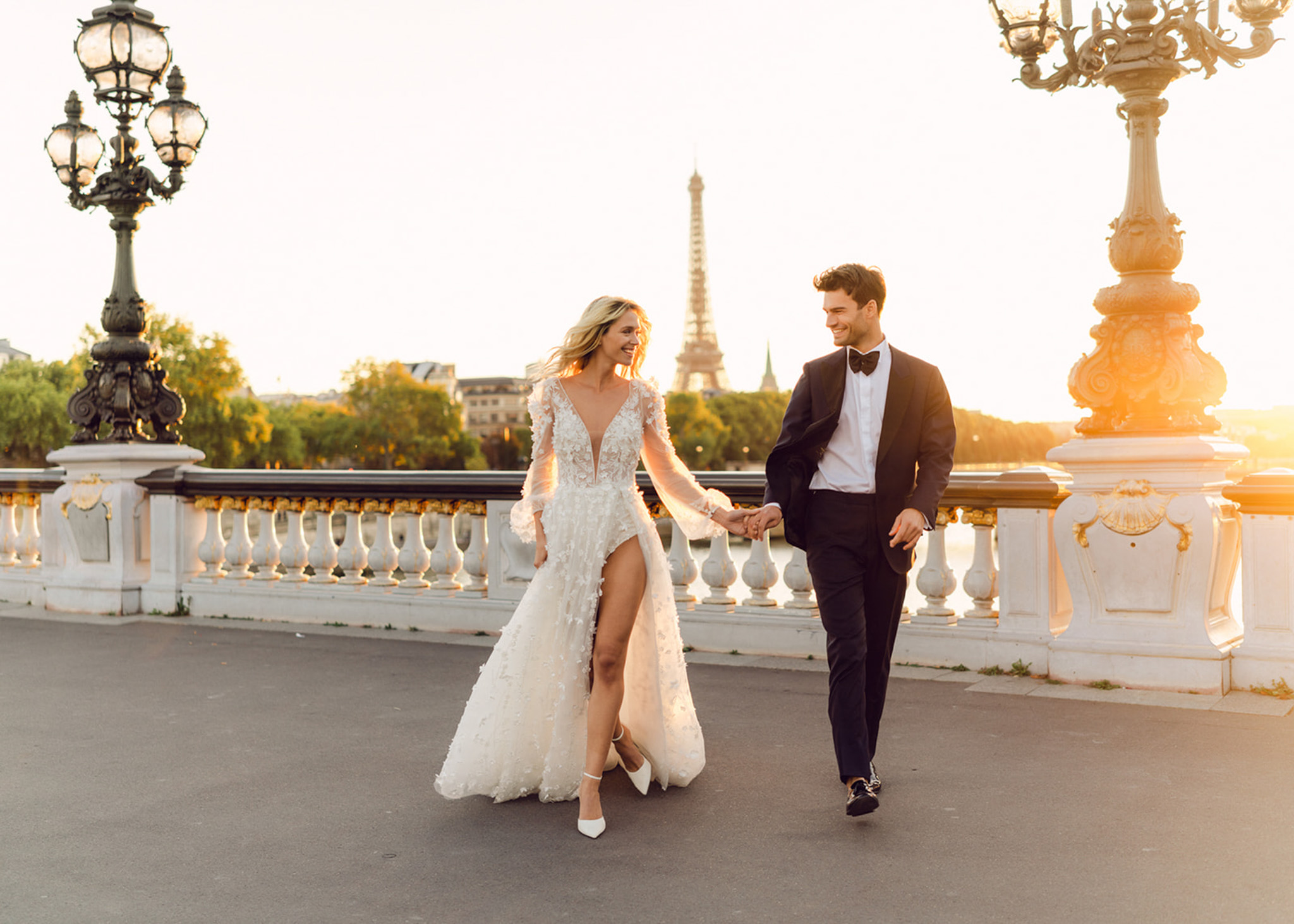
Languedoc-Occitanie is where the Provence and Dordogne wedding markets were fifteen years ago: genuinely attractive, significantly underpriced relative to quality, and not yet discovered by the international destination wedding circuit. Cathar castles sit on limestone ridges above wild garrigue, the Canal du Midi traces its UNESCO-listed path through plane tree tunnels, and Mediterranean vineyards stretch from Minervois to the coast at Sète.
As of 2026, a comparable domaine wedding here costs 30 to 50% less than in Provence, with stronger availability and fewer calendar conflicts. Leading planners are beginning to route clients here quietly. Everything you need to plan a Languedoc wedding as part of our guide to choosing your wedding region in France. For a broader view of every step involved, see our step-by-step destination wedding planning guide for France.
Key Takeaways
- Languedoc-Occitanie offers domaine and château weddings at 30 to 50% less than Provence equivalents, with a total budget of €35,000 to €80,000 for 80 guests as of 2026.
- Five airports serve the region: Montpellier (MPL), Toulouse (TLS), Béziers (BZR), Carcassonne (CCF), and Perpignan (PGF). No other French wedding region outside Paris has this density of gateways.
- Standout areas include Cathar castle country around Carcassonne, the Canal du Midi corridor, the Minervois and Corbières wine regions, and the Mediterranean coast from Sète to Cap d'Agde.
- The vendor ecosystem is growing rapidly but remains less established than Provence. A planner with local contacts is more important here than in mature destination markets.
- The window of genuine discovery remains open. As the Luberon becomes more saturated and Riviera prices push beyond reach, Languedoc presents as the logical next frontier for international couples seeking value without compromise on setting.
Why Is Languedoc the Emerging Destination Wedding Region in France?
The answer is straightforward: the region delivers Mediterranean climate, historic architecture, and vineyard landscapes at a fraction of what Provence or the Riviera charges. A mid-range destination wedding for 80 guests costs €35,000 to €80,000 in Languedoc, compared to €83,000 to €144,000 for mid-to-premium Provence properties (budget-tier Provence weddings start lower, from around €40,000). This is not a downgrade. The venue stock in Languedoc includes medieval Cathar fortresses perched above gorges, wine domaines with 17th-century stone farmhouses, Canal du Midi properties shaded by 300-year-old plane trees, and coastal settings on the Mediterranean at Sète and Cap d'Agde. The architecture carries centuries of Cathar, Roman, and Occitan heritage. The landscape is dramatic rather than manicured, with wild garrigue scrubland, limestone plateaux, and vine-covered hillsides running down to the sea. Five airports serve the region (Montpellier, Toulouse, Béziers, Carcassonne, Perpignan), giving it the densest gateway network of any French wedding destination outside Paris.
What keeps prices lower is simple market dynamics. International destination wedding demand has not yet reached Languedoc in volume. Provence has absorbed two decades of British, American, and Australian couples. The Dordogne has built a robust English-speaking infrastructure. The Riviera commands premium pricing through global name recognition. Languedoc has none of that demand pressure.
The venues are comparable. The setting is comparable. The prices reflect a market that has not been discovered, not a market that has been discounted. For couples exploring destination wedding venues in France, this distinction matters. You are not getting a cheaper version of Provence. You are getting a different region at its pre-discovery price point.
The region also offers something Provence cannot: genuine variety within a compact area. A 90-minute drive from Carcassonne reaches medieval hilltop castles, a UNESCO waterway, two distinct wine regions, and the Mediterranean coast. No other southern French region packs this range of settings into such a short radius.
How Does Languedoc Compare to Provence on Price and Quality?
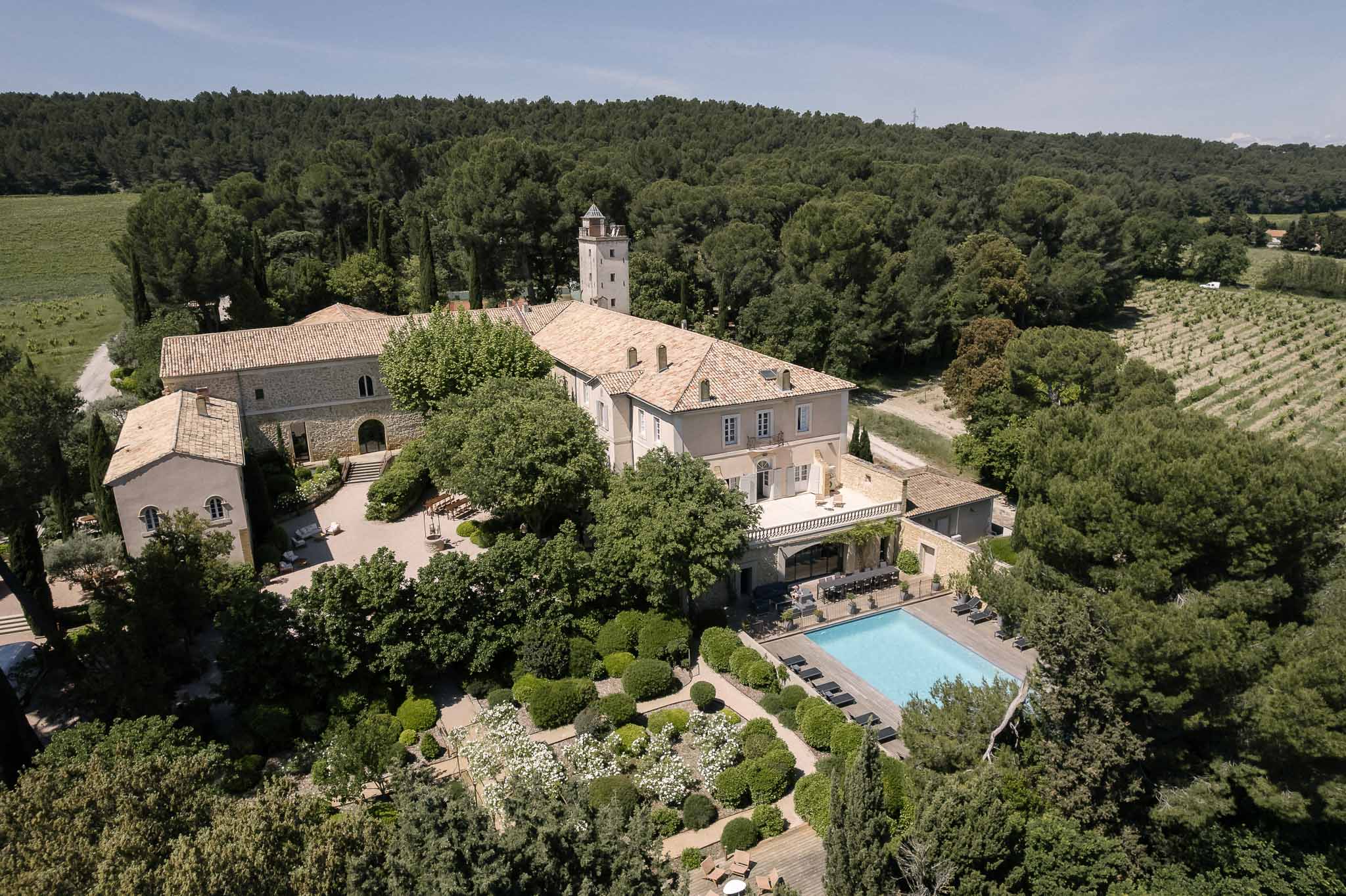
The comparison is often summarised as "Provence without the premium," and the data supports it. Venue hire for a comparable domaine property in Languedoc runs €4,000 to €15,000 for a weekend, compared to €15,000 to €45,000 in Provence. Catering sits at €100 to €220 per head, below Provence's €150 to €280 range. A photographer in Languedoc costs €2,000 to €4,500 for a full day versus €3,000 to €10,000 in Provence's increasingly Paris-adjacent pricing. The result is a total budget that sits roughly half that of a mid-range Provence celebration for the same guest count and comparable quality. The compound savings across every vendor category are where the real difference appears, giving couples either significant savings or the freedom to invest in elements like florals and entertainment at a level that would be unaffordable in the Luberon. The landscape, light, and wine culture are comparable; the pricing is not.
- Venue hire for a comparable domaine property in Languedoc runs €4,000 to €15,000 for a weekend, compared to €15,000 to €45,000 in Provence
- Catering sits at €100 to €220 per head, below Provence's €150 to €280 range
- Photographer and florist pricing reflects a regional market, not the Paris-adjacent rates that Provence vendors increasingly charge
- A photographer in Languedoc costs €2,000 to €4,500 for a full day versus €3,000 to €10,000 in Provence
- The result is a total budget that sits roughly half that of a mid-range Provence celebration for the same guest count and comparable quality
- The compound savings across every vendor category are where the real difference appears, giving couples either significant savings or the freedom to invest in elements like florals and entertainment at a level that would be unaffordable in the Luberon
| Cost Category | Languedoc (80 Guests) | Provence (80 Guests) |
|---|---|---|
| Venue fee (weekend) | €4,000 to €15,000 | €15,000 to €45,000 |
| Catering per head (food, before drinks) | €100 to €220 | €150 to €280 |
| Wedding planner (full) | €4,000 to €10,000 | €8,000 to €18,000 |
| Photographer (full day) | €2,000 to €4,500 | €3,000 to €10,000+ |
| Florist and styling | €1,500 to €5,000 | €4,000 to €15,000+ |
| Live band (5 to 8 pieces) | €3,000 to €6,000 | €6,000 to €12,000 |
| Realistic total (all-in) | €35,000 to €80,000 | €83,000 to €144,000 (mid-to-premium tier) |
The quality gap is narrower than the price gap suggests. Languedoc domaines often feature the same Provençal-style stone construction, cypress-lined drives, and outdoor dining terraces that couples associate with southern France. What differs is polish. Provence venues have been refined by years of hosting international weddings. Signage is bilingual.
Communication is immediate. Vendor referral lists are long and vetted. Languedoc venues are catching up fast, but some still operate with a more agricultural, less event-oriented approach. This is not a disadvantage for every couple. For those who prefer authenticity over curation, it is part of the appeal. For a full breakdown of how regions compare financially, see our regional price comparison.
How Much Does a Languedoc Wedding Cost?
A mid-range destination wedding for 80 guests in Languedoc costs €35,000 to €80,000 all-in as of 2026, making it one of the most affordable destination wedding regions in southern France Weekend venue hire runs €4,000 to €15,000, catering €100 to €220 per head, and a full-service planner €4,000 to €10,000 This is comparable to the Dordogne and substantially below Provence (€83,000 to €144,000), the Riviera (€100,000 to €300,000+), and the Loire Valley (€55,000 to €100,000) for equivalent property types Based on French Wedding Style's work with couples planning in this region, the savings are most pronounced on venue hire and catering, where Languedoc pricing has simply not been subject to the demand inflation that has driven Provence costs upward for two decades Wine costs are a particular advantage.
- A mid-range destination wedding for 80 guests in Languedoc costs €35,000 to €80,000 all-in as of 2026, making it one of the most affordable destination wedding regions in southern France
- Weekend venue hire runs €4,000 to €15,000, catering €100 to €220 per head, and a full-service planner €4,000 to €10,000
- This is comparable to the Dordogne and substantially below Provence (€83,000 to €144,000), the Riviera (€100,000 to €300,000+), and the Loire Valley (€55,000 to €100,000) for equivalent property types
- Based on French Wedding Style's work with couples planning in this region, the savings are most pronounced on venue hire and catering, where Languedoc pricing has simply not been subject to the demand inflation that has driven Provence costs upward for two decades
- Wine is a further advantage: local appellations such as Minervois, Corbières, and Pic Saint-Loup offer excellent quality at €10 to €15 per bottle, a fraction of comparable Bordeaux or Burgundy prices
Wine costs are a particular advantage. Languedoc has invested heavily in quality-focused appellations over the past two decades, and local wines (Minervois, Corbières, Saint-Chinian, Faugères, Pic Saint-Loup) offer excellent quality at prices that would be unthinkable in Bordeaux or Burgundy. Many domaine venues produce their own wine and include it in the package or offer it at production cost. Serving local wines at your wedding is both expected and remarkably affordable. A couple spending €15 per bottle on a Minervois or Corbières red is getting wine that would cost three to five times more from a comparable Provence or Bordeaux appellation.
Where Languedoc budgets can increase is in vendor sourcing. The local vendor ecosystem is growing rapidly, but for specific services (high-level floristry, international-standard videography, English-speaking celebrants), couples sometimes bring vendors from Provence, Toulouse, or Montpellier. This adds travel costs. A planner who knows the region can mitigate this by connecting couples with the emerging local talent pool. For budget planning across all regions, see our guide to planning a budget wedding in France.
How Do Guests Reach Languedoc and Occitanie?
Languedoc has one logistical advantage that surprises most couples: five airports serve the region, giving it the densest gateway network of any French wedding destination outside Paris. Montpellier (MPL) has the broadest European route network and sits closest to eastern Languedoc venues. Toulouse (TLS) is a major international hub with seasonal transatlantic flights and serves western Occitanie. Béziers (BZR) and Carcassonne (CCF) receive seasonal Ryanair flights from UK cities, landing within 30 minutes of prime venue territory in the Canal du Midi corridor and Cathar country. Perpignan (PGF) serves the southern area near the Spanish border. By rail, the TGV reaches Montpellier from Paris in 3 hours 20 minutes and serves Béziers and Narbonne on the same line. No single airport dominates, so the best choice depends on where your venue sits and where your guests are flying from.
Scroll →
| Airport | Code | Best For | Key Routes |
|---|---|---|---|
| Montpellier | MPL | Eastern Languedoc, Hérault coast, Pic Saint-Loup | London, Paris, Amsterdam, Brussels, seasonal European cities |
| Toulouse | TLS | Western Occitanie, Canal du Midi west | Major international hub. London, Dublin, European cities, seasonal transatlantic |
| Béziers | BZR | Central Languedoc, Minervois, Canal du Midi | Ryanair seasonal from UK cities (London, Bristol, Edinburgh) |
| Carcassonne | CCF | Cathar country, Corbières, western wine region | Ryanair seasonal from UK (London Stansted, Manchester) |
| Perpignan | PGF | Southern Languedoc, Roussillon, Spanish border | Paris, seasonal UK and European routes |
Toulouse-Blagnac (TLS) is the most connected airport, a major international hub with year-round European routes and seasonal transatlantic services. It sits roughly two hours west of central Languedoc, making it the best arrival point for guests flying from outside Europe or from destinations without direct Languedoc connections. For UK guests, Carcassonne and Béziers offer seasonal budget flights that land within 30 minutes of prime venue territory.
By rail, the TGV serves Montpellier (3 hours 20 minutes from Paris), Béziers, and Narbonne. Toulouse is connected by both TGV and regular intercity services. Carcassonne sits on the Toulouse to Montpellier rail line. For guests arriving via Paris, the train is competitive with domestic flights once airport transfer times are factored in. Couples comparing access to other regions should note that Languedoc's multi-airport setup offers more routing flexibility than the Dordogne or Bordeaux wine country, where a single airport serves most arrivals.
Which Areas of Languedoc Are Best for Weddings?
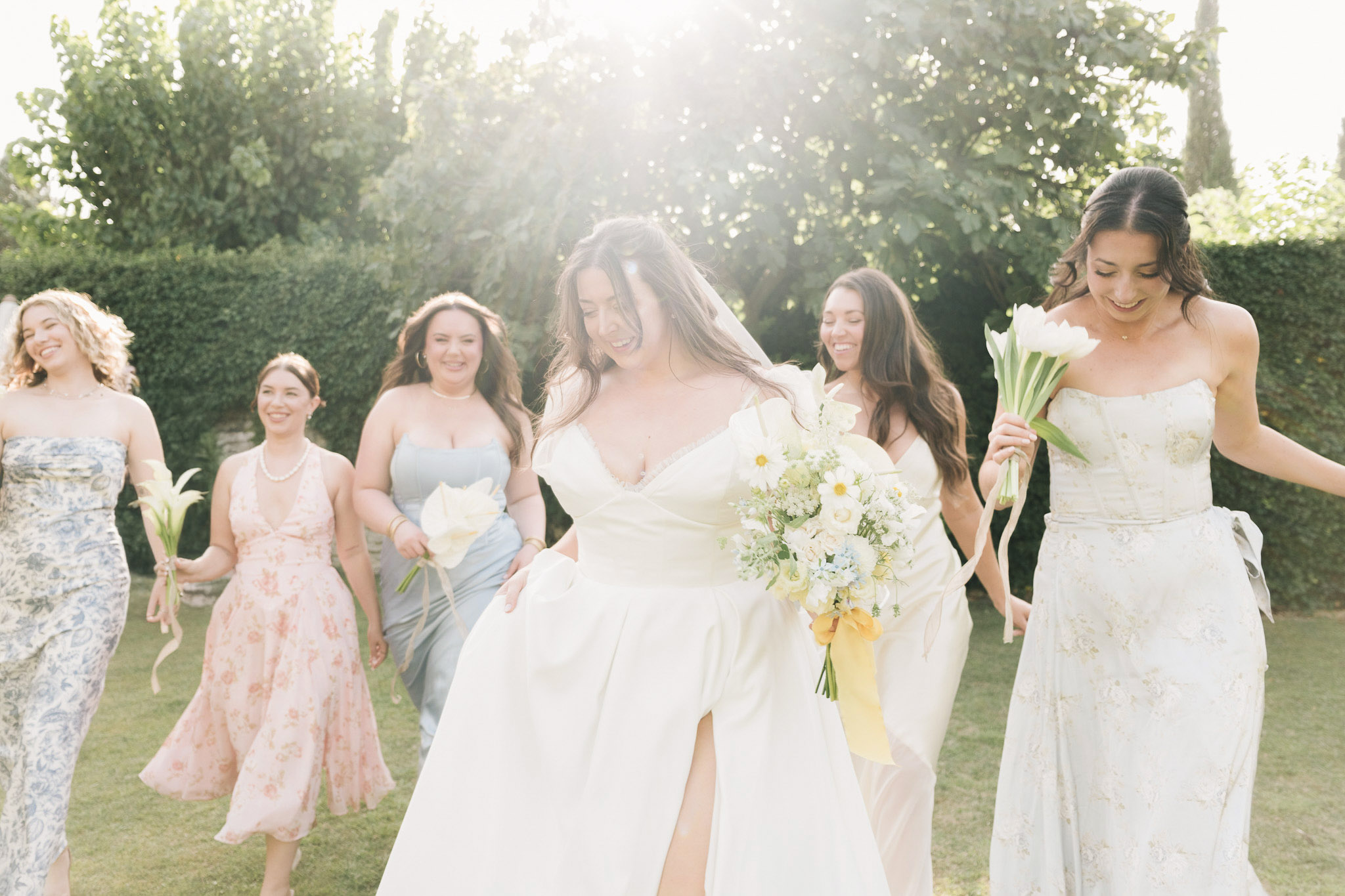
Languedoc is not a single landscape. The region spans 170 kilometres from Perpignan near the Spanish border to Montpellier near the Rhône, and each sub-area offers a distinct character, venue stock, and price range. The five strongest zones for destination weddings are Carcassonne and Cathar castle country (dramatic medieval fortifications on limestone ridges), the Canal du Midi corridor (UNESCO-listed waterway with plane tree-lined towpaths and converted mill houses), the Minervois wine region (terraced vineyards with some of Languedoc's finest reds), the Corbières (wild, affordable, and remote), and the Hérault coast (Mediterranean waterfront at Sète and Cap d'Agde). A 90-minute drive from Carcassonne reaches all five zones, giving couples remarkable variety within a compact area. Choosing the right area is as important as choosing the right venue, because the character and price range differ substantially.
Carcassonne and Cathar Castle Country
The medieval walled city of Carcassonne is one of the most photographed sites in France, and the surrounding hills hold dozens of Cathar castles perched on limestone ridges. These are not Loire-style Renaissance châteaux. They are fortified medieval structures with commanding views over gorges and vineyards, carrying 800 years of Cathar history. Venues in this area range from restored castle properties to domaines in the foothills. The landscape is dramatic: rocky, wild, and defined by contrast between ancient stone and green valley floors. Carcassonne's own airport (CCF) provides direct seasonal access from the UK.
The Canal du Midi Corridor
The Canal du Midi, built between 1666 and 1681 under Pierre-Paul Riquet, is a UNESCO World Heritage Site running 240 kilometres from Toulouse to the Mediterranean at Sète. Properties along its banks offer a setting unlike anything else in France: plane tree-lined towpaths, stone lock-keeper's houses, arched bridges, and the quiet passage of canal boats.
Wedding venues here include converted mill houses, domaines with canal frontage, and estate properties in the rolling countryside just back from the waterway. The corridor between Carcassonne and Béziers holds the highest concentration of canal-adjacent venues. For couples drawn to waterside settings, this is an alternative to coastal properties that carries genuine historical weight.
Minervois Wine Region
Minervois sits north of the Canal du Midi between Carcassonne and Narbonne. The wine region produces some of Languedoc's finest reds and rosés, and the landscape of terraced vineyards, hilltop villages, and limestone gorges is visually striking. Venue pricing here represents some of the strongest value in southern France. Wine domaines with guest accommodation, outdoor dining terraces, and vineyard views are available at rates that would be unimaginable in Provence. The area is ideal for couples interested in vineyard wedding venues in France who find Provence and Bordeaux pricing prohibitive.
Corbières
South of Carcassonne and west of Narbonne, Corbières is the wildest and most affordable area in Languedoc. Rugged hills covered in garrigue scrubland give way to isolated Cathar castles (Quéribus, Peyrepertuse, Aguilar) and small wine villages where tourism has barely arrived. This is the area for couples who want a genuinely remote, undiscovered setting. Venue options are fewer but growing, and the prices reflect a region where demand is minimal. The trade-off is infrastructure: vendor sourcing requires more planning, and some venues are 30 to 45 minutes from the nearest town of any size.
The Hérault Coast
The Mediterranean coast from Sète through Cap d'Agde to Valras-Plage offers a coastal dimension that is often overlooked. Sète in particular, a working fishing port built across a network of canals, has a character closer to an Italian coastal town than a French resort. Coastal venues suit couples who want a Mediterranean wedding with beach access or harbour-front dining at pricing well below the Riviera. The Hérault coast sits 20 to 40 minutes from Montpellier airport and combines naturally with vineyard visits inland for multi-day programmes. For broader coastal and outdoor options, see outdoor wedding venues in France.
4 Avoidable Errors When Planning a Languedoc Wedding
Judging it as "cheap Provence." Languedoc is not a budget compromise. The region offers a Mediterranean setting with 300 days of sunshine per year, historic architecture dating back to the 13th-century Cathar period, and a vineyard culture that produces more wine than any other region in France. Couples who approach Languedoc as a discount version of Provence tend to judge it against Provençal aesthetics and find it lacking in lavender fields and honey-stone farmhouses. Those who approach it on its own terms discover medieval Cathar fortresses, the UNESCO-listed Canal du Midi, and a rugged garrigue landscape with a character Provence does not possess. The Cathar castles of Quéribus and Peyrepertuse, perched on limestone ridges with 360-degree views, have no visual equivalent anywhere else in France. The comparison to getting married in Provence is useful for pricing, but the regions deliver fundamentally different experiences. See how this couple brought this to life at Château Canet in Languedoc.
Underestimating the vendor gap. Languedoc's vendor ecosystem is growing fast, but it has not reached the depth of Provence, the Riviera, or Bordeaux. English-speaking celebrants, international-standard florists, and videographers who work to destination wedding expectations are available, but the pool is smaller. Couples who plan to source every vendor locally may find gaps. The practical solution is a recommended wedding planner who has built vendor relationships across Languedoc, since the network is still developing and sourcing from Toulouse or Montpellier may be necessary for specialist vendors like high-level florists, English-speaking celebrants, or cinematic videographers.
Ignoring peak summer heat. Languedoc is hotter than Provence's interior in July and August. Daytime temperatures of 35 to 40°C are common, and the tramontane wind, while it cools the air, can be strong enough to disrupt outdoor ceremonies. Venues with shaded outdoor spaces, thick stone walls for indoor alternatives, and swimming pools for guest comfort are not optional in peak summer. Read our guide to rustic styling ideas that suit Languedoc and southern French wedding venues for the full breakdown. Couples who have attended a June wedding in the English countryside and assume the same works in August Languedoc will face a difficult reality. Late May, June, and September offer the best balance of warmth and comfort.
Treating Languedoc as one place. The distance from Perpignan to Montpellier is 170 kilometres. The character of Cathar castle country, the Canal du Midi corridor, the Minervois, the Corbières, and the Hérault coast are as different as any five sub-regions in France. Explore our guide to rustic and countryside venue types in southern France for the full picture. Choosing "Languedoc" without specifying an area is like choosing "southern France" without specifying a region. Start with the type of setting you want, then narrow to the area that provides it.
Finally, some couples delay booking because they perceive Languedoc as a risk. The region is unfamiliar. The name recognition is low. The Instagram hashtag count is a fraction of Provence's. None of this reflects the quality of the venues, the landscape, or the experience. What it reflects is a market that has not yet been saturated by demand. For couples willing to explore beyond the established circuit, this is precisely the advantage. The full directory of wedding venues in France includes properties across every Languedoc sub-area.
Related Articles
- Regional price differences across France: where your euro goes furthest
- Getting married in Provence: the complete planning guide
- Dordogne and South-West France: a wedding planning guide
- Bordeaux wine country: the complete wedding planning guide
- Destination wedding venues in France
Frequently Asked Questions
How much does a wedding in Languedoc cost?
A mid-range destination wedding for 80 guests costs €35,000 to €80,000 all-in. Venue weekend hire runs €4,000 to €15,000 and catering €100 to €220 per head. This is 30 to 50% less than a comparable Provence wedding, making Languedoc one of the most affordable Mediterranean wedding destinations in France.
What is the best time of year for a Languedoc wedding?
Late May, June, and September offer the best conditions. July and August bring temperatures of 35 to 40°C, which can make outdoor ceremonies uncomfortable without shade and cooling provisions. The tramontane wind (a cold, dry wind similar to the Mistral) can also disrupt outdoor events in spring and autumn. September delivers warm weather (25 to 30°C), harvest atmosphere in the vineyards, and lower pricing. October is mild and increasingly popular for intimate celebrations, with daytime temperatures of 20 to 25°C.
How do guests fly to Languedoc?
Five airports serve the region. Montpellier (MPL) has the broadest European route network. Toulouse (TLS) offers major international connections including seasonal transatlantic flights. Béziers (BZR) and Carcassonne (CCF) receive seasonal Ryanair flights from UK cities. Perpignan (PGF) serves the southern area near the Spanish border. The TGV reaches Montpellier from Paris in 3 hours 20 minutes.
Is Languedoc safe to book for a destination wedding?
The venues, infrastructure, and legal framework are identical to any other French region. What Languedoc lacks is the brand recognition and established vendor depth of Provence or the Riviera. Working with a planner who knows the region eliminates most practical concerns. The venue stock is strong and growing, and French legal requirements for weddings apply uniformly nationwide.
What makes Cathar castle venues different from Loire Valley châteaux?
Cathar castles are medieval military fortifications, not Renaissance pleasure palaces. They sit on hilltops and ridgelines, built for defence during the 13th-century Albigensian Crusade. The aesthetic is stone, drama, and panoramic views over wild landscape. Loire châteaux are 15th to 17th-century aristocratic residences with formal gardens, ornate interiors, and river frontage. The two offer entirely different visual experiences and atmospheres.
Can I combine a vineyard wedding with the Mediterranean coast?
Easily. The Minervois and Corbières wine regions sit 30 to 60 minutes from the Mediterranean coast at Narbonne, Sète, or Cap d'Agde. A three-day programme with a vineyard ceremony, coastal welcome dinner (oysters and white wine on the Sète waterfront is a guest favourite), and a Canal du Midi boat excursion covers the region's full range within short driving distances. Canal boat rentals for group outings run €200 to €500 for a half-day. This variety within a compact geography is one of Languedoc's core strengths.
Do Languedoc venues speak English?
Many do, though English proficiency varies more widely than in Provence or the Riviera, where international demand has made bilingual service standard. Venues that actively market to international couples will have English-speaking coordinators. Smaller domaines and rural properties may operate primarily in French. A bilingual planner resolves communication gaps and is more important in Languedoc than in more established destination markets. Ask venues directly about English-language capability before your first site visit to avoid surprises.
The window of genuine discovery in Languedoc is still open. As Provence saturates further and Riviera prices push beyond reach, the couples booking here now are getting comparable Mediterranean settings at pre-demand pricing. That gap will not last indefinitely. Browse wedding venues in France to compare Languedoc properties against other southern regions for your date and budget.
Explore Every Guide in This Chapter
Deep-dive into each topic covered above.