
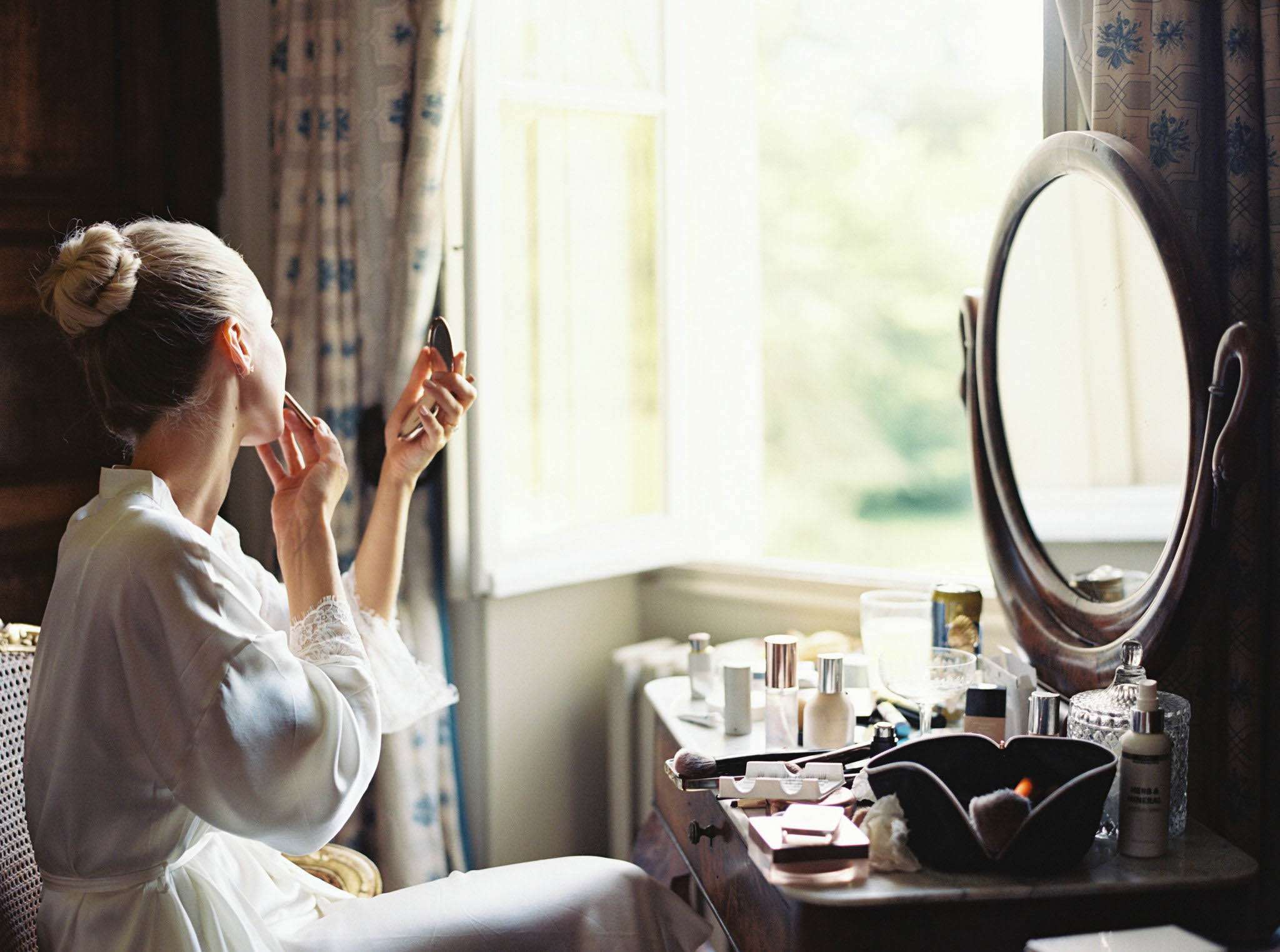
Hair, Makeup & Getting Ready in France
Getting ready at a French château is not the same as getting ready in a London hotel suite. The bridal suite may have 4-metre ceilings and original frescoes, but it may also have one mirror, no air conditioning, and natural light that shifts dramatically between 7am and noon. The HMUA (hair and makeup artist) arrives at 6am for a bridal party of six, works for 5 to 6 hours straight, and finishes the couple just in time for a midday first look or a 4pm ceremony. If you have hired one artist, that is 5 to 6 hours of sequential work. If you have booked a second artist, the timeline halves and the bridal party stays calm instead of watching the clock.
In the south of France, the heat adds another variable: products that hold in London melt in 35-degree Provençal heat without the right formulation. What follows is how to find the right artist, how to plan the timeline, and what the venue itself contributes to the getting-ready experience. This forms part of planning your destination wedding in France from start to finish. For the full chapter, see our complete final details guide.
Key Takeaways
- A bridal party of 6 (couple plus 4 attendants) requires 5 to 6 hours of hair and makeup with one artist. A second artist halves the timeline to 2.5 to 3 hours. For ceremonies starting at midday, one artist means a 6am start. A second artist means a more comfortable 8am start.
- Bilingual HMUA artists (French-English) are available across all major wedding regions. Finding one who travels to rural venues is the real challenge. Confirm travel willingness, surcharges for distance, and whether the artist needs accommodation the night before.
- Heat-specific products are essential for summer weddings in southern France. Oil-free primer, waterproof mascara, setting spray, and matte formulations prevent the "melting" effect during an outdoor ceremony in 30 to 35 degree heat.
- Air conditioning in the getting-ready room is not optional for summer weddings in the south. Confirm this with your venue before booking. A room without AC at 8am in July will be 28+ degrees by 10am, and sweat undermines every product application.
- Budget €300 to €600 for the bridal hair and makeup, plus €100 to €200 per additional person. A second artist adds €200 to €400 to the total but saves 2 to 3 hours of stress.
How Do You Find a Bilingual HMUA in France?
The bilingual requirement is the first filter. Communication between the couple and the artist about skin type, product preferences, desired style, and on-the-day adjustments needs to be precise. An artist who speaks conversational English is not the same as one who can discuss undertones, hold times, and product ingredients in detail. For destination couples from the UK, US, or Australia, a fully bilingual artist removes the risk of miscommunication during a high-stakes morning. Start the search 9 to 12 months before the wedding for peak-season dates (May to September). The best bilingual artists in Provence, the Riviera, and Paris are booked 12 months ahead. In less competitive regions (Normandy, the Loire, the South-West), 6 to 9 months is usually sufficient. Sources for finding a bilingual HMUA in France include your wedding planner's roster (the fastest route to a vetted recommendation), international wedding directories including French Wedding Style, Instagram hashtags and location tags (#makeupartistprovence, #hmuafrance), and direct recommendations from your venue coordinator.
Confirm three things at the enquiry stage. First, the artist's willingness and surcharge for travelling to your specific venue. An artist based in Aix-en-Provence may charge €50 to €150 extra to travel 90 minutes to a venue in the Luberon. Second, whether the artist needs accommodation the night before (standard for remote venues where the call time is 6am and the drive is over an hour). Third, the artist's experience with diverse skin tones and hair types. A portfolio that shows only one skin type is a red flag for international bridal parties.
How Long Does Getting Ready Take?
The timeline depends on three variables: the number of people being styled, the number of artists, and the ceremony start time. Work backwards from the ceremony to set the call time. For a midday ceremony (common at civil ceremonies in France), a bridal party of 6 with one artist must start at 6 to 7am. This is a very early morning that compounds the stress of an already emotional day. A second artist, at an additional cost of €200 to €400, allows a civilised 8 to 9am start and gives the couple 30 to 60 minutes of buffer before the ceremony for photographs, final touches, and a quiet moment alone. The couple is always styled last. This ensures the hair and makeup are freshest for the ceremony. Attendants and mothers go first, working through the sequence while the couple has breakfast, reviews the day's timeline, and gradually transitions into the wedding mindset.
Scroll →
| Bridal Party Size | 1 HMUA Artist | 2 HMUA Artists | Start Time (4pm ceremony) |
|---|---|---|---|
| Couple only | 1.5 to 2 hours | Not needed | 1:30pm to 2pm |
| Couple + 2 attendants | 3 to 3.5 hours | 1.5 to 2 hours | 12pm to 12:30pm (1 artist) / 1:30pm (2 artists) |
| Couple + 4 attendants | 5 to 6 hours | 2.5 to 3 hours | 10am (1 artist) / 12:30pm (2 artists) |
| Couple + 6 attendants | 6.5 to 7.5 hours | 3 to 4 hours | 8:30am (1 artist) / 11:30am (2 artists) |
| Couple + mothers of couple | Add 1.5 to 2 hours | Add 45 min to 1 hour | Adjust start time accordingly |
How Does Southern France Heat Affect Makeup?
Summer temperatures in Provence, the Riviera, and Languedoc regularly exceed 30 degrees Celsius by late morning. At an outdoor ceremony starting at 4pm, the air temperature may be 33 to 35 degrees. Direct sun adds radiant heat. Stone terraces and gravel courtyards reflect heat upward. The couple and their guests are standing or sitting in this environment for 30 to 45 minutes during the ceremony, followed by a 1.5 to 2-hour apéritif outdoors. Standard makeup products designed for British or northern European conditions are not formulated for this level of heat and humidity. Foundation oxidises faster, concealer creases, mascara runs, and lipstick migrates. The result, 3 hours into the celebration, is visibly degraded makeup in every photograph taken after the ceremony. Heat-specific products and techniques solve this. Your HMUA should use oil-free primer as a base layer to prevent shine and product slip. Long-wear, waterproof foundations and concealers that resist oxidation. Waterproof mascara and eyeliner. Cream blush (which bonds to skin better than powder in heat).
Air conditioning in the getting-ready room is the most critical environmental factor. An AC unit running at 22 to 24 degrees keeps the room comfortable, prevents perspiration during application, and allows products to set properly. Confirm AC availability with your venue. If the bridal suite does not have it, ask whether a portable unit can be installed or whether another room with AC is available for the morning. Some château venues have renovated suites with modern AC. Others have original rooms with thick stone walls (cool but not cold) and no mechanical cooling. Know which you are getting.
What Should You Know About Bridal Suites in Châteaux?
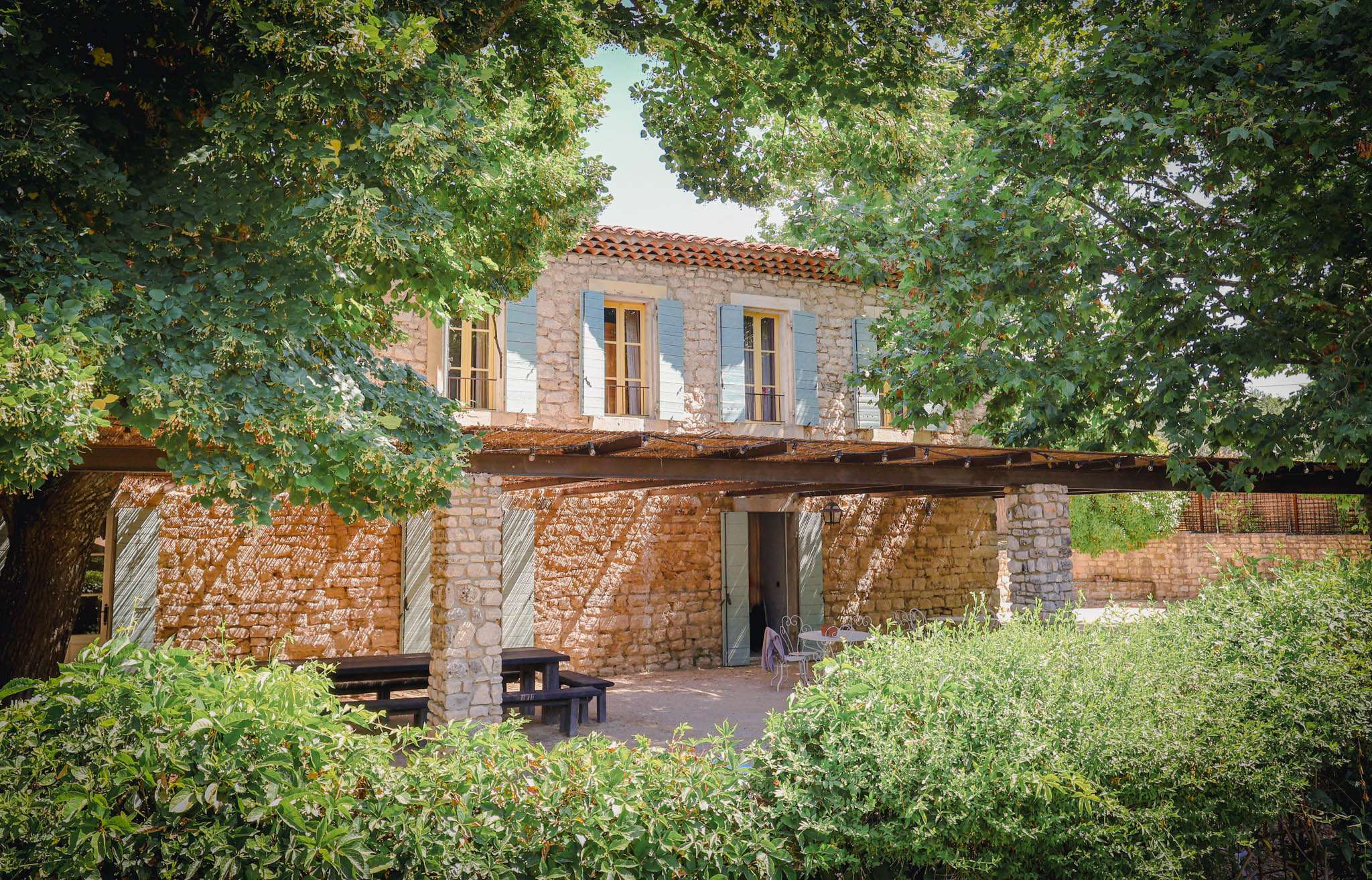
The bridal suite at a French château or domaine is rarely the hotel-style room that Anglo couples imagine. It may be large and atmospheric (high ceilings, period furniture, exposed stone) but practically limited for a 6-person getting-ready session that requires mirrors, lighting, power outlets, hanging space, and room to move. Visit the bridal suite during your venue visit and assess it with the HMUA's requirements in mind. Is there a full-length mirror? Are there enough power outlets for 2 to 3 styling tools running simultaneously (hairdryer, curling iron, steamer)? Is the natural light good enough for accurate makeup application, or will the HMUA need to bring portable lighting? Is there a door that closes, separating the couple from the noise and activity of the wider bridal party? Some couples set up the getting-ready space the night before: hanging the dress, laying out accessories, placing a steamer and an ironing board, arranging the HMUA station with a chair facing the window for natural light.
If the bridal suite is too small for the full party, split the getting-ready across two rooms. The couple uses the bridal suite with the lead artist. Attendants use an adjacent room with the second artist. This creates space, reduces noise, and gives the couple privacy during the final stages of preparation.
Related Articles
- Final details: the complete guide
- Choosing a wedding dress for your venue type
- Couple's packing list for a French wedding
- French wedding emergency kit
- Choosing a wedding planner in France
- Seasonal weather and climate guide
- Château wedding venues in France
- Wedding venues in the south of France
- Browse all wedding venues in France
Frequently Asked Questions
Do we need a trial with a French HMUA if we live abroad?
An in-person trial is ideal but not always practical for destination couples. Many French HMUA artists offer video consultations where they discuss skin type, product preferences, and style references using photographs and mood boards. If you are visiting France for a venue viewing or a planning trip, schedule the trial for the same visit. If a trial is truly impossible, book an artist with strong portfolio evidence, detailed testimonials from international couples, and a clear cancellation or adjustment policy for the wedding day.
How much does a bridal HMUA cost in France?
Bridal hair and makeup (trial plus wedding day) costs €300 to €600 for the couple. Each additional person (attendants, mothers) adds €100 to €200. A second artist for the bridal party adds €200 to €400 to the total. Travel surcharges for remote venues add €50 to €150. Accommodation the night before (if required) may be an additional cost or can be provided on site at the venue. Total for a bridal party of 6 with two artists: €900 to €1,800.
What if the makeup does not last through the evening?
Build touch-up provisions into the plan. Pack a small clutch with blotting papers, translucent powder, the lip colour used during application, and a mini setting spray. Brief one attendant on how to help with quick fixes. Some HMUA artists offer an "on call" service where they stay at the venue through the ceremony and apéritif for touch-ups (€100 to €200 extra for 2 to 3 hours). For summer weddings in the south, this is worth the investment.
Explore Every Guide in This Chapter
Deep-dive into each topic covered above.