
Getting Married Legally in France
France requires every legal marriage to take place at the mairie (town hall) of the commune where the wedding is registered, and the process for international couples involves more paperwork, longer timelines, and higher costs than most expect. That is why roughly 80 to 90% of foreign couples choose a different path: they marry legally at home and hold a symbolic ceremony at their French venue instead. Below we explain every route to getting married in France as an international couple. It is the first chapter in our complete guide to planning a wedding in France, and it links to seven detailed articles that go deeper on each topic, from the civil ceremony itself to nationality-specific legal checklists.
What Are the Two Types of Wedding Ceremony in France?
International couples planning a wedding in France need to understand a distinction that does not exist in most English-speaking countries: the civil ceremony and the symbolic ceremony are two separate events, held in different locations, with different legal standing and different degrees of personalisation. The civil ceremony at the mairie is the only form of marriage that French law recognises. The symbolic ceremony at the venue is a fully customised celebration with no legal weight. Most destination couples hold both, or skip the French civil process entirely by marrying at home first. The what actually happens at the civil ceremony inside a French mairie follows a fixed legal format defined by the French Civil Code. The maire reads Articles 212 to 215 aloud in French, covering mutual respect, fidelity, shared household responsibility, and joint financial obligations. The couple gives formal consent, witnesses sign the register, and the couple receives a livret de famille (the official French family record).
Our guide to how symbolic ceremonies work and why 80 to 90% of international couples choose them covers the opposite format: completely open. The couple designs every element. They write their own vows, choose readings, select music, incorporate cultural or religious rituals, decide the language, and set the length. There is no required format, no mandated officiant, and no legal restrictions. A professional celebrant, religious officiant, or trusted friend can conduct it. Most symbolic ceremonies run 30 to 75 minutes. For the vast majority of destination couples, this is the ceremony everyone attends and remembers.
| Feature | Civil Ceremony (Mairie) | Symbolic Ceremony (Venue) |
|---|---|---|
| Legal standing | Legally binding marriage | No legal standing |
| Location | Mairie (town hall) | Venue of your choice |
| Language | French only | Any language |
| Officiant | Maire or deputy | Celebrant, friend, or religious officiant |
| Vows | Fixed Civil Code declarations | Fully personalised |
| Duration | 10 to 30 minutes | 30 to 75 minutes |
| Cost | Free (paperwork costs vary) | €800 to €3,000 (celebrant fee) |
| Personalisation | Very limited | Unlimited |
| Witnesses required | 2 to 4 (minimum age 18) | None required |
What Documents Do You Need to Get Married Legally in France?
Every foreign couple marrying legally in France must submit a dossier de mariage to the mairie at least 30 to 40 days before the ceremony date. A dossier de mariage is the complete file of legal documents the French authorities require to authorise a civil marriage. The core documents are the same regardless of where you are from: a full birth certificate (acte de naissance intégral), valid passport, proof of current address, a certificat de coutume or equivalent confirming neither partner is currently married, and a sworn French translation (traduction assermentée) of every document not originally in French. Birth certificates must be less than 3 months old for those born in France, or less than 6 months old for non-EU nationals (including British citizens post-Brexit, Americans, and Australians). After the dossier is submitted, the mairie publishes the banns (annonce des bans) for a minimum of 10 days and schedules a pre-wedding interview (audition) with the couple.
Where the process gets complicated is in the nationality-specific requirements on top of this core list. Each country handles the certificat de coutume differently, apostille requirements vary, and the sequential nature of the steps means starting too late is the single biggest risk. Our every document in the dossier de mariage, with validity periods and sworn translation costs by nationality covers every requirement in detail, with timelines and costs broken down by nationality.
Start the paperwork 6 to 9 months before your wedding. The process is sequential, meaning each step depends on the previous one completing, and nothing compresses. A birth certificate that expires while you wait for an apostille means starting that step again from scratch.
How Does the Process Differ by Nationality?
The legal process for marrying in France varies significantly depending on which passport you hold. The core dossier de mariage requirements are the same, but the route to obtaining the certificat de coutume, the cost of apostilles, and the total paperwork timeline differ enough that couples from different countries face genuinely different planning challenges. Our guide to the post-Brexit legal process for British couples, from CNI to FCDO apostille covers the full route. UK couples must obtain a Certificate of No Impediment (CNI) from their local register office, which requires 28 days' notice and is valid for only 3 months. The CNI must then be apostilled by the FCDO (£75, 15 to 20 working days for standard processing) and translated by a sworn French translator. Since Brexit, UK nationals no longer benefit from EU document simplification, adding extra apostille and translation steps that were previously unnecessary.
Our guide explains why the US legal process is the most complex, including the certificat de coutume gap. American couples face the most complex process of any nationality because the US Embassy in Paris cannot issue a certificat de coutume. Marriage law in the United States is administered at the state level, not federally, so no federal authority can confirm a US citizen's eligibility to marry abroad. Instead, couples sign a self-attestation (Attestation tenant lieu de certificat de coutumes et de célibat) that may or may not require Embassy notarisation depending on the mairie. Some mairies require Embassy notarization at $50 per seal, which means scheduling an in-person appointment. US apostilles are issued by the Secretary of State in the state where each document was originally issued, not a central federal office. Total US paperwork costs: $600 to $1,200 (approximately €550 to €1,100).
Our guide to the Embassy CNI route for Australian and New Zealand couples marrying in France covers a more straightforward process. The Australian Embassy in Paris issues a CNI directly at AUD 181 per document, with processing taking up to 10 working days. The birth certificate requires an Australian apostille from DFAT at AUD 105 per document. Total ANZ paperwork: AUD 500 to AUD 1,000 (approximately €300 to €600). The process is simpler than the US route because the Embassy can issue the CNI directly, with no need for the self-attestation process that US couples must navigate.
Scroll →
| Requirement | UK Couples | US Couples | Australian/NZ Couples |
|---|---|---|---|
| Key document | CNI from register office | Self-attestation (no Embassy CNI) | CNI from Embassy in Paris |
| Apostille source | FCDO (£75) | State Secretary of State (varies by state) | DFAT (AUD 105) |
| Total paperwork cost | £400 to £800 (€500 to €1,000) | $600 to $1,200 (€550 to €1,100) | AUD 500 to AUD 1,000 (€300 to €600) |
| Key complication | Post-Brexit apostille + 3-month CNI validity | No Embassy certificat de coutume | In-person Embassy appointment only |
| Timeline (start to submission) | 4 to 5 months | 4 to 6 months | 3 to 4 months |
| Birth certificate validity | Less than 6 months (non-EU post-Brexit) | Less than 6 months (non-EU) | Less than 6 months (non-EU) |
How Much Does the Legal Paperwork Cost?
The civil ceremony at the mairie is free. The cost of getting married legally in France is entirely in the paperwork required to reach that point, and it varies substantially by nationality. UK couples typically spend £400 to £800 (€470 to €950) on birth certificates, apostilles, and sworn French translations. US couples face a higher total of $600 to $1,200 (€550 to €1,100) because the absence of a federal CNI authority means they must navigate state-level document certification. Australian and New Zealand couples land between AUD 500 and AUD 1,000 (€300 to €600), benefiting from a more direct Embassy CNI process and a single national apostille authority. In every case, the sworn French translations (traductions assermentees) are the largest variable cost, running €30 to €60 per page for a dossier of 6 to 10 pages. The table below aggregates the key cost components from our nationality-specific guides so you can compare your likely spend at a glance.
Scroll →
| Cost Component | UK (GBP / EUR) | US (USD / EUR) | Australia/NZ (AUD / EUR) |
|---|---|---|---|
| CNI / Certificat de coutume | £35 to £50 / €40 to €60 | Free (self-attestation form) or $50 Embassy notarisation if mairie requires it | AUD 181 / €110 |
| Apostille(s) | £75 (FCDO) / €90 | $10 to $50 per document (varies by state) | AUD 105 (DFAT) / €65 |
| Birth certificate reissue | £11 / €13 | $15 to $30 / €15 to €30 | AUD 55 / €35 |
| Sworn translations (8 to 12 pages) | £200 to £450 / €250 to €550 | $200 to $400 / €200 to €400 | AUD 200 to AUD 500 / €120 to €300 |
| Total estimated range | £400 to £800 / €500 to €1,000 | $600 to $1,200 / €550 to €1,100 | AUD 500 to AUD 1,000 / €300 to €600 |
These costs cover the paperwork only. If you instead marry legally at home and hold a holding a symbolic ceremony in France instead of navigating the full legal paperwork, the only ceremony-related cost is the celebrant fee (€800 to €3,000), and you avoid the entire French legal document process. For many couples, particularly those who find the sequential paperwork timeline stressful, the symbolic route is both simpler and comparable in cost.
Should You Marry at Home and Hold a Symbolic Ceremony in France?
Based on 15 years of destination weddings featured on French Wedding Style, approximately 80 to 90% of international couples choose this route. They complete the legal marriage at a registry office in their home country, either before the trip to France or after returning, and hold a symbolic ceremony at the French venue as the main celebration. The symbolic ceremony is what guests attend, photographers capture, and the couple plans around. It carries the same emotional weight as a legal ceremony for everyone involved. This approach has practical advantages beyond simplifying the paperwork. It removes the residency requirement, which is the most common blocker for couples with no existing connection to France. Two foreign nationals who do not live in France can only marry at the mairie if at least one partner demonstrates 30 to 40 days of continuous residence in the commune. Without that, the couple's options are limited to marrying at their country's consulate in France or in a French overseas territory.
It also removes the scheduling pressure of coordinating a mairie ceremony on the same day as the venue celebration. The mairie and venue are often 30 to 60 minutes apart. Allowing for travel, outfit changes, and photographs, couples need at least 2 hours between the two events. Based on data from our planner network, 60 to 70% of couples who do hold a French civil ceremony schedule it on a separate day from the venue celebration to avoid this logistical pressure.
The decision ultimately comes down to whether having a French marriage certificate matters to you. If it does, the legal process is entirely achievable with 6 to 9 months' preparation. If what matters is the celebration itself, the symbolic route delivers the same experience with less administrative burden. Either way, you are married. The venue, the vows, the people in the room: those are the same regardless of which path you take.
How Do You Find a Celebrant for the Symbolic Ceremony?
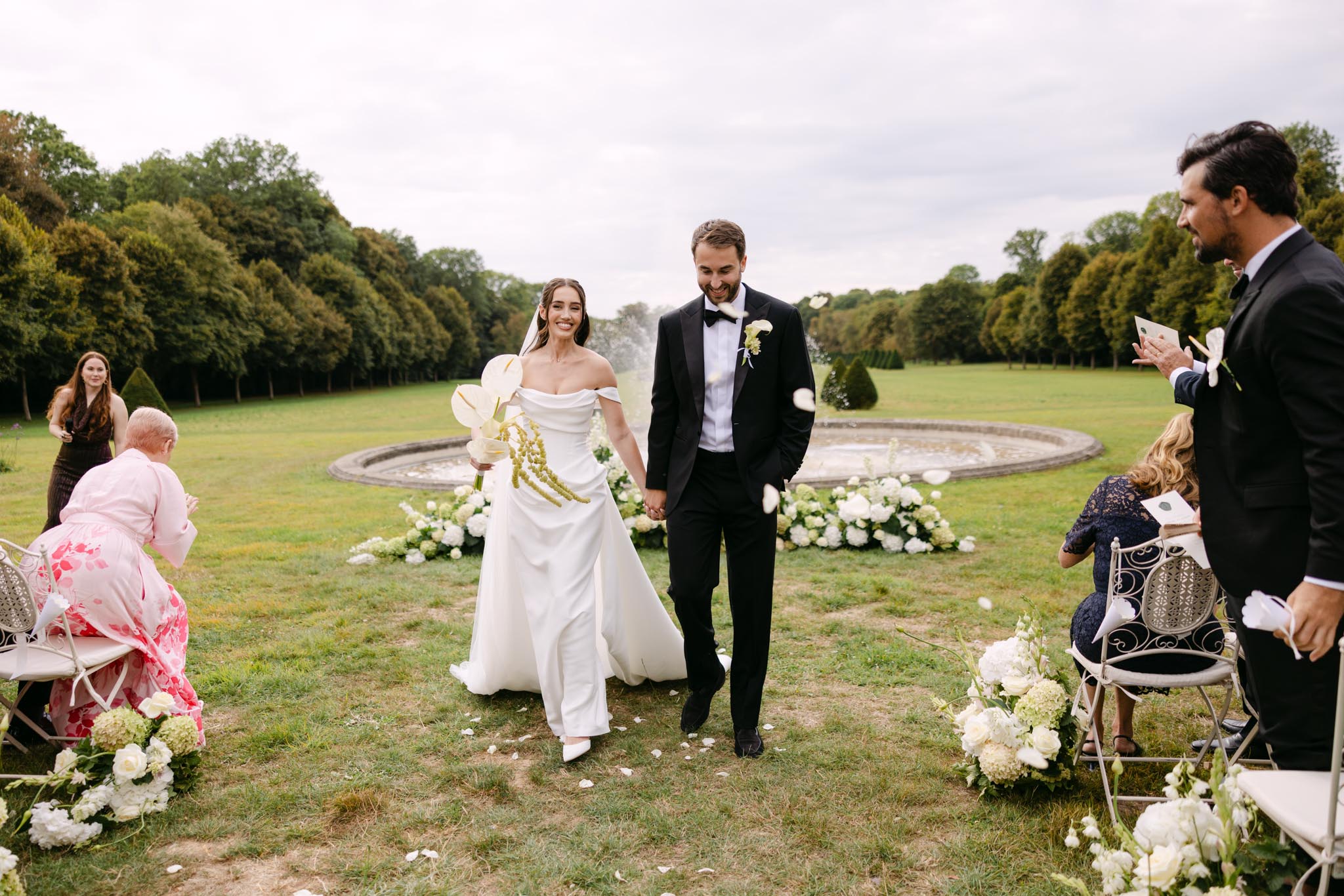
If you choose the symbolic route, the celebrant is one of the most important vendor decisions you will make. They set the tone for the most emotionally significant moment of the day. Professional celebrants in France charge €800 to €3,000, with the fee typically covering 2 to 3 pre-wedding consultations, collaborative script writing, a venue rehearsal, and the ceremony itself. Celebrants in Provence and on the Cote d'Azur sit at the higher end (€1,500 to €3,000), while those in the Dordogne, Normandy, and the Loire Valley charge €800 to €1,800 for equivalent scope. The celebrant market in France is entirely unregulated. No licence, certification, or training is required. This means quality varies more widely than in any other vendor category. When vetting, ask to see full ceremony videos, not just photographs. A portfolio of posed images tells you nothing about how the celebrant performs, paces, and connects with the audience. For bilingual weddings, confirm the celebrant has specific experience conducting ceremonies in both languages.
A trusted friend or family member can also officiate, since the symbolic ceremony has no legal requirements. No ordination or formal status is needed. This option works well for couples who want an intimate, personal ceremony led by someone who knows them deeply. The preparation is consistently underestimated, though. Writing and delivering a 30-to-45-minute ceremony that holds an audience, manages emotion, and paces well is a genuine skill. Our how to find, vet, and book a celebrant in France's unregulated market covers how to find, vet, and brief the right person for your ceremony.
Chapter 3 Articles
Each guide below covers one aspect of the legal process in detail. Read the overview above for the full picture, then follow the links that apply to your situation. Step-by-step through the civil ceremony: what the maire reads, what couples wear, witness requirements, photography rules, and how the atmosphere varies between village mairies and city halls. How a symbolic ceremony works, why most international couples choose one, how to structure a personalised celebration, and the difference between a professional celebrant and a friend-officiated ceremony. The post-Brexit process for British couples: CNI from the register office, FCDO apostille, sworn translations, and the full sequential timeline with costs (£400 to £800 total). Why the US process is the most complex of any nationality, the certificat de coutume gap, Embassy attestation, state-by-state apostille requirements, and costs ($600 to $1,200 total).
Step by step through the French civil ceremony, from the Civil Code reading to the livret de famille
What a symbolic ceremony involves and why the vast majority of international couples choose one
The US legal process: the certificat de coutume gap, Embassy attestation, and state apostilles
The Australian Embassy CNI process, DFAT apostille, and how it compares to UK and US routes
The Embassy CNI process, DFAT apostille, AUD 181 fee, and why the Australian route is simpler than the US process. Includes New Zealand equivalents.
Every document in the dossier de mariage, with timelines and costs by nationality
Every document in the dossier de mariage, nationality-specific additions, validity periods, sworn translation requirements, and a preparation timeline starting 6 to 9 months before the wedding.
How to find and vet a celebrant in France's unregulated market, from €800 to €3,000
How to find, vet, and book a celebrant in an unregulated market. Costs (€800 to €3,000), what the fee includes, bilingual options, red flags, and the friend-officiated alternative.
Download: Legal Document Checklist by Nationality
A printable PDF with every document you need, organised by nationality (UK, US, Australia/NZ, and other EU/non-EU nationals). Includes the preparation timeline, current fees, and a progress tracker so you can tick off each step as you complete it.
Related Chapters
- How much does a wedding in France cost? Full budget breakdown by region, venue tier, and vendor category.
- Choosing your wedding region in France: climate, accessibility, pricing, and character for every major destination.
- Planning a wedding in France: the complete guide: the full pillar covering all 16 chapters from legal requirements to the day itself.
If you are still choosing a venue, browse wedding venues in France or use our destination wedding venues guide to narrow by region and style. For couples who have settled on a region, our château wedding venues in France and vineyard wedding venues across France are the most popular starting points.
Frequently Asked Questions
Can two foreigners who don't live in France get legally married there?
Two foreign nationals who do not have a residential connection to France face a critical restriction: the standard mairie process requires at least one partner to demonstrate 30 to 40 days of continuous residence in the commune. Without this, the couple can only marry at their country's consulate in France or in a French overseas territory. Some rural mairies interpret the residency rule more flexibly than urban ones, so couples with a long-term rental or family property in France should contact the local mairie directly to ask whether their connection qualifies. In practice, the vast majority of international destination couples marry legally at home and hold a symbolic ceremony in France, which sidesteps the residency issue entirely.
How much does it cost to get legally married in France as a foreigner?
The civil ceremony at the mairie itself is free. Total paperwork costs vary by nationality: UK couples spend approximately £400 to £800 (€500 to €1,000) on the CNI, FCDO apostille, birth certificate reissue, and sworn translations. US couples face the highest costs at $600 to $1,200 (€550 to €1,100) because the US Embassy cannot issue a certificat de coutume. Australian couples spend approximately AUD 500 to AUD 1,000 (€300 to €600). Couples who marry at home and hold a symbolic ceremony pay €800 to €3,000 for a professional celebrant instead of any paperwork fees.
What is the difference between a civil and symbolic ceremony in France?
A civil ceremony takes place at the mairie (town hall), is conducted by the maire in French following the Civil Code, and is the only form of legally recognised marriage in France. A symbolic ceremony takes place at the wedding venue, is conducted by a celebrant or friend, and has no legal standing. The symbolic ceremony is fully customisable: couples write their own vows, choose any language, and design every element. One practical detail many couples miss: the civil ceremony must happen before or on the same day as the symbolic one if you want a French marriage certificate. Scheduling the civil ceremony on a separate weekday morning (many mairies only conduct weddings on Saturdays, though small communes may offer weekday slots) keeps the venue celebration day free from logistical pressure. Approximately 80 to 90% of international couples choose a symbolic ceremony in France after marrying legally at home.
How far in advance should we start the legal paperwork for a French wedding?
Start 6 to 9 months before the wedding date. The process is sequential: each step depends on the previous one completing. UK couples must allow for CNI issuance (28 days), FCDO apostille (15 to 20 working days), sworn translation, mairie submission (30 to 40 days before the ceremony), publication of banns (minimum 10 days), and a pre-wedding interview. US and Australian couples follow similar timelines with their own nationality-specific steps. Birth certificates must be less than 6 months old at submission for non-EU nationals. One timing trap to watch: the FCDO apostille service offers a premium same-day option at £75 plus a courier fee, but standard processing runs 4 to 6 weeks during peak summer demand, not the 15 working days quoted on the website. Build the worst-case processing time into your schedule, not the published target.
Do we need a celebrant for a symbolic ceremony or can a friend do it?
Because a symbolic ceremony has no legal standing in France, any person can officiate. No licence, ordination, or certification is required. A trusted friend or family member can conduct the ceremony. However, the preparation required is consistently underestimated. Professional celebrants charge €800 to €3,000 and bring experience in pacing, projection, bilingual delivery, and managing the emotional arc of a ceremony. The celebrant market in France is unregulated, so couples choosing a professional should ask to see full ceremony videos and check references. Our how to find, vet, and book a celebrant in France's unregulated market covers how to vet and book the right person.
Explore Every Guide in This Chapter
Deep-dive into each topic covered above.