
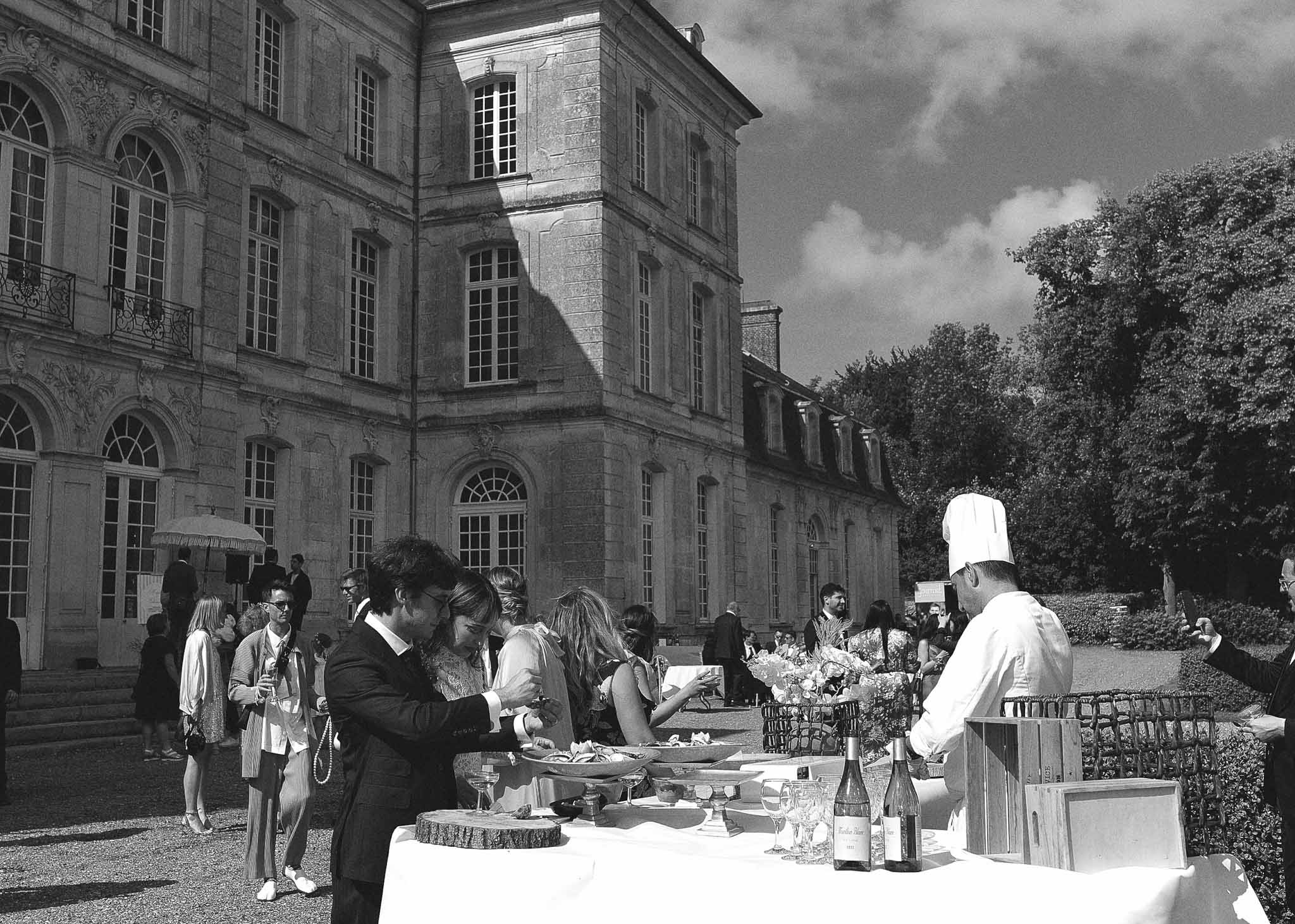
Le Trou Normand & French Wedding Dining Traditions
French dining traditions at weddings go far beyond the menu. The trou normand between courses. The cheese course that arrives before dessert, not after. The bread placed directly on the table, not on a plate. The digestif that signals the evening is shifting from seated conversation to dancing. For international guests, these customs are part surprise, part education, part delight.
For couples planning a wedding in France, understanding them means designing an evening that feels authentically French rather than a British dinner held in a French building. Below are the key dining traditions, what they mean, and how to adapt them for a mixed guest list. For the full course-by-course structure, see our guide to traditional French wedding menus. For a broader view of every step involved, see the complete French destination wedding planning resource.
Key Takeaways
- Le trou normand is a small sorbet (traditionally spiked with calvados) served between courses at a long French dinner. It cleanses the palate and creates a pause, literally "making a hole" in the stomach for the courses ahead.
- The cheese course at a French wedding is served after the main course and before dessert. It is a full course, not a nibble, with 3 to 5 regional cheeses, fresh bread, and its own wine pairing.
- French bread etiquette places bread directly on the tablecloth beside the plate, not on a side plate. Bread is torn, never cut. It is eaten throughout the meal and used to wipe the plate (faire chabrot in the south).
- Speeches at French weddings are woven between courses, not clustered in one block. This pacing keeps energy high and gives the kitchen time to plate each course.
What Is Le Trou Normand and Why Does It Appear at French Weddings?
A trou normand (literally "Norman hole") is a small serving of sorbet, traditionally apple or pear, doused in calvados (apple brandy from Normandy) and served between courses at a long French dinner. Its purpose is palate-cleansing and restorative. After two rich courses, the cold sorbet and the alcohol combination is said to "make a hole" in the stomach, resetting the appetite for what follows. The tradition dates to Norman farmhouse celebrations where multi-course feasts lasting six or seven hours were the standard, and guests needed a physiological pause to continue eating. At French weddings, the trou normand appears between the entrée and the plat principal, or between the plat and the fromage course. It arrives in a small glass or coupe, often with a shot of calvados poured tableside by a waiter. The room pauses. Guests sip. Conversation shifts. It is a built-in breathing moment in a long evening, and it serves the same function as an intermission at the theatre: it refreshes the audience for the second act.
Modern versions have expanded beyond calvados. Champagne sorbet, pear and eau-de-vie, lemon and vodka, even gin and tonic granita appear at contemporary weddings. In Provence, a lavender or rosemary sorbet with a splash of local marc replaces the Norman original. In Bordeaux, a grape and Armagnac sorbet nods to the local spirit tradition. The vehicle changes. The principle stays: a cold, sharp, slightly alcoholic pause that resets the palate and the pace. Your traiteur will know the regional variation that suits your menu.
International guests who have never encountered the trou normand often love it. It is theatrical (the tableside pour), unexpected (a course that is neither food nor drink but something between), and genuinely effective (the appetite reset is not folklore, it is physiology). If your traiteur offers it, include it. It is one of the small traditions that makes a French wedding dinner feel irreplaceably French.
Why Is the Cheese Course Sacred at a French Dinner?
The fromage course at a French wedding is not a cheeseboard passed with crackers after dessert. It is a full, separate course served after the main dish and before dessert, with its own bread, its own wine pairing, and its own 20-to-30-minute window in the meal. France produces over 1,600 named cheeses. The wedding cheese course is the moment when the regional identity of the dinner is reinforced through a curated selection of 3 to 5 local varieties. In a country where cheese carries cultural weight comparable to wine, skipping the fromage course at a wedding would be like skipping the first dance at an American one. A typical wedding cheese board includes one soft cheese (Brie, Camembert, or a local equivalent), one hard cheese (Comté, Beaufort, or Cantal), one goat cheese (Sainte-Maure, Crottin de Chavignol), and one blue (Roquefort or Bleu d'Auvergne). Regional menus tailor the selection: a Provence wedding features goat cheeses from the Luberon and sheep's milk Banon wrapped in chestnut leaves. A Burgundy wedding includes Époisses and Cîteaux.
The cheese arrives on a board or platter for the table to share. Bread (plain baguette and often a walnut or raisin bread) accompanies it. Butter is served in Normandy and Brittany but rarely in the south, where cheese is eaten with bread alone. The wine pairing shifts: a red (often the same region as the cheese), a sweet white (Sauternes with Roquefort is the classic pairing), or the continuation of the dinner wine.
At the overwhelming majority of the venues in our directory, the cheese course appears at every wedding dinner. Dropping it to save time or cost is the most frequently regretted menu decision international couples report after the wedding. French guests notice. The meal structure feels incomplete without it. And the cheese course provides one of the most relaxed, convivial moments of the evening: plates are shared, conversation flows, the formality loosens, and the room shifts from dining to celebrating.
What Other French Dining Traditions Surprise International Guests?
Bread etiquette. Bread is placed directly on the tablecloth beside the dinner plate. There is no side plate. This alarms some British and American guests, but it is standard French table setting. Bread is torn by hand, never cut with a knife at the table. It is eaten throughout the meal, not just at the start. In the south, the tradition of faire chabrot (pouring a splash of red wine into your empty soup bowl and drinking it with the bread) still appears at some rural celebrations, though it is rare at formal weddings. Speech timing. At British and American weddings, speeches typically happen in one block, often before or after the main course. At French weddings, speeches are woven between courses. A short speech after the entrée. Another between the plat and the fromage. A longer one or a slideshow before the pièce montée.
Wine service. Wine is poured by waitstaff and placed in the centre of the table. Guests do not serve themselves from the bottle until the service staff has done the first pour. The glass is never filled more than halfway. Different wines accompany different courses: a white or rosé with the entrée, a red with the plat, a different red or sweet white with the fromage, and champagne with the pièce montée. This progression is managed by the traiteur's sommelier or service team. For more detail on selecting wine for a French wedding, see our dedicated guide.
The digestif. A digestif is a post-dinner spirit served after the pièce montée, designed to aid digestion after a long meal. Classic choices include cognac, Armagnac, calvados, or a local eau-de-vie (fruit brandy). At weddings, the digestif coincides with the transition to dancing and is often served at the bar rather than the table. It is a signal that the formal dinner has ended and the evening's second act has begun. Some couples also offer a selection of herbal liqueurs (Chartreuse, Génépi) alongside the digestif for variety.
The pace itself. A four-to-five-hour French wedding dinner is not slow. It is deliberately paced to prioritise conversation, enjoyment, and the communal experience of sharing a meal. Courses arrive with 20 to 30 minutes between them. The table is cleared completely between courses (no stacking plates at the side). Water glasses are refilled. Wine is rotated. The rhythm is unhurried but constant. International guests accustomed to a 90-minute dinner initially feel the length but almost always report afterwards that the evening flew by. The pacing is the design, not a flaw in it.
How Do You Adapt French Dining Traditions for an International Guest List?
The key is not to eliminate French traditions but to contextualise them. International guests do not need French customs removed. They need them explained. A brief note on the printed menu: "The cheese course follows the main. Dessert will follow the cheese." A line in the ceremony program: "Speeches will be woven between courses throughout the evening." A mention on the wedding website: "French wedding dinners are typically 4 to 5 hours with several courses and a relaxed pace. Come hungry and plan to settle in." For the trou normand, a simple introduction by the MC or the couple ("This is the trou normand, a palate cleanser between courses. The tradition is Norman. The calvados is strong. Santé.") turns an unfamiliar tradition into a shared moment. For the cheese course, let the table discover the board and ask each other what they are eating. The conversation that emerges is part of the tradition.
Where adaptation genuinely helps is in timing. If 70 percent of your guests are international and accustomed to shorter dinners, discuss with your traiteur whether a four-course menu (entrée, plat, fromage, pièce montée, skipping the amuse-bouche and plated dessert) provides the French experience in a slightly tighter timeframe. This trims 45 to 60 minutes without losing any of the defining elements. The full traditional menu structure works best for predominantly French guest lists or couples who want the complete experience.
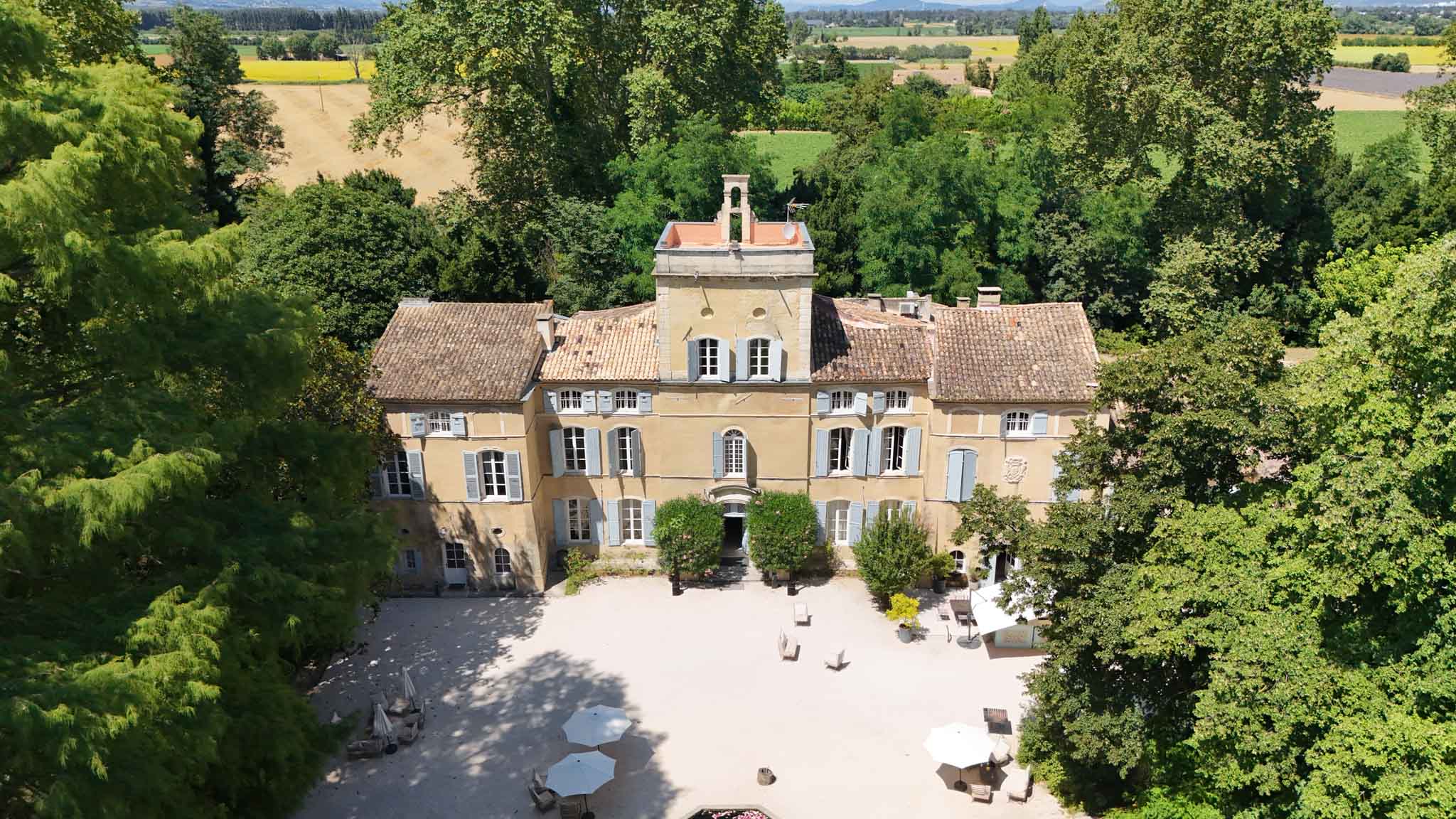
One adaptation to avoid: removing the cheese course to make room for a British-style cake cutting. The cheese course is the most distinctly French element of the dinner. The pièce montée provides the dramatic dessert moment. Adding a separate cake ceremony on top of both creates redundancy and extends the evening. Choose one dramatic dessert moment (pièce montée or cake) and let the cheese course stand as the bridge between savoury and sweet. See how this couple brought this to life at Château de Fonscolombe in Provence.
Related Articles
- Food and drink for a French wedding: the complete guide
- Traditional French wedding menus: course by course
- Wine selection for your French wedding
- Late-night onion soup and after-party food
- The croquembouche: France's wedding dessert
- Blending French and international wedding traditions
- The vin d'honneur and French wedding day structure
- Browse all wedding venues in France
Frequently Asked Questions
Is the trou normand alcoholic?
Traditionally, yes. The classic trou normand is a sorbet doused in calvados (apple brandy, 40% ABV). The amount of alcohol is small (a single measure poured over the sorbet), but it is not negligible. Non-alcoholic versions are available: a plain apple sorbet, a lemon granita, or a fruit-based palate cleanser without spirits. Ask your traiteur to offer both options if you have guests who do not drink alcohol.
Can we skip the cheese course to save time?
You can, but it is the most commonly regretted menu decision international couples make. The cheese course takes 20 to 30 minutes and provides the most relaxed, convivial moment of the dinner. If timing is tight, consider serving a smaller cheese selection (two cheeses instead of four) rather than dropping the course entirely. French guests expect it, and it costs very little relative to the rest of the menu.
What is a digestif and when is it served?
A digestif is a post-dinner spirit intended to aid digestion. Common options at French weddings include cognac, Armagnac, calvados, and local eaux-de-vie (fruit brandies). It is served after the pièce montée, typically at the bar as guests transition from the dining room to the dance floor. It is offered, not obligatory. Guests who prefer a softer drink can choose herbal tea (infusion), which is also traditionally served at this stage of the evening.
Do French guests really put bread directly on the table?
Yes. There is no side plate for bread at a traditional French table. The bread piece sits on the tablecloth to the left of the dinner plate. This is correct French table etiquette, not a missing item. If you feel strongly about including side plates for your international guests' comfort, your traiteur can add them, but French guests may find it unusual.
How do speeches work between courses at a French wedding?
Speeches are interspersed between courses rather than delivered in a single block. A typical sequence: one speech after the entrée (often the best man or maid of honour), one between the plat and the fromage (often the father of the bride or groom), and a longer speech or slideshow before the pièce montée (often the couple or a close friend). This keeps the energy dynamic and gives the kitchen clear windows for plating. Total speech time is comparable to an Anglo wedding. The distribution is different.
What is faire chabrot?
Faire chabrot (or faire chabrol in some dialects) is a south-western French tradition of pouring a small amount of red wine into the last few spoonfuls of soup, swirling it, and drinking directly from the bowl. It occasionally appears at informal rural weddings in the Dordogne, Lot, and Gers regions, typically during the late-night onion soup service. It is not a formal dining custom and would not appear during the seated wedding dinner. If it happens at 3am during the soupe à l'oignon, embrace it.
Explore Every Guide in This Chapter
Deep-dive into each topic covered above.