
French Bridal Designers You Should Know
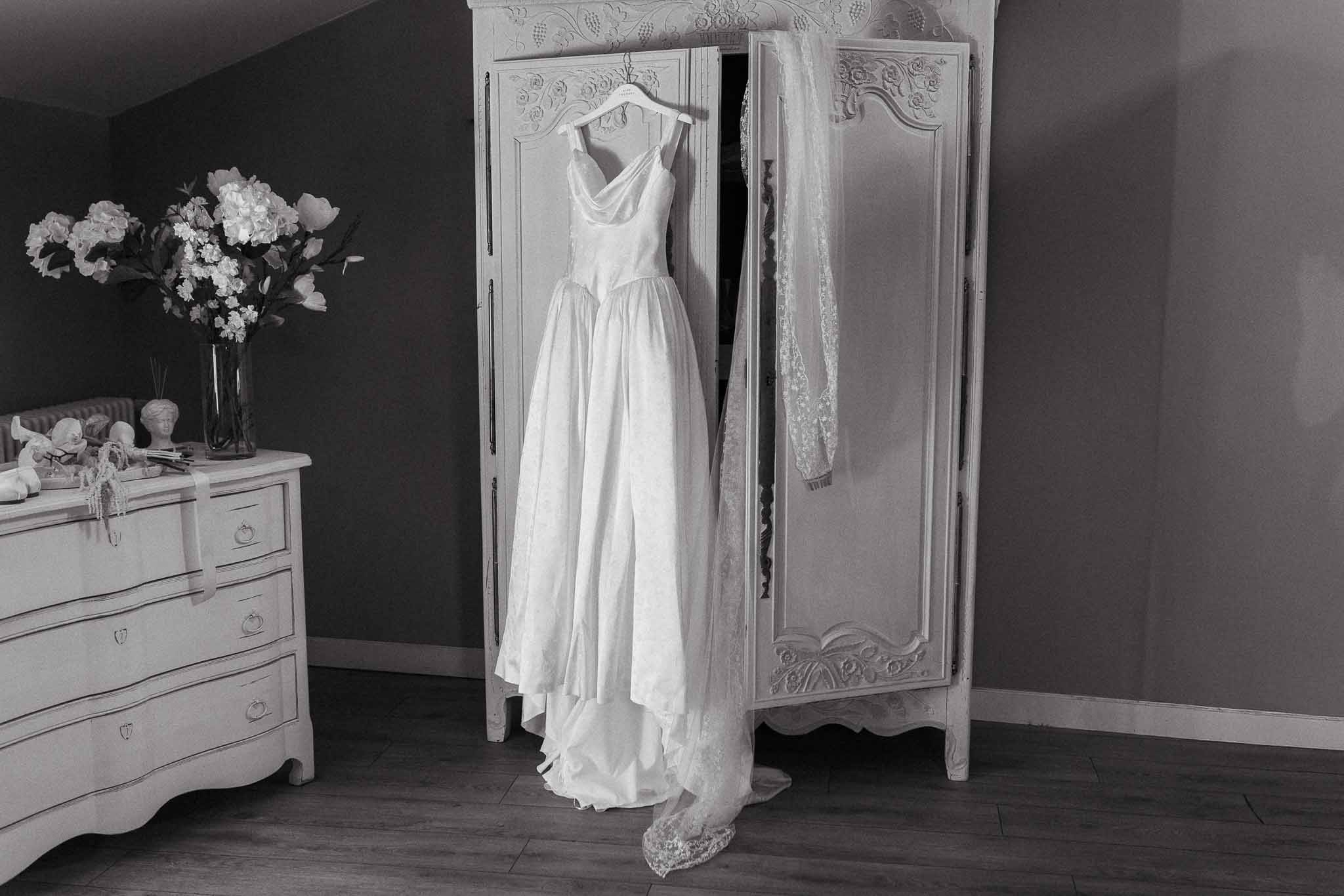
French bridal design does not try to make a statement. It tries to make you look like yourself, only sharper. The silhouettes are clean. The fabric does the work. The construction is technical but the effect is easy.
Walk past any atelier in the Marais or Saint-Germain and you can see the philosophy in the window: one seam, one drape, one deliberate detail. No embellishment for the sake of it. The five designers in this guide represent the spectrum of what French bridal fashion produces, from Laure de Sagazan's left-bank nonchalance to Cymbeline's southern classicism. Each approaches the bride differently, and understanding those approaches will save you months of trying dresses that were never designed for the way you want to feel. For a broader view of styling every element of your French wedding, see our complete styling and design chapter. For a broader view of every step involved, see our complete guide to planning a destination wedding in France.
Key Takeaways
- French bridal design prioritises cut, fabric quality, and movement over embellishment. The difference from British and American design is philosophical: French designers dress the woman, not the occasion.
- Laure de Sagazan (bohemian Parisian), Rime Arodaky (modern and architectural), Cymbeline (classic French), Delphine Manivet (structural minimalism), and Sophie et Voila (contemporary clean lines) cover the full range of French bridal aesthetics.
- Pricing for French bridal designers ranges from approximately €2,500 for entry-level Cymbeline to €8,000 or more for made-to-order Laure de Sagazan or Rime Arodaky couture pieces.
- Most French designers now stock at selected boutiques across the UK, US, and Australia. You do not need to travel to Paris for a first appointment, though the flagship experience is worth the trip if budget allows.
Which French Bridal Designers Define the Parisian Look?
Laure de Sagazan. The name that changed how international brides think about French wedding dresses. Her collections centre on what she calls "the ceremony of the everyday." Soft crepe bodies with deep V-necklines. Vintage lace overlays that move like they have been in someone's family for decades. Separates (a lace top paired with high-waisted wide trousers, a cropped jacket over a slip dress) that give brides the flexibility to change silhouette between ceremony and reception without changing outfit. Her atelier on rue de Saintonge in the 3rd arrondissement is the original salon, but she now stocks at over 40 retailers internationally. Price range: €3,000 to €6,500 for ready-to-wear, €6,500 to €8,750 for made-to-measure. Rime Arodaky. Where Laure de Sagazan is soft, Rime Arodaky is sharp. Her signature is the structured mini dress, the tailored jumpsuit, the column gown with geometric lace panels. The woman wearing Rime Arodaky is not trying to look romantic.
She is trying to look like she walked out of a Nouvelle Vague film and into a wedding. The brand operates from its Parisian flagship and through a strong international stockist network. Her "civil" collection (shorter, more fashion-forward pieces for the mairie ceremony or evening party) fills a gap that almost no other bridal designer addresses. Price range: €2,800 to €7,000.
Cymbeline. Founded in 1978 and based in Perpignan rather than Paris, Cymbeline is the French bridal house that international couples are most likely to encounter without realising it is French. Their collections are classic in the purest sense: A-line silhouettes, refined lace, clean bodice construction, and a fit-and-flare approach that flatters a wide range of body types. They design for the bride who wants to look traditionally bridal in a way that feels current rather than dated. With over 200 stockists worldwide, Cymbeline is the most accessible French designer on this list. Price range: €2,500 to €4,500.
Delphine Manivet. Architecture translated into fabric. Manivet's training in fashion (not bridal) shows in every collection: the seams are precise, the volumes are controlled, the detail is structural rather than decorative. A single sculptural sleeve. An asymmetric neckline that changes shape as the bride moves. Fabric that holds a fold rather than flowing. Her pieces suit brides who think of their dress as design rather than tradition. Less widely stocked than the others, with appointments primarily in Paris and a handful of select international retailers. Price range: €4,000 to €8,000.
Sophie et Voila. The youngest house on this list, founded in Barcelona by a French designer and now operating across both cities. The aesthetic is contemporary clean: column dresses in heavy crepe, square necklines, minimal seaming, and a colour palette that includes warm ivory, soft champagne, and occasionally blush. The brand has gained a strong following among fashion-industry brides who want something that reads as modern without being bridal-industry modern. Price range: €2,200 to €4,000.
What Makes French Bridal Design Different from British and American?
The difference is not quality. British and American designers produce technically excellent gowns. The difference is intention. British bridal design, broadly, dresses the occasion. The gown is constructed to mark the moment as ceremonial, with structured bodices, full skirts, and details (beading, embroidery, train weight) that signal "this is the most important outfit you will ever wear." The dress is distinct from anything the bride owns or will own again. That distinction is the point. American bridal design leans toward drama and personality. Bigger silhouettes, bolder embellishment, more variety in neckline and detail, and a strong emphasis on the "wow moment" when the bride appears. The dress is a centrepiece. It is designed to be seen from a distance and photographed from every angle. French bridal design dresses the woman. The starting question is not "what should a bride look like?" but "what does this woman look like at her most confident?" The construction is precise. The fabric carries the design. Embellishment is used sparingly, as punctuation rather than prose.
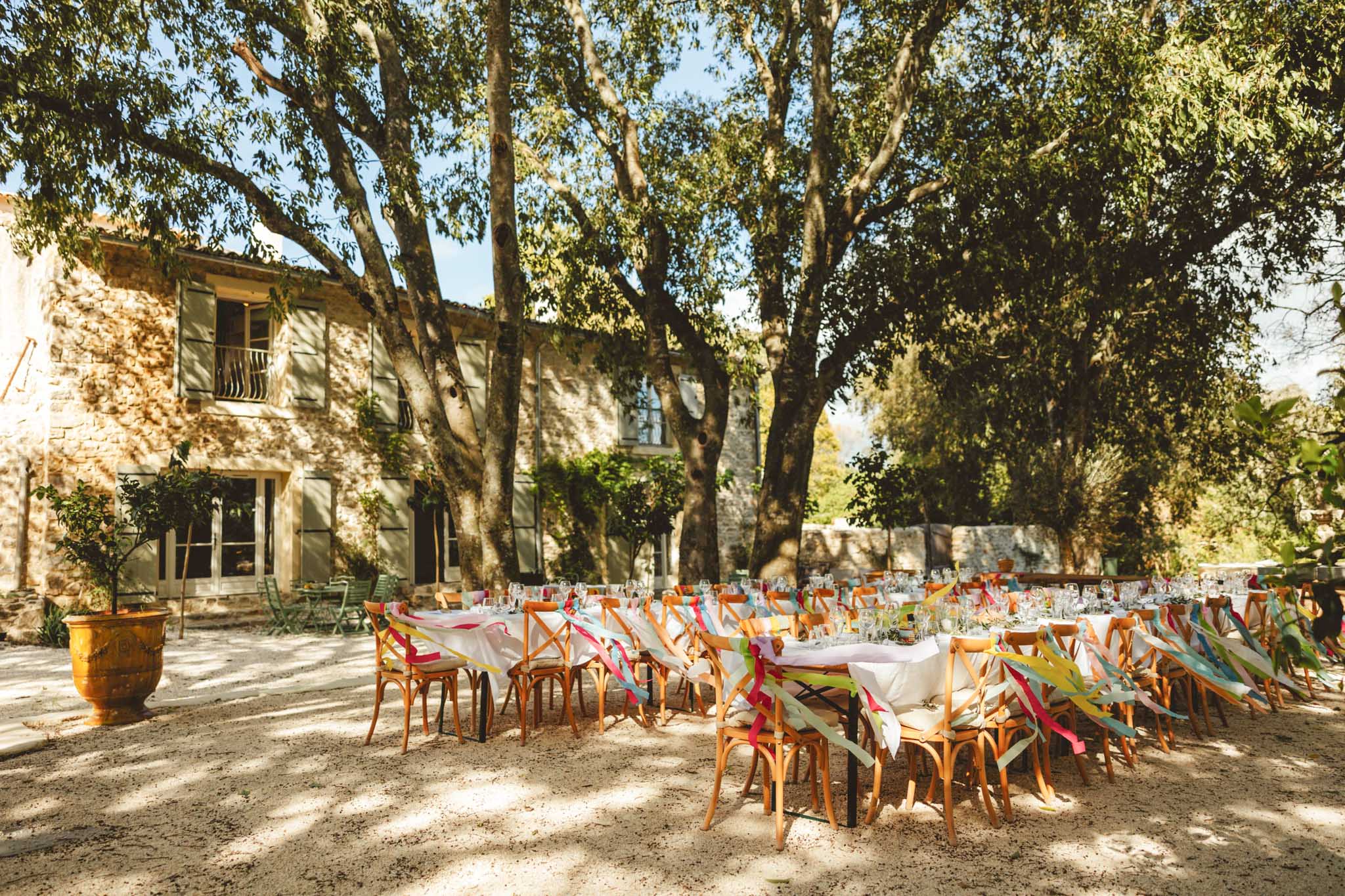
For destination brides marrying in France, this philosophy has a practical advantage. A French bridal gown rarely competes with a château dining room or a garden ceremony framed by stone arches. It sits inside the visual composition rather than demanding to be its centre.
Where Can You Try French Designers Outside Paris?
All five designers maintain international stockist networks, and availability has expanded significantly since 2024. Trunk shows (events where the designer sends their full collection to a stockist for a limited window) are the best opportunity to see a complete range outside Paris. These typically run two to three times per year at major stockists. Follow the designer's social media or sign up for stockist newsletters to catch the dates. Trunk show appointments often include a 10% discount and direct access to the designer's atelier team for alterations guidance. For the full flagship experience, the Paris ateliers of Laure de Sagazan and Rime Arodaky are worth visiting. Both offer by-appointment consultations in settings that are part of the brand experience. If you are already visiting wedding venues near Paris, adding a bridal appointment makes logistical sense. Book at least six weeks in advance for Saturday appointments.
Scroll →
| Designer | UK Stockists | US Stockists | Australia Stockists |
|---|---|---|---|
| Laure de Sagazan | London (The Mews Bridal, Chloe Pierre), Edinburgh | New York, Los Angeles | Melbourne, Sydney |
| Rime Arodaky | London (Browns Bride, The Wedding Club) | New York (Lovely Bride), Miami | Melbourne |
| Cymbeline | 20+ stockists across England, Scotland, Wales | 15+ stockists nationwide | 5+ stockists |
| Delphine Manivet | London (by appointment at selected boutiques) | New York (limited) | Not currently stocked |
| Sophie et Voila | London, Manchester | New York, Los Angeles, Chicago | Sydney |
How Do French Designers Approach Destination Brides?
French designers are accustomed to working with brides who live in a different country, marry in France, and manage the entire process remotely with one or two fitting trips. This is not an edge case for them. It is a substantial portion of their client base. The standard process for a destination bride purchasing from a French atelier: an initial consultation (in person or increasingly via video), fabric and silhouette selection, one to two fittings in Paris or at an international stockist, and final delivery four to six weeks before the wedding. Most French designers ship internationally and can coordinate with a local seamstress in the bride's home city for final alterations if a return trip to Paris is not feasible. Alterations are where the French approach differs most from the British and American model. French ateliers assume the dress will be altered. The purchase price typically does not include alterations, and the atelier's in-house alterations team charges separately (€300 to €800 depending on complexity). This is not an oversight.
What Price Range Should You Expect?
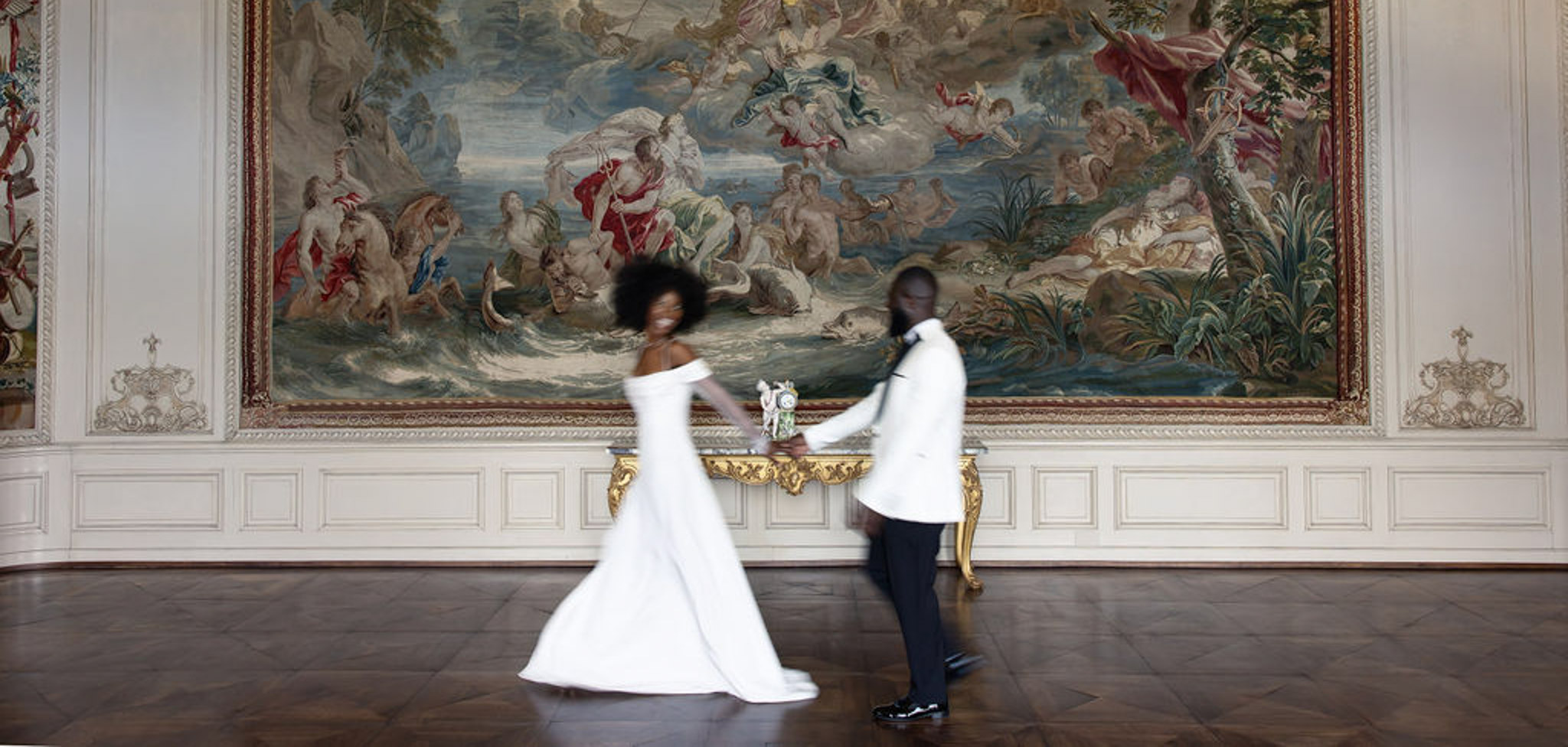
French bridal pricing sits in a middle band globally. Lower than comparable American couture houses (Monique Lhuillier, Oscar de la Renta bridal), comparable to mid-range British designers (Jenny Packham, Suzanne Neville), and higher than high-street bridal. These prices do not include alterations (add €300 to €800), accessories (veil, shoes, jewellery), or travel costs for fitting appointments. Budget the dress as 60 to 70% of total bridal outfit cost, with the remainder covering alterations, accessories, hair, and makeup on the day. Emerging French designers worth watching for brides who want the aesthetic at a lower entry point: Maison Floret (romantic, delicate, €2,000 to €3,500), Elise Hameau (organic fabrics, sustainable production, €2,500 to €4,500), and Rembo Styling (Belgian-French, bohemian, €1,800 to €3,000). These houses are gaining international stockists quickly and offer the same fabric-first, construction-focused approach as the established names.
| Tier | Price Range | What You Get |
|---|---|---|
| Entry French designer | €2,200 to €3,500 | Ready-to-wear from Cymbeline, Sophie et Voila. Standard sizing with alterations separate. High-quality fabric and construction. |
| Mid-range French designer | €3,500 to €6,000 | Laure de Sagazan ready-to-wear, Rime Arodaky ready-to-wear. More complex construction, premium fabrics, stronger design identity. |
| Premium/made-to-measure | €6,000 to €8,750 | Made-to-measure from Laure de Sagazan, Rime Arodaky, or Delphine Manivet. Custom sizing, fabric choices, limited design modifications. |
| Full custom | €8,000 to €15,000+ | Fully custom design from Delphine Manivet or couture-level French houses. Multiple fittings, original pattern, exclusive fabric sourcing. |
Couples planning their complete vendor team should see our guide to building your French wedding vendor team for how dress, photographer, and venue choices connect. For guidance on matching your gown's fabric warmth to the venue's stone and the overall colour palette at your French venue, see our dedicated guide.
Related Articles
- Styling and design for a French wedding: the complete guide
- French wedding aesthetics: what makes them different
- Colour palettes for French wedding venues
- Style guide: classic French weddings
- Wedding arch and ceremony backdrops at French venues
- Château table décor ideas for French wedding dining rooms
- Building your French wedding vendor team
- Choosing a wedding photographer in France
- Destination wedding cost guide for France
- Château wedding venues across France
Frequently Asked Questions
Can I order a French designer dress if I do not speak French?
All five designers on this list operate in English at their Paris ateliers and through their international stockists. Laure de Sagazan and Rime Arodaky conduct the majority of their destination-bride consultations in English. The consultation process, fabric descriptions, fitting notes, and invoice documentation are all available in English. Language is not a barrier to purchasing from any established French bridal house.
Is it cheaper to buy a French designer dress in Paris than through a UK or US stockist?
Not necessarily. The retail price is typically standardised across markets by the designer. However, French retail prices include 20% TVA (VAT), which non-EU residents can reclaim through the détaxe process at the airport when departing France. This effectively reduces the price by approximately 12% after administrative fees. For a €5,000 dress, that is a saving of around €600. The détaxe process requires the purchase to exceed €100, the buyer to be a non-EU resident, and the paperwork to be stamped at the airport on departure.
How do I transport a wedding dress from France to my home country?
Most French ateliers and stockists will ship internationally via specialist garment courier. The dress travels in a rigid box on its own hanger, typically insured for the full purchase price. Shipping costs range from €80 to €200 depending on destination. Alternatively, carry the dress as cabin luggage. Airlines permit garment bags as an additional carry-on for delicate items. Contact your airline in advance to confirm their policy. A dress in a proper garment bag folds in half lengthwise and fits in an overhead compartment without compression damage.
What is the difference between French ready-to-wear and custom bridal?
Ready-to-wear (prêt-à-porter) means the dress exists in standard sizes (French 34 to 46, roughly UK 6 to 18) and is produced from an existing pattern. You select a design from the current collection. Made-to-measure allows limited modifications to an existing design: neckline changes, sleeve additions, fabric substitutions. Full custom creates an original design from a blank pattern, built to your exact measurements. The timeline difference is significant: six months for ready-to-wear, eight to ten months for made-to-measure, ten to fourteen months for full custom.
Do French designers make suits and grooms' attire?
Most French bridal designers focus on womenswear. For French-made grooms' suits, the tailoring houses of Paris (Cifonelli, Camps de Luca, Smalto) operate at the couture level, while ready-to-wear options from De Fursac, The Kooples, and Sandro offer clean French tailoring at accessible prices (€500 to €1,200 for a full suit). For couples who want both outfits to share a French design language, coordinate the colour temperature and fabric weight rather than trying to match specific details.
Explore Every Guide in This Chapter
Deep-dive into each topic covered above.