
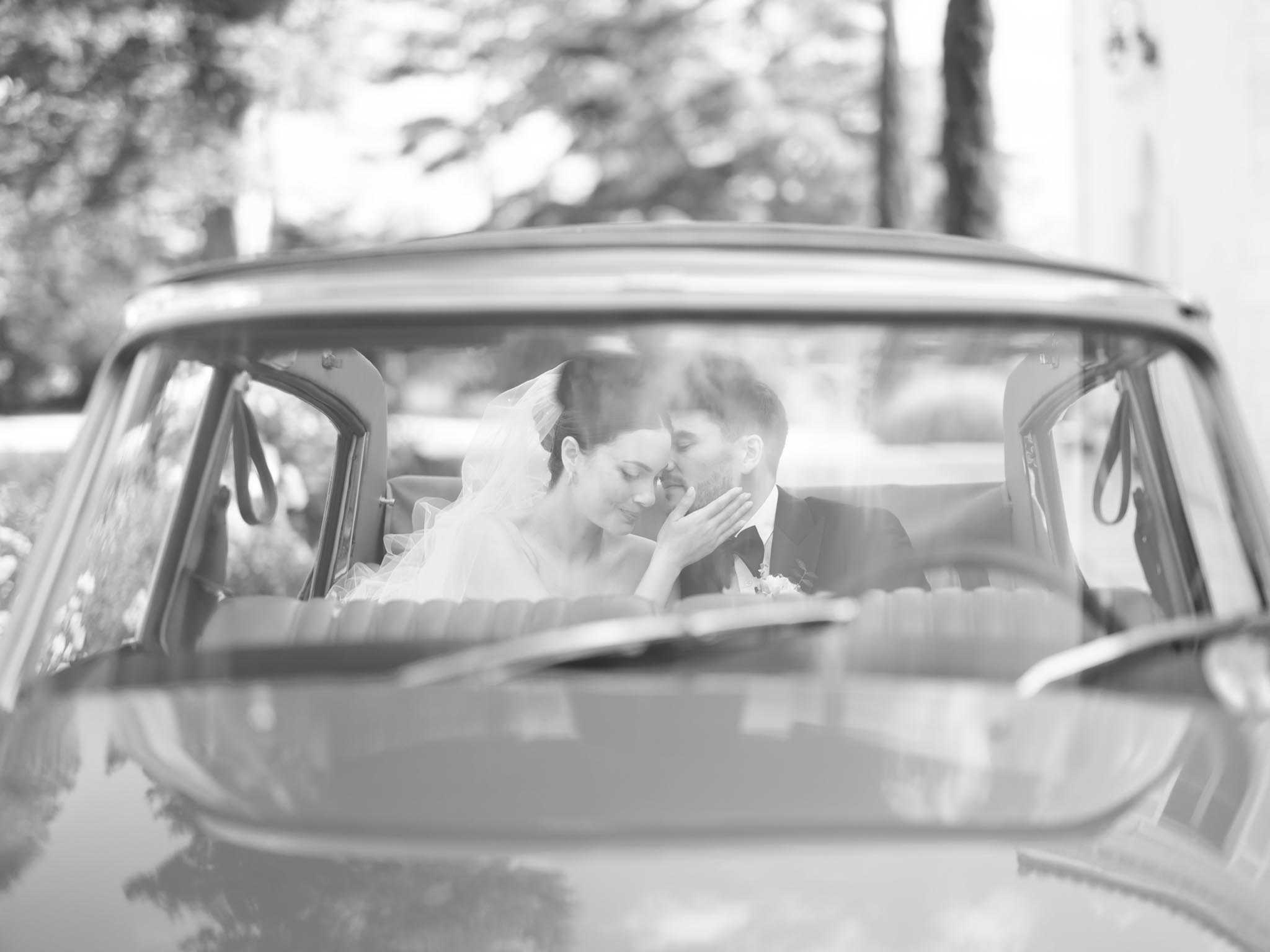
French Wedding Aesthetics: What Makes Them Different
French weddings look different from their Anglo-American counterparts. Not louder or quieter. Not more or less expensive. Different in philosophy.
The distinction sits in how French couples approach decoration, fashion, and design: the venue carries the visual weight, the flowers stay loose rather than architectural, and the details feel collected over time rather than ordered from a single catalogue. This is the core difference that international couples notice but struggle to recreate. The French approach is not about spending less on styling. It is about spending differently, choosing restraint over volume, and trusting the raw materials of stone, linen, and candlelight to do work that imported centrepieces cannot. This article is the starting point for our complete Styling and Design chapter, where every style guide that follows builds on the aesthetic principles outlined here. For a broader view of every step involved, see the complete French destination wedding planning resource.
Key Takeaways
- French wedding aesthetics prioritise venue architecture and natural materials over layered decoration. The stone, the light, and the landscape do the visual work that flower walls and draped fabric do in Anglo-American celebrations.
- The "less is more" principle is practical, not philosophical. French couples spend proportionally less on decor but more on food, wine, and the weekend experience. The result looks spare because the budget sits in the kitchen, not the ceremony arch.
- International couples most often fail by adding rather than subtracting. The Pinterest mood board becomes a shopping list rather than a direction. In France, the styling that photographs best is the styling you barely notice.
- French wedding fashion follows the same restraint. Clean lines, single-fabric gowns, natural hair, minimal jewellery. The bride dresses for the architecture, not against it.
What Is the Core Difference Between French and Anglo-American Wedding Aesthetics?
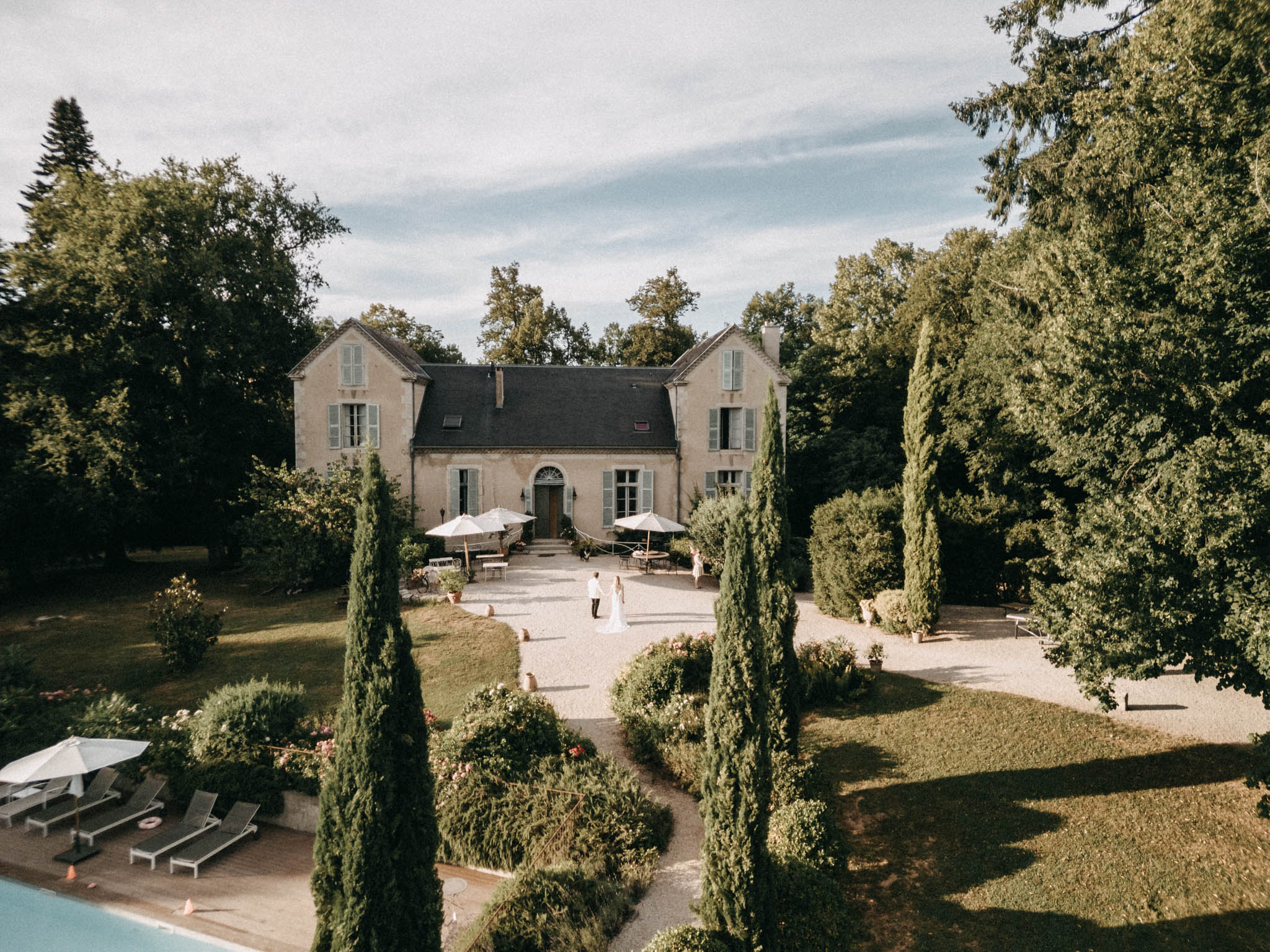
Walk into a well-styled Anglo-American wedding and you see the decoration first. The flower arch frames the aisle. Draped chiffon softens the ceiling. Personalised signage marks each zone. The visual language is additive: every surface receives a treatment, every corner gets a moment, and the design scheme wraps around the space like a stage set built for the day. Walk into a well-styled French wedding and you see the building first. A limestone courtyard. Weathered shutters in faded blue. A long gravel drive lined with plane trees. The decoration is there, but it occupies the margins. Candles on the dinner table. Garden roses in mismatched ceramic jugs. Linen runners on bare oak. The visual weight sits in the venue itself: the honey-coloured stone, the iron balustrade, the centuries-old parquet that creaks underfoot. Decoration exists to draw the eye toward those surfaces, not to compete with them.
This is not an accident of budget. It is a deliberate design choice rooted in how French culture relates to its built environment. A 17th-century château in the Loire Valley does not need a flower wall. The hand-carved mantlepiece is the statement. A Provençal mas with terracotta floors and exposed oak beams does not need fabric draping. The raw materials are the palette. The French aesthetic starts from a position of trust: trust that the venue provides the atmosphere, and that the couple's role is to amplify what already exists rather than install something new on top of it.
How Does "Less Is More" Play Out in Flowers, Decor, and Fashion?
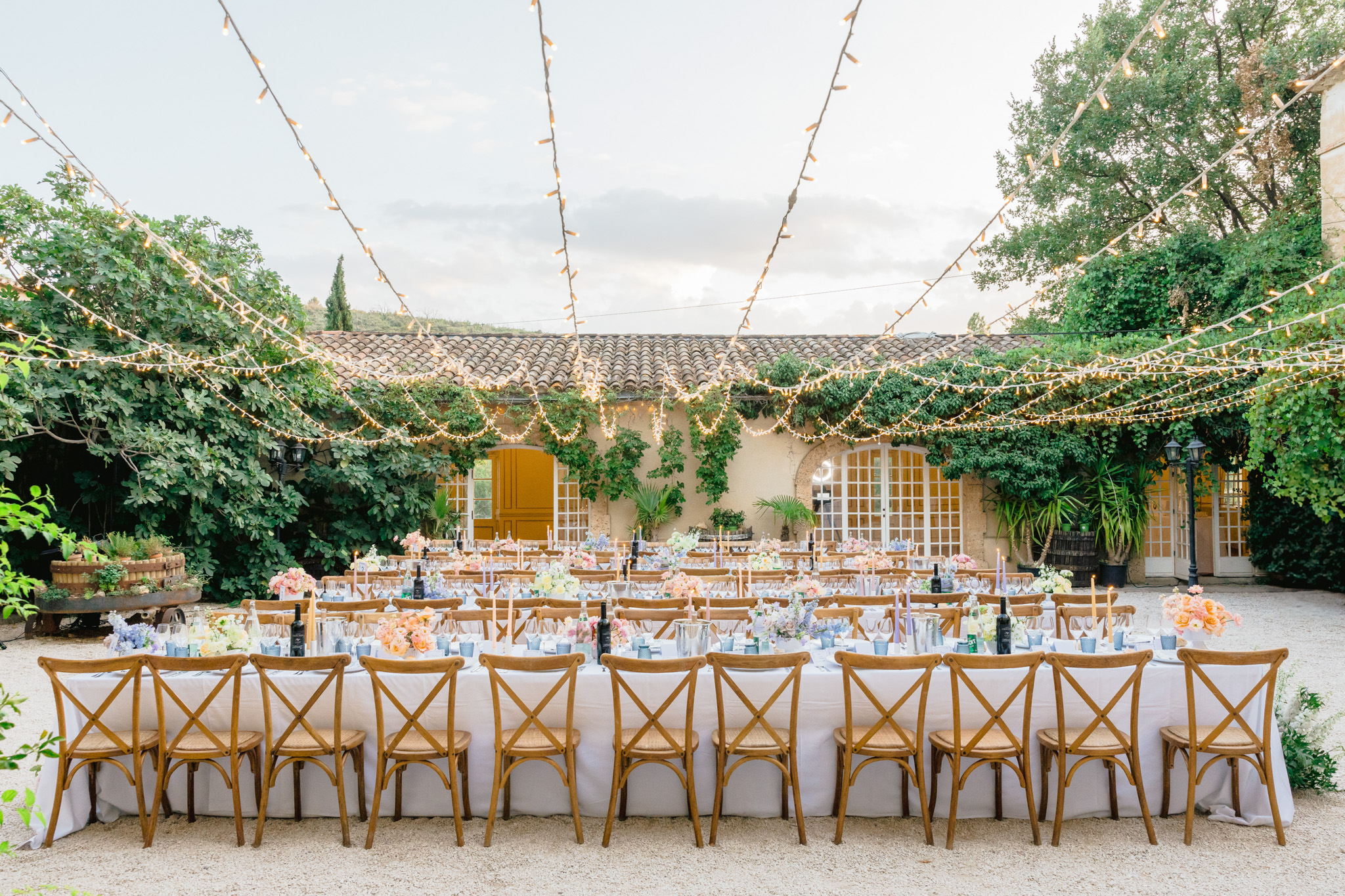
In flowers, it means loose rather than structured. A French wedding bouquet is gathered, not wired. Garden roses sit alongside sprigs of rosemary or trailing jasmine, tied with a single silk ribbon. The arrangement looks like someone walked through a garden with scissors, which is often exactly what happened. Table centres follow the same logic: low vessels, seasonal stems, no uniformity between tables. One might hold pale pink dahlias. The next, cream garden roses with olive branches. The inconsistency is intentional. It reads as collected, lived-in, personal. In decor, it means materials over objects. Long wooden tables left bare or dressed with linen runners in oatmeal or soft white. Brass candlesticks of different heights rather than matching candelabras. Vintage glassware in green or amber tones. Handwritten menus on heavy card stock. No monogrammed dance floor. No custom neon sign. No hashtag. The surfaces you touch carry the design: the grain of the wood, the weight of the linen, the warmth of the brass against the cool stone of the table.
In fashion, restraint runs even deeper. French bridal style favours clean silhouettes in a single fabric: silk crepe, duchess satin, or fine lace with no embellishment beneath. The gown works with the architecture rather than competing with it. Hair stays undone or softly pulled back. Jewellery is minimal. The groom wears a well-cut navy or charcoal suit, rarely a full morning coat. Bridesmaids, where they exist at all, wear their own dresses in a loosely coordinated palette rather than matching gowns.
Why Do French Weddings Look Unstudied When They Are Not?
The word "Unstudied" needs retiring from wedding vocabulary, because it obscures something important: the French aesthetic requires enormous care in selection and editing. Looking undone takes work. The couple who sets a bare oak table with mismatched ceramics and wildflower arrangements has made dozens of precise decisions. Which wood tone. Which ceramic glaze. Which stem heights. Which ribbon width for the napkins. The restraint is the effort. What creates the illusion of ease is the absence of visible production. No stage lighting rigs. No branded signage. No coordination between tablecloths and bridesmaid dresses and save-the-date cards. Each element appears to have arrived on its own terms: the vintage carafe found at a brocante market, the candles collected over months, the table linen borrowed from the venue's own collection. Nothing matches too precisely. Nothing announces itself as "wedding decor."
The planning behind this look involves longer lead times for sourcing. Finding the right mismatched chairs across three antique dealers. Locating a florist who understands negative space. Commissioning hand-lettered menus rather than printing them. These choices take more time, not less, than ordering a coordinated package from a single styling company. The difference is that the result looks accumulated rather than purchased, and that distinction is what gives French weddings their specific visual character.
How Does the Venue Replace the Need for Heavy Styling?
In France, the venue is the first and most important design decision. Not just for logistics. For aesthetics. A couple choosing between a Provençal bastide with pale ochre walls and a contemporary domaine with poured concrete and glass is making a styling decision that determines every choice after it. The colour palette, the table style, the flower varieties, the fabric weight for the bride's dress: all of these respond to the venue's existing materials. Warm-toned limestone calls for cream, soft gold, and blush. Cool grey stone in Normandy or Brittany works with sage, ivory, and pewter. A sun-bleached mas in the Luberon pairs with terracotta, dried lavender, and raw linen. The venue's material palette sets the range, and the couple works within it. This is why French weddings photographed at the same venue in different seasons still share a visual coherence. The building anchors everything.
The practical consequence is that French couples spend a smaller proportion of their budget on decoration. Industry data across the destination weddings featured on French Wedding Style shows that international couples who let the venue lead typically allocate 5 to 8% of their total budget to flowers and decor, compared to 12 to 18% for couples who import a full styling scheme.
The venue does not replace the decorator. It replaces the need for the decorator to start from a blank canvas. When you explore château wedding venues across France, you begin to see how strongly the architecture dictates the design direction.
What Do International Couples Get Wrong When Recreating a French Look?
The misjudgement that compounds over months is treating a French aesthetic as a shopping list. The mood board collects the right images: bare tables, loose flowers, linen napkins, brass candlesticks. Then the couple orders each item individually and assembles them in a space that does not support the look. The table is bare oak, but the venue is a modern hotel ballroom with carpet and recessed lighting. The flowers are loose garden roses, but they sit in crystal vases on a cloth-covered round table. The individual ingredients are correct. The context is wrong. **Over-styling in the name of "natural."** Adding dried grasses, pampas plumes, macramé hangings, terracotta pots, wicker chargers, and linen overlays to the same table. Each element signals "natural" or "rustic," but the accumulation produces the opposite effect. It reads as decorated. The French approach removes before it adds. A stone table with candles and one type of green foliage says more than a table carrying eight different "natural" textures.
The third mistake is ignoring the light. French wedding venues are designed around natural light: south-facing courtyards, tall windows without curtains, outdoor dining under plane trees. The golden quality of late afternoon light in Provence or the soft grey light of a Normandy evening is itself a styling element. Couples who plan their décor in isolation from the light cycle miss the most powerful visual tool the venue provides. The same cream linen looks warm and alive in golden hour and cold and institutional under fluorescent ballroom lights.
Is the French Approach Actually Cheaper?
It can be, but not always, and the savings come from allocation rather than reduction. French couples and international couples adopting the French aesthetic tend to spend less on décor, signage, printed materials, and matching accessories. The flower budget is often lower because the design scope stays contained: table centres and bouquets rather than ceremony arches, hanging installations, and multi-zone floral schemes. The savings are real and can reach €3,000 to €8,000 compared to a full Anglo-American styling package. But the money typically goes somewhere else. French weddings allocate more to food, wine, and the dining experience. A sit-down dinner for 120 guests at a quality traiteur in Provence costs €120 to €180 per person before wine. Wine itself, often sourced directly from local domaines, adds €30 to €60 per person. The weekend format that most French weddings follow adds accommodation costs, a welcome dinner, a brunch, and sometimes a second evening gathering. Across a three-day programme, the total budget may equal or exceed a single-day Anglo-American celebration.
The honest answer is that the French approach is cheaper to decorate and more expensive to feed. For couples whose priority is how the wedding looks in photographs, the restrained aesthetic delivers strong visual impact at lower cost. For couples whose priority is the guest experience across a full weekend, the French model redistributes spending toward the table, the cellar, and the programme rather than cutting total outlay. See how this couple brought this to life at Château de Tourreau in Provence.
Related Articles
- Styling and Design: the complete chapter guide
- Style guide: classic French weddings
- Style guide: Provençal rustic weddings
- Style guide: modern minimalist weddings in France
- Style guide: boho chic weddings in France
- French wedding venue types explained
- French wedding florist: costs and seasonal guide
- Destination wedding venues across France
Frequently Asked Questions
Can you achieve a French aesthetic at a non-French venue?
The principles transfer, but the results depend on the venue's own material palette. A stone barn in the Cotswolds or a farmhouse in Tuscany shares enough raw-material DNA with French venues that the approach works naturally: bare surfaces, seasonal flowers, linen and brass. A modern hotel ballroom or a purpose-built event space lacks the architectural foundation the aesthetic relies on. In those settings, recreating the look requires significant set dressing, which contradicts the philosophy. Choose a venue with existing character, and the French approach follows.
Do French couples use wedding planners or stylists?
French couples increasingly use coordinators (organisateurs de mariage), but the role centres on logistics, vendor management, and timeline execution rather than visual design. Dedicated wedding stylists exist in France but are more commonly hired by international couples who want the French look without the cultural instinct for what to leave out. A good French wedding planner understands the aesthetic implicitly and will steer couples away from over-decoration as part of the planning process. For couples planning from abroad, our guide to hiring a wedding planner in France covers how to find the right match.
Is the French less-is-more approach just minimalism?
Not quite. Minimalism as a design movement strips to the essential and celebrates empty space. The French wedding aesthetic is not empty. It is full of texture, warmth, and material richness: heavy linen, aged brass, weathered stone, abundant garden flowers. The restraint is in the number of different elements, not the total visual weight. A classic French table has fewer types of objects but each object carries sensory presence. The wood grain is visible. The candlelight flickers on patinated metal. The flowers smell like the garden they came from. It is warm restraint, not cold absence.
How does the French aesthetic vary by region?
Significantly. Provence leans warm: ochre, terracotta, olive green, dried herbs, sun-bleached linen. Normandy and Brittany lean cool: slate, grey stone, cream, pewter, hydrangeas, and garden greenery. The Loire Valley occupies a middle ground with its pale tuffeau limestone, formal gardens, and classical proportions. Bordeaux brings deep reds, vineyard greens, and barrel oak textures. The Riviera introduces Mediterranean blues, white render, and bougainvillea. Each region has a native palette, and working within it produces stronger results than imposing a style from outside. Our seasonal climate guide covers how regional conditions affect both palette and flower choices.
What is the best starting point for couples who want the French look?
Visit your venue before making any design decisions. Photograph the stone, the floors, the natural light at the time of day your ceremony and dinner will take place. Those photographs become the foundation of every colour, material, and flower choice. A mood board built from the venue's own palette will always produce a more cohesive result than one assembled from generic inspiration images. From there, work through the style guides in this chapter to find the specific direction that matches your venue's character and your personal taste.
The French wedding aesthetic is not a trend to follow. It is a design philosophy to understand. Start with the venue. Trust the materials. Edit relentlessly. Let the stone, the light, and the season do the work that imported decoration cannot. Every style guide in this chapter, from classic French to boho chic, applies these principles to a specific visual direction.
Explore Every Guide in This Chapter
Deep-dive into each topic covered above.