
France vs Italy vs Spain: Destination Wedding Comparison
If you are reading this, you have probably already decided on a European destination wedding. The question is where. France, Italy, and Spain are the three countries that dominate the conversation, and each has genuine strengths.
But they are not interchangeable. The venue stock, the cost structure, the guest logistics, the food culture, the legal requirements, and the supplier infrastructure differ in ways that will shape every detail of your wedding weekend. This guide compares all three honestly, drawing on the 400+ venues and 15 years of destination wedding coverage at French Wedding Style. It connects to our broader guide to why couples choose France for destination weddings. For a broader view of every step involved, see planning your destination wedding in France from start to finish.
Key Takeaways
France, Italy, and Spain are the three countries that dominate the European destination wedding conversation, and the differences between them are structural rather than cosmetic. France offers the widest venue diversity in Europe with châteaux, mas, barns, villas, and coastal estates across 12 regions. Italy centres on Tuscan villas, lake properties, and the Amalfi Coast. Spain is strongest in Mallorca, Ibiza, and the Costa del Sol. An 80-guest wedding costs €40,000 to €80,000 in France, €45,000 to €90,000 in Italy, and €30,000 to €65,000 in Spain. France wins on guest accessibility with Paris CDG, Nice, Lyon, Bordeaux, and Toulouse all receiving direct international flights, plus the TGV network connecting Paris to every major wedding region in under three hours. These five comparisons summarise the decision framework for couples weighing all three countries.
- France offers the widest venue diversity in Europe: châteaux, mas, barns, villas, coastal estates, and modern spaces across 12 regions. Italy centres on Tuscan villas, lake properties, and Amalfi Coast. Spain is strongest in Mallorca, Ibiza, and the Costa del Sol.
- An 80-guest wedding costs €40,000 to €80,000 in France, €45,000 to €90,000 in Italy, and €30,000 to €65,000 in Spain. France and Italy overlap; Spain is cheaper but with less infrastructure.
- France wins on guest accessibility: Paris CDG, Nice, Lyon, Bordeaux, and Toulouse all receive direct international flights, and the TGV network connects Paris to every major wedding region in under three hours.
- Legal complexity is lowest in France for symbolic ceremonies. Italy requires more paperwork. Spain has streamlined civil ceremonies but limited venue choice for legal ceremonies.
- France has the most mature English-speaking supplier ecosystem. Italy is strong in Tuscany and the Lakes. Spain is growing but less developed outside Mallorca and Barcelona.
How Do France, Italy, and Spain Compare for Destination Weddings?
France, Italy, and Spain compare across nine factors that determine how a destination wedding actually feels, not just how it photographs. The table below provides a direct side-by-side comparison based on current market conditions as of 2026. France leads in venue diversity, guest accessibility, and supplier infrastructure. Italy leads in brand recognition and specific iconic locations. Spain leads in cost and casual atmosphere. None of the three is the wrong choice, but each suits a different couple and a different vision.
Scroll →
| Factor | France | Italy | Spain |
|---|---|---|---|
| Venue diversity | Highest in Europe. Châteaux, mas, bastides, barns, villas, coastal estates, modern venues across 12+ regions. | Strong but concentrated. Tuscan villas, Lake Como estates, Amalfi Coast, Puglia masserie. Visual vocabulary is narrower. | Growing. Fincas in Mallorca, Ibiza estates, Barcelona industrial spaces, haciendas in Andalusia. Less architectural range. |
| Cost range (80 guests) | €40,000 to €80,000. Best value in Dordogne, South-West, Normandy. Premium in Provence and Riviera. | €45,000 to €90,000. Tuscany and Lake Como at the top. Puglia and Sicily more affordable. VAT (22%) applies to most services. | €30,000 to €65,000. Cheapest of the three. Mallorca and Barcelona match French prices. Mainland and southern Spain significantly cheaper. |
| Guest accessibility | Best in Europe. CDG, Nice, Lyon, Bordeaux, Toulouse, Marseille. TGV connects Paris to all regions in under 3 hours. Eurostar from London. | Good for northern Italy (Milan, Venice airports). Central and southern Italy harder: Florence and Rome airports then long drives to Tuscany, Amalfi, or Puglia. | Strong for Mallorca and Barcelona (direct flights). Mainland venues often require internal flights or 2 to 3-hour drives from Madrid or Málaga. |
| Legal complexity | Low for symbolic ceremonies (no residency). Civil ceremonies require 40-day residency. Most international couples marry legally at home. | Moderate. Nulla osta (certificate of no impediment) required. Bureaucracy varies by comune. Process takes 2 to 4 months of preparation. | Low to moderate. Civil ceremonies at town halls are straightforward. Symbolic ceremonies at venues increasingly common. Less paperwork than Italy. |
| Food and wine culture | Exceptional across all regions. Wine at source prices. Traiteur system produces multi-course seated dinners as standard. Cheese course before dessert. | Exceptional, especially in Tuscany, Emilia-Romagna, and Sicily. Stronger pasta and seafood traditions. Prosecco and local wines are affordable. | Strong but less wedding-focused. Tapas culture suits casual receptions. Spanish wines (Rioja, Cava, Albariño) offer value. Less formal dining tradition. |
| Supplier ecosystem maturity | Most mature in Europe. Bilingual planners, photographers, florists, and caterers in every major region. 20+ years of international destination wedding infrastructure. | Strong in Tuscany and the Lakes. Less developed in Puglia, Sicily, and southern Italy. Growing fast but still concentrated geographically. | Emerging. Mallorca and Barcelona have established suppliers. Mainland Spain is less developed for international weddings. English-language support is patchier. |
| Language barrier | Low in wedding regions. English widely spoken by planners, venue staff, and suppliers in Provence, Riviera, Loire, Bordeaux, Paris. | Moderate. English strong in tourist areas (Florence, Lake Como, Rome). Less consistent in rural Tuscany, Puglia, southern Italy. | Moderate to high. Barcelona and Mallorca are bilingual. Mainland Spain, especially smaller towns, has less English-language infrastructure. |
| Wedding weekend culture | Deeply established. Friday-to-Sunday format is standard. Most venues offer exclusive-use weekend packages. Guests expect and embrace the multi-day structure. | Growing. Weekend weddings common at villas and estates. Some Italian venues still default to single-day events. Less established as a cultural norm. | Less common. Spanish weddings traditionally are one-day events running very late (midnight dinner service). Multi-day destination format is newer. |
| Climate reliability | Strong in south (Provence, Riviera, South-West) May to September. Northern France can be unpredictable. Shoulder seasons work well in the south. | Strong across most regions June to September. Extreme heat in July and August in central and southern Italy (38 to 42°C). Spring and autumn are ideal. | Hottest of the three. Inland Spain reaches 40°C+ in July and August. Coastal and island venues are more moderate. Risk of extreme heat is highest here. |
Which Country Offers the Best Venue Selection?
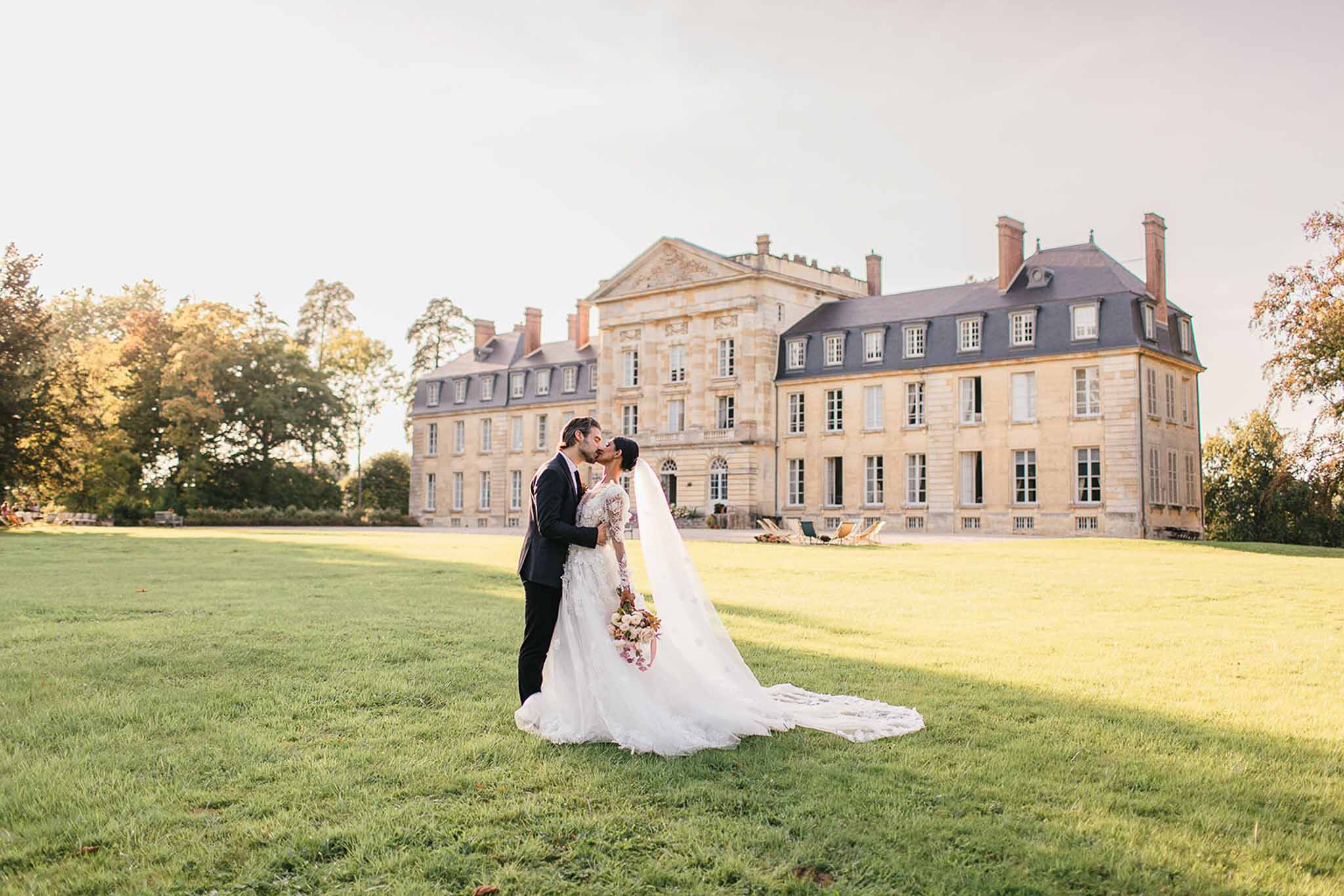
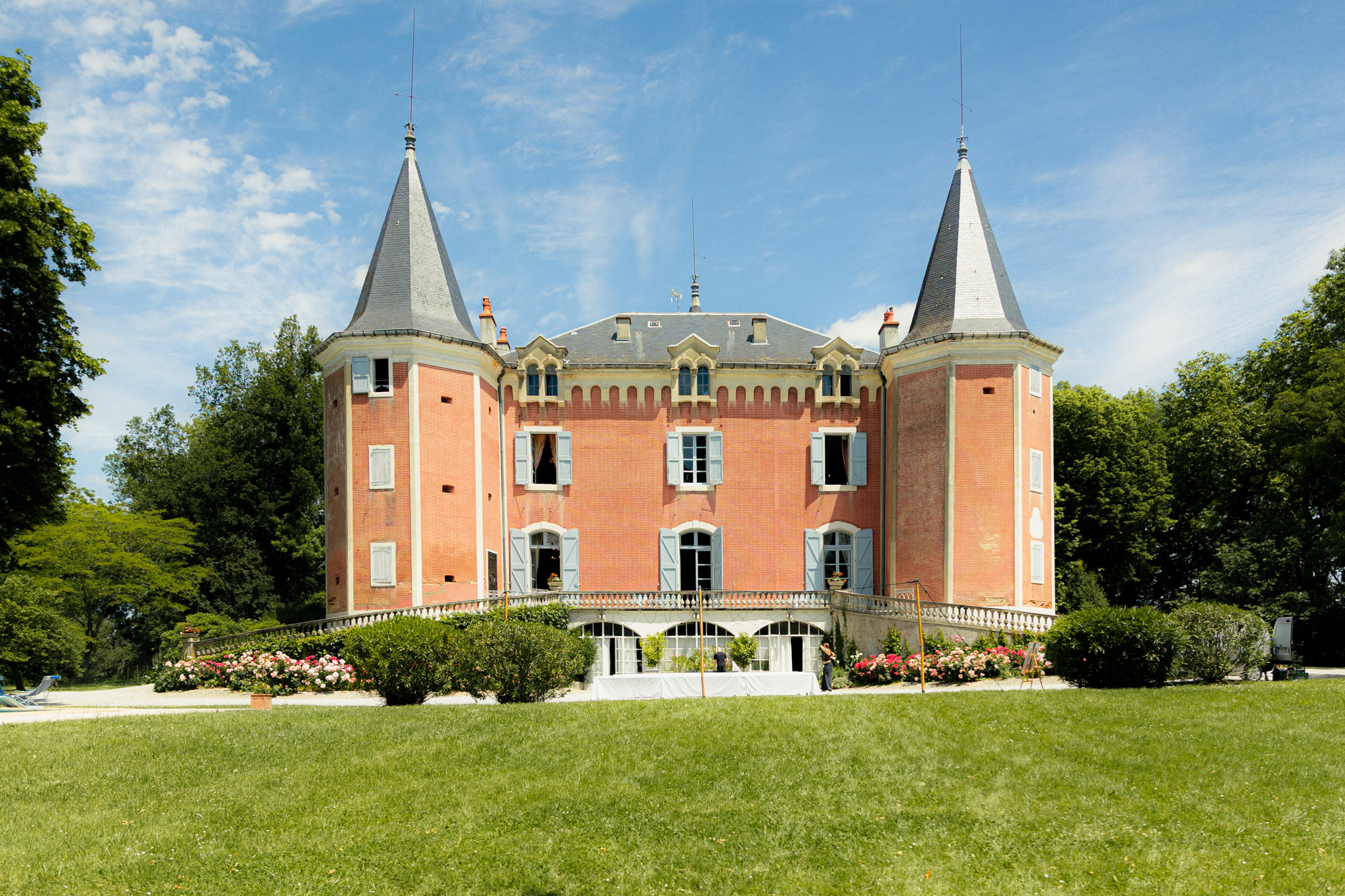
France offers the best venue selection of the three countries because its architectural and geographic diversity is simply wider. Within a three-hour drive of a single French airport, couples can visit a 15th-century stone château with formal gardens, a converted Provençal mas with a lavender-lined drive, a rustic stone barn in the Dordogne, a contemporary glass-walled estate overlooking the Mediterranean, and a vineyard domaine where dinner happens between the vines. No other European country puts this range within practical reach of a single venue-viewing trip.
Italy's venue stock is concentrated in three well-known corridors: Tuscany, where golden afternoon light falls across stone farmhouses and the hills roll away in lines of cypress and olive; the Italian Lakes, where grand waterfront estates face the water and the mountains behind them turn violet at dusk; and the Amalfi Coast, with cliff-top hotels and terraced gardens where dinner happens above the sea. Each is genuinely striking but represents a relatively narrow visual vocabulary. Tuscan weddings look like Tuscan weddings.
Lake Como weddings look like Lake Como weddings. Couples who want something that does not fit these templates have fewer options. Puglia's masserie and Sicily's baroque estates are expanding the range, but these regions have less developed infrastructure.
Spain's venue market is the newest of the three and the most geographically concentrated. Mallorca dominates with stone fincas where bougainvillea spills over courtyard walls and the scent of orange blossom carries across warm evening air. Ibiza offers bohemian villas and beach clubs.
Barcelona has rooftop terraces where the city lights spread below you and the energy of the Eixample drifts up through open windows. Andalusian haciendas provide a distinctive Moorish-influenced aesthetic. But between these clusters, there are gaps. Rural mainland Spain has fewer properties set up for international destination weddings, and the conversion of historic buildings into wedding venues is less advanced than in France or Italy.
How Do Costs Compare Across the Three Countries?
Costs for an 80-guest destination wedding in 2026 range from €30,000 to €65,000 in Spain, €40,000 to €80,000 in France, and €45,000 to €90,000 in Italy, with Spain the cheapest of the three and Italy the most expensive due to 22% VAT, premium venue hire in Tuscany and the Lakes, and imported flower costs. The ranges overlap significantly, and the most important variable is region within each country rather than the country itself. In France, regional price differences create a spread of 30 to 50% between the most and least expensive areas: a Dordogne château weekend costs €5,000 to €12,000 versus €10,000 to €25,000 for an equivalent Provence property, and catering follows the same pattern at €120 to €160 per head in the South-West versus €150 to €220 on the Riviera. Couples who are flexible on region within France can access the full French wedding experience at prices that match or undercut Spain.
- In France, regional price differences create a spread of 30 to 50% between the most and least expensive areas
- A weekend at a château in the Dordogne costs €5,000 to €12,000 for venue hire
- An equivalent property in Provence costs €10,000 to €25,000
- Catering follows the same pattern: €120 to €160 per head in the South-West versus €150 to €220 per head in the Riviera
- Couples who are flexible on region can access the French wedding experience at prices that match or undercut Spain
Italy's cost structure is pushed higher by several factors. Italian VAT at 22% applies to most wedding services, compared to 20% in France and 21% in Spain. Venue hire in Tuscany and the Lakes has increased 15 to 25% since 2022 as demand has surged. Flowers in Italy are often imported from the Netherlands, adding cost that does not exist in France where local florists work with garden-grown and regionally sourced blooms. The exception is Puglia and Sicily, where costs run 20 to 30% below Tuscany.
Spain offers the lowest entry point. Mainland Spanish venues charge €3,000 to €8,000 for weekend hire. Catering runs €80 to €130 per head. Wine is affordable (Rioja and Cava at €5 to €10 per bottle at source). Mallorca is the exception: prices there have risen to match Provence levels as demand from UK and Scandinavian couples has grown. For budget-conscious couples who prioritise cost above all other factors, mainland Spain and southern Spain deliver the most wedding per euro spent.
Which Is Easiest for International Guests to Reach?
France is the easiest of the three countries for international guests to reach, and it is not close. Paris Charles de Gaulle is the second-busiest airport in Europe, serving direct flights from every major international hub including New York, London, Dubai, Singapore, Sydney (via stopover), and all European capitals. But the real advantage is regional: Nice, Lyon, Marseille, Bordeaux, and Toulouse all receive direct international flights, meaning guests can fly to within an hour of most French wedding venues without transiting through Paris.
The TGV network adds a second layer of accessibility that neither Italy nor Spain can match. Paris to Avignon takes 2 hours 40 minutes. Paris to Bordeaux takes 2 hours. Paris to Lyon takes under 2 hours. The Eurostar connects London to Paris in 2 hours 16 minutes, and onward TGV connections mean London to Avignon is under 6 hours without leaving the ground. For UK couples, who represent the largest source market for French destination weddings, this combination of Eurostar and TGV makes France reachable without flying at all.
Italy is well-connected to northern venues (Milan and Venice airports serve Lake Como and the Veneto) but less so for the regions where most weddings take place. Florence airport is small, with limited direct international routes. Rome is a major hub but sits 3 to 4 hours from both Tuscany's interior and the Amalfi Coast. Puglia requires a domestic connection or a drive from Bari. The logistics of getting 80 guests from various countries to a Tuscan hilltop involve more planning than getting them to a Provençal mas.
Spain is strong for island and coastal destinations. Palma de Mallorca airport receives direct flights from across Europe. Barcelona is a major hub. But mainland Spanish venues, particularly in Andalusia and interior regions, require either Madrid or Málaga as a gateway, followed by a 2 to 3-hour drive. For guests flying from the US, Australia, or Asia, Spain offers fewer direct routing options than France.
How Does the Food and Wine Culture Shape Each Wedding?
Food and wine culture shapes a destination wedding more profoundly than most couples anticipate, because the meal is not just a meal. It is the centrepiece of the evening, the longest single block of time your guests spend together, and the sensory memory they carry home. France, Italy, and Spain each bring a distinct culinary identity to the table, and understanding those differences helps couples choose the right country for the wedding they want to host.
France structures the wedding dinner as a formal, multi-course seated affair. Four to six courses served over three to four hours. Apéritif with canapés in the garden. Entrée, fish course, main course, cheese, dessert. Wine paired to each course, often from the venue's own production or a neighbouring vigneron. The traiteur system means a professional kitchen team arrives at the venue, sets up, cooks, serves, and cleans. The baseline quality of French wedding catering is remarkably high: local ingredients, seasonal menus, and a culture that treats feeding guests as the host's primary obligation.
Italy brings an equally strong food tradition with a different rhythm. Picture a long table under a pergola draped in white wisteria, the last Tuscan sun warming the terracotta, and a plate of hand-rolled pici arriving with a Brunello that tastes like the earth it grew from. Italian wedding meals often run even longer than French ones, with seven to nine courses in some regions. Antipasti, primi (pasta), secondi (meat or fish), contorni, dolci.
The pasta course is the emotional peak. Wine is typically local and affordable: Chianti in Tuscany, Prosecco in the Veneto, Nero d'Avola in Sicily. The catering infrastructure in Tuscany and the Lakes is mature, though less consistent in southern regions. Italian food at its best is equal to French food, different in character but not in quality.
Spain takes a more casual approach. Traditional Spanish celebrations favour abundant sharing plates, late dining (10pm starts are common), and a festive atmosphere that feels more like a party than a formal dinner. Tapas-style reception food works well for casual, social weddings. Spanish wines (Rioja, Ribera del Duero, Cava, Albariño) offer strong value. The catering infrastructure for international-style weddings is most developed in Mallorca and Barcelona, with less depth elsewhere. Couples who want a relaxed, late-night, convivial atmosphere may find Spain suits their vision better than the more structured French or Italian formats.
What Are the Legal Requirements in Each Country?
Legal requirements differ significantly across France, Italy, and Spain, and understanding them early prevents costly surprises. France is the simplest for couples who choose a symbolic ceremony, the most common route for international couples. Italy requires the most paperwork. Spain falls between the two.
In France, a legal civil ceremony requires at least one party to have 40 consecutive days of residency in the commune where the wedding takes place, or a direct family connection to it. The ceremony must take place at the mairie (town hall), not at the venue. For this reason, the overwhelming majority of international couples choose a symbolic ceremony at their chosen venue and complete the legal marriage in their home country. This separates the legal obligation from the celebration and gives couples total creative freedom with the ceremony format, location, and celebrant.
In Italy, international couples need a Nulla Osta (certificate of no impediment) from their home country's embassy or consulate in Italy. The document must be translated, legalised, and presented to the local comune. Processing time is 2 to 4 months and varies by region.
Italy also allows legally binding ceremonies at approved venues (not just town halls), which is an advantage. However, the bureaucracy involved means most couples need a wedding planner experienced in Italian legal procedures to navigate the process reliably. If you are leaning towards France, browse bilingual wedding planners who specialise in destination celebrations across every French region.
In Spain, civil ceremonies take place at a civil registry or town hall and require a certificado de capacidad matrimonial. The process involves submitting documents 2 to 3 months in advance and attending an interview at the civil registry. Spain has recently simplified the process for EU citizens but non-EU couples still face additional steps. Symbolic ceremonies at venues, as in France, are the simpler alternative and are increasingly popular with international couples choosing Spanish destination weddings.

Which Country Suits Your Wedding Style?
Your wedding style is the best guide to which country fits. The question is not which country is objectively "best" but which one aligns with the celebration you want to create. Use the visual and experiential preferences below to narrow your choice.
Choose France if: you want the widest venue choice, a formal multi-course dinner as the centrepiece, a weekend format with exclusive-use properties, strong guest accessibility from the UK and Europe, and a mature supplier network in every region. France suits couples who see their wedding as a weekend house party with a ceremony in the middle. It rewards couples who care as much about the Saturday morning market trip and the Sunday brunch as the ceremony itself. Browse all wedding venues in France to see the range.
Choose Italy if: you have fallen in love with a specific Italian landscape (Tuscan hills, Lake Como, Amalfi cliffs) and the visual identity is non-negotiable. Italy suits couples who want an iconic, immediately recognisable backdrop and are willing to invest more for it. The food is exceptional. The atmosphere is romantic in a way that is distinct from France: warmer palette, more dramatic terrain, a different quality of light. Be prepared for more complex legal procedures and less consistent infrastructure outside the established wedding regions.
Choose Spain if: you prioritise budget, warmth, and a relaxed atmosphere. Spain suits couples who want a casual, late-night, social celebration. Island venues (Mallorca, Ibiza) deliver a beach-and-sun aesthetic that neither France nor Italy matches as naturally. The cost savings are real, particularly on the mainland. Trade-offs include less developed English-language supplier networks, fewer exclusive-use properties, and extreme heat in July and August that limits outdoor ceremony options in many regions.
What International Couples Get Wrong About Comparing European Destinations
The biggest mistake is treating all three countries as equivalent options differentiated only by personal taste. They are not. The supplier infrastructure, the venue format, the legal process, and the guest logistics differ enough that a wedding planned for France would require significant restructuring if moved to Spain, and vice versa. Choosing a country is a structural decision, not an aesthetic one. It determines your budget range, your guest list size, your timeline format, and your vendor options.
A second common error is choosing based on a single Instagram image or a single friend's experience. One couple's Tuscan villa wedding looked extraordinary. That does not mean Tuscany is the right choice for your 80-guest weekend celebration with guests flying from four countries. The logistics behind a photogenic result matter more than the result itself.
Before falling in love with a location, ask: how do 80 people get there? Where do they stay? What happens if it rains? How do I communicate with suppliers who may not speak English? A destination wedding planner with on-the-ground experience in your chosen region can answer all four questions in the first consultation.
Finally, couples often compare peak-venue prices across countries without accounting for regional variation within each one. The cheapest French regions (Dordogne, Normandy, South-West) cost less than the most expensive Spanish locations (Mallorca). The cheapest Italian regions (Puglia, Sicily) cost less than Provence. Country-level averages obscure these overlaps. The right comparison is specific region to specific region, not country to country.
Related Articles
These six guides expand on the country comparison covered above. The full case for France covers the 15 specific factors that make it the most popular destination wedding country in Europe. The regional price comparison maps costs across all nine French wedding regions, showing where the country-level averages obscure 30 to 50% internal variation. The legal requirements guide explains the French civil ceremony and symbolic ceremony options in detail. The convincing-family guide provides practical talking points for couples whose partners or parents need persuading. The destination venues collections for France and Europe offer handpicked property shortlists filtered by region, capacity, and style across all three countries.
- Why get married in France: the complete case for a French destination wedding
- 15 reasons to get married in France in 2026
- How to convince your partner or parents about a destination wedding in France
- French wedding costs by region: a complete price comparison
- Legal requirements for getting married in France
- Destination wedding venues across Europe
Frequently Asked Questions
Which is cheaper for a destination wedding: France, Italy, or Spain?
Spain is the cheapest of the three for an equivalent 80-guest wedding, with total costs ranging from €30,000 to €65,000 as of 2026. France sits in the middle at €40,000 to €80,000, and Italy is the most expensive at €45,000 to €90,000. However, regional variation within each country is significant. The Dordogne and Normandy in France can match or undercut Mallorca prices. Puglia in Italy can be cheaper than Provence. Compare specific regions, not country averages.
Is France or Italy better for a château or villa wedding?
France is better for château weddings, with hundreds of properties spanning five centuries of construction across the Loire Valley, Dordogne, Provence, Burgundy, and Normandy. Italy is stronger for classic Tuscan villa weddings, with a concentrated inventory of Renaissance-era stone farmhouses and estates. If your vision is a formal, historical stone building with gardens and exclusive weekend use, France offers more choice. If your vision is a Tuscan landscape specifically, Italy is the only answer. Browse French château venues to compare.
Which country has the best food for a wedding?
France and Italy are equally strong but different. France defaults to multi-course seated dinners with regional wine, seasonal ingredients, and a cheese course. Italy defaults to longer meals with an emphasis on pasta, antipasti, and regional specialties. Both countries have exceptional food cultures. Spain offers strong value and a more casual dining style (tapas, sharing plates, late-night service). The "best" depends on whether you prefer a formal dinner (France), a longer, more relaxed Italian feast (Italy), or a convivial sharing format (Spain).
Can you have a legal wedding ceremony at your venue in Italy?
Yes, in some cases. Italy allows legally binding ceremonies at approved venues, not just town halls, which is an advantage over France. However, the approval process varies by comune, and the paperwork (Nulla Osta, translations, legalisation) takes 2 to 4 months. Not all venues are approved for civil ceremonies. A wedding planner experienced in Italian legal requirements is strongly recommended to navigate the process, as it varies significantly by region and municipality.
How does the heat compare across France, Italy, and Spain in summer?
Spain is the hottest, with inland temperatures reaching 40°C or above in July and August. Central and southern Italy can reach 38 to 42°C in the same months. Southern France (Provence, Languedoc) averages 30 to 35°C, with cooler evenings that make outdoor dining comfortable. Northern France and the Atlantic coast stay below 30°C in most summers. For outdoor ceremonies and receptions, France offers the most comfortable summer climate of the three countries, particularly in the early evening hours when most wedding celebrations take place.
Which country has the best wedding photography light?
Southern France, particularly Provence and the Riviera, is widely regarded by destination wedding photographers as having the most consistently flattering natural light in Europe. The quality of late-afternoon and golden-hour light on limestone and honey-coloured stone creates warm, amber tones that require minimal editing. Tuscany offers similar quality in a different palette (warmer ochres, deeper shadows). Spanish light is harsher, especially in summer, with high midday contrast that can be challenging for photography. For consistently good light across the full day, southern France is the strongest choice.
Ready to explore? Browse all wedding venues in France to see the full range of properties, or read our 15 reasons to choose France for your destination wedding for a deeper look at what makes it work.
Explore Every Guide in This Chapter
Deep-dive into each topic covered above.