
France vs Italy for Destination Weddings: Full Comparison
France and Italy are the two most popular destination wedding countries in Europe, and the decision between them is one that couples return to repeatedly during the planning process. Both offer historic venues, outstanding food and wine, warm climates, and the kind of visual beauty that fills a wedding album with images guests frame and keep. But the two countries differ in meaningful ways: the legal framework, the venue market structure, the cost profile, the guest experience, and the cultural approach to weddings. Choosing between them is not about which country is better. For a broader view of every step involved, see the complete French destination wedding planning resource.
It is about which country fits the specific wedding you want to create. This comparison is published by French Wedding Style, a France-focused publication. We have scored each factor based on practical data for 2026, not editorial preference. Where Italy holds a clear advantage, we say so. This guide provides a detailed, factor-by-factor comparison to help you make that decision with clarity. For a broader three-country comparison including Spain, see our France vs Italy vs Spain overview. For the full chapter, see our complete destination comparison guide.
Key Takeaways
- France has a larger and more structured destination wedding venue market than Italy, with more properties offering all-inclusive coordination, English-speaking staff, and established vendor networks for international couples.
- Italy is generally 10 to 20 percent more expensive than France for a comparable wedding, driven by higher venue hire fees in Tuscany, the Amalfi Coast, and Lake Como. Southern France and the South-West offer better value than any premium Italian region.
- France is easier for UK guests (Eurostar, short flights, Channel ferries) and offers better regional airport access across the country. This advantage is strongest for southern and central France. For northern Italian venues near Milan or Pisa airports, the logistics difference narrows. Italy requires more complex logistics for guests flying from outside Europe.
- French legal requirements for a civil ceremony are more demanding (publication of banns, residency rules, document preparation 2 to 3 months in advance). Italian civil ceremonies are administratively simpler, though the nulla osta process requires an in-person embassy or consulate appointment, which can involve waiting times of 4 to 8 weeks in peak season. Both countries recognise symbolic ceremonies, which have no legal standing.
- The dining experience is the clearest differentiator. France offers structured, course-based dining with regional wines matched to each course. Italy offers a more abundant, family-style approach with multiple primi and secondi. Both are outstanding, but the rhythm and style of the meal differ.
How Do France and Italy Compare on Venues?
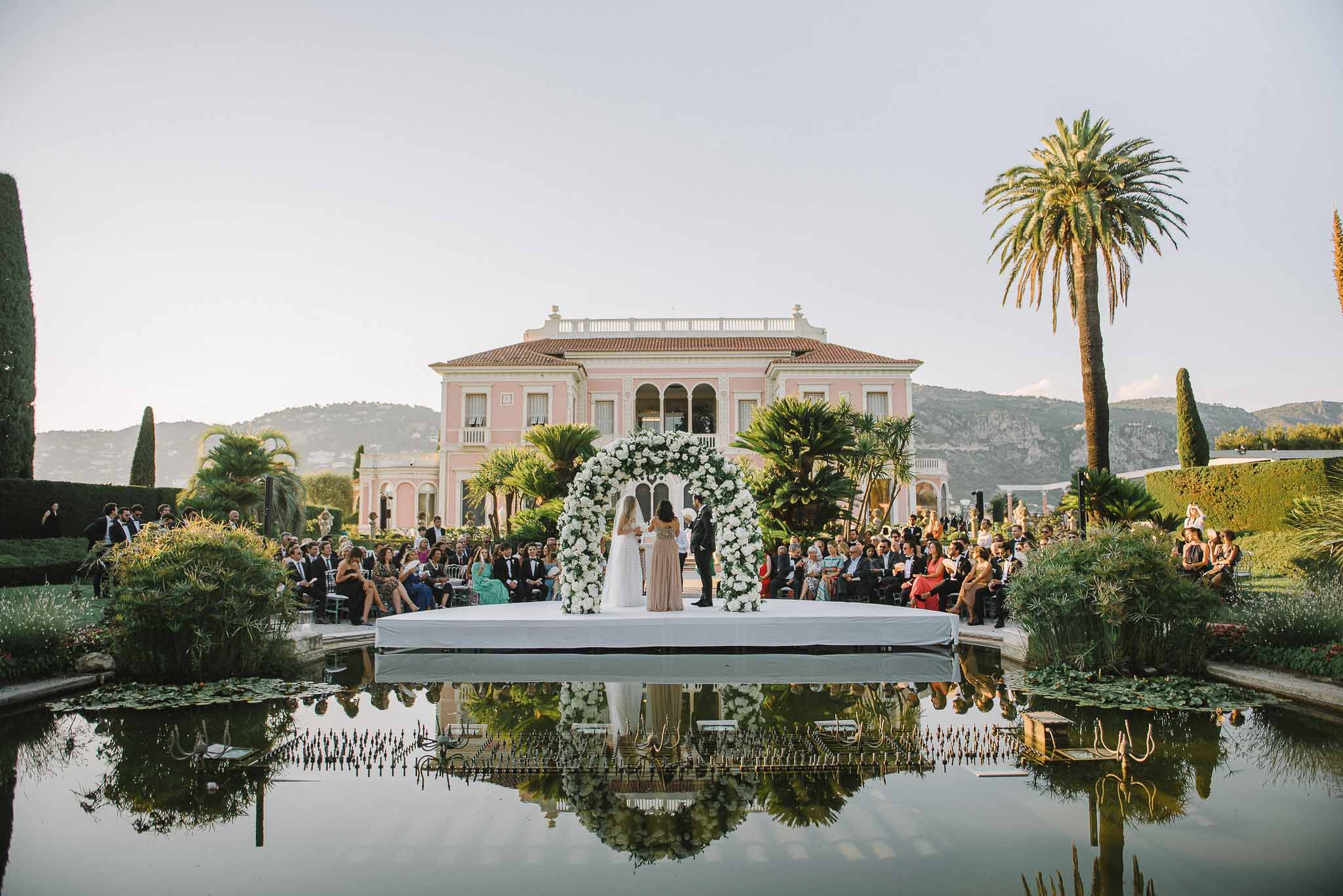
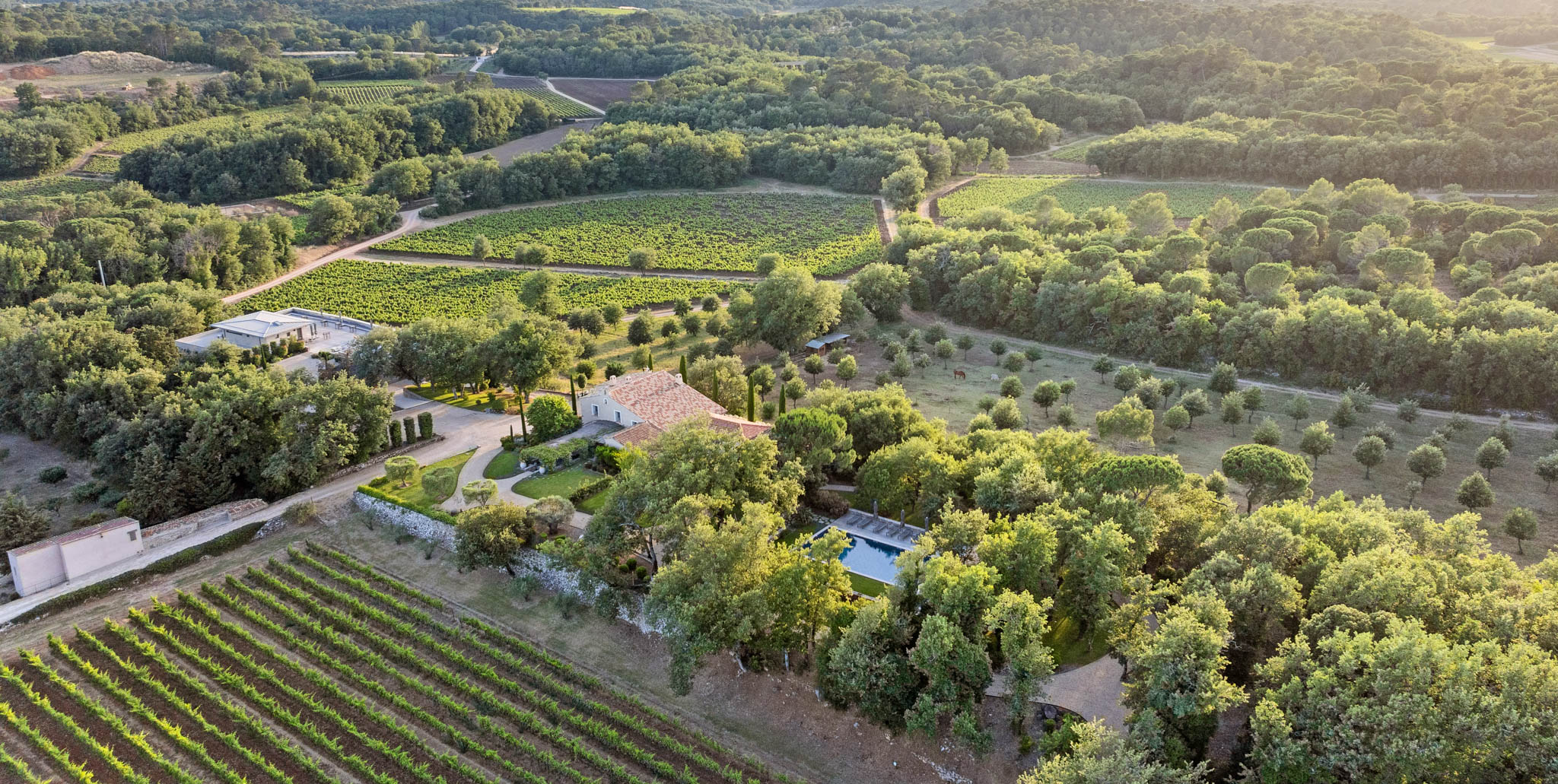
The venue landscapes in France and Italy share a common ancestor (historic estates converted for private events) but have evolved in different directions. France has a mature destination wedding industry with approximately 2,000 to 3,000 properties actively marketing to international couples. The range spans châteaux (Loire, Normandy, Champagne), bastides and mas (Provence), domaines (Languedoc, South-West), and converted estates across every region. Many French venues operate as turn-key wedding venues with in-house coordinators, approved vendor lists, and packages that include accommodation, catering, and event coordination. The professionalism of the French wedding venue market means that couples, particularly those planning from abroad, benefit from established processes and English-speaking contacts. For the full range, browse our directory of wedding venues in France. Italy has a similarly large venue market, concentrated in Tuscany, Umbria, the Amalfi Coast, Lake Como, and Puglia. Italian venues tend to be more varied in their operational model: some are fully managed wedding estates, others are private villas that rent the property and leave the couple to source all vendors independently.
The architectural character differs too. French châteaux have formal symmetry, manicured gardens, and an emphasis on stone, slate, and classical proportions. Italian villas favour terracotta, warm plaster, pergolas, and a more organic relationship between indoor and outdoor space. The aesthetic preference is personal, but it shapes the visual identity of the wedding.
Which Is More Affordable?
France, on average, is the more affordable destination for a comparable wedding. The difference is driven by venue hire costs in Italy's premium regions, which have risen significantly since 2022. A three-day weekend venue hire in France runs €8,000 to €30,000, compared to €10,000 to €45,000 in Italy, with Lake Como and Amalfi Coast properties commanding the highest premiums. Catering per head for a five-course dinner costs €120 to €250 in France versus €130 to €300 in Italy. French venue contracts also tend to offer more flexibility on external supplier selection, while Italian venues more frequently bundle catering into the hire price at a higher all-inclusive rate. The cumulative effect across venue, catering, florals, and photography means a mid-range French wedding for 80 guests typically costs 15 to 25% less than a comparable Italian celebration. The table below compares each major cost category with 2026 pricing from both countries.
Scroll →
| Cost Category | France (2026) | Italy (2026) | Notes |
|---|---|---|---|
| Venue hire (3-day weekend) | €8,000 to €30,000 | €10,000 to €45,000 | Italian premium regions (Como, Amalfi) command the highest rates |
| Catering per head (5-course) | €120 to €250 | €130 to €300 | Comparable quality. Italian catering includes more courses on average. |
| Photography | €3,000 to €6,000 | €3,500 to €7,000 | Similar quality. Italian photographers slightly higher due to demand. |
| Flowers and décor | €2,000 to €8,000 | €2,500 to €10,000 | Regional flowers cost less in Provence. Imported arrangements cost more everywhere. |
| Planner (full service) | €5,000 to €15,000 | €5,000 to €18,000 | Full-service planners in both countries. Italy's top-tier planners charge premiums. |
| Total (100 guests, mid-range) | €40,000 to €80,000 | €50,000 to €100,000 | France offers 10 to 20% savings at comparable quality levels. |
The most significant savings in France come from venue hire in the South-West (Dordogne, Lot-et-Garonne, Gers), where château venues offer 3-day exclusive use for €8,000 to €15,000. In Italy, the equivalent pricing is found only in lesser-known regions (Le Marche, Abruzzo, Calabria) that lack the established vendor infrastructure of Tuscany. For a complete breakdown of French wedding costs, see our budget planning guide.
Which Is Easier for Guests?
France has a structural advantage for UK guests and a logistical advantage for guests from most other countries. From the UK: France is easier in every dimension. Eurostar from London to Paris in 2 hours 15 minutes. Direct flights from 15+ UK airports to regional French airports (Nice, Toulouse, Bordeaux, Lyon, Marseille, Nantes). Channel ferries for guests who prefer to drive. No currency difference (both use the euro, but UK guests are crossing the Channel either way). Italy requires a flight to Rome, Milan, Florence, or Naples, followed by a transfer or a connecting flight. The travel time and cost are higher. From the US: Both countries have good transatlantic connections. Paris CDG is the main hub for France, with onward domestic flights or TGV connections. Rome FCO and Milan MXP serve Italy. The difference is internal logistics: France has a comprehensive high-speed rail network (TGV) that connects Paris to Provence in 3 hours, Bordeaux in 2 hours, and the Loire in 1 hour.
From Australia: Comparable flight times to both countries (via Middle East or Southeast Asia hubs). The internal logistics within France (regional airports, rental car infrastructure, signage in English at major routes) are marginally easier than rural Italy.
Accommodation logistics also favour France. French wedding venues typically offer more on-site sleeping capacity (10 to 40 guests in the main property and annexes) and are located near clusters of small hotels, gîtes, and chambres d'hôtes that absorb the remaining guest list. In rural Italy, accommodation options near villa venues can be limited, requiring more advance booking and more complex transport arrangements.
How Do the Legal Requirements Compare?
The legal frameworks differ significantly, and this is often the deciding factor for couples who want a legally binding ceremony at the venue. France: A civil ceremony at the local mairie is the only legally valid ceremony format. Religious and symbolic ceremonies are not legal substitutes. The paperwork requires preparation 2 to 3 months before the wedding: translated and apostilled birth certificates, a certificat de coutume, publication of banns at the mairie for 10 days, and potentially a certificat de non-empêchement from the embassy. The process is rigorous but well-documented. See our complete guides for UK couples and US couples. Italy: Italy offers more ceremony format options. A civil ceremony can take place at the town hall (comune) or at a registered location (some venues are licensed for civil ceremonies, particularly in Tuscany and the Italian Lakes). The paperwork is less demanding: an atto notorio (declaration of intent), a nulla osta (no impediment certificate) from the embassy, and translated documents. Processing takes 2 to 4 weeks.
For couples who want a legal ceremony at the venue itself (not at a separate town hall), Italy offers this option at some venues. France does not: the civil ceremony must take place at the mairie. This is the single largest legal advantage Italy holds. Many French wedding couples work around it by having the civil ceremony at the mairie a day or two before the wedding, then holding a symbolic ceremony at the venue on the wedding day. For the full legal comparison, see our document requirements guide.
Which Suits Your Wedding Style?
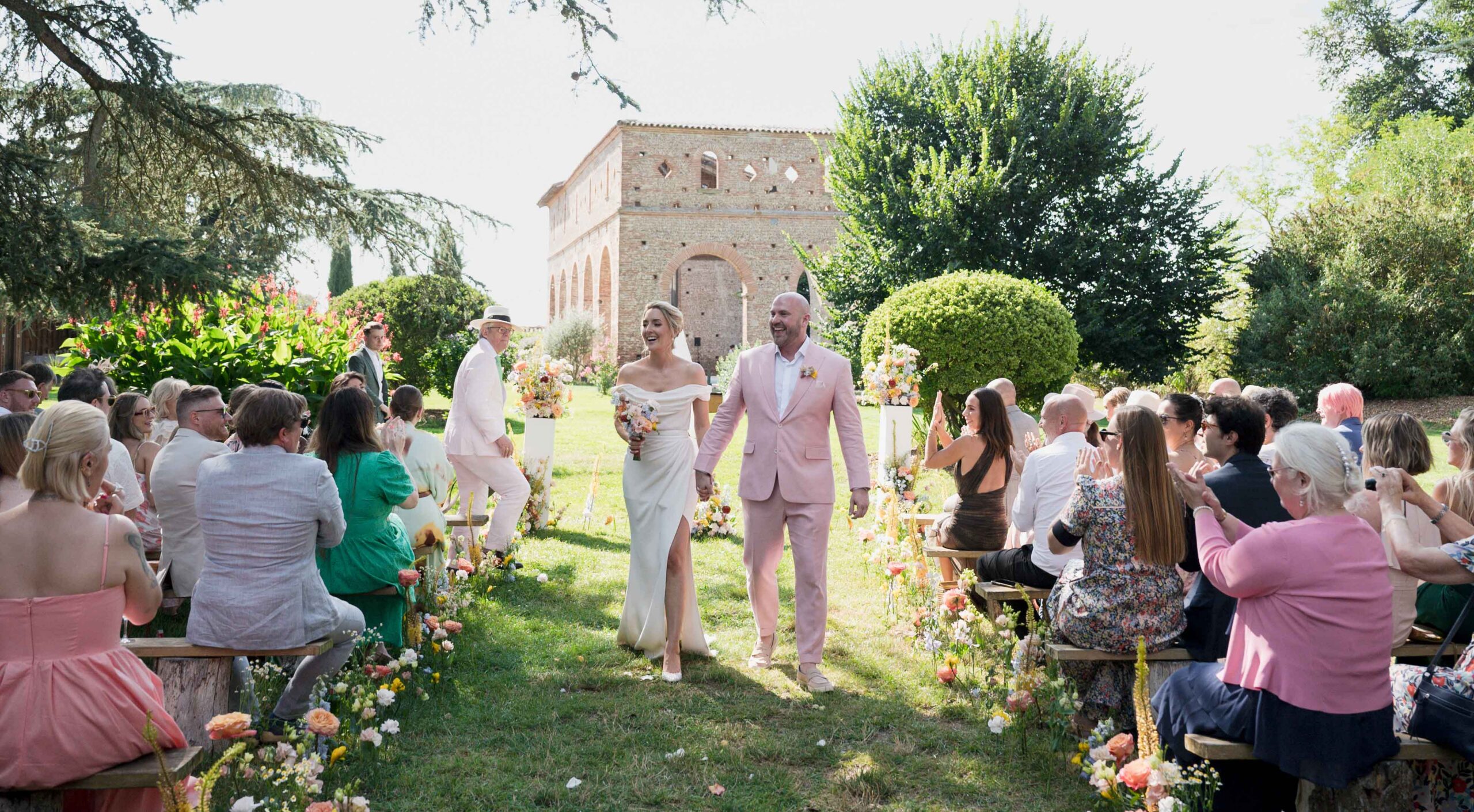
The final consideration is cultural fit. France and Italy project different energies, and the wedding you create in each country will feel different even with the same guest list and the same décor. Choose France if you want a structured, course-based dinner with regional wine pairings; a late-afternoon ceremony in a formal garden or courtyard; a vin d'honneur (extended champagne cocktail reception) that is a social event in its own right; a long evening that builds from dinner through dancing to a 3am to 5am close; a venue with established coordination and an English-speaking team; and the aesthetic of symmetry, stone, and formal gardens. Choose Italy if you want a more abundant, family-style dining experience with multiple courses served from shared platters; a ceremony at a licensed venue (avoiding a separate town hall visit); the warmth and informality of Italian hospitality; a visual landscape of terracotta, olive groves, and rolling hills; and the flexibility to build a wedding from scratch using independently sourced vendors.
Neither country is objectively better. The decision is about which cultural register resonates with how you want your wedding day to feel. Some couples visit both countries before deciding. Others know instinctively. If you are drawn to the idea of a long, late, wine-fuelled dinner in a stone-walled dining room with chandeliers and candlelight, France is your country. If you are drawn to the idea of dancing under a pergola with fairy lights while olive trees rustle in the warm night air, Italy may be the place.
For couples still exploring their options, our guides to destination wedding venues in France and destination wedding venues across Europe provide detailed venue-level comparisons.
Related Articles
- Destination comparison: the complete guide
- France vs Spain and Portugal
- Why France wins on food and wine
- The complete 6-country destination comparison
- France vs Italy vs Spain overview
- Why choose France for your wedding
- French wedding budget planning guide
- Guest travel logistics
- Civil ceremony in France
- Required documents for a French wedding
- Destination wedding venues in France
- Destination wedding venues in Europe
- Château wedding venues in France
- Vineyard wedding venues in France
- Browse all wedding venues in France
Frequently Asked Questions
Can we have a legally binding ceremony at the venue in France?
No. French law requires the civil ceremony to take place at the local mairie. Symbolic and religious ceremonies at the venue are not legally binding. Most international couples hold the civil ceremony at the mairie on the Thursday or Friday before the wedding, then have a symbolic ceremony at the venue on Saturday. In Italy, some venues are licensed for civil ceremonies, allowing the legal and personal ceremony to happen in the same location.
Is the food really different enough to be a deciding factor?
For many couples, yes. French wedding dining follows a structured progression: amuse-bouche, entrée, possibly a fish course, plat principal, fromage, dessert, each with a matched wine. Italian wedding dining is more abundant and less structured: antipasti, two or three primi, a secondo, dolce, and often a midnight buffet. The French approach is formal and paced. The Italian approach is generous and convivial. If the dinner experience is central to your vision, visit both countries and eat before you decide.
Which country is better for a winter wedding?
France offers stronger winter wedding infrastructure. Paris has year-round venue availability and indoor ceremony spaces. The Alps (Chamonix, Megève) offer mountain-wedding settings with ski-season charm. In Italy, winter weddings are concentrated in Rome, Florence, and Venice, with fewer options in the countryside where most summer weddings take place. Southern France (Provence, Riviera) has milder winters than central Italy (Tuscany, Umbria), making outdoor moments more feasible from November to March.
Explore Every Guide in This Chapter
Deep-dive into each topic covered above.