
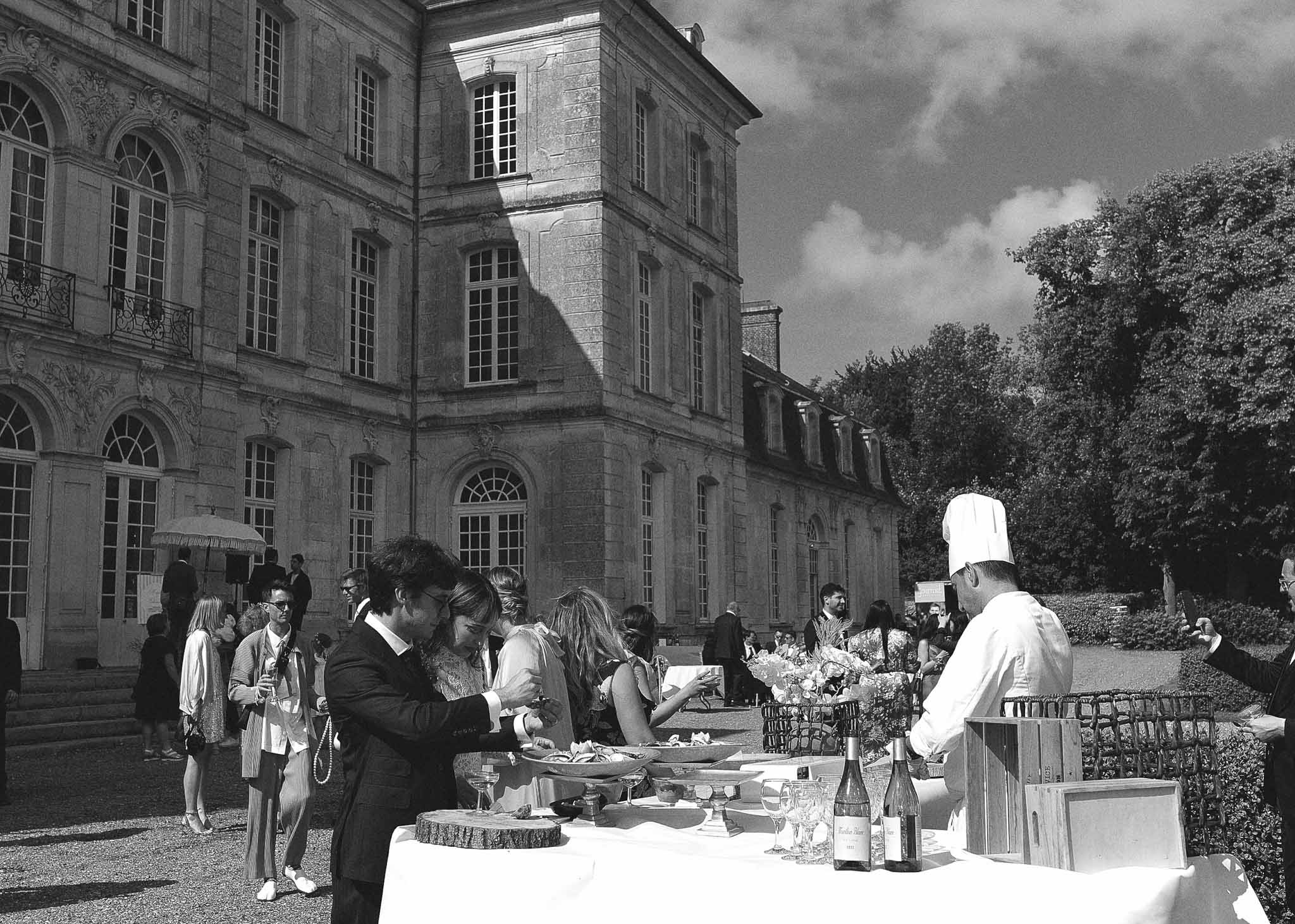
Food is the centrepiece of a French wedding. Not the venue, not the flowers, not the dress. The dinner. A five-to-seven-course progression served over four to five hours, with speeches woven between courses, wine matched to every dish, and a cheese course that arrives after the main and before dessert. At 2am, just when the dance floor thins, bowls of soupe a l'oignon refuel the room until dawn. For international couples, this is the single biggest cultural shift, and the element that defines the entire celebration. This chapter covers the full food and drink experience across five detailed guides. It is part of our complete guide to planning a wedding in France.
Why Food Defines a French Wedding
French couples budget differently from British or American ones. Where an Anglo wedding might allocate 40 percent to the venue and 15 percent to catering, a French wedding reverses the emphasis. Food, wine, and service represent 35 to 45 percent of the total budget. The venue provides the setting. The meal provides the experience.
The practical consequence for couples planning from abroad: catering decisions drive everything else. Your traiteur shapes the evening timeline (a five-course dinner requires a different schedule than a three-course one). Your wine reflects the region (Provence rosé with the entrée, a Bandol rouge with the lamb). Your printed menu at each place setting tells guests the arc of what is coming. And the dietary information you collect through your wedding website feeds directly to the kitchen.
How the Evening Unfolds Through Food
The food timeline at a French wedding runs from roughly 6pm to 3am. It opens with the apéritif dinatoire: 1.5 to 2 hours of champagne, cocktails, and 8 to 12 types of canapes served in the venue grounds during golden hour. Then the dining room opens. The plan de table directs guests to their seats. The printed menu awaits. The seated dinner begins.
Scroll →
| Phase | Time | Food | Wine |
|---|---|---|---|
| Apéritif dinatoire | 6:00pm to 7:30pm | 8 to 12 canapes, passed and stationed | Champagne, crémant, cocktails |
| Entrée | 8:30pm | Light starter: terrine, tartare, ceviche, velouté | White or rosé |
| Plat principal | 9:30pm | Regional main: lamb, duck, beef, or fish | Red (regional) |
| Fromage | 10:30pm | 3 to 5 regional cheeses with bread | Red or sweet white |
| Pièce montée | 11:30pm | Croquembouche, macaron tower, or centrepiece dessert | Champagne toast |
| Late-night food | 2:00am | Soupe à l'oignon, croque-monsieurs, or crêpe station | Bar continues |
After the pièce montée arrives with sparklers (typically between 11pm and midnight), dancing begins. Two to three hours later, the late-night food service refuels the room. By the time the last guests leave at dawn, they will have eaten across 8 to 10 hours, with each food moment serving a different purpose in the evening's rhythm.
What Catering Costs in France
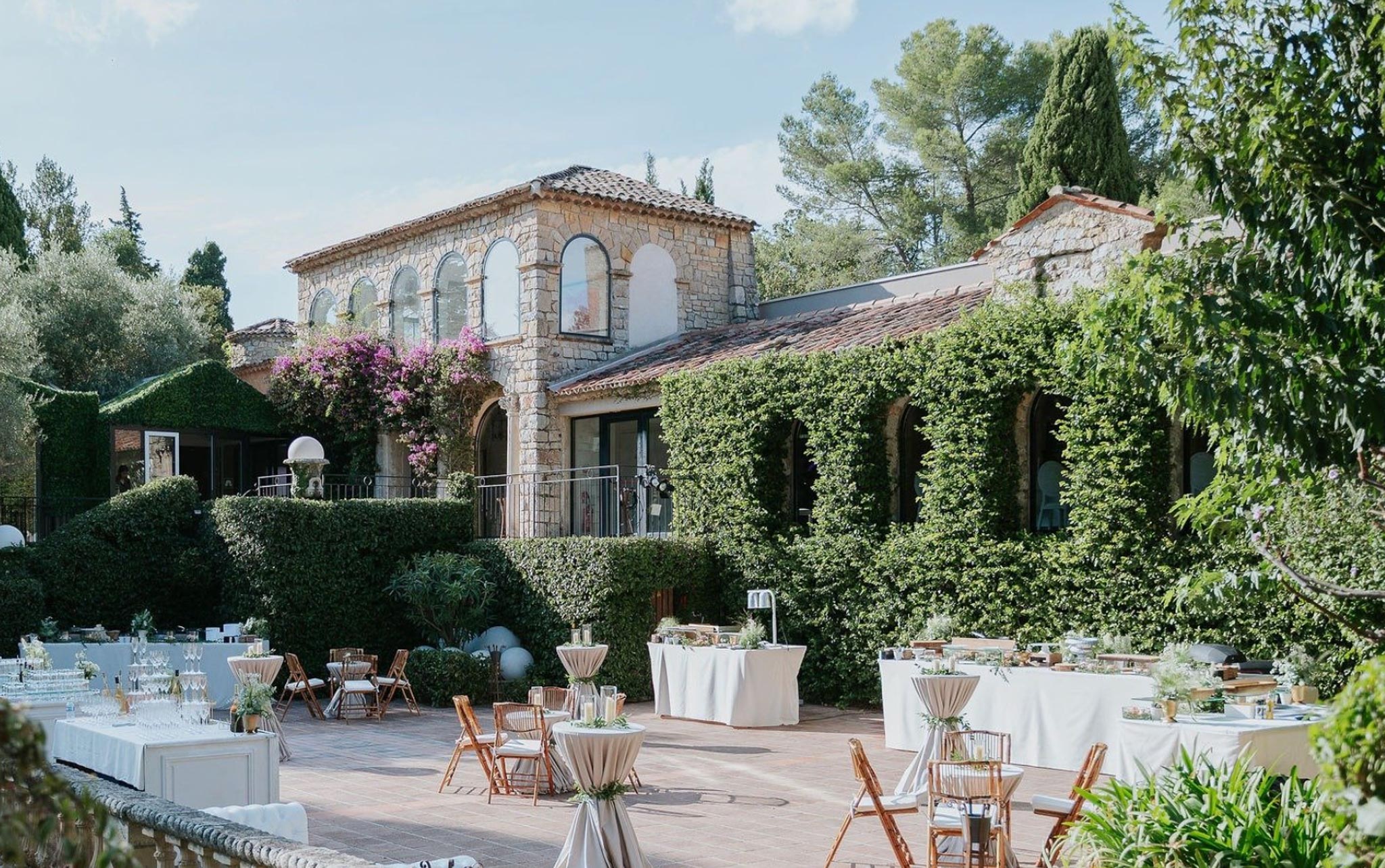
Wedding catering in France costs between €150 and €280 per head for food as of 2026. This covers the apéritif dinatoire, all seated courses, the pièce montée, and service staff. Drinks are quoted separately at €30 to €60 per head for a wine package, or sourced directly from local domaines at €5 to €15 per bottle (BYO).
| Cost element | Per head / Per unit | Notes |
|---|---|---|
| Food (all courses + service) | €150 to €280 per head | South-west cheapest, Riviera highest |
| Venue drinks package | €30 to €60 per head | Includes champagne apéritif + dinner wines |
| BYO wine (cave coopérative) | €5 to €15 per bottle | 74% of external-caterer venues charge zero corkage |
| Droit de bouchon (corkage) | €5 to €12 per bottle | Only at venues that charge it |
| Late-night food | €8 to €20 per head | Soupe à l'oignon at the low end, burger bars higher |
The BYO saving is where international couples gain the most. A couple sourcing wine from a local cave coopérative at €10 per bottle average, versus a venue package at €35 per bottle, saves €2,500 on 100 bottles. That saving often covers the entire floral budget.
“The biggest catering mistake I see from international couples is not doing a tasting before signing the contract. You are committing to the most important element of the evening based on a written menu and a conversation. Taste the food. Taste the wine pairing. Bring your planner so nothing is lost in translation. A two-hour tasting prevents six months of uncertainty.”
The Five Guides in This Chapter
Traditional French Wedding Menu: Course by Course
The cornerstone guide. Every course explained: what it is, when it arrives, and why it matters. The apéritif dinatoire and why it represents 20 to 25 percent of the food cost. Regional menu variations from Provence (Sisteron lamb, tarte Tropézienne) to Bordeaux (entrecôte bordelaise, canelés) to the Dordogne (duck, foie gras, walnut). Catering costs broken down by budget tier and region.
Le Trou Normand and French Wedding Dining Traditions
The traditions that carry cultural weight within the dinner. The trou normand: a sorbet spiked with calvados, served between courses to reset the palate. Why the cheese course comes before dessert, not after. Bread placed directly on the tablecloth. Wine poured by waitstaff, never more than half a glass. And why speeches woven between courses work better than a 45-minute block.
Wine Selection for a French Wedding
Region-first wine selection: Côtes de Provence rosé at a Luberon bastide, Saint-Émilion with the entrecôte at a Bordeaux château, Sancerre with pike-perch in the Loire Valley. BYO economics versus venue packages, droit de bouchon explained, and the quantity formula (0.5 to 0.75 bottles per person for dinner plus champagne for the apéritif and toast). Crémant as a respected alternative to champagne.
Dietary Requirements at French Wedding Venues
What most traiteurs handle comfortably (vegetarian, gluten-free, nut-free, lactose-free) and what requires specialist sourcing or an external caterer (fully vegan, kosher, halal). The difference between allergie and intolérance in French kitchen protocol, and how the word you use determines the response. How to collect requirements through your wedding website and compile them for your traiteur.
Late-Night Onion Soup and After-Party Food
Why soupe à l'oignon is the classic choice: hot, salty, cheap, and restorative. How the kitchen prepares it (base made the day before, gratinée assembled fresh at 2am). Modern alternatives from croque-monsieurs to crêpe stations to portable pizza ovens. Cost comparison from €8 to €20 per head. Particularly important at no-curfew venues where the party has no imposed endpoint.
The biggest catering mistake is signing a contract without tasting the menu. Book a tasting 4 to 6 months before the wedding. Taste every course, confirm dietary alternatives, and discuss the wine pairing in person. Bring your planner if language is a barrier. This single meeting resolves more questions than a dozen emails.
Related Chapters
- Planning a Destination Wedding in France: The Complete Guide (pillar page)
- Wedding Cost Guide: how catering costs sit within the overall budget
- Building Your Vendor Team: how to find, interview, and book a traiteur
- French Wedding Traditions: the vin d'honneur, the pièce montée ceremony, and the customs that shape the dinner
Frequently Asked Questions
How many courses are served at a traditional French wedding dinner?
Five to seven courses, served over four to five hours. The core structure is apéritif dinatoire (1.5 to 2 hours of canapes and champagne), entrée, plat principal, fromage, and pièce montée. Speeches fill the pauses between courses. The full menu guide walks through every course in detail.
How much does wedding catering cost in France?
Between €150 and €280 per head for food as of 2026. Drinks are quoted separately at €30 to €60 per head, or sourced BYO at €5 to €15 per bottle. The south-west and Languedoc offer the best value. The Riviera and Paris are the most expensive. Provence sits in the middle.
Can French caterers handle vegan, kosher, or halal requirements?
Most traiteurs accommodate vegetarian, gluten-free, and common allergy requirements with 3 to 4 weeks' notice. Vegan menus require a traiteur experienced with plant-based cuisine. Kosher and halal catering requires a certified specialist who brings their own equipment. The dietary requirements guide covers communication protocols.
What is droit de bouchon (corkage)?
The corkage fee per bottle when couples provide their own wine. Approximately 74 percent of venues that allow external caterers charge zero corkage. Those that do charge apply €5 to €12 per bottle opened. The wine guide covers the full economics of BYO versus venue packages.
Why do French weddings serve onion soup at 2am?
Because the party does not end at midnight. By 2am, guests who have been dancing for hours need fuel. Soupe à l'oignon is hot, salty, and restorative. It refuels the dance floor and extends the party by two to three hours. Approximately 70 percent of French weddings include some form of late-night food.
A French wedding dinner is not a meal interrupted by a party. It is a party structured around a meal. The apéritif sets the tempo. The cheese course loosens the formality. The pièce montée brings the room to its feet. And the 2am onion soup brings them back to the dance floor for the hours that couples describe as the best of the night. Browse wedding venues in the south of France for properties in the country's richest gastronomic regions, explore vineyard venues where the wine is grown on the estate, or continue to the next chapter: wedding flowers.
Explore Every Guide in This Chapter
Deep-dive into each topic covered above.