
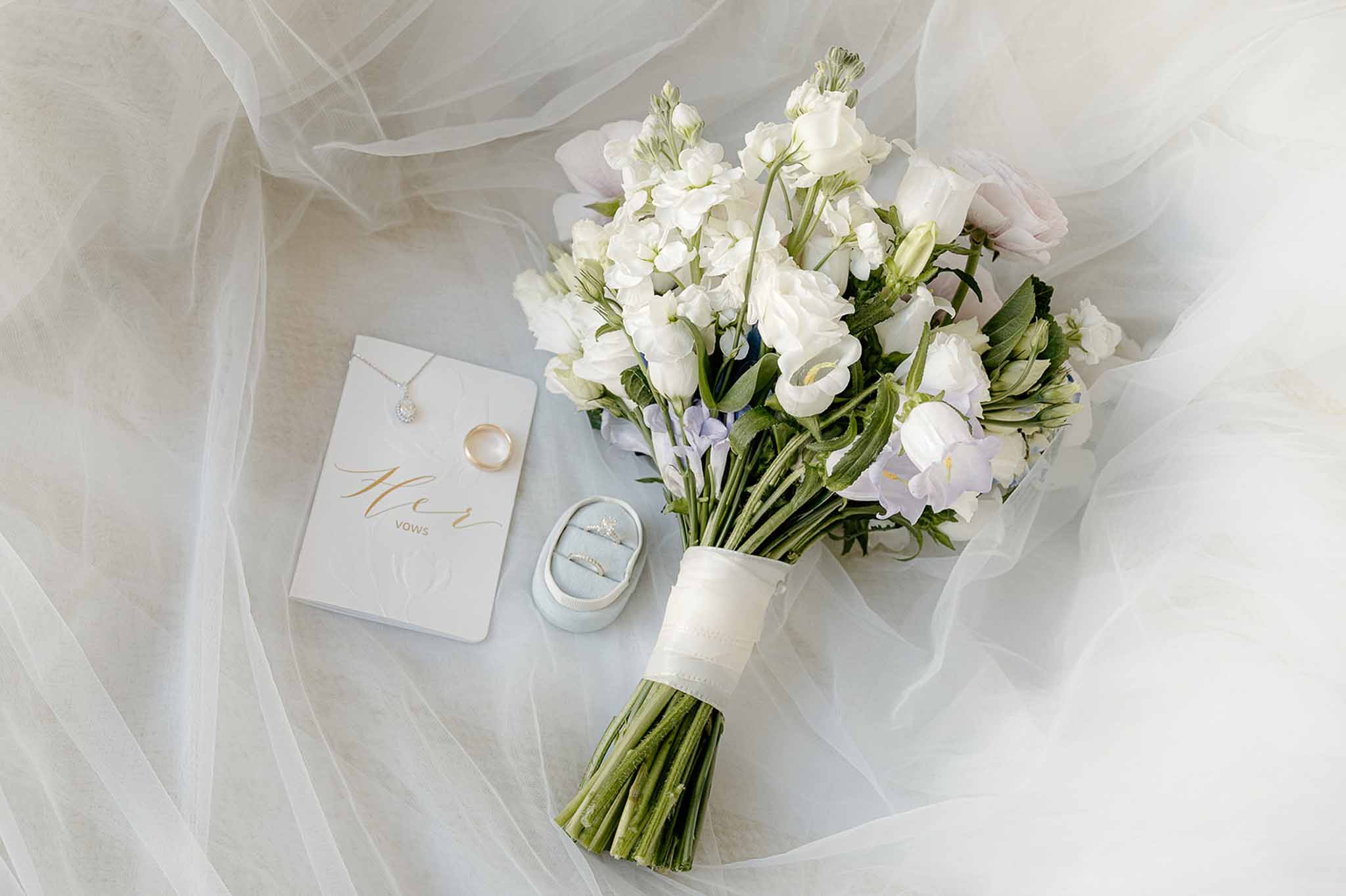
Working with French Florists
Flowers are one of the most visible parts of any wedding in France, and one of the most misunderstood in terms of what they actually cost. The number on a florist's initial proposal covers the blooms themselves. It does not cover the labour to install them, the equipment to suspend them, or the team that returns at midnight to break it all down.
Across the destination weddings featured on French Wedding Style, the gap between the flower budget couples expect and the final floristry invoice is consistently 30 to 50% wider than planned. What wedding flowers genuinely cost in France, what drives that cost beyond the stems, and how to work with a French florist so the final invoice holds no surprises. For a broader view of vendor budgets, see our complete guide to building your French wedding vendor team. For a broader view of every step involved, see planning your destination wedding in France from start to finish.
Key Takeaways
- Wedding flowers in France start at approximately €4,000 for restrained table arrangements and bouquets, reach €8,000 for a full ceremony and reception scheme with some structural elements, and exceed €15,000 for large-scale installations at premium venues.
- Installation labour, breakdown, scaffolding, and equipment hire add 30 to 50% on top of the flower cost itself. A €10,000 floral design becomes €13,000 to €15,000 once installation is included.
- Peonies are available in France from May to June only. Lavender peaks late June to early July. Garden roses run June to September. Planning your palette around what grows locally in your wedding month saves money and improves quality.
- August temperatures in southern France regularly hit 38°C. Delicate blooms wilt within hours unless the florist plans active heat management: late setup, water sources, and shade positioning.
How Much Do Wedding Flowers Cost in France?
Floristry pricing in France falls into three broad tiers, and which tier applies depends on the scope of the design rather than the prestige of the florist. Entry-level budgets start at approximately €4,000 and cover a bridal bouquet, four to six bridesmaids' bouquets, buttonholes, and simple table arrangements across 10 to 15 tables. There is no ceremony arch, no hanging installation, and no dramatic statement piece. The arrangements are well made and often locally sourced, but the design scope stays contained. Mid-range budgets of approximately €8,000 add a ceremony backdrop (arch, asymmetric arrangement, or altar flowers), more layered table designs with mixed vessels and foliage runners, and potentially one feature installation such as a flower wall panel or staircase garland. This is the range where most destination couples in France land when they want a cohesive floral look across both ceremony and reception without going fully architectural.
These numbers reflect Provence market pricing as of 2026. Paris florists work 10 to 20% above these ranges. Rural areas in Normandy, Brittany, and the Dordogne may sit 10 to 15% below. The florist's quote should always specify whether it is TTC (toutes taxes comprises, including the 20% TVA on goods) or HT (hors taxes, excluding VAT), because flowers are classified as goods and carry the full 20% rate. A quote of €10,000 HT becomes €12,000 TTC. For a full breakdown of vendor pricing and hidden costs that catch international couples, see our dedicated guide.
What Should You Know About Installation Costs Beyond the Flowers Themselves?
The defining consistent surprise in wedding floristry is the gap between the cost of the flowers and the cost of putting them in place. A hanging installation above a 12-metre dining table requires scaffolding, a rigging team, several hours of on-site construction, and a return visit after midnight to dismantle everything safely. That labour and equipment is not decorative. It is structural, and it adds 30 to 50% on top of the flower cost for the same installation. Here is how the costs break down for a mid-to-premium floral scheme: A couple who sees a €10,000 flower quote and assumes it covers everything will receive an invoice of €13,000 to €15,000 once installation is complete. The way to avoid this is direct: ask the florist at the proposal stage whether the quote includes installation, breakdown, transport, and equipment hire, or whether those appear as separate line items. Both approaches are legitimate. The problem is not the cost. The problem is not knowing about it until the invoice arrives.
| Cost Component | What It Covers | Typical Addition |
|---|---|---|
| Flowers and foliage | The stems, greenery, and dried elements | Base quote |
| Installation labour | On-site team (2 to 6 people), setup time (4 to 10 hours) | 15 to 25% of base |
| Breakdown and removal | Post-event dismantling, cleaning, waste removal | 5 to 10% of base |
| Equipment and hire | Scaffolding, rigging hardware, vases, vessels, arches | 5 to 15% of base |
| Transport | Refrigerated van, multiple trips, rural access logistics | €300 to €800 |
| Accommodation (if required) | Florist stays overnight for multi-day setup at remote venues | €150 to €300 |
How Does Seasonality Affect Flower Choice in France?
France grows exceptional flowers, but each variety has a narrow window. International couples who build their mood boards from Pinterest without checking French growing seasons end up either paying import premiums or redesigning the palette three months before the wedding. The key seasonal windows for the most requested wedding flowers in France: A good French florist will steer you toward what grows locally in your wedding month. That is not a compromise. It is better design. Locally sourced, in-season flowers arrive fresher, last longer in heat, cost less per stem, and create a palette that looks like it belongs in the landscape rather than imported from a Dutch wholesale market. Couples planning a June wedding in Provence with a soft pink and white palette have garden roses, peonies (early June only), lisianthus, and jasmine to work with. All local. All in season. All available without import surcharges.
| Flower | French Season | Notes |
|---|---|---|
| Peonies | May to June | The critical requested wedding flower. Available for roughly six weeks. July and August weddings cannot source French peonies at any price. |
| Lavender | Late June to early July | Peaks for two to three weeks. Cut lavender wilts quickly in heat. Works best in Provence, Occitanie, and the Drôme. |
| Garden roses | June to September | The most versatile option for summer weddings. French-grown garden roses hold well in heat and offer colour range from cream through deep burgundy. |
| Dahlias | August to October | Peak availability when peonies are gone. Rich colour palette suits autumn palettes. |
| Ranunculus | March to May | Spring-only. Ideal for April and May weddings. Wilts in summer heat. |
| Olive branches | Year-round | Locally abundant in Provence and the south. Cost-effective foliage base for any season. |
| Dried flowers and grasses | Year-round | Increasingly popular for boho and rustic schemes. No freshness concerns. |
Should You Choose a Local Florist or a Destination Designer?
This is a genuine decision, not a foregone conclusion, and the right answer depends on what matters most to the couple. A local florist based within an hour of the venue knows the regional flower markets, has standing relationships with local growers, understands what survives in that specific microclimate, and has worked with the venue before. They know which walls can support garlands, which archways are load-bearing, and where the afternoon sun hits hardest. They do not charge travel or accommodation. Their pricing reflects the local market. For couples who want well-designed, regionally appropriate flowers designed by someone who knows the landscape, a local florist is the stronger choice in most cases. A destination floral designer brings a signature aesthetic, often developed through top-tier editorial and premium events in multiple countries. They may specialize in large-scale architectural installations, trend-forward colour work, or a particular design philosophy that the couple has followed on social media.
The trade-off is real: travel costs (flights, accommodation, shipping for non-local materials), higher per-stem pricing to cover studio overheads, and less familiarity with the venue and the local growing season. For couples whose floral design is the centrepiece of their creative vision and who have a budget that absorbs the premium, a destination designer delivers something a regional florist may not attempt.
The middle option works well and is more common than either extreme: book a local florist who has worked destination weddings before, share your design references in detail, and give them creative freedom to interpret the vision using what grows in their region. Many of the most striking floral schemes on French Wedding Style were created by florists based within 30 minutes of the venue, working with flowers they picked up at the Marseille or Avignon flower markets that morning.
What Every Couple Wishes They Had Known About French Wedding Florals
August heat kills flowers. Temperatures across Provence, Occitanie, and the Riviera regularly reach 35 to 38°C, and delicate blooms that look fresh in a British summer at 22°C will wilt within two hours in direct southern French sun. Any florist working a July or August wedding must plan for heat management: late setup, water sources for table arrangements, shade positioning, and heat-tolerant varieties. If your florist does not raise heat as a topic in the initial consultation, raise it yourself. Pinterest mood boards lie about seasonality. A board full of peonies, lily of the valley, and ranunculus is a spring-only palette. Presenting it for an August wedding forces the florist to import at premium cost or substitute with visually similar but different flowers. Start every mood board conversation with one question: "What grows locally in our wedding month?" Then build the palette from the answer.
Lead times are longer than couples expect. The best French wedding florists in Provence, the Riviera, and the Loire Valley book 12 to 18 months in advance for peak season dates. Start the florist search as soon as you have a confirmed venue and date. For couples choosing between different French venue types, the floral approach shifts depending on whether the property is an open-air domaine, a formal château, or a converted barn.
Flowers are goods, not services, under French tax law. The TVA rate is 20%, not the 10% rate that applies to photography or planning. A florist who quotes HT is excluding a fifth of the final cost. Always confirm: "Ce devis est TTC ou HT?" For more on how French vendor contracts and deposits work across all vendor categories, see our dedicated guide.
Related Articles
- Building your French wedding vendor team: the complete guide
- Planner vs coordinator vs day-of manager in France
- French vendor contracts, deposits, and VAT explained
- Hidden costs of a destination wedding in France
- How French venue pricing works
Frequently Asked Questions
How far in advance should I book a wedding florist in France?
Book 12 to 18 months in advance for peak season (June to September) weddings in popular regions like Provence, the Côte d'Azur, and the Loire Valley. In quieter regions and shoulder season months, six to nine months is typically sufficient. The initial consultation should happen before you finalize your colour palette, because a good florist will shape the palette around what grows locally in your wedding month.
Can I bring my own flowers to a French wedding venue?
Most French venues have no restriction on which florist you use. Unlike catering, where some venues require an approved traiteur, floristry is almost always the couple's free choice. However, check whether the venue has rules about attaching arrangements to walls, using candles near foliage, or leaving petal residue on stone floors. Some historic properties restrict adhesives, nails, and open flames near protected surfaces.
What is the cheapest month for wedding flowers in France?
September and October offer strong value because dahlias, chrysanthemums, and late-season roses are abundant locally. The import premium that applies to out-of-season requests in winter (December through February) does not exist when French gardens and growers are producing at full capacity. Avoid February and early March, when local supply is lowest and everything must come from greenhouse or Dutch wholesale channels.
Do French florists provide vases, vessels, and arches?
Many established French wedding florists own a rental inventory of vases, vessels, candleholders, and ceremony arch structures. These are either included in the design fee or charged as a separate rental line. Ask during the proposal stage. If the florist does not provide vessels, you will need to source them from a separate rental company (société de location), which adds a coordination step and delivery cost. Couples working with destination wedding venues across France should ask the venue coordinator whether they have preferred florist partnerships that include vessel rental.
What is the difference between a fleuriste and a décorateur floral?
In France, a fleuriste is a trained florist who primarily works with fresh flowers: bouquets, arrangements, and table compositions. A décorateur floral (or scénographe floral) is a floral designer who creates large-scale environmental installations, working with architecture, lighting, and structural elements alongside the flowers themselves. For weddings with a simple floral scheme (bouquets plus table centres), a fleuriste is the right choice. For weddings with hanging installations, full ceremony backdrops, and multi-zone venue decoration, a décorateur floral has the design and logistics capacity to manage the scope.
Request an itemised quote that includes installation, breakdown, transport, equipment hire, and VAT. The total installed cost is the only number that matters for your budget. Browse our directory of wedding florists across France to find designers who specialise in your venue's region and style.
Explore Every Guide in This Chapter
Deep-dive into each topic covered above.