
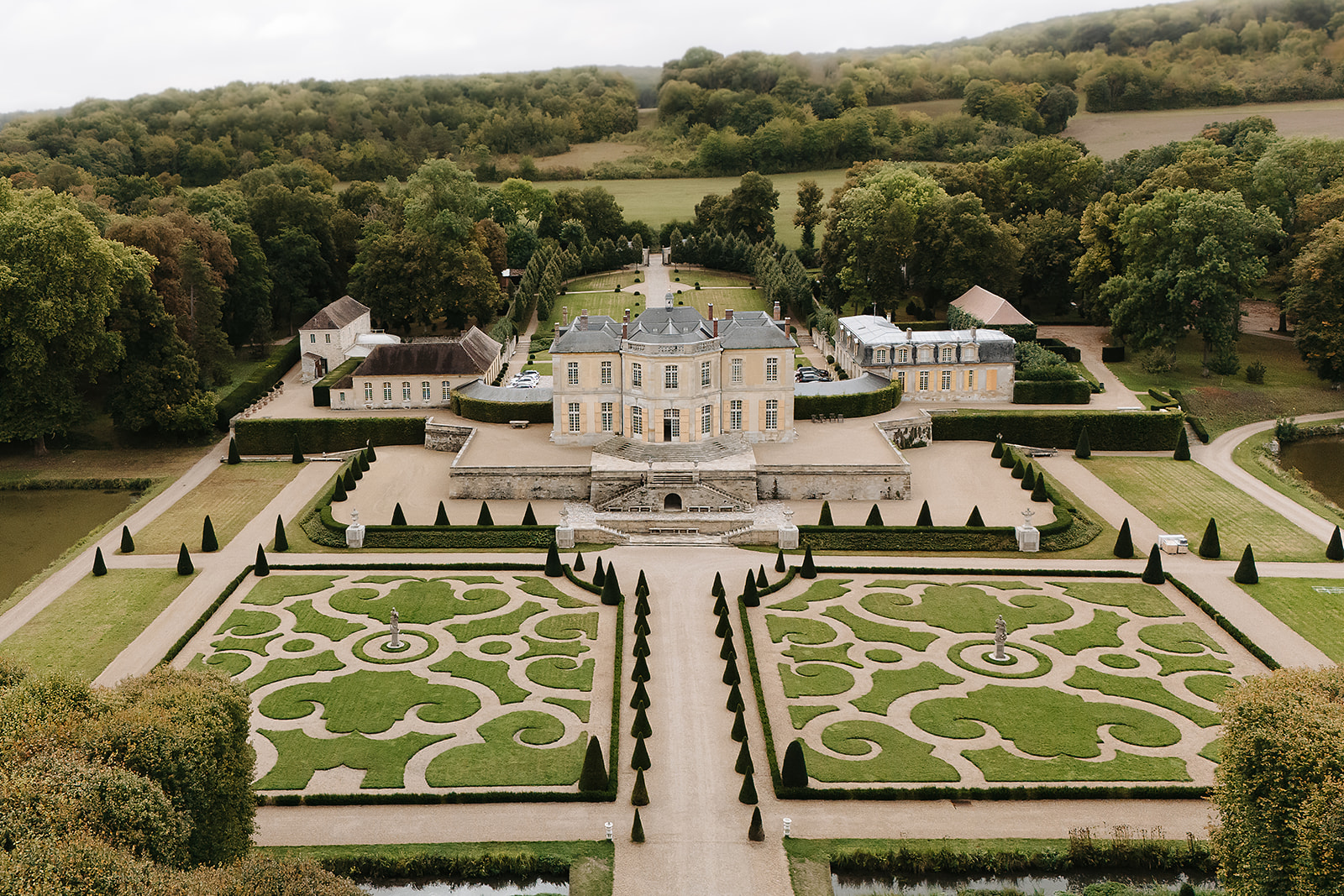
The venue determines more about your French wedding than any other single decision. It sets the catering model, the accommodation logistics, the ceremony setting, the noise curfew, and the budget ceiling. Across the 438 properties listed on French Wedding Style, the range spans from Provençal farmhouses sleeping 12 to Loire Valley châteaux with 60 rooms, from fully staffed hotels to dry-hire barns where you source every chair yourself. This chapter covers each dimension of that decision. It is part of our complete guide to planning a wedding in France.
The Six French Venue Types That Matter
French property terminology has no direct equivalent in the UK, US, or Australian market. A château is not a castle. A domaine is not a manor. A mas is not a bastide. Each word describes an architectural tradition with direct implications for your wedding: kitchen size, ceremony spaces, catering model, and atmosphere. Across the FWS venue collection, 54% of properties are châteaux, but that label covers enormous variation, from a fortified 12th-century property in the Dordogne to a neoclassical 18th-century country house in the Loire Valley.
Scroll →
| Venue Type | Typical Capacity | Site Fee Range (Weekend) | Best For |
|---|---|---|---|
| Château | 80 to 250 | €3,000 to €50,000+ | Grand celebrations, formal gardens, period architecture |
| Domaine | 60 to 200 | €4,000 to €15,000 | Vineyard settings, relaxed outdoor weddings |
| Mas | 40 to 100 | €3,000 to €12,000 | Intimate Provençal weddings, rustic character |
| Bastide | 60 to 150 | €5,000 to €18,000 | Provençal setting with more formal structure |
| Villa | 30 to 80 | €5,000 to €30,000 | Riviera intimacy, sea views |
| Hotel | 50 to 300 | €200 to €350/person | Convenience, large guest lists, winter weddings |
The venue type determines whether you source your own traiteur or eat from a set menu, whether you control the full weekend or work within fixed event hours. Start with the type that matches your priorities, not the one with the best photographs.
What to Ask Before Signing a French Venue Contract
Generic venue checklists miss the questions that matter in France. Commune noise regulations, the legal distinction between arrhes and acompte deposits, whether a quoted price includes TVA, how the traiteur model works: these are the details that prevent expensive surprises after signing.
- Catering model: 66% of FWS venues require couples to source their own traiteur, from an approved list (42%) or the open market (31%). Only 11% offer all-inclusive catering. This single question shapes more of your budget and planning than any other.
- Pricing clarity: Is the quoted price HT or TTC? French TVA adds 20% on goods and 10% on services. A €15,000 HT quote becomes €18,000 TTC.
- Exclusive-use hours: "Friday to Sunday" can mean Friday 14:00 to Sunday 10:00, or Friday 10:00 to Sunday 17:00. The difference is an entire day.
- Ceremony permissions: Only the civil ceremony at the mairie is legally binding. Confirm where symbolic ceremonies can take place on site.
- Accommodation terms: 25% of venues require mandatory room purchase alongside the site hire.
If the contract is in French only, invest in a traducteur assermenté for a certified translation before signing.
Planning a Venue Visit from Abroad
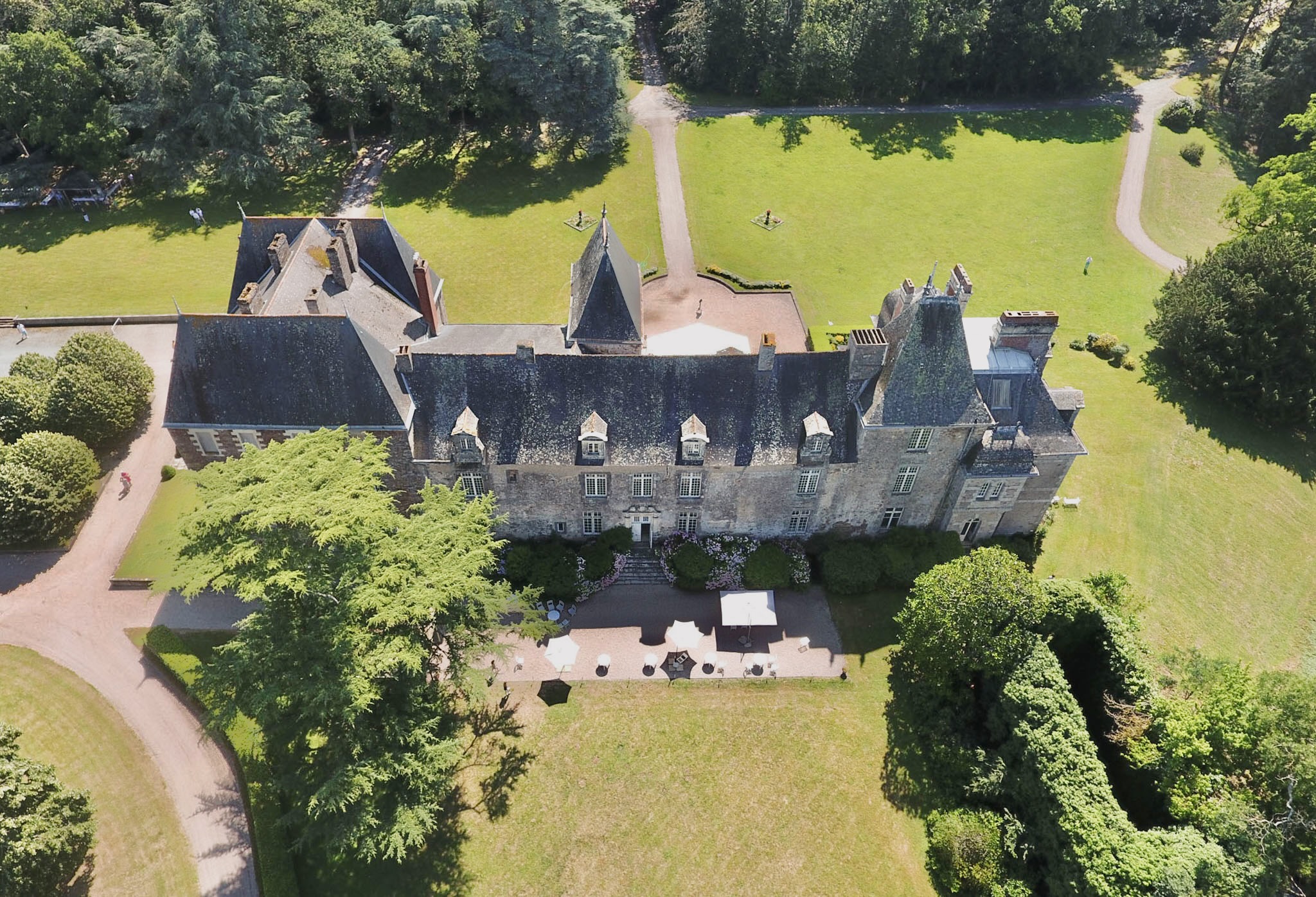
No photograph, virtual tour, or video call can reveal the noise from the road behind the reception terrace, the condition of the bathrooms, the true scale of a reception room with 80 chairs in it, or the state of the access road after rain. Four to six venues over three days is the realistic maximum for a productive trip.
Shortlist eight to ten properties through the FWS venue directory, then narrow to six based on email exchanges. Request the full rate card and contract template before visiting. Cluster visits by region to minimise driving.
On site, focus on what cameras hide: stand in the ceremony space and listen for road noise, walk the distance between ceremony and reception at guest pace, open the kitchen, check guest-accessible toilets, test water pressure in multiple bathrooms simultaneously. Ask about septic capacity, electrical supply (single-phase or three-phase), and commune event permits. The trip investment of €500 to €1,500 is negligible against a venue booking of €8,000 to €30,000.

“The biggest mistake I see is couples who shortlist venues entirely from photos and book without visiting. A venue can look ideal on screen and feel completely wrong in person. The sound carries differently, the distances between spaces are longer than they appear, and the kitchen that looked fine in a wide-angle photo cannot support a seated dinner for 100. Always visit before you sign.”
Exclusive-Use vs Shared Venues
Across the FWS collection, 72% of venues offer some form of exclusive use. But the term means something different at almost every property.
Scroll →
| Feature | Full Exclusive Use | Partial Privatisation (Hotel) | Day Hire |
|---|---|---|---|
| Event spaces | Reserved for your wedding | Reserved for your wedding | Reserved for your wedding |
| Accommodation | All rooms for your guests | Block reserved, others public | Not included |
| Pool and gardens | Private to your group | Shared with other guests | May not be accessible |
| Scheduling freedom | Full control, Friday to Sunday | Restricted to agreed times | Specific hours only |
| Other events | None permitted | Possible in separate areas | Likely |
| Pricing model | Weekend flat fee + per-person catering | Room block + event package | Hourly or half-day fee |
Exclusive use typically adds a 30 to 50% premium over shared or day-hire pricing. One detail that catches international couples: rural exclusive-use properties do not automatically have more relaxed noise rules. French noise regulations (arrêtés préfectoraux) are set by each commune. A rural commune with no event precedent may impose stricter curfews than a hotel in an established hospitality zone.
Self-Catering and Airbnb Venues
Every year, thousands of couples find a French property on Airbnb and begin imagining their wedding there. The nightly rate looks reasonable and the garden appears large enough for a marquee. What the listing does not mention: hosting a wedding requires explicit written permission from the owner, notification to the local commune, specialist event insurance, and infrastructure that most residential properties lack.
The apparent cost advantage closes rapidly. A Dordogne farmhouse at €3,000 to €6,000 for a week still needs a mobile kitchen (€1,500 to €3,000), generator (€800 to €2,000), portable toilets (€1,500 to €3,000), furniture hire (€2,000 to €5,000), and potentially a marquee (€3,000 to €8,000). Self-catering works well for intimate celebrations of 20 to 40 guests. For the farmhouse aesthetic with professional infrastructure already in place, many converted rustic venues on FWS started as exactly this kind of property.
Booking from photographs alone. A property can look ideal on screen and feel wrong in person. Sound carries differently, distances between spaces are longer than wide-angle shots suggest, and a kitchen that looks adequate in photos may lack the electrical capacity for professional catering equipment. Visit before you sign, or at minimum send a planner who knows what to check.
Why Guest Accommodation Shapes Everything
The median property on French Wedding Style sleeps 33 guests across 13 rooms. For a wedding of 80 or more, roughly half your guests need accommodation elsewhere. Where they sleep determines whether your celebration lasts one Saturday evening or a full weekend.
A guest staying on-site arrives Friday, joins the welcome dinner, swims Saturday afternoon, walks to the ceremony, dances until midnight, and sits down for Sunday brunch without needing a car or a taxi. A guest at a hotel 20 minutes away arrives by shuttle, leaves when the last shuttle departs, and misses everything before and after. The difference is not marginal.
Overflow options include gîtes (€80 to €150 per night), chambres d'hôtes (€100 to €200), and local hotels (€80 to €180). Book overflow accommodation at the same time as the venue. In Provence and the Dordogne, quality gîtes fill 9 to 12 months ahead. Rural France has scarce taxi availability, so shuttle transport is necessary: budget €500 to €1,200 for a minibus.
The Six Guides in This Chapter
Nine French Venue Types Compared
Château, domaine, mas, bastide, villa, manoir, hotel, abbaye, and salle des fêtes. What each term means architecturally, how it shapes your catering model and ceremony options, and a full comparison table.
50 Questions to Ask Your French Wedding Venue
Organised by theme: pricing, catering model, ceremony, accommodation, noise curfews, contracts, and logistics. Includes a French terms glossary covering frais de location, arrhes, acompte, droit de bouchon, and arrêtés préfectoraux.
How to Plan a Venue Visit Trip
What cameras hide, a 3-day trip plan for four to six visits, France-specific on-site checks, red flags, and scoring sheets.
Exclusive-Use vs Shared Venues
Full comparison across all three models, the 30 to 50% cost premium, and why rural properties sometimes face stricter curfews than hotels. Browse exclusive-use venues across France.
Airbnb and Self-Catering Venues
Legal requirements, infrastructure costs that close the price gap with dedicated venues, and where self-catering works well.
Guest Accommodation Guide
Why the number of beds shapes the entire weekend, overflow options and costs, who pays by cultural norm, and room standards at historic properties. Browse venues with on-site accommodation.
Explore Every Guide in This Chapter
Deep-dive into each topic covered above.