
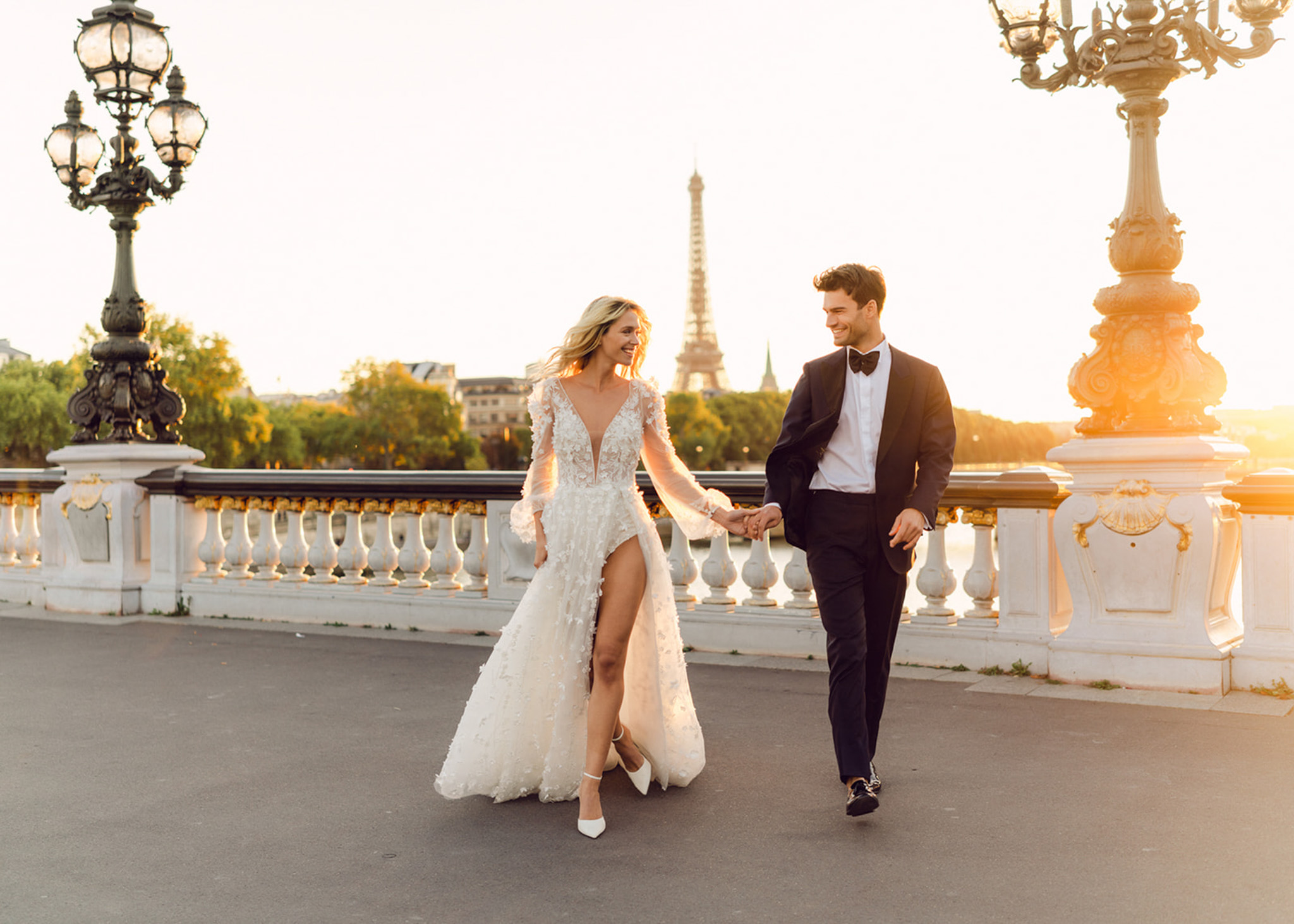
Dordogne & South-West France
The Dordogne is the region where the château wedding becomes genuinely accessible. More châteaux per square kilometre than almost anywhere else in France, a legacy of the Hundred Years' War, and pricing that runs 40 to 60% lower than comparable properties in Provence.
Add a bilingual vendor community shaped by decades of British expat life, direct UK flights into Bergerac, and one of the richest regional food cultures in the country, and you have a destination that delivers the full French wedding experience without the premium price. Everything you need to plan a Dordogne wedding as part of our guide to choosing your wedding region in France. For a broader view of every step involved, see the full planning guide for destination weddings in France.
Key Takeaways
The Dordogne offers the strongest value proposition for château weddings in France, with weekend hire from €3,000 to €12,000 versus €15,000 to €45,000 in Provence for comparable stone properties, and a mid-range 80-guest celebration costing €35,000 to €75,000 all-in as of 2026. A well-established English-speaking expat community around Bergerac, Eymet, and Issigeac has created a bilingual vendor ecosystem where contracts are routinely provided in English and site visits do not require a translator. Bergerac airport receives direct flights from seven UK cities, while Bordeaux and Toulouse airports provide broader European and transatlantic connections within 1 to 2 hours. Perigord cuisine built on duck, foie gras, black truffle, cepes, and Monbazillac wine gives wedding menus a regional identity that rivals any area in France. The region is not yet saturated by the international destination wedding circuit, keeping vendors less stretched and the pace of planning unhurried.
- The Dordogne offers the strongest value proposition for château weddings in France: weekend hire from €3,000 to €12,000 versus €15,000 to €45,000 in Provence for comparable stone properties.
- A well-established English-speaking expat community around Bergerac, Eymet, and Issigeac means bilingual contracts, English-language site visits, and vendors who work comfortably with international couples.
- Bergerac airport receives direct flights from multiple UK cities. Bordeaux and Toulouse airports provide broader European and transatlantic connections within 1 to 2 hours.
- Périgord cuisine, built on duck, foie gras, black truffle, cèpes, and Monbazillac wine, gives wedding menus a regional identity that rivals any area in France.
- The region is not yet saturated by the international destination wedding circuit. Vendors are less stretched, venues more available, and the pace of planning is noticeably unhurried.
What Makes the Dordogne Different from Other French Wedding Regions?
The Dordogne, known locally as the Périgord, stands apart from every other French wedding region for one structural reason: the concentration of privately rentable châteaux is unmatched. The Hundred Years' War between England and France (1337 to 1453) left this contested borderland with a density of fortified houses, manor homes, and stone châteaux that no other department rivals. Unlike the grand estates of the Loire Valley, which function as public monuments, or the renovated bastides of Provence, which command premium destination wedding rates, the Dordogne's châteaux are overwhelmingly in private hands.
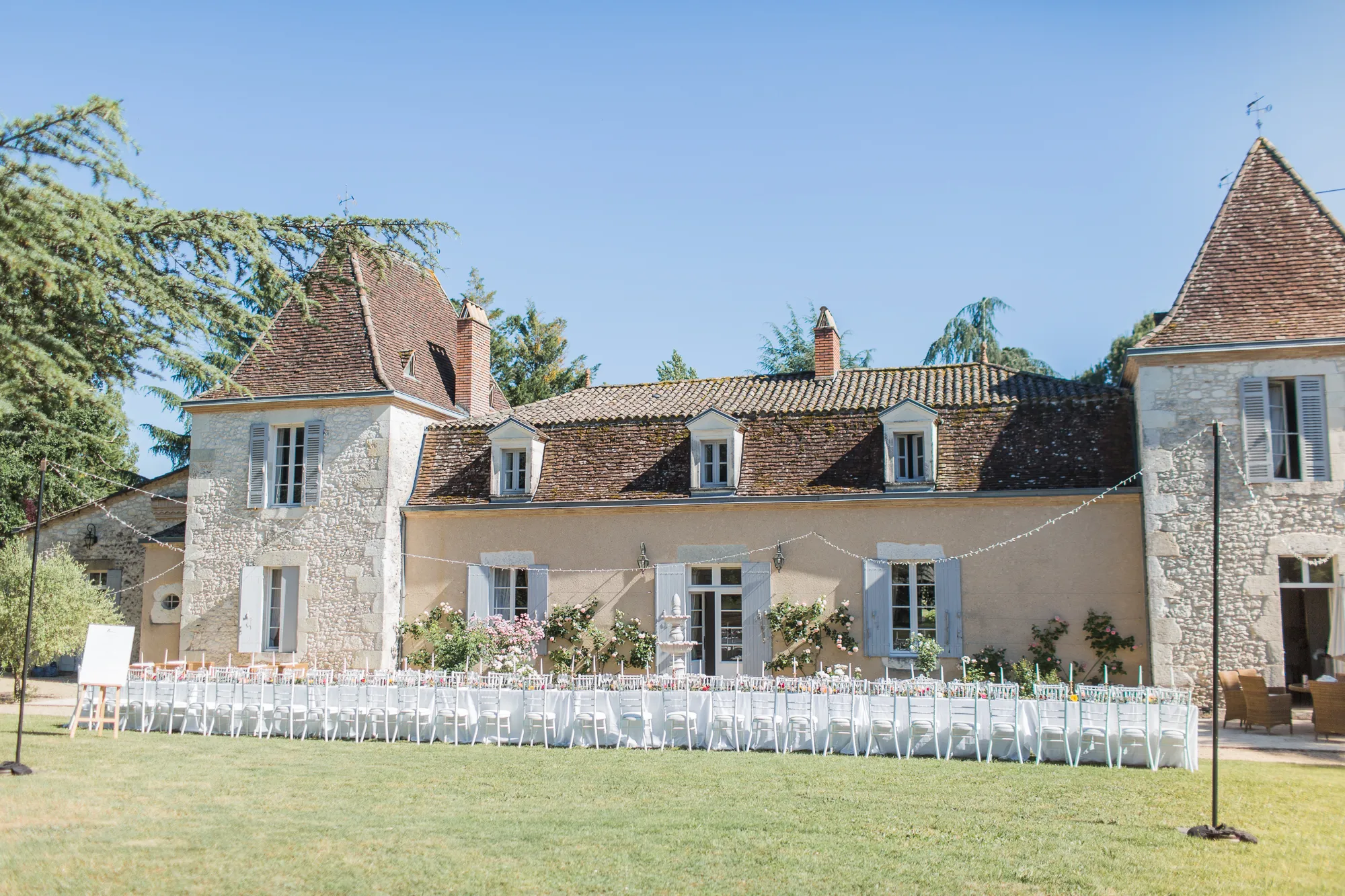
Many are available for full weekend hire at prices that would cover a single evening on the Côte d'Azur. As of 2026, couples can rent an entire château with accommodation for 30 to 50 guests, a great hall, gardens, and grounds for €3,000 to €12,000 for a full weekend. That same budget in Provence secures only the venue fee before catering, vendors, or accommodation enter the picture.
French Wedding Style lists 20 venues in the Dordogne, of which 70% are châteaux and every single one includes on-site guest accommodation. The pool rate across Dordogne properties is 95%, the highest of any region in the FWS collection.
The second distinction is pace. The Dordogne has not been discovered by the international destination wedding market in the way Provence and the Riviera have. Vendors are not managing back-to-back Saturday bookings through the summer. Venues respond to enquiries within days, not weeks. Site visits can be arranged at short notice. The overall quality of attention is higher because the demand-to-supply ratio has not yet tipped. For couples who want the château wedding experience without competing for calendar dates, the Dordogne is the most strategic choice in France right now.
How Much Does a Dordogne Wedding Cost Compared to Provence?
A mid-range destination wedding for 80 guests in the Dordogne costs €35,000 to €75,000 all-in as of 2026, compared to €80,000 to €130,000 for the same celebration in Provence. The gap reflects the concentration of international demand in Provence rather than any difference in venue quality. Weekend château hire runs €3,000 to €12,000, catering sits at €130 to €220 per head, and a full-service planner costs €4,000 to €8,000 in the Dordogne. The stone architecture is comparable to Provence, often older and frequently more private, with a vendor ecosystem that is smaller but highly competent and not yet inflated by years of competing international enquiries. The compound saving across every budget line is where the real difference appears: a couple spending €60,000 in the Dordogne achieves a celebration that would cost €120,000 or more in the Luberon for a comparable property and team, freeing significant budget for the food, the music, the flowers, and the multi-day guest experience.
| Cost Category | Dordogne (80 Guests) | Provence (80 Guests) |
|---|---|---|
| Venue fee (weekend) | €3,000 to €12,000 | €15,000 to €45,000 |
| Catering per head | €130 to €220 | €150 to €280 |
| Wedding planner (full) | €4,000 to €8,000 | €8,000 to €18,000 |
| Photographer (full day) | €2,000 to €4,500 | €3,000 to €10,000+ |
| Florist and styling | €1,500 to €4,000 | €4,000 to €15,000+ |
| Live band (5 to 8 pieces) | €3,000 to €6,000 | €6,000 to €12,000 |
| Realistic total (all-in) | €35,000 to €75,000 | €80,000 to €200,000+ |
The compound effect across every vendor category is where the real savings appear. A couple spending €60,000 in the Dordogne achieves a celebration that would cost €120,000 or more in the Luberon for a comparable property and team. That freed budget can go toward the elements guests actually remember: the food, the music, the flowers, and the multi-day experience. For detailed comparisons across all regions, see our guide to regional price differences across France.
Does the English-Speaking Community Make Planning Easier?
The Dordogne has been home to a significant British expat community for over 40 years, with an estimated 10,000 to 15,000 British residents in the department. The concentration is densest around Eymet, Issigeac, Bergerac, and the Périgord Pourpre (Purple Périgord), the wine-growing area south and west of Bergerac. This has created something unusual in rural France: a vendor ecosystem that operates comfortably in English without losing its French character. Emails are answered in English.
Contracts are routinely bilingual. Site visits do not require a translator. Caterers can explain a Périgord menu in detail to British or American families. The local wedding planners, many of them British residents who have lived in the region for a decade or more, understand both the French bureaucratic landscape and the expectations of English-speaking couples. Eymet's weekly market even operates bilingually, giving guests a taste of local life without a language barrier.
This practical bilingualism reduces planning friction significantly. In Provence, English-language service is available but often at a premium, because it is a selling point rather than a community norm. In the Dordogne, it is simply how business operates in areas with a high expat population. For UK couples in particular, the combination of familiar language, direct flights, and cultural comfort makes the Dordogne the easiest region in France to plan a wedding from abroad. To find experienced local support, browse recommended wedding planners in France.
How Do Guests Reach the Dordogne?
Guest logistics are one of the most common concerns for couples considering the Dordogne, and the answer is more straightforward than most expect. Three airports serve the region effectively: Bergerac (EGC) with direct seasonal UK flights from seven British cities, Bordeaux (BOD) with broad European and seasonal transatlantic connections, and Toulouse (TLS) for the southern Dordogne.
Bergerac airport is the primary gateway for British guests, sitting just 30 to 60 minutes from most Dordogne venues, with flights of 1.5 to 2 hours from the UK. Bordeaux, approximately one hour south-west of the central Dordogne, provides the broadest international connectivity and a TGV link to Paris in just over two hours. The choice depends on where your guests are travelling from, but the combination of three airports within a 1 to 2 hour radius gives the Dordogne more routing flexibility than many couples realise.
Bergerac (EGC) is the primary gateway for British guests. Direct flights operate from London Stansted, London Gatwick, Southampton, Birmingham, Bristol, Edinburgh, and Manchester on a seasonal schedule (typically April to October). Flight time is 1.5 to 2 hours. The airport is small and uncrowded. Most Dordogne venues sit within 30 to 60 minutes by car. For a summer wedding with a predominantly UK guest list, Bergerac is the most convenient airport in France outside Paris.
Bordeaux (BOD) is the main international hub, approximately 1 hour south-west of the central Dordogne. It receives direct flights from across Europe and seasonal transatlantic routes from New York and Montreal. The TGV connects Bordeaux to Paris in approximately 2 hours. For couples with guests arriving from multiple countries, Bordeaux provides the broadest connectivity. The city itself makes a strong pre-wedding or post-wedding destination, with world-class restaurants, wine bars, and the Cité du Vin museum. Read more about Bordeaux and wine country weddings.
Toulouse (TLS) sits approximately 2 hours south and handles significant international traffic including transatlantic routes. It is most useful for weddings in the southern Dordogne or Lot-et-Garonne. Brive (BVE) receives seasonal Ryanair service from London Stansted and is convenient for venues in the north-eastern Périgord Noir area.
What Defines Périgord Food Culture at a Wedding?
The Périgord has one of the strongest regional food identities in France, and this directly shapes the wedding menu in ways that set a Dordogne celebration apart. The cuisine is built on duck in every form, foie gras, black truffle (harvested from November to March in the Périgord Noir), cèpe mushrooms (September and October), walnuts, and walnut oil. A traiteur is a French caterer who sources and prepares the full wedding menu.
In the Périgord, a traiteur draws on these ingredients as the foundation of every celebration, not as event-only additions but as standard regional cooking. Foie gras mi-cuit, a semi-cooked preparation that preserves the silky texture of the liver, is served at nearly every Dordogne wedding apéritif, typically on walnut bread with a glass of Monbazillac. Based on French Wedding Style's experience with Dordogne weddings, the food consistently ranks as the element guests remember most vividly.
A typical Périgord wedding menu follows a generous progression. The apéritif features duck rillettes, foie gras mi-cuit on walnut bread, and vin de noix (walnut wine). The starter is a salade Périgourdine with warm duck, foie gras, and walnuts.
The main course centres on duck confit or magret with pommes sarladaises (potatoes cooked in duck fat with garlic and parsley) and seasonal cèpes when available. Dessert offers walnut tart, black cherry clafoutis, or strawberry fraisier depending on the season. The wine pairing leans on Monbazillac, a sweet golden wine from vineyards just south of Bergerac, traditionally served with foie gras. Pécharmant, the prestige red of the area, accompanies the main course.
One practical consideration: Périgord cuisine is genuinely rich. Duck fat, foie gras, and walnut oil feature in nearly every course. Discuss balance with your caterer and consider incorporating lighter elements, particularly during summer weddings. The foie gras question is also worth addressing proactively with international guests. Include a brief note on your wedding website explaining the regional tradition, and ensure your caterer offers an alternative for guests who prefer not to eat it. For broader guidance on all-inclusive vs dry-hire venues in France, the Dordogne is predominantly dry-hire territory where you choose your own traiteur.
Which Areas of the Dordogne Are Best for Weddings?
The Dordogne department divides into four traditional areas, each named after a colour that reflects its dominant landscape: Noir (black oak and walnut forests), Pourpre (purple autumn vines), Blanc (white limestone plateaux), and Vert (green northern forests). Each offers a distinct character, venue stock, and price range. The Périgord Noir around Sarlat-la-Canéda is the most famous, with medieval villages, river valleys, and the highest concentration of tourist infrastructure.
The Périgord Pourpre south of Bergerac is the most practical for bilingual planning, sitting closest to Bergerac airport and the English-speaking expat community. The Blanc around Périgueux and the Vert in the north offer the best value and the most seclusion. Understanding these four areas helps narrow your venue search to the landscape and atmosphere that best fits your celebration, and avoids the common mistake of treating the Dordogne as one homogeneous market.
Périgord Noir (Black Périgord) is the most famous area, centred on Sarlat-la-Canéda. Dense oak and walnut forests give this zone its name. The Vézère and Dordogne rivers carve through limestone valleys studded with medieval villages, prehistoric caves, and clifftop châteaux. This is the postcard Dordogne: honey-coloured stone, troglodyte architecture, and a landscape that has drawn visitors since the Lascaux caves were discovered in 1940. Wedding venues here tend toward the higher end of Dordogne pricing but remain far below Provence equivalents. Guest activities abound: canoe trips on the river, cave visits, and the Saturday market in Sarlat.
Périgord Pourpre (Purple Périgord) is the wine-growing area south and west of Bergerac, named for the colour of the vines in autumn. This is where the English-speaking expat community is strongest, making it the most practical area for bilingual planning. Proximity to Bergerac airport is a further advantage. The landscape is gentler and more open than the Noir, with rolling vineyards and sunflower fields. Venue pricing here sits at the lower end of the Dordogne range. Towns like Eymet and Issigeac offer charming village squares for rehearsal dinners or post-wedding brunches.
Périgord Blanc (White Périgord) surrounds the departmental capital of Périgueux. Named for the white limestone plateaux, this central area is quieter in the wedding market and offers strong value. Périgueux itself has a remarkable Roman and medieval heritage, including a cathedral modelled on Saint Mark's in Venice. Venues here are less discovered and often more affordable.
Périgord Vert (Green Périgord) covers the north of the department, with dense forests, river valleys, and a distinctly rural character. The most remote and least touristic area, it appeals to couples who want seclusion and privacy above all else. The trade-off is a thinner vendor network and longer drive times from Bergerac or Bordeaux airports. Explore all available properties through our listing of rustic château and farmhouse wedding venues in France.
What Dordogne First-Timers Consistently Misunderstand
Lower prices do not mean a lesser experience. The châteaux in the Dordogne are not budget alternatives to Provence. Many are older, with medieval and Renaissance architecture that predates the Provençal mas by centuries.
The Dordogne contains over 1,500 châteaux and manor houses, more per square kilometre than almost any other department in France, a legacy of the Hundred Years' War when both English and French lords fortified the contested borderland between 1337 and 1453. The stone is different (golden limestone rather than pale ochre), the landscape is different (river valleys and forests rather than lavender and garrigue), but the quality of the architecture and the character of the properties are at least equal. Couples who visit after seeing only Provence are consistently surprised by the scale and beauty of Dordogne properties at a fraction of the price.
The multi-day potential goes underused. The Dordogne is one of the best regions in France for a wedding weekend rather than a single-day event. Rent an entire château, install your guests in the on-site accommodation, and build a programme around the landscape: long lunches under walnut trees, canoe trips on the Dordogne river, visits to the prehistoric caves at Font-de-Gaume or Lascaux IV, wine tasting at a Monbazillac domaine. The unhurried quality of the region, where vendors are not rushing between back-to-back bookings, supports this pace perfectly.
American couples in particular misjudge the accessibility. They often discover the Dordogne through food writing or prehistoric archaeology rather than the wedding market and assume the area is remote. In practice, Bordeaux airport is 1 hour away with direct European and seasonal transatlantic connections, and the TGV puts Paris 3 hours from central Dordogne venues. The region is not remote. It is simply quieter than its reputation deserves.
Neighbouring departments share the same character at even lower prices. The Lot to the south, Lot-et-Garonne to the south-west, and Corrèze to the north-east all offer similar stone architecture and countryside at prices 10 to 30% below the Dordogne proper. A good wedding planner based in the south-west will show you properties across departmental borders. For broader regional context, consider the Loire Valley for destination weddings or compare the approach of getting married in Provence.
Related Articles
These four guides connect directly to the Dordogne planning decisions covered above. The regional price comparison maps venue fees and vendor costs across all nine major French wedding areas, confirming the 40 to 60% saving the Dordogne offers over Provence for comparable properties. The Bordeaux guide covers the neighbouring wine country region that pairs naturally with the Dordogne for multi-day wedding programmes. The all-inclusive versus dry-hire comparison is particularly relevant for the Dordogne, which is predominantly dry-hire territory where couples choose their own traiteur. The budget wedding guide shows how the Dordogne's pricing makes a well-planned celebration under €20,000 achievable with a small guest list and an all-inclusive venue.
- Regional price differences across France: where your euro goes furthest
- Bordeaux and wine country: a wedding planning guide
- All-inclusive vs dry-hire venues in France
- Planning a wedding in France on a budget
Frequently Asked Questions
How much does a wedding in the Dordogne cost?
A mid-range destination wedding for 80 guests in the Dordogne costs €35,000 to €75,000 all-in as of 2026. Weekend château hire runs €3,000 to €12,000, catering €130 to €220 per head, and a full-service wedding planner €4,000 to €8,000. This represents 40 to 60% less than a comparable celebration in Provence.
What is the best time of year for a Dordogne wedding?
June to September is peak season with reliable warmth, long evenings, and full vendor availability. July and August bring the highest temperatures (30 to 35°C) and the busiest tourist season. Late May and early October offer pleasant weather and lower prices, though evenings can be cool enough to require indoor backup plans. September is increasingly popular for Dordogne weddings because the tourist crowds thin out, prices drop 10 to 15%, and the light turns golden over the river valleys.
Can my guests fly directly to the Dordogne from the UK?
Bergerac airport receives direct seasonal flights from London Stansted, London Gatwick, Southampton, Birmingham, Bristol, Edinburgh, and Manchester between April and October. Flight time is 1.5 to 2 hours. Most Dordogne venues are 30 to 60 minutes from the airport by car.
Do I need a French-speaking wedding planner in the Dordogne?
Having a planner who speaks both French and English is important for communicating with local mairies, some caterers, and municipal contacts. The Dordogne's expat community means many planners are native English speakers who have lived in France for years. They handle French administration fluently while communicating with you entirely in English. For a full breakdown of which French wedding vendors typically speak English, by region and category, see our language guide.
What food is traditional at a Dordogne wedding?
Périgord wedding menus centre on duck in every form, foie gras, cèpe mushrooms, walnuts, and black truffle. A typical progression moves from duck rillettes and foie gras mi-cuit at the apéritif through salade Périgourdine to duck confit or magret with pommes sarladaises. Monbazillac, a local sweet wine, pairs with the foie gras course. Walnut tart or cherry clafoutis closes the meal. For international guests unfamiliar with foie gras, ask your traiteur to prepare a vegetarian or fish alternative and include a brief note about the regional tradition on your wedding website.
Is the Dordogne too remote for a destination wedding?
The Dordogne is quieter than Provence but not remote. Bordeaux airport, with direct European and seasonal transatlantic flights, is 1 hour away. The TGV connects Bordeaux to Paris in 2 hours. Bergerac airport handles direct UK flights in season. Most couples find accessibility easier than expected once they map the actual drive times from the nearest airport.
What are the neighbouring areas worth considering alongside the Dordogne?
The Lot (south), Lot-et-Garonne (south-west), and Corrèze (north-east) share the same stone architecture and countryside character at prices 10 to 30% below the Dordogne. The Gers in Gascony, about 2 hours south, is arguably the most underrated wedding destination in France. The hilltop bastide towns of the Gers, such as Fourcès and Larressingle, offer a Gascon food culture built on Armagnac and duck that rivals the Périgord. A good south-west planner will show you properties across all these departments.
The Dordogne is at its best as a multi-day celebration: rent the entire château, bring your guests under one roof, and fill the weekend with river walks, market visits, and long lunches under the walnut trees. That unhurried, everyone-together format is what the region does better than anywhere else in France. Browse château wedding venues across France to find the property that fits your guest count and weekend vision.
Explore Every Guide in This Chapter
Deep-dive into each topic covered above.