
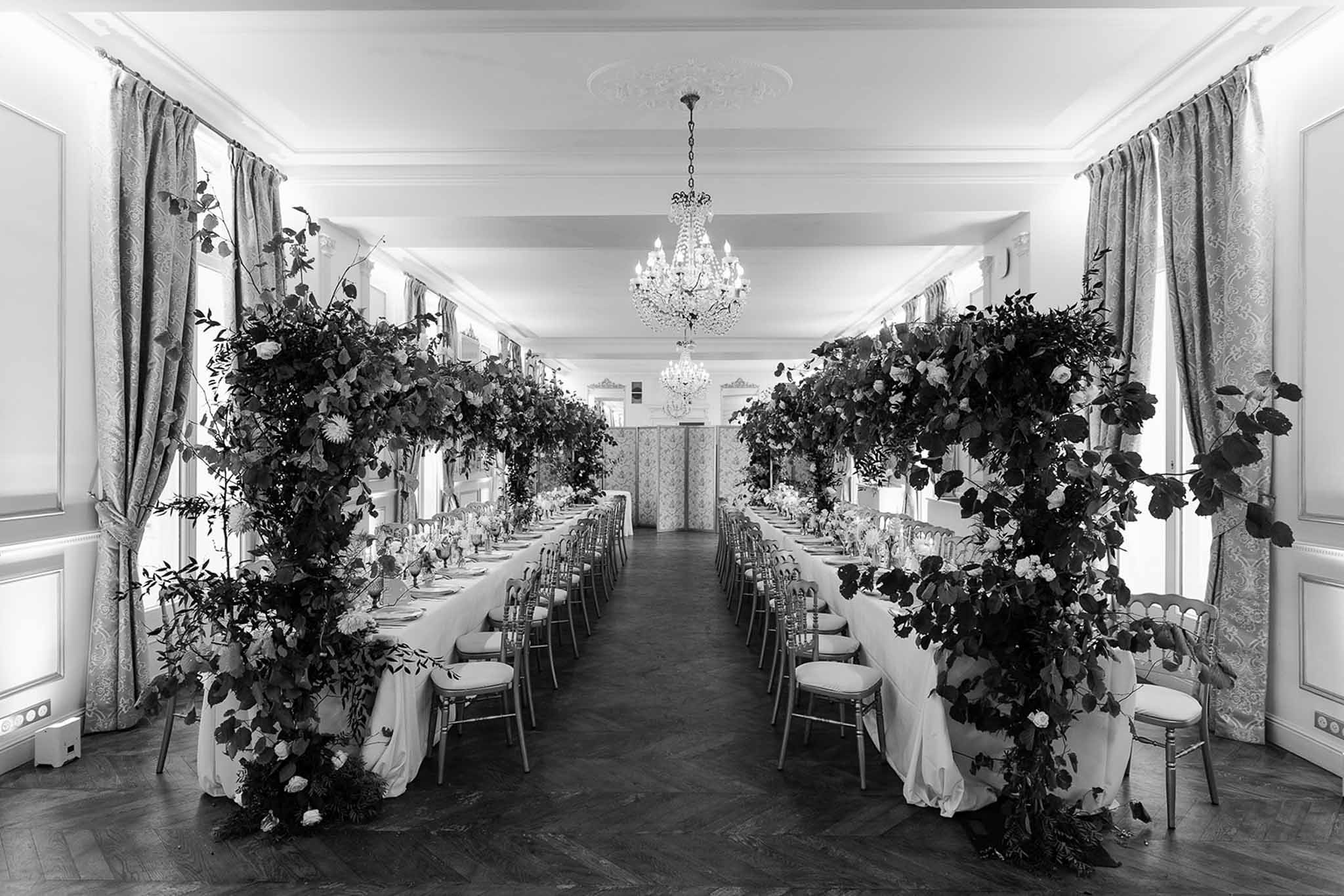
Colour Palettes for French Settings
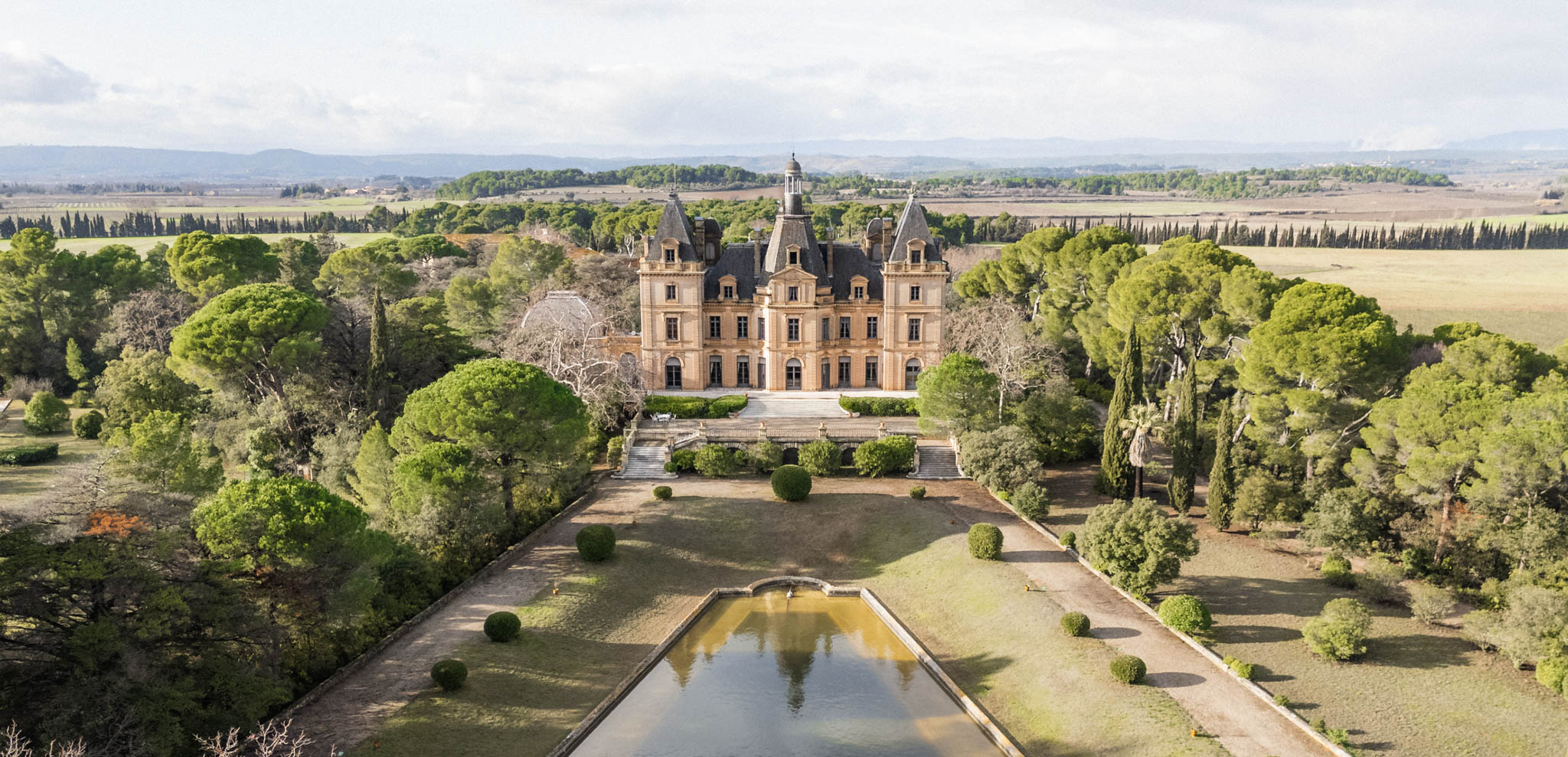
Colour at a French wedding is not just about what you like. It is about what the building gives you to work with. A dusty rose that sings against white tuffeau in the Loire Valley falls completely flat against Provence ochre.
A deep burgundy that transforms a grey Normandy manor looks heavy and oppressive in a sun-drenched bastide. The stone, the light, the season, and the hour of day all shape how your palette reads in photographs and in person. This is the most visual decision you will make for your wedding in France, and it starts not with a swatch book but with the walls of your venue. For broader design guidance across every element of your celebration, see our complete styling and design chapter. For a broader view of every step involved, see planning your destination wedding in France from start to finish.
Key Takeaways
- French venue stone varies dramatically by region. Loire tuffeau is cool white, Provence stone is warm ochre, Dordogne limestone runs golden, and Normandy granite reads grey-blue. Your palette must account for the dominant stone tone.
- Warm tones (blush, terracotta, gold, sage) harmonise with warm-toned stone. Cool tones (lavender, dusty blue, silver) complement grey and white stone. Mixing warm palette against cool stone or vice versa creates visual tension.
- Golden hour light in France shifts every colour 10 to 15 minutes before sunset. Blush goes warmer, blue reads greyer, white turns cream, and green intensifies. Plan your ceremony timing around this.
- Bright primary colours (pillarbox red, royal blue, sunshine yellow) compete with French architecture rather than complementing it. Muted, desaturated versions of the same hues work far better.
How Should You Think About Colour at a French Wedding Venue?
Start with the stone. Every French region has a signature material, and that material is the largest colour block in your photographs. It fills the background of your ceremony, frames your dining room, and wraps around every detail shot your photographer takes. Your flowers, your linens, your stationery, your bridesmaids' dresses are all small accents against that enormous canvas of stone. Loire Valley tuffeau is a chalky, cool white with faint grey veining. It photographs clean and bright. Colours placed against it read almost exactly as they appear on your swatch. Provence ochre and Luberon stone carry a warm golden undertone that shifts pink tones warmer and cool tones slightly muddy. Dordogne golden limestone sits between the two, a rich honey tone that pairs well with greens, burgundies, and warm neutrals. Normandy granite is the outlier: a cool, sometimes blue-grey stone that pairs naturally with soft lavender, slate, blush, and silver rather than the warm earthy tones that dominate southern French weddings.
The second layer is the surrounding landscape. A vineyard venue in the south of France adds deep green vine rows and amber soil. A Provence hilltop brings silvery olive trees and dry lavender fields. A Normandy apple orchard adds soft green and white blossom. These natural colours become part of your palette whether you choose them or not. The couples who achieve the most cohesive look treat the landscape as a fixed element and build their palette to sit inside it.
Which Colours Work Against French Limestone, Tuffeau, and Ochre Stone?
This is where the specific combinations matter. General palette advice that ignores the building material misses the point entirely. The principle behind all of these: match the temperature. Warm stone pairs with warm accents. Cool stone pairs with cool accents. This is not rigid. A single cool accent (a pale blue ribbon, a silver candlestick) against warm stone can be striking precisely because it breaks the rule deliberately. But the dominant palette should sit in the same temperature family as the architecture. Couples planning a wedding at a French château should request stone close-up photographs from the venue or visit at the same time of day as their planned ceremony. The same limestone reads differently at 10am under flat light than at 6pm under low sun. A venue coordinator who hears "we are choosing our palette and need to see the stone in afternoon light" will understand immediately. This is a standard consideration for any venue that takes design seriously.
Scroll →
| Stone Type | Region | Strong Pairings | Colours to Avoid |
|---|---|---|---|
| Tuffeau (cool white) | Loire Valley | Soft blush, dusty blue, sage, cream, champagne gold, lilac | Bright orange, strong yellow (overpower the white) |
| Ochre stone | Provence, Luberon | Terracotta, burnt sienna, olive green, deep plum, cream, rust | Baby blue, cool silver, icy pastels (clash with warmth) |
| Golden limestone | Dordogne, Périgord | Burgundy, forest green, warm white, amber, faded coral | Neon pink, electric blue (compete with the stone warmth) |
| Grey granite | Normandy, Brittany | Lavender, slate blue, blush, silver, soft white, dusty mauve | Warm terracotta, rust (read muddy against cool stone) |
| Honey sandstone | Burgundy, Beaujolais | Deep red, ivory, gold, moss green, plum | Pastel pink (washes out), pure white (too stark a contrast) |
What Are the Seasonal Palette Options?
Season shapes palette in two ways: the flowers available and the quality of light. Spring (April to May). Soft pastels work because the light is gentle and the landscape is fresh. Pale pink ranunculus against white tuffeau. Cream peonies (late May only) with sage green foliage. Soft lilac with ivory. The countryside is green and gentle, not yet bleached by summer heat. This is the one season where delicate pastels genuinely hold their own against the architecture. Summer (June to August). Light is intense, bleaching pastels in photographs. Stronger tones survive better. Dusty blue holds where baby blue washes out. Deep coral reads better than pale peach. Olive green, the deep blue-green of rosemary, the silvered grey of lavender foliage. These are summer's native colours across the south of France, and they photograph well in bright conditions. White remains safe, but ivory reads warmer and more grounded. For couples exploring outdoor ceremony spaces across France, the summer palette needs to work in full sun, not just shade.
Autumn (September to November). The richest palette season. Burnt orange, deep burgundy, plum, amber, forest green. Dahlias and chrysanthemums deliver these tones naturally. The vine rows turn gold and red in October, adding landscape colour that matches. Golden hour arrives earlier, casting warm light that deepens every warm tone further. Autumn weddings in France produce the most consistently dramatic colour photographs.
Winter (December to February). Pare back. Deep green (eucalyptus, pine, olive), burgundy, gold metallics, candlelight. The stone interiors of a French château in winter are lit by fire and candle rather than sun, which shifts every colour toward warmth. Cool-toned palettes can feel stark in winter's low light. Lean into richness: velvet textures, brass accents, berry tones. The landscape outside is dormant and grey, so the interior design carries the entire visual weight.
How Does Golden Hour Light Change Your Colour Choices?
Golden hour in France runs roughly 40 minutes before sunset, and during those minutes, every colour in your wedding shifts. This is not subtle. It is transformative. Your photographer knows this. Your florist should know it too. Your palette choice should account for it. Blush turns warm apricot. White turns rich cream. Blue-grey reads almost neutral. Green intensifies and saturates. Burgundy deepens to near-black. Gold metallics glow rather than glint. Skin tones warm to their most flattering. This is why nearly every wedding photographer in France recommends scheduling the couple portraits during golden hour and why so many destination couples time their outdoor ceremony to finish just as the light turns. The practical implication for your palette: whatever colours you choose will look their best in warm light and their most accurate in flat, overcast conditions. If your ceremony is at 3pm under flat cloud, your blush will read as blush. If your ceremony is at 7pm in June sun, the same blush will read as soft peach.
Couples who specifically want their palette to photograph as cool (dusty blue, lilac, silver) should consider morning ceremonies. The morning light in France is clean and neutral, without the amber cast of late afternoon. It preserves cool tones accurately. Afternoon and evening light favours warm palettes, which is one reason why warm-toned weddings dominate French wedding photography.
What Is the Biggest Colour Mistake at French Venues?
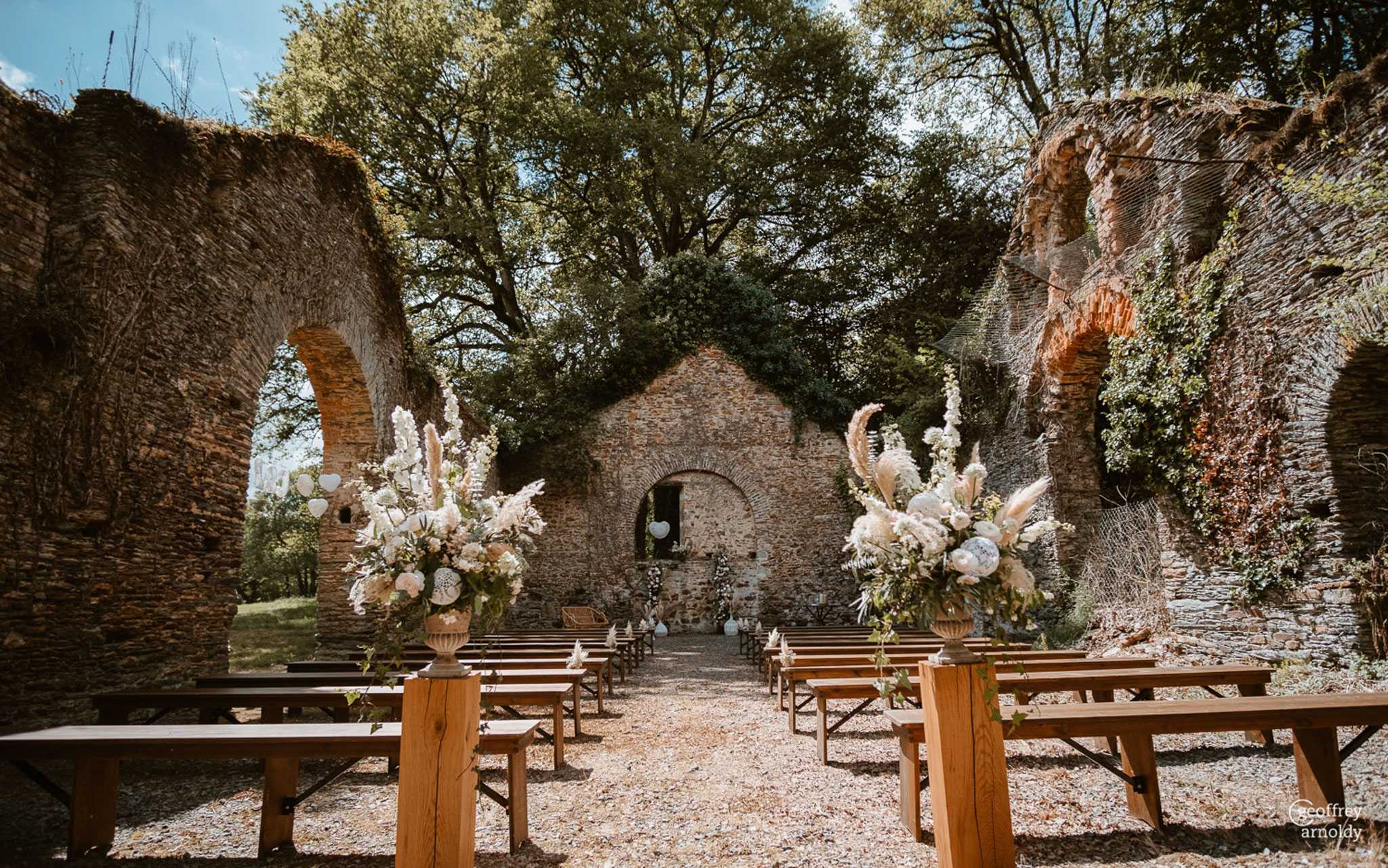
Bright, saturated primary colours. Pillarbox red, royal blue, sunshine yellow, hot pink. These are the colours that compete with French architecture rather than complementing it. They demand attention in a setting where the stone, the gardens, the shutters, the ironwork, and the landscape already provide more visual information than most wedding venues anywhere else in the world. French wedding venues are not blank canvases. They are richly detailed environments with centuries of patina, weathered pigment, and natural colour built into every surface. A bright red runner down a stone aisle fights the ochre. Neon pink chair sashes on a terrace fight the garden. Electric blue linens in a tuffeau dining room fight the soft grey of the stone. The solution is not to avoid colour. It is to desaturate it. Take the same hue and pull it toward its muted cousin. Royal blue becomes dusty slate. Hot pink becomes faded rose. Sunshine yellow becomes warm sand. Red becomes wine or terracotta.
The couples who arrive at a Provence bastide with an entirely grey-and-white palette also miss an opportunity. The venue itself provides so much warmth that adding nothing feels deliberately sparse. A single accent colour (terracotta napkins, olive-green runners, blush garden roses) gives the design a point of view without fighting the setting.
The most striking colour palettes in the real weddings we feature on French Wedding Style share one quality: restraint. Two or three considered tones, repeated consistently across flowers, linens, stationery, and bridesmaids' dresses, set against the natural colour of the venue. Nothing competing. Everything composing. The building does the heavy lifting, and the palette adds a signature rather than a shout. Couples exploring classically styled wedding venues in France will find this principle holds across every region and every season.
Related Articles
- Styling and design for a French wedding: the complete guide
- Château table décor ideas for French wedding dining rooms
- Wedding arch and ceremony backdrops at French venues
- Lighting guide: fairy lights, candles, and lanterns
- French bridal designers you should know
- Choosing a wedding florist in France
- Seasonal climate guide for weddings in France
- Style guide: classic French weddings
- Style guide: Provençal rustic weddings
- Style guide: modern minimalist weddings in France
Frequently Asked Questions
Can we use a completely white palette at a French wedding?
An all-white palette works well against warm-toned stone (Provence ochre, Dordogne golden limestone) because the stone provides all the warmth and contrast. Against cool white tuffeau in the Loire, all-white can read flat and clinical in photographs. If you want an all-white scheme against light stone, introduce texture variation (matte linen, glossy ceramic, soft cotton) and green foliage to create visual depth. Pure white on white photographs better when you add one natural element that breaks the monotone.
How many accent colours should we use?
Two to three accent colours plus a neutral base is the most reliable formula for French venue weddings. One primary accent (appearing in flowers, bridesmaids' dresses, and key linen pieces), one secondary accent (stationery, ribbon, minor floral accents), and a neutral base (cream, soft white, natural linen). More than three accents creates visual noise in a setting that already provides substantial colour and texture through the architecture itself.
Do metallic tones work against French stone?
Gold, brass, and copper work against warm-toned stone. Silver, pewter, and platinum work against cool-toned stone. Rose gold sits between the two and adapts to both. Metallic accents in candleholders, charger plates, and cutlery catch golden hour light and add dimension that flat colours cannot. Avoid high-shine metallics in direct sun, where they create harsh glare. Brushed or antiqued finishes photograph better outdoors.
Should our photographer influence our colour palette choice?
Your photographer's editing style affects how your colours render in the final images. A photographer who edits warm and muted will shift your entire palette toward amber. A photographer who edits bright and true-to-life will preserve your colours more accurately. Ask to see full galleries from your specific venue, not just highlight reels. The venue's stone, the regional light, and the photographer's editing style combine to create the final colour story. Discussing this triangle early prevents surprises when the gallery arrives.
What colour works universally across French regions?
Soft, desaturated green. Sage, olive, eucalyptus grey-green. These tones complement warm and cool stone equally, sit inside every landscape from Normandy orchards to Provence hillsides, and work across all four seasons. Green is the only colour family that harmonises with every French venue stone type without adjustment. It also photographs consistently well in both flat and golden hour light, which is unusual for any single hue.
Explore Every Guide in This Chapter
Deep-dive into each topic covered above.