
Style Guide: Classic French
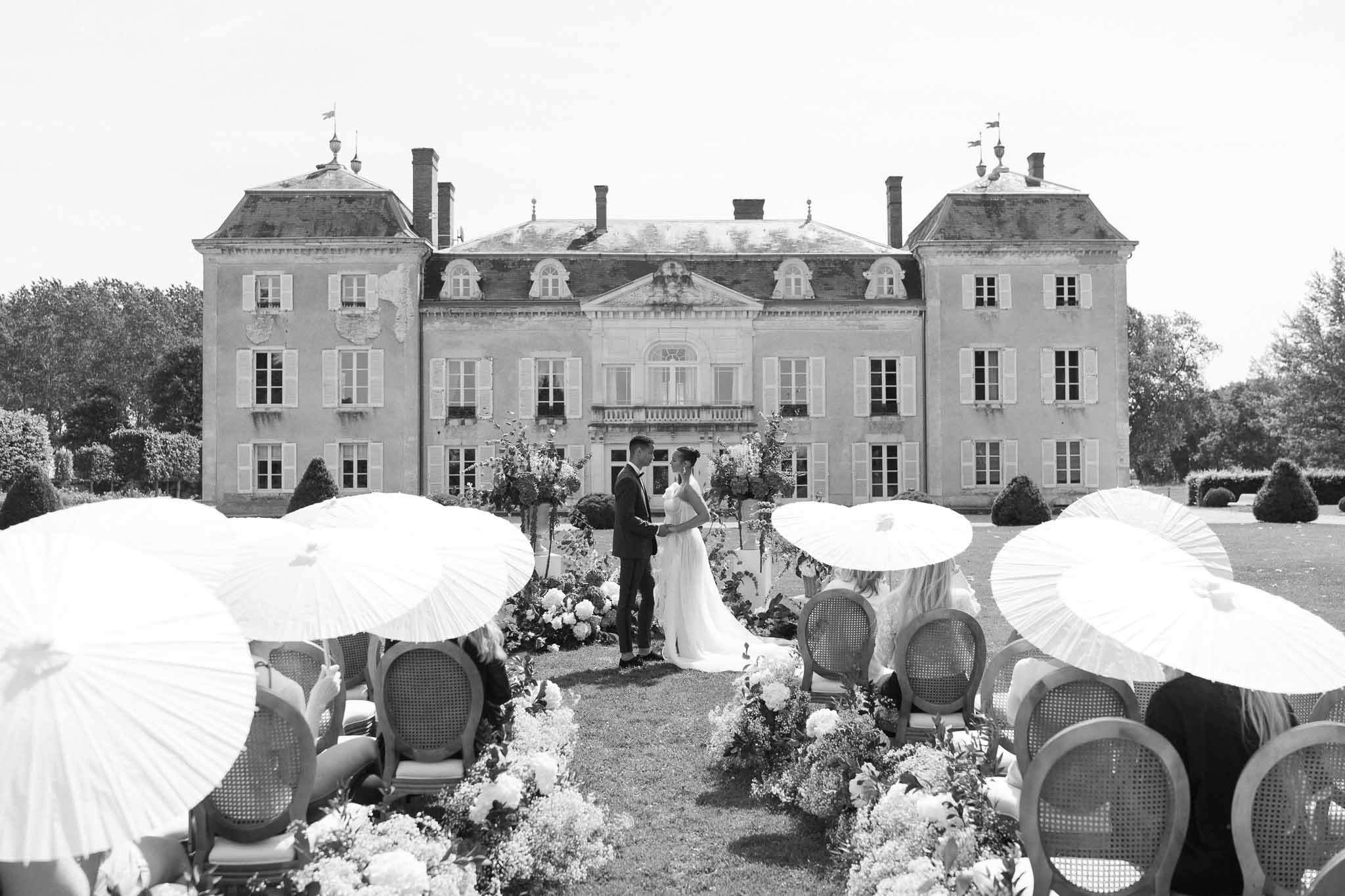
Classic French wedding style is the one most people picture when they think of a wedding in France. Long tables under plane trees. Cream linen catching candlelight. Garden roses in silver urns.
It draws from the same visual language as a well-set French country house: formal enough to feel considered, relaxed enough to feel like someone actually lives here. The palette sits in a narrow band of warm neutrals, the materials lean toward natural fibres and aged metals, and the overall effect is one of abundance without excess. This guide breaks down exactly how that look works across colour, materials, table design, flowers, and fashion, so you can brief your vendors with precision rather than a mood board of vague references. For the broader design philosophy behind every style in this chapter, start with our guide to what makes French wedding aesthetics different. For a broader view of every step involved, see our step-by-step destination wedding planning guide for France.
Key Takeaways
- The classic French palette centres on cream, soft gold, and warm white, supported by natural stone tones and accented with blush or sage. It avoids bright white, which reads cold against French limestone.
- Materials matter more than colour: heavy linen, aged silver, clear crystal, patinated brass, and natural wood. These textures create visual warmth without adding colour.
- The classic French table is layered but not crowded. Each place setting has weight and presence: proper silverware, cloth napkins, crystal stemware, hand-lettered menus on heavy card.
- Garden roses and peonies are the anchor flowers. Arrangements stay loose and low, filling the centre of the table without blocking sightlines across it.
What Defines the Classic French Wedding Style?
Classic French is not a single look. It is a set of shared principles applied across different venues and scales. A 200-guest seated dinner in a Loire Valley château and a 60-guest garden lunch at a Provençal bastide can both read as classic French. What unites them is a commitment to natural materials, warm neutrals, structured but relaxed tablescapes, and a relationship between the décor and the building that feels earned rather than imposed. The hallmarks are consistent. Real fabric, not synthetic. Fresh flowers, not silk. Metal that has aged, not polished to a mirror finish. Glass that catches light rather than reflecting it. Paper goods with weight and texture. The overall impression is that these objects have been in the house for decades and someone has simply set a well-considered table with what was already there. That impression is constructed, of course, but the construction works because the materials are genuine.
Classic French style also means proportion. Tables are long rather than round where the room allows it. Arrangements sit below eye level. Candles are the primary light source after sundown. Place settings spread out rather than cramming. Every element has space to breathe, which is what gives the look its characteristic sense of generosity. If you are choosing between different French venue types, the classic aesthetic works strongest in châteaux, bastides, and formal domaines where the architecture already speaks the same visual language.
What Is the Colour Palette and Material Language?
The classic French palette is deceptively simple. It reads as "white and cream" at a glance, but the actual range is more nuanced and entirely dependent on what it sits against. Start with the venue stone. Warm-toned limestone in Provence and the Loire Valley calls for cream, champagne, soft gold, and the faintest blush pink. Cool-toned stone in Normandy, Brittany, or northern châteaux shifts the palette toward ivory, pewter grey, and muted sage. Bright white fabric or décor clashes with both. It looks clinical against warm stone and sterile against cool. The white in a classic French wedding is always off-white, always warm, always with a tint of cream or buttermilk. The accent colours stay within a narrow range: dusty rose, antique gold, sage green, or the palest lavender. These are not feature colours. They appear as small touches: a ribbon on a bouquet, the wax seal on a menu card, the glaze on a ceramic jug. The dominant visual impression remains neutral, anchored by the stone, the linen, and the candlelight.
Materials carry more visual weight than colour in this style. Here is the material palette:
| Material | Where It Appears | Effect |
|---|---|---|
| Heavy linen (cream or oatmeal) | Table runners, napkins, chair ties | Texture and weight. Absorbs candlelight. Creases add character. |
| Aged silver or pewter | Cutlery, candelabras, serving platters | Warmth without shine. Patina signals heritage. |
| Clear crystal | Stemware, water glasses, small vases | Light refraction. Adds sparkle without colour. |
| Patinated brass | Candlesticks, votive holders, charger rims | Warm metallic tone that pairs with stone and linen. |
| Natural wood (oak or walnut) | Farm tables, chairs, cheese boards | Grain and warmth. Bare or lightly oiled, never lacquered. |
| Heavy card stock (cotton or laid) | Menus, place cards, invitations | Tactile quality. Letterpress or calligraphy, not digital print. |
The combination of these materials, even without flowers, creates a table that looks and feels rich. That is the point. The material language does the work before the florist arrives. Couples looking at classic venues across France will find that many already supply silverware, crystal, and linen as part of their in-house collection.
How Does a Classic French Table Setting Look?
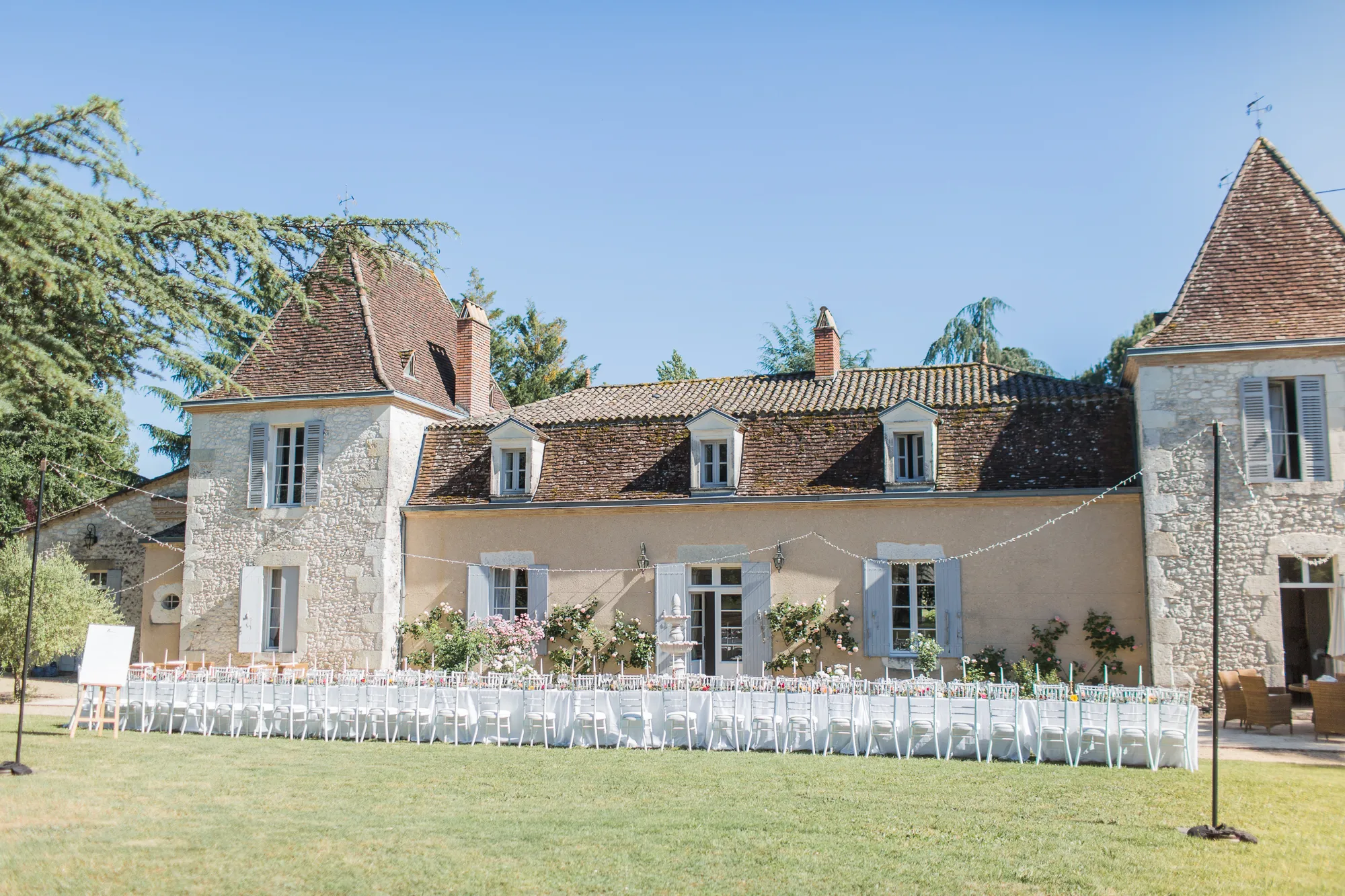
Imagine a table of twelve. The table is long, bare oak, lightly oiled. No tablecloth. A cream linen runner stretches the length but stops short of the ends. At each setting: a heavy silver charger plate, a ceramic dinner plate in warm white with a fine gold rim, polished silverware (three pieces, not five), a crystal water glass, a wine glass, and a smaller glass for dessert wine. A cream linen napkin, folded once, sits on the plate. A hand-lettered menu card, tucked into a brass holder or laid flat, marks each place. A sprig of rosemary or olive branch sits beside the menu. Down the centre of the table, low arrangements of garden roses in cream and soft pink fill three or four aged silver compotes or ceramic vessels. Between them, brass candlesticks hold tapered candles in ivory. Votives in clear glass dot the gaps. No runner of greenery. No scatter of petals. No mirror base. The negative space between the arrangements is as important as the arrangements themselves.
This is the classic French table at its strongest: layered, generous, warm, with every item earning its place. The silverware has weight when you pick it up. The linen has texture between your fingers. The candlelight moves across the crystal and the brass. The effect is sensory, not decorative. Guests feel it before they see it.
What Flowers Suit a Classic French Celebration?
The classic French flower palette stays within the warm neutral range: cream, soft pink, the palest peach, and green. White is used sparingly and always softened with green foliage. The arrangements are generous but not architectural. No suspended installations. No towering centrepieces. No geometric foam structures. The flowers sit at or below table level, loose in their vessels, leaning naturally, as if arranged by someone who knows what she is doing but is not trying too hard. Garden roses are the foundation. In France, they peak from June to September, and the locally grown varieties have a depth of colour and petal count that imported hothouse roses cannot match. Cream and blush garden roses in low silver compotes, mixed with sprigs of jasmine and trailing ivy, are easily the most common classic French arrangement. Peonies sit alongside them in late May and June, adding volume and that specific round, ruffled quality that photographs well in natural light.
Other flowers that work in the classic palette:
- Ranunculus (March to May): tight-petalled, painterly, ideal for spring weddings in cream and apricot tones.
- Lisianthus (June to October): a cost-effective stand-in for roses, with ruffled petals in white, cream, and blush.
- Sweet peas (April to July): trailing, fragrant, and delicate. Work best in small vessels and bouquets.
- Olive branches: year-round green foliage that reads as distinctly French. Silvery leaves complement brass and linen.
- Jasmine: trailing, scented, and refined. Adds movement to bouquets and table arrangements in summer.
The classic French bouquet is hand-tied, not wired. Stems are visible. The shape is round but not rigid. Ribbon wrapping is silk or raw linen, in cream or champagne. No cascading trails, no brooches, no crystal pins. For guidance on sourcing and seasonal timing, our French wedding florist guide covers the full picture.
What Does the Classic French Bridal Look Involve?
The classic French bride dresses for the building. The gown works with the stone and the scale of the venue rather than competing with it. In practical terms, that means clean lines, quality fabric, and restrained detail. Silhouettes tend toward column, A-line, or fitted with a soft flare. Fabric is typically a single material: silk crepe for warmth, mikado for structure, duchess satin for formal settings. Lace appears as overlay or detail, rarely as the primary fabric. The texture of the fabric carries the visual interest. No heavy beading. No crystal embellishment. No illusion panels. The neckline is often simple: a bateau, a V-neck, a square cut. Sleeves, when present, are sheer or three-quarter length. Hair follows the same principle of intentional undone-ness. A low chignon with loose face-framing pieces. A soft wave with a single pin. Hair down with a slight texture, held with nothing but product and intention. Veils are optional and increasingly less common at French weddings.
Jewellery is one statement or none. Pearl drop earrings. A single gold bangle. A family heirloom worn as the something old. The overall bridal look reads as polished rather than produced. She looks like the sharpest version of herself, not a different person. The groom in classic French style wears a tailored navy or charcoal suit with a quality tie in silk, polished leather shoes, and a boutonniere of a single garden rose matching the bride's bouquet.
Related Articles
- Styling and Design: the complete chapter guide
- French wedding aesthetics: what makes them different
- Style guide: Provençal rustic weddings
- Style guide: modern minimalist weddings in France
- Style guide: boho chic weddings in France
- French wedding florist: costs and seasonal guide
- Château wedding venues across France
- Colour palettes for French wedding venues
- Château table décor ideas for French wedding dining rooms
- Lighting guide: fairy lights, candles, and lanterns
Frequently Asked Questions
Does the classic French style work for a winter wedding?
It works exceptionally well. Winter shifts the palette from cream and blush toward richer tones: deep burgundy candles, gold-rimmed tableware, dark green foliage (pine, eucalyptus, ivy). The candlelight that defines the style becomes even more important when daylight fades early. Indoor receptions in vaulted stone dining rooms with fireplaces lit are the strongest setting. Winter flowers include anemones, hellebores, and amaryllis, all of which carry the right visual weight for a formal table. The classic French look in winter is warmer and more dramatic than its summer counterpart, with velvet replacing linen and dark metals replacing brass.
Can I achieve classic French on a tight decor budget?
The style is inherently cost-efficient because it relies on materials rather than quantity. Skip the tablecloth and let the wood show. Use the venue's own silverware and crystal rather than renting. Choose one or two seasonal flower types in a single colour range rather than mixed exotic blooms. Invest in quality linen napkins and hand-lettered place cards, both of which photograph well and cost less than elaborate centrepieces. The biggest saving in classic French style is what you do not buy: no ceremony arch, no hanging installations, no custom signage, no matching accessories. Budget guidance across all vendor categories is covered in our destination wedding cost guide.
How does classic French differ from classic English wedding style?
Both share a commitment to tradition, quality materials, and understatement. The differences are in warmth, formality, and structure. English classic leans cooler: silver over brass, white over cream, structured flower arrangements over loose garden-style. English table settings are more formal: full cutlery sets, charger plates, printed menus. English bridal fashion allows more embellishment. The French version is warmer, softer, and more relaxed, with materials that look handled rather than pristine. English classic says "formal country house." French classic says "family estate where dinner has been served this way for generations."
What time of year looks best for classic French?
Late May through early October delivers the strongest results. June and September are the sweet spots: long golden light, garden roses in full bloom, warm evenings that keep dinner outdoors past midnight. July and August work but require heat management for flowers and shade planning for guests. April and October sit at the edges, with cooler light and different flower availability, but the indoor version of classic French suits these months well. Couples exploring seasonal conditions across French regions can match their preferred date to the climate that best supports this look.
How do I brief a French florist for a classic style?
Bring three things to your florist consultation: a close-up photograph of the venue's stone, a fabric swatch from the table linen you plan to use, and one reference image showing the density of arrangement you prefer (not the specific flowers). Ask the florist to propose seasonal stems that sit within the same colour temperature. A good French florist will steer you toward locally grown garden roses, ranunculus, or peonies depending on the month and will suggest vessel options from their own collection. Avoid sending a folder of 30 Pinterest images. One clear direction produces a stronger result than a collage of competing references.
Classic French is not about following a trend. It is about understanding a material language that has worked in these buildings for centuries and applying it to a wedding table with the same care and attention. Start with the stone. Choose the linen. Set the silver. Add the flowers. Light the candles. The rest takes care of itself.
Explore Every Guide in This Chapter
Deep-dive into each topic covered above.