
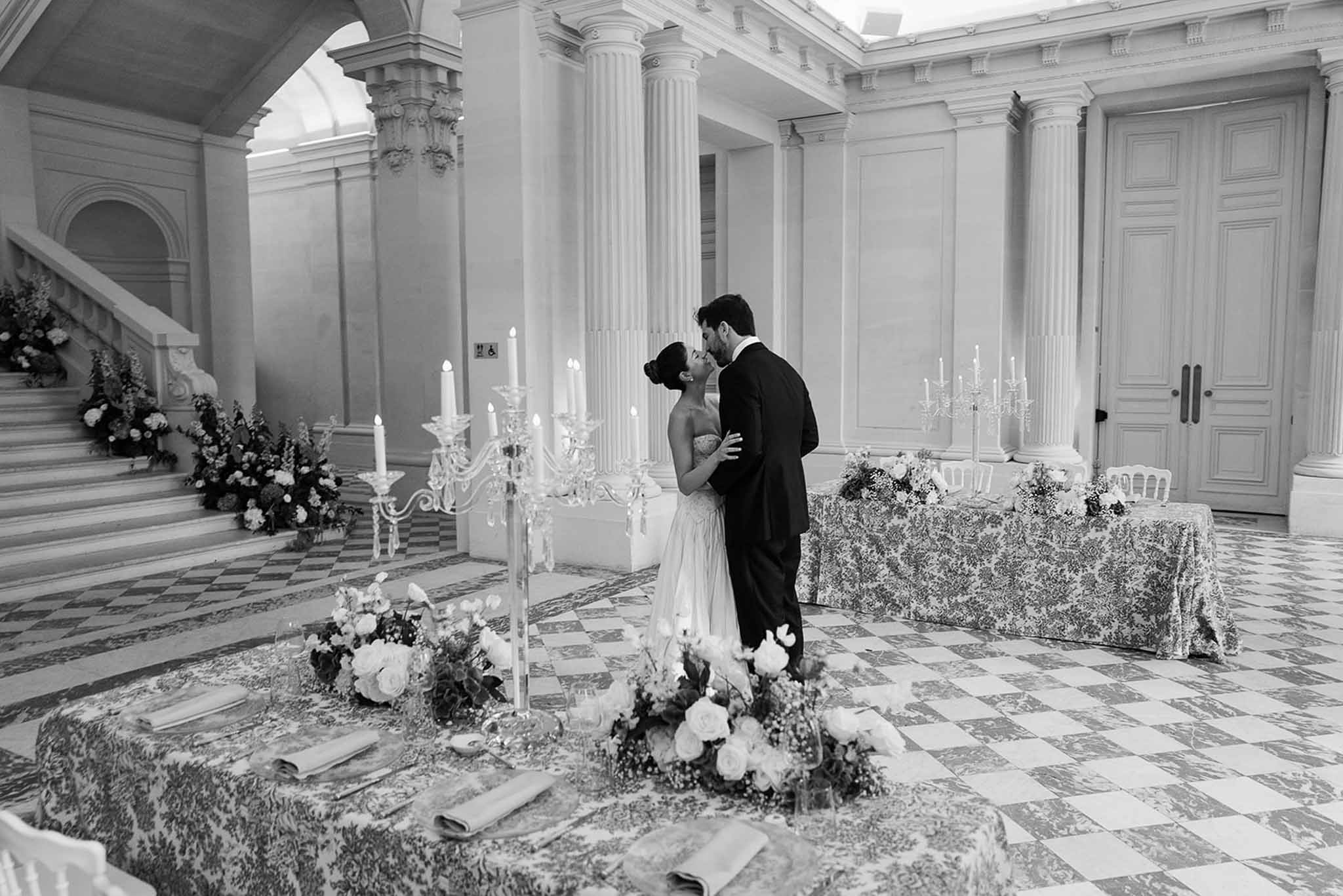
Finding a Celebrant or Officiant
Finding the right celebrant for a symbolic ceremony in France is one of the most personal decisions in wedding planning, and the unregulated nature of the French market means quality varies more widely than in any other vendor category. Professional celebrants charge €800 to €3,000, with the fee typically covering consultations, collaborative script writing, a venue rehearsal, and the ceremony itself. How to find, vet, and book the right person for your ceremony, whether that is a professional celebrant, a religious officiant, or a trusted friend, as part of our complete guide to getting married legally in France. For a broader view of every step involved, see the full planning guide for destination weddings in France.
Key Takeaways
- Professional celebrants in France charge €800 to €3,000. The fee includes 2 to 3 consultations, script writing, a venue rehearsal, and the ceremony.
- The celebrant market in France is entirely unregulated. No licence, certification, or training is required. Vetting is the couple's responsibility.
- Ask to see full ceremony videos, not just photographs. A portfolio of posed images tells you nothing about how the celebrant performs, paces, and connects with the audience.
- For bilingual weddings, confirm the celebrant has specific experience conducting ceremonies in both languages. Alternating between French and English requires a different skill set from conducting a single-language ceremony.
- Book 6 to 12 months ahead for peak summer dates in Provence, the Riviera, and the Loire Valley. Good celebrants fill quickly.
What Types of Celebrants Operate in France?
Four types of ceremony officiant operate in the French wedding market, and understanding the distinction helps couples choose the right fit for their ceremony style and budget. Independent professional celebrants are the most common choice for international destination weddings. They are experienced ceremony designers who build a tailored script from the couple's story, manage the ceremony logistics, and typically bring their own sound equipment. Fees run €800 to €3,000 depending on experience and region, with Provence and the Riviera at the higher end. Bilingual celebrants who conduct ceremonies fluently in both French and English (or other language combinations) command a premium within this range because the skill set is rarer and the demand is high. Religious officiants, including priests, ministers, and rabbis, can conduct blessings at French wedding venues without the ceremony being a legal marriage.
How Much Does a Celebrant Cost in France?
Professional celebrant fees in France range from €800 to €3,000 as of 2026, with the variation driven by experience, region, and the scope of service included in the package Based on our analysis of destination weddings across all regions of France, a celebrant based in Provence or on the Côte d'Azur typically charges €1,500 to €3,000 for a full-service package A celebrant in the Dordogne, Normandy, or the Loire Valley charges €800 to €1,800 for equivalent scope The fee structure is almost always a flat rate per ceremony, not an hourly charge Travel and accommodation are usually included for venues within the celebrant's home region and charged separately for venues further afield, typically €100 to €300 for travel beyond one hour Always confirm whether travel is included before comparing quotes The total celebrant cost represents approximately 2 to 5% of most destination wedding budgets, making it one of the lower individual vendor costs but one of the highest-impact investments in the emotional quality of the day
- Professional celebrant fees in France range from €800 to €3,000 as of 2026, with the variation driven by experience, region, and the scope of service included in the package
- Based on our analysis of destination weddings across all regions of France, a celebrant based in Provence or on the Côte d'Azur typically charges €1,500 to €3,000 for a full-service package
- A celebrant in the Dordogne, Normandy, or the Loire Valley charges €800 to €1,800 for equivalent scope
- The fee structure is almost always a flat rate per ceremony, not an hourly charge
- Travel and accommodation are usually included for venues within the celebrant's home region and charged separately for venues further afield, typically €100 to €300 for travel beyond one hour
- Always confirm whether travel is included before comparing quotes
- The total celebrant cost represents approximately 2 to 5% of most destination wedding budgets, making it one of the lower individual vendor costs but one of the highest-impact investments in the emotional quality of the day
| What Is Typically Included | What May Be Extra |
|---|---|
| 2 to 3 pre-wedding consultations (video call) | Travel beyond home region (€100 to €300) |
| Collaborative script writing from the couple's story | Accommodation if venue is remote (€100 to €200) |
| Ceremony rehearsal at the venue | Additional rehearsal sessions |
| Ceremony delivery (30 to 75 minutes) | Pre-ceremony welcome and coordination |
| Sound equipment (wireless microphone, speaker) | Bilingual delivery (sometimes included, sometimes a premium) |
| Coordination with photographer on ceremony flow | Post-ceremony drinks or mingling time |
How Do You Vet a Celebrant in an Unregulated Market?
The celebrant market in France is entirely unregulated, which means anyone can market themselves as a wedding celebrant without training, certification, or demonstrated experience. This creates a quality spectrum wider than any other vendor category: the best celebrants deliver ceremonies that guests remember for years, while the worst deliver generic scripts read without conviction from a phone screen. Vetting is entirely the couple's responsibility, and the standard approach of reviewing a website portfolio is insufficient because ceremony quality is invisible in photographs. Request full ceremony videos from at least two previous weddings. Watch how the celebrant manages pacing, audience engagement, emotional moments, and transitions. A celebrant who reads rigidly from notes, makes no eye contact with the couple, or rushes through the vows will be visible in video but invisible in a curated photo portfolio. Ask for 3 to 5 references from couples who married in the past 12 months and contact them directly.
Red Flags When Choosing a Celebrant
- Cannot provide ceremony videos. A professional celebrant should have multiple full ceremony recordings. Refusing to share them suggests the delivery does not match the marketing.
- Offers a single fixed ceremony format. A celebrant who presents one standard script with minor customisation is a reciter, not a ceremony designer. The ceremony should be built from scratch around the couple's story.
- Unavailable for a venue rehearsal. The rehearsal is where timing, positioning, microphone placement, and coordination with the photographer are finalised. A celebrant who skips the rehearsal is leaving the most important moment of the day to chance.
- Does not ask detailed questions about the couple's relationship. The initial consultation should feel like a conversation, not a sales pitch. A celebrant who does not want to know the couple's story cannot write a ceremony that reflects it.
- No liability insurance. Professional celebrants carry public liability insurance. Ask directly.
- Pressures a quick booking without allowing time to review references. Reputable celebrants understand that couples need to vet before committing.
How Do Bilingual Ceremonies Work with a Celebrant?
A bilingual ceremony requires specific experience that not every celebrant possesses, even if they speak both languages fluently. Conducting a ceremony in two languages is a performance skill: the celebrant must manage transitions between languages without losing momentum, ensure both language groups feel included rather than waiting through sections they do not understand, and deliver emotional passages with equal conviction in both tongues. The three common approaches are alternating delivery (the celebrant switches between languages throughout, summarising each section rather than translating word for word), dual officiant (the main celebrant conducts in one language while a second person, often a bilingual friend or the wedding planner, provides the other language), and hybrid (the ceremony is conducted primarily in one language with key moments such as vows, declaration of intent, and pronouncement delivered in both).
The alternating model works best when the celebrant is genuinely fluent in both languages and experienced in managing the dual flow. The dual officiant model works well when a professional handles one language and a trusted personal connection handles the other. Always discuss the bilingual approach during the initial consultation and confirm the celebrant's specific experience with your language combination.
Should a Friend Officiate or Should You Hire a Professional?
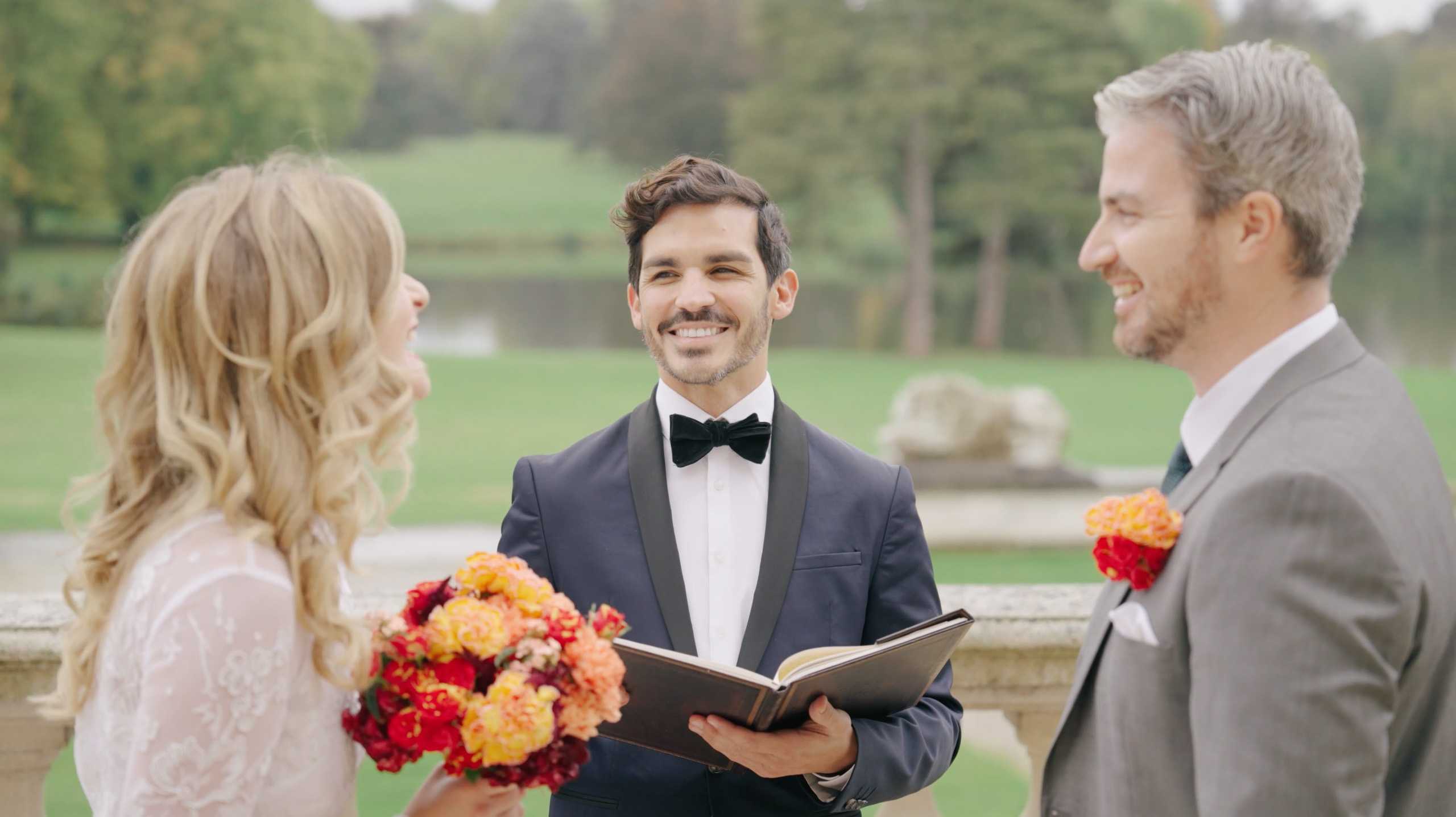
The decision between a professional celebrant and a friend officiant is one of the most consequential choices in ceremony planning, and the right answer depends on what the couple values most. A professional celebrant brings ceremony design expertise, performance experience, logistical coordination with vendors, and the ability to manage unexpected moments (equipment failure, weather changes, emotional overwhelm) with composure. The ceremony is their craft, and the couple benefits from that accumulated skill. From the hundreds of real weddings we have featured, couples who hired a professional celebrant consistently rated the ceremony as the most emotionally impactful moment of the day. A friend officiant brings intimate knowledge of the couple's relationship, a personal connection that no professional can replicate, and a level of emotional authenticity that is genuinely difficult to hire. The risk with a friend is not sincerity. It is preparation. A ceremony that feels spontaneous and natural on the day is the product of weeks of scripting, rehearsal, and timing decisions.
If a friend officiates, apply the same preparation standards as a professional engagement. Begin scripting 3 to 4 months before the wedding. Write a full script collaboratively, not an outline. Rehearse at the venue with the photographer present. Plan for sound equipment (a wireless microphone is non-negotiable for outdoor ceremonies). And agree a backup plan: if the friend becomes too emotional to continue, who steps in? Having that conversation in advance removes the pressure on the day.
When Should You Book and What Is the Process?
Book a celebrant 6 to 12 months before the wedding for peak summer dates in popular regions. Provence, the Riviera, and the Loire Valley celebrants fill fastest. Off-season and weekday weddings offer more availability at shorter notice, but starting early gives the couple and celebrant time to build the ceremony properly rather than rushing the creative process. Across the 400+ venues listed on French Wedding Style, the most in-demand celebrants in Provence and the Riviera fill their summer calendars by January. The standard preparation timeline with a professional celebrant follows three phases. The first phase (3 to 6 months out) is discovery: the celebrant conducts one or two extended conversations to understand the couple's story, relationship dynamics, and ceremony vision. The second phase (2 to 3 months out) is script development: the celebrant writes a draft script and shares it for feedback. Multiple rounds of revision are normal.
The Mistakes That Cost Couples Time and Money When Hiring a Celebrant
The error that creates the most stress is choosing based on price alone. A celebrant charging €800 and a celebrant charging €2,500 may deliver fundamentally different experiences. The cheaper option may use a standard template with light customisation, a single consultation call, and a ceremony that follows a familiar script with names swapped in. The more expensive option may build an entirely original ceremony through 3 to 4 extended consultations, multiple script drafts, and a full venue rehearsal. The fee reflects 20 to 40 hours of preparation, not just the 45 to 75 minutes of delivery on the day. A €1,700 gap in price represents the difference between a recitation and a ceremony designed specifically around the couple's story and relationship. Ask what the fee includes, how many consultation hours are built in, and how many script revisions are standard before comparing numbers. For guidance on how to evaluate any French wedding vendor's credentials and contract terms, see our guide to contracts, deposits, and VAT for French wedding vendors. See how this couple brought this to life at Château de Robernier in Provence.
On the same theme: not checking bilingual capability thoroughly enough. A celebrant who lists "bilingual" on their website may be fluent in conversation but inexperienced in managing a bilingual ceremony, which is a performance skill requiring practice and specific technique. Read our guide to colour palettes that complement your French ceremony backdrop for the full breakdown. Ask for a video of a bilingual ceremony they have conducted. If they cannot provide one, they have not done it.
Compounding the problem is waiting too long to start the creative process. Couples who book a celebrant 9 months out but do not begin the script conversations until 6 weeks before the wedding are compressing the most important creative collaboration of the planning process. We cover this in our guide to selecting the right French region for your ceremony setting. The ceremony script benefits from time: time to draft, time to sit with it, time to revise, time to read aloud and feel whether it lands. Start the conversation early and give the ceremony the creative space it deserves.
Related Articles
- Symbolic ceremonies: what they are and why most couples choose them
- Civil ceremony in France: what happens at the mairie
- Documents you need to get married in France
- UK couples getting married in France
Frequently Asked Questions
How much does a wedding celebrant cost in France?
Professional celebrants charge €800 to €3,000 as of 2026. Provence and the Riviera sit at the higher end (€1,500 to €3,000). The Dordogne, Normandy, and Loire Valley are more accessible (€800 to €1,800). The fee typically includes 2 to 3 consultations, collaborative script writing, a venue rehearsal, and the ceremony. Travel beyond the celebrant's home region adds €100 to €300.
Do you need a licence to officiate a wedding in France?
No licence, certification, or training is required to officiate a symbolic ceremony in France because the ceremony has no legal standing. Only the civil ceremony at the mairie (conducted by the maire) is legally binding. Any person the couple trusts can officiate the symbolic ceremony at the venue. This makes vetting the couple's responsibility.
How far in advance should you book a celebrant?
Book 6 to 12 months ahead for peak summer dates in Provence, the Riviera, and the Loire Valley. Off-season and weekday weddings offer more availability at shorter notice. Starting early also gives the couple and celebrant time to build the ceremony properly through the three-phase preparation process (discovery, script development, rehearsal).
What should a celebrant consultation involve?
A good first consultation is a long, open conversation where the celebrant learns the couple's story: how they met, what makes the relationship work, key moments, shared values, and their vision for the ceremony. It should feel like a conversation, not a questionnaire. If the celebrant spends more time talking about their packages than listening to the couple, they are the wrong fit.
Can a priest or religious officiant conduct a ceremony at a French venue?
Religious officiants can conduct blessings and religious ceremonies at French wedding venues without the ceremony being a legal marriage. A Catholic priest can deliver a blessing, a rabbi can lead a ceremony under a chuppah, and a Protestant minister can conduct a full service. The couple typically marries legally at the mairie or at home before the religious ceremony at the venue.
What is the biggest red flag when choosing a celebrant?
A celebrant who cannot provide full ceremony videos from previous weddings. Photography shows how the ceremony looked but not how it felt. Video reveals pacing, audience engagement, emotional management, and whether the celebrant reads rigidly from notes or connects naturally with the couple and guests. If they refuse to share video, the delivery likely does not match the marketing.
For a full guide to ceremony structure and what to expect, read our guide to symbolic ceremonies in France. To understand the legal alternative, see our guide to the French civil ceremony at the mairie.
Explore Every Guide in This Chapter
Deep-dive into each topic covered above.