
Planning on a Budget: Under €20K
A Genuinely Enjoyable wedding in France is achievable for €15,000 to €20,000, but only if you understand which decisions unlock that budget and which ones break it. The key is a small guest list, an all-inclusive venue in a value region, and the discipline to protect three non-negotiable investments. This guide provides real 2026 pricing for every budget line so you can plan with confidence as part of your overall French wedding cost planning. For a broader view of every step involved, see our complete guide to planning a destination wedding in France.
Key Takeaways
A Genuinely Enjoyable wedding in France for under €20,000 is realistic for 15 to 20 guests at an all-inclusive venue in a value region such as the Dordogne, Loire Valley, or Normandy, where the venue package at €8,000 to €12,000 bundles catering, accommodation, coordination, and furniture into a single price. The three investments you should never cut are the photographer starting at €2,500, the wedding planner at €3,000 to €6,000 whose fee consistently saves more than it costs through supplier negotiation and mistake prevention, and the food which is cultural currency in France where guests remember the meal above all other details. Off-season weddings from November to March save 20 to 30% on total spend, while a weekday ceremony saves an additional 15 to 50% on venue hire alone. Buying wine directly from a cave cooperative at €5 to €20 per bottle rather than through the venue saves hundreds of euros on drinks. Keeping the guest list small is not a compromise but the single decision that makes everything else possible.
- A well-planned wedding in France for under €20,000 is realistic for 15 to 20 guests at an all-inclusive venue in the Loire Valley, Normandy, or the Dordogne.
- The three things you should never cut: the photographer (starts at €2,500), the wedding planner (€3,000 to €6,000 for partial to full planning, saves more than it costs), and the food (cultural currency in France).
- Off-season weddings (November to March) save 20 to 30% on total spend. A weekday wedding saves an additional 15 to 50% on the venue fee alone.
- Buying wine directly from a cave coopérative at €5 to €20 per bottle rather than through the venue can save hundreds of euros on drinks.
- Keeping the guest list small is not a compromise. It is the single decision that makes everything else possible.
How Much Does a Budget Wedding in France Actually Cost?
The minimum realistic budget for a Genuinely Enjoyable wedding in France is €15,000 to €20,000 for 15 to 20 guests at an all-inclusive venue in a value region such as the Dordogne or Loire Valley. That figure covers the venue package at €8,000 to €12,000 (bundling catering, accommodation, coordination, and furniture), a professional photographer at €2,500 to €3,500, seasonal florals at €1,000 to €1,500, ceremony music, and a 10% contingency reserve. The venue alone absorbs 50 to 65% of the total because the all-inclusive model eliminates the separate logistics costs that push dry-hire budgets €5,000 to €10,000 higher at the same headline fee. Off-season timing from November to March reduces the total by 20 to 30%, while a weekday celebration saves a further 15 to 50% on the venue fee alone. This is not a stripped-back compromise but a well-structured plan that protects three non-negotiable investments: the food, the photographer, and the planner.
Here is what that budget realistically buys at a mid-range all-inclusive venue in the Loire Valley or Normandy as of 2026.
| Budget Category | Cost Range | % of Budget |
|---|---|---|
| All-inclusive venue (accommodation, catering, coordination, furniture) for 20 guests | €8,000 to €12,000 | 50 to 65% |
| Photographer (full day, edited gallery) | €2,500 to €3,500 | 15 to 20% |
| Florals (simple, seasonal, intimate) | €1,000 to €1,500 | 5 to 10% |
| Music (solo musician for ceremony, playlist for evening) | €500 to €800 | 3 to 5% |
| Wedding planner (partial planning at an all-inclusive venue) | €0 to €3,000 | 0 to 15% |
| Contingency (non-negotiable buffer) | €1,000 to €1,500 | 5 to 10% |
| Realistic total | €13,000 to €22,300 | 100% |
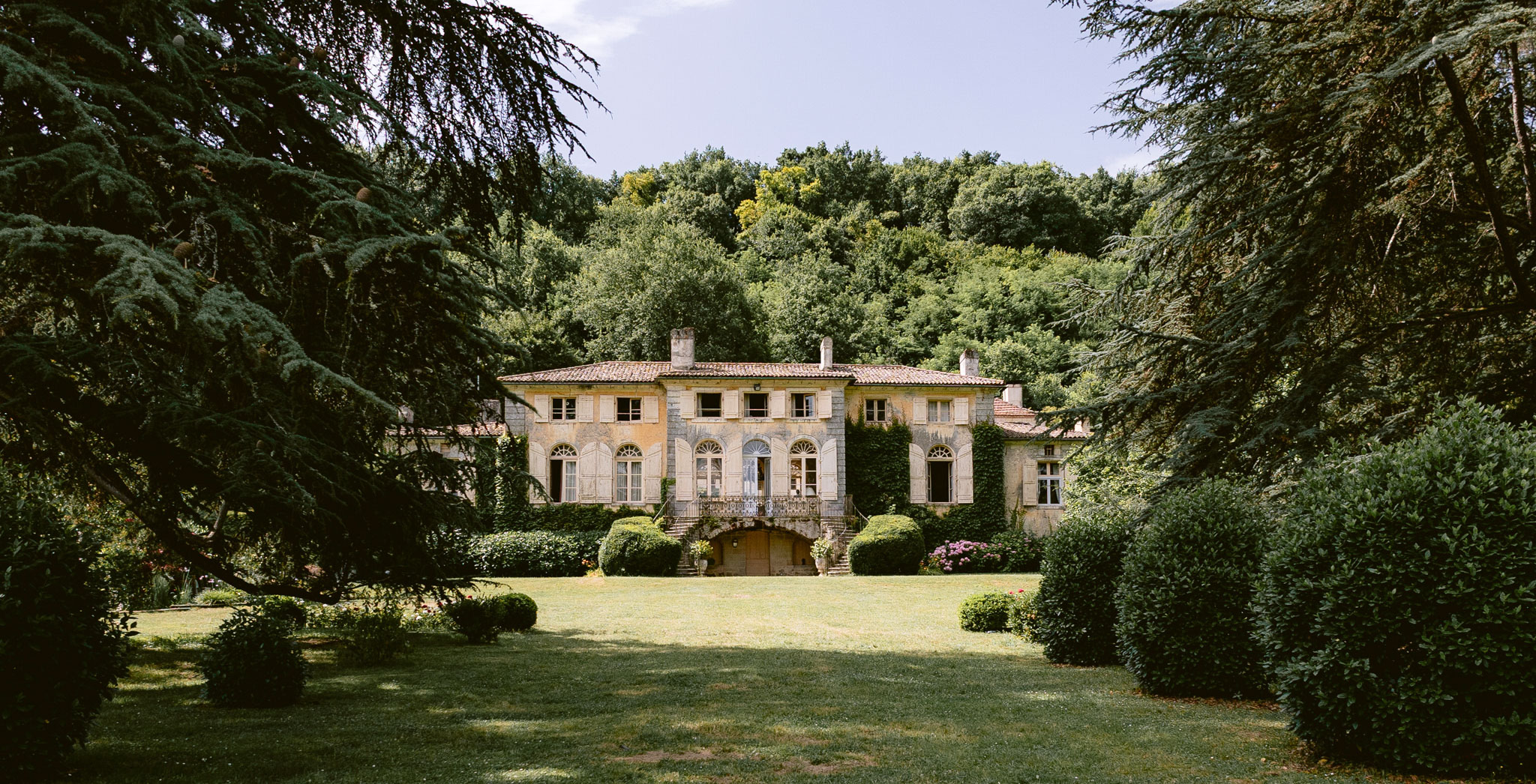
The venue takes 50 to 65% of the total budget at this price point. That proportion is higher than at a €50,000+ wedding because the venue is doing the heavy lifting: catering, accommodation, and coordination are all absorbed into the package price. At an all-inclusive venue, the on-site coordinator may cover enough of the planning role that a separate planner is optional, keeping the total closer to €15,000. Where a partial planner is added at €3,000, the total pushes toward €22,000, which remains realistic for a well-executed 20-guest celebration. This is precisely why an all-inclusive model is essential for a sub-€20,000 wedding. A dry-hire venue at the same headline price would require separate spending on catering, logistics, and a planner that would push the total well beyond €20,000. For a detailed comparison, see our guide to all-inclusive versus dry-hire venue costs in France.
Which Regions Offer the Best Value for a Budget Wedding?
Region selection is the most effective budget lever in French wedding planning, with the difference between venue hire in Provence and a comparable property in the Dordogne reaching €10,000 or more on the site fee alone. Weekend venue hire in the Luberon or Alpilles starts at €15,000, while similar stone properties in the Dordogne or Lot cost €2,500 to €8,000, and inland Normandy and the Gers offer comparable value at €2,500 to €8,000 for manor houses and small châteaux with accommodation. The lowest prices in France sit in the Creuse and Correze departments of the Limousin, where weekend hire starts at just €2,000, though the local vendor network is thinner. For couples planning under €20,000, the Dordogne, Lot, inland Normandy, and Gers consistently deliver the strongest combination of beauty, tourism infrastructure, and accessible pricing. Occitanie and lesser-known Loire Valley departments such as Sarthe and Indre offer southern light and historic architecture at 30 to 50% below Provence rates.
| Region | Venue Hire (Weekend) | Why It Works for Budget Weddings |
|---|---|---|
| Dordogne (Périgord) | €3,000 to €8,000 | Characterful stone architecture, rolling countryside, well-established tourism infrastructure. Less fashionable than Provence, which works in your favour on price. |
| Lot and Lot-et-Garonne | €2,500 to €7,000 | Arguably even better value than the Dordogne with equally striking landscapes. Less discovered by the destination wedding market. |
| Normandy (inland) | €3,000 to €8,000 | Striking manor houses and farmhouses. Well-connected from Paris and London. June to September reliably photogenic. |
| Creuse and Corrèze (Limousin) | €2,000 to €6,000 | The most underrated region in France for weddings. Unspoiled countryside, very low prices. Trade-off: thinner supplier network, so a good planner matters more. |
| Gers (Gascony) | €2,500 to €7,000 | Deeply underrated. Armagnac country, rolling hills, characterful small châteaux. Growing slowly but not yet overpriced. |
| Occitanie (Aude, Hérault) | €4,000 to €10,000 | Southern light and landscapes at noticeably lower prices than Provence. Carcassonne area offers exceptional character venues. |
| Loire Valley (lesser-known departments) | €4,000 to €10,000 | Good value in Sarthe, Indre, Loir-et-Cher. Avoid the most touristic areas around Amboise where the wedding premium kicks in. |


“The departments that consistently deliver the best value are Calvados and Manche in Normandy, Finistère in Brittany, Tarn and Lot in Occitanie, and Dordogne and Lot-et-Garonne in Nouvelle-Aquitaine. These are not compromises. These are regions with genuine character and château stock at a fraction of Provence pricing.”
More than half of the venues in the FWS collection have site fees under €10,000, with the strongest concentration of affordable properties in Languedoc, Nouvelle-Aquitaine, and Normandy. For genuine value without sacrificing beauty: the Dordogne, Lot, inland Normandy, and Gers are the four strongest answers. Corrèze and Creuse suit the genuinely budget-conscious couple willing to invest more in planner support to compensate for the thinner local vendor network. For a full regional comparison including Provence and Paris pricing, see our guide to regional price differences across France.
How Much Can You Save with Off-Season or Weekday Timing?
Timing is the second most powerful budget lever after location. Moving from a peak-season Saturday to a shoulder-season Friday can save 20 to 30% on the total wedding budget, representing €4,000 to €6,000 in real savings on a €20,000 celebration. An off-season wedding (November to March) reduces venue fees by 20 to 40% and vendor costs by 10 to 25% across categories. A Friday wedding in peak season saves 15 to 25% on the venue fee, while a Thursday drops that figure by 25 to 35%.
Monday to Wednesday ceremonies unlock the deepest discounts at 30 to 50% off venue hire. These savings compound across the entire vendor team: photographers typically offer 10 to 20% reductions for weekday bookings, traiteurs reduce rates by 10 to 15% when mid-week staffing costs are lower, and musicians discount by 15 to 25%. The sweet spot for budget couples who still want reliable weather is a Friday in late May, June, or September. August pricing matches June and July at most venues, so there is no saving from choosing the hottest month.
Scroll →
| Timing Strategy | Venue Saving | Vendor Saving | Overall Budget Impact |
|---|---|---|---|
| Off-season (November to March) | 20% to 40% | 10% to 25% across categories | 20% to 30% total saving |
| Friday wedding in peak season | 15% to 25% | 10% to 25% | 15% to 20% total saving |
| Thursday wedding | 25% to 35% | Significant across all vendors | 20% to 30% total saving |
| Monday to Wednesday | 30% to 50% | Significant across all vendors | 25% to 35% total saving |
Wedding planners rarely discount their fee for weekday weddings, but weekday availability is significantly better, meaning you receive more of their attention for the same price.
How Does Buying Your Own Wine Save Money?
Sourcing your own wine is one of the most significant France-specific savings available to budget couples, because the gap between producer prices at a cave cooperative (€5 to €20 per bottle) and venue-supplied wine (€25 to €50 per bottle) represents a saving of €375 to €1,000 on a 25-bottle order for a 20-guest micro-wedding. This strategy does not exist in the UK or US wedding market where BYO is rarely permitted, but in France buying your own wine is culturally celebrated rather than seen as cost-cutting. The one variable to confirm early is the droit de bouchon (corkage fee), which ranges from €5 to €10 per bottle at mid-range venues to €20 to €35 at premium properties. Even with corkage factored in, BYO wine is almost always cheaper than venue-supplied alternatives. Buying direct from a domaine adds a personal story worth sharing with guests on the day. The savings and logistics break down as follows.
- A cave coopérative sells regional wine at producer prices of €5 to €20 per bottle, compared to €25 to €50 per bottle through a venue drinks package
- For a 20-guest micro-wedding requiring approximately 25 bottles (one per two guests for dinner, one per three for cocktails, plus a 15% buffer), the total wine cost at coopérative prices ranges from €125 to €500 versus €500 to €1,500 through the venue
- This strategy simply does not exist in the UK or US wedding market, where BYO is rarely permitted
- In France, buying your own wine is culturally celebrated rather than seen as cost-cutting
- The one variable to confirm early is the droit de bouchon (corkage fee), which ranges from €5 to €10 per bottle at mid-range venues to €20 to €35 at premium properties
- Even with corkage factored in, BYO wine is almost always cheaper
- Confirm the corkage terms before signing any venue contract, as this single clause shapes your entire drinks budget
Buying direct from a domaine costs slightly more at €8 to €20 per bottle but adds a story worth telling on the day: many couples visit vineyards during planning trips, select a cuvée that means something personal, and share that narrative with their guests. Running out of wine at a French wedding is not an option, so always build in that 15% buffer when calculating quantities. For a full explanation of how French venue pricing and corkage works, see our dedicated guide.
What Should Budget Couples Never Cut?
The temptation to trim every budget line is strong when planning under €20,000, but three categories consistently prove to be false economies. The photographer (starting at €2,500 for a full day in France) is the biggest regretted cut across every budget level. The images are the only lasting record of the day, and quality below that threshold drops sharply. The wedding planner (€3,000 to €6,000 for partial to full planning) saves more than the fee through better supplier negotiation, prevented logistical mistakes, and contract review that catches costly clauses. For destination couples navigating French vendor relationships, language barriers, and local regulations, the planner is a financial safeguard as much as a logistical one.
The food is cultural currency in France. Guests forget the florals and stationery, but nobody forgets a bad meal or a great one. An all-inclusive venue with an in-house chef protects food quality at the lowest per-head cost. These three investments are the foundation. Everything else is flexible.
1. The Photographer
The most overlooked yet important regretted cut in wedding planning, universally and consistently across every budget level. A cheaper photographer is not a smaller version of a good photographer. The images from your wedding are the only thing that outlasts the day itself. Couples who cut here do not realise the cost until the gallery arrives and the quality simply is not there. A good wedding photographer in France starts at €2,500 for a full day. Below that threshold, the risk is significant. Protect this line item above almost everything else.
2. The Wedding Planner
For destination couples marrying in France, cutting the planner to save €3,000 to €6,000 routinely costs more in mistakes, stress, last-minute supplier changes, and decisions made under pressure without expert guidance. An experienced French wedding planner negotiates better rates with suppliers, prevents costly errors, and manages the day so the couple can be present rather than project-managing.
The planner fee is the one line in the budget that protects every other line. At a budget level, a partial-planning package (€3,000 to €5,000) offers the essential support without the full-planning price. To find a recommended wedding planner in France, browse our curated directory.
3. The Food
Guests forget the florals. Guests forget the stationery. Nobody forgets a bad meal, and nobody forgets a great one. Catering is the single element your guests will talk about for years after the wedding. In France especially, where food is cultural currency, serving a mediocre meal is a statement nobody intends to make. At a budget level, choosing an all-inclusive venue with an in-house chef is the most effective way to protect food quality without overspending. The chef knows the kitchen, the produce is local, and the per-head cost is lower than hiring an independent traiteur.
What Budget-Conscious Couples Consistently Misunderstand About France
The mistake that shows up at every budget level is trying to fit 80 guests into a €20,000 budget, when French catering alone costs €150 to €280 per head, meaning an 80-guest dinner consumes €12,000 to €22,000 before the venue fee, photographer, or any other expense is considered. A sub-€20,000 wedding in France is realistically a 15-to-25-guest celebration, and accepting that constraint early makes the entire planning process simpler and more effective. The error that shows up most is choosing a dry-hire venue because the headline fee appears lower, when a barn at €3,000 quickly reaches €15,000 once generator hire, portable toilets, furniture rental, and a coordinator are added. We cover this in our guide to finding English-speaking vendors who work within modest budgets in France. Adding to this is defaulting to Provence, where venue fees of €15,000 to €45,000 consume the entire budget before any vendor is booked, when comparable stone properties in the Dordogne or Gers cost €3,000 to €8,000. These errors and their solutions are detailed below.
- The assumption that backfires most reliably is trying to fit 80 guests into a €20,000 budget
- At €150 to €280 per head for catering alone in France, an 80-guest dinner consumes €12,000 to €22,000 before the venue fee, photographer, or any other cost
- A sub-€20,000 wedding in France is realistically a 15-to-25-guest celebration
- Choosing a dry-hire venue because the headline site fee looks lower is equally costly
- A barn at €3,000 quickly reaches €15,000 once generator hire, portable toilets, furniture rental, waste removal, and a coordinator are added
- Defaulting to Provence, where venue fees of €15,000 to €45,000 consume the entire budget before any vendor is booked, compounds the problem
- Comparable stone properties in the Dordogne, Normandy, or the Gers cost €3,000 to €8,000
- Finally, some couples cut the 10% contingency to make the numbers work
- On a €20,000 budget, that contingency is €2,000
- Without it, a single unexpected cost pushes the total beyond what the couple can absorb
- Accept the guest count constraint early and the entire planning process becomes simpler
For budget weddings, an all-inclusive venue that absorbs catering and logistics into one package price is almost always the right model. The comparison must be total-to-total, not fee-to-fee. For a detailed cost breakdown, see our guide to all-inclusive versus dry-hire costs.
What Makes a Sub-€20,000 Wedding Genuinely Enjoyable?
The best thing about a €20,000 budget is that it forces the best decision in the entire planning process: keeping the guest list small. A small guest list unlocks everything. Our complete guide to affordable venue types from barn conversions to rural domaines in France walks through the details. Intimate properties in the Dordogne or Gers at €3,000 to €8,000 are more affordable and more characterful than large-capacity estates. The per-head food budget stretches further with 20 plates instead of 80, allowing €200+ per person at a top regional traiteur.
The photographer fee of €2,500 to €3,500 becomes a manageable 15 to 20% of the total rather than a painful compression. Based on the hundreds of destination weddings featured on French Wedding Style over the past 15 years, some of the most talked-about celebrations have been the smallest. The intimacy creates space for unhurried conversation, personal ceremony moments, and a pace that larger weddings simply cannot deliver. Our guide to where your euro goes furthest across French wedding regions breaks this down further. The couples who succeed at this budget treat it as a design constraint, not a limitation. They choose a region for value, a venue for character, a season for savings, and a guest list for meaning.
Twenty people who genuinely love you, under one roof, in a striking corner of France. That is not a compromise. Every euro goes further because every decision is deliberate.
Related Articles
These four guides expand on the budget decisions covered above. The venue pricing guide explains how French site fees, all-inclusive packages, and hidden extras work at each property type, which is essential for understanding why the all-inclusive model saves money at the sub-€20,000 level. The all-inclusive versus dry-hire comparison provides the detailed total-cost analysis that confirms dry-hire typically costs more despite lower headline fees. The hidden costs guide identifies the 15 to 25% of extra expenses that sit outside venue and vendor quotes at every budget level. The regional price comparison maps costs across all nine major French wedding areas, confirming which regions deliver the strongest value for budget-conscious couples in 2026.
- How venue pricing works in France: site fees, packages, and hidden costs
- All-inclusive versus dry-hire venue costs in France
- Hidden costs of a destination wedding in France
- Regional price differences across France
Frequently Asked Questions
Can you have an enjoyable wedding in France for under €20,000?
A Genuinely Enjoyable wedding in France is achievable for €15,000 to €20,000 with 15 to 20 guests at an all-inclusive venue in a value region such as the Dordogne, Normandy, or the Loire Valley. The budget covers venue with accommodation and catering (€8,000 to €12,000), a quality photographer (€2,500 to €3,500), seasonal florals (€1,000 to €1,500), music, and a contingency reserve.
Which region in France is cheapest for a wedding?
The Creuse and Corrèze departments in the Limousin offer the lowest venue prices in France, with weekend hire from €2,000 to €6,000. The Dordogne, Lot, and inland Normandy offer the best balance of value and vendor infrastructure, with venue hire from €3,000 to €8,000. These regions deliver comparable stone architecture and countryside beauty to Provence at a fraction of the price.
How many guests can you invite for a €20,000 French wedding?
Realistically, 15 to 25 guests. At €150 to €280 per head for catering alone in France, an 80-guest dinner would consume €12,000 to €22,000 of the budget before any other costs. A small guest list is not a limitation at this price point. It is the strategic decision that makes a characterful venue, quality food, and a proper photographer all affordable.
Is a weekday wedding in France significantly cheaper?
A Friday wedding saves 15 to 25% on the venue fee compared to Saturday. Thursday saves 25 to 35%. Monday to Wednesday saves 30 to 50%. Vendors also discount mid-week: photographers by 10 to 20%, traiteurs by 10 to 15%, and musicians by 15 to 25%. On a €20,000 budget, a weekday wedding in shoulder season can save €4,000 to €6,000.
Should I hire a wedding planner on a tight budget?
For destination couples, a planner is one of the highest-return investments even on a tight budget. A partial-planning package (€3,000 to €5,000) covers supplier sourcing, contract review, and day-of coordination. The planner typically saves more than their fee through better supplier negotiation and prevented mistakes. At a budget level, the planner protects the couple from the costly errors that tight budgets cannot absorb.
Can I use a food truck for the main wedding dinner in France?
Food trucks work brilliantly for a welcome dinner the evening before or a brunch the morning after. As the main wedding dinner for guests who have travelled internationally, they are not the right fit for the occasion. The per-head cost saving is modest once you account for the volume of food needed, and the experience does not match the significance of the event. Invest the dinner budget in a proper seated meal at an all-inclusive venue with an in-house chef.
Start exploring affordable venues by browsing all wedding venues in France, or return to our complete guide to wedding costs for budget breakdowns at every price tier.
Explore Every Guide in This Chapter
Deep-dive into each topic covered above.