
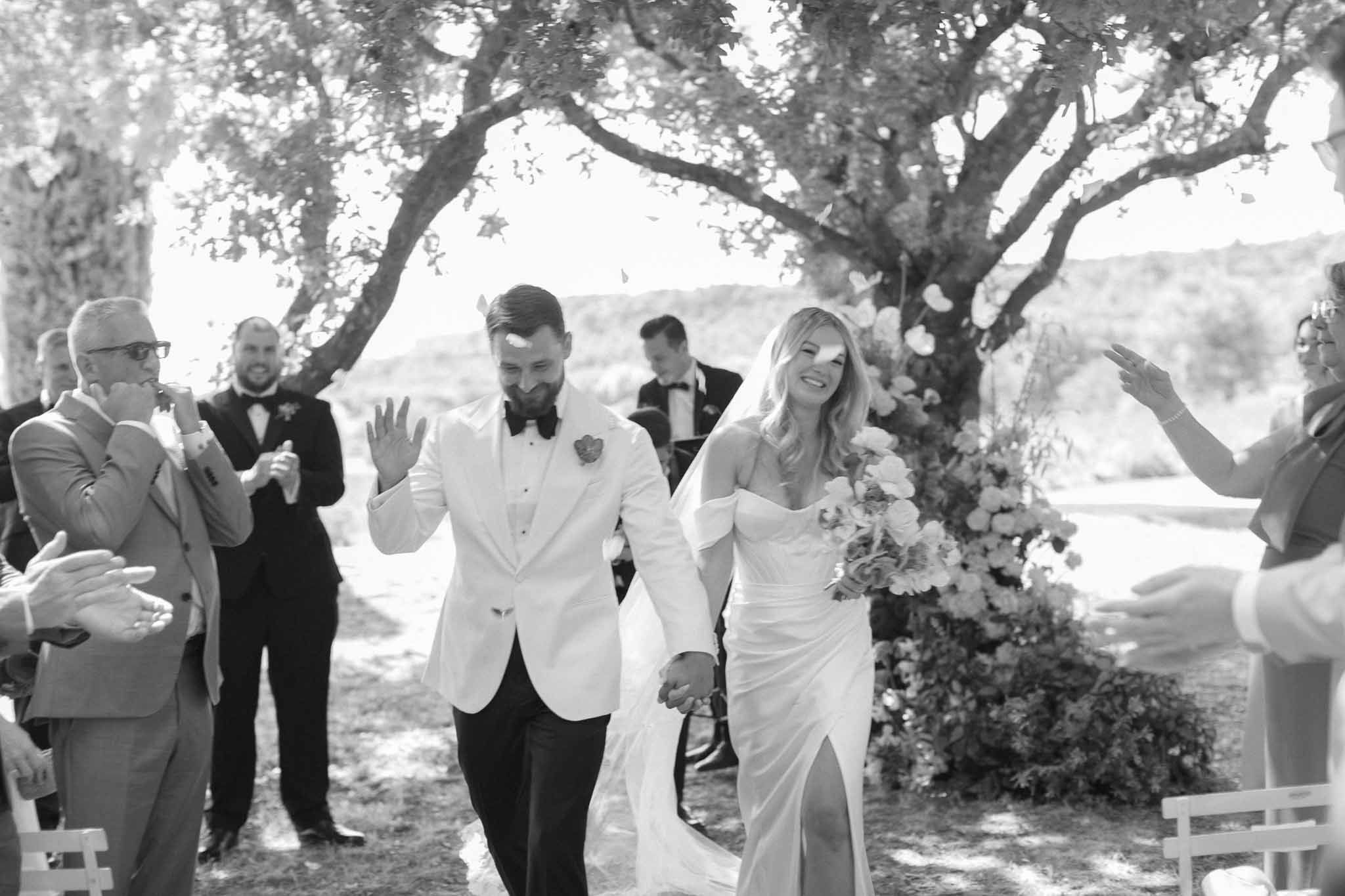
Bouquet Ideas for French Countryside Ceremonies
The bouquet that works in France looks nothing like the tight, structured arrangements that dominate British and American bridal magazines. Across the real weddings featured on French Wedding Style, one pattern is consistent: the bouquets that photograph most naturally are loose, textured, and built from what grows nearby. It is looser, softer, and built to look as though it was gathered from the garden an hour before the ceremony. This is not an accident. For a broader view of every step involved, see the complete French destination wedding planning resource.
French florists design for the landscape, not the ballroom. A bouquet held against honey-coloured stone, lavender fields, or a crumbling courtyard wall needs movement and texture, not precision. It should feel like part of the scene, not something imported from a different aesthetic. Understanding what flowers are in season in your region is the first step to achieving this. For the full picture on every floral decision, see our complete wedding flowers chapter.
Key Takeaways
- The loose, garden-gathered bouquet is the dominant style in French wedding floristry. It pairs naturally with the architecture, the light, and the photography style of French destination weddings.
- French florists work from a colour direction and a sense of scale, not from a stem-by-stem specification. The best brief is three photographs: your venue stone, your dress silhouette, and a colour you love.
- Regional flowers create the most cohesive result. Provence bouquets favour garden roses, jasmine, lavender, and olive. Loire bouquets lean toward peonies, sweet peas, and wisteria. Normandy bouquets feature hydrangeas, foxgloves, and apple blossom.
- Bouquet size should relate to dress proportions. A structured column dress pairs with a smaller, tighter posy. A full skirt with volume handles a large, trailing arrangement. A relaxed linen or silk dress calls for a mid-sized, loose gathering.
What Bouquet Style Suits a French Countryside Wedding?
Three styles account for the vast majority of successful bouquets at French countryside weddings. The first is the loose garden-gathered bouquet: asymmetric, textured, with stems at varying heights and a mix of open blooms, buds, foliage, and trailing elements. This is the most photographed style on French Wedding Style and the one that sits most naturally against château stone, barn timber, and vineyard backdrops. It reads as organic rather than designed. The second is the romantic hand-tied posy: smaller, rounder, and more defined than the garden-gathered, but still soft in texture. This works well for civil ceremonies at the mairie, intimate weddings under 40 guests, and brides wearing structured or minimalist dresses that benefit from a more restrained floral accent. The posy style suits Paris and the Loire particularly well, where the architecture is more formal.
The third is the trailing or cascading bouquet: longer, with elements that fall below the hand in a loose drape. This is less common in French countryside settings because it competes with the visual weight of the venue and the dress. Where it works is at grand châteaux with long staircases and formal reception rooms, where the scale of the space can absorb the drama. At most rural domaines and bastides, the trailing bouquet photographs as overdone.
What does not work in the French countryside is the perfectly round, symmetrical, tightly packed bouquet. Against old stone, informal grounds, and natural light, it looks artificial. French florists will steer you away from this shape, and they are right to do so. The landscape calls for something that breathes.
How Does the Loose Garden-Gathered Look Work?
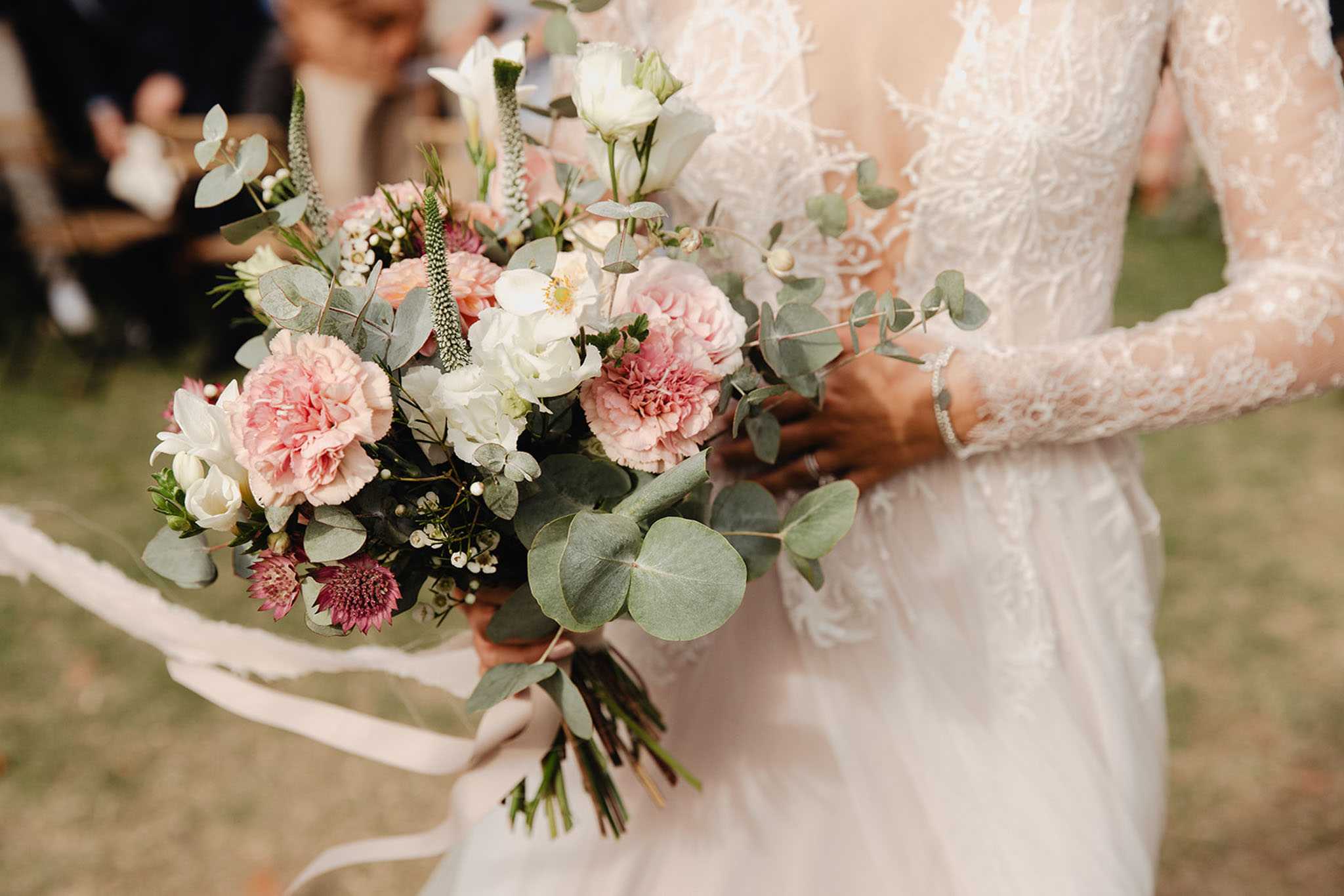
The garden-gathered bouquet works because it follows a principle French florists call "controlled disorder." Every stem is placed intentionally, but the final effect should feel spontaneous, as though someone walked through the garden with scissors and ribbon and assembled what they found. This is harder to execute than a structured arrangement, not easier, and it is the signature skill of an experienced French wedding florist. The construction starts with a base of foliage and textural greenery: eucalyptus, olive, Italian ruscus, or whatever grows near the venue. Into that go the feature flowers (garden roses, peonies, dahlias, depending on season) at slightly different heights. Filler flowers (astilbe, astrantia, wax flower, matricaria) create volume and softness between the focal blooms. Trailing elements (jasmine vine, clematis, spirea branches, or cascading grasses) break the outline and add movement.
The colour range within a garden-gathered bouquet is typically narrow. Two to three tones, not five. Cream and blush. Ivory and sage. Peach and terracotta. Restricting the palette is what prevents the "random" look from becoming genuinely chaotic. The texture does the work. The colour holds it together.
Stems are wrapped in a single satin or silk ribbon, often in a neutral tone (ivory, champagne, sage). No rhinestone pins. No heavily wrapped handle. The visible stems above and below the ribbon are part of the design. This is not a bouquet that conceals its mechanics. It shows its construction honestly, which is the French approach to flowers more broadly: less polish, more character.
What Are the Best Bouquet Flowers for Each French Region?
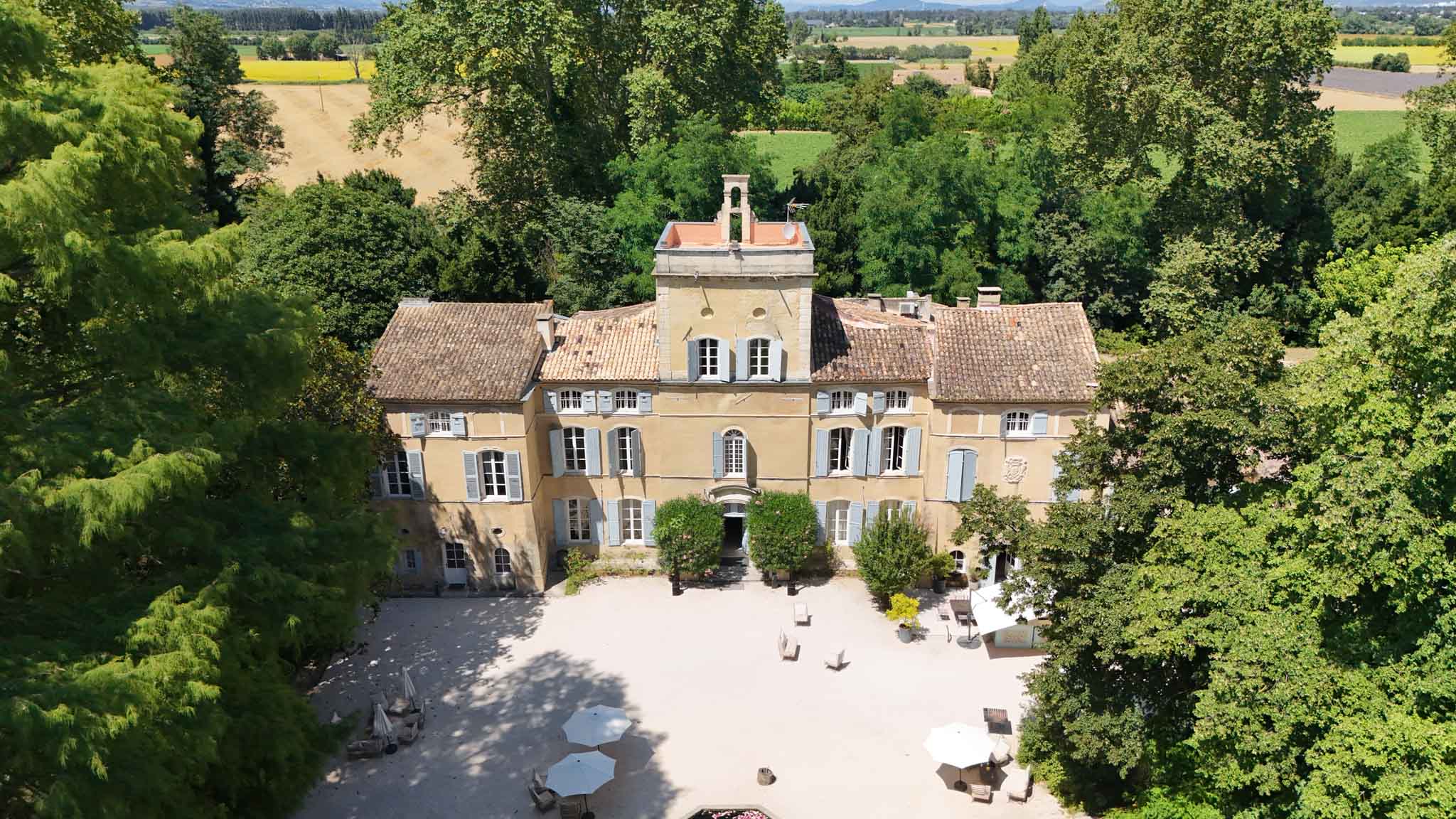
The strongest bouquets use flowers grown near the venue. Not as a rule, but as a pattern. When a florist sources from local growers, the blooms arrive fresher, more fragrant, and more in tune with the season and the surroundings. Here is what works, region by region. Provence and the Côte d'Azur: Garden roses (Juliet, Keira, and local varieties from Grasse-area growers) form the backbone. Add jasmine for scent at evening ceremonies, olive branches for silver-green foliage, lavender as a textural accent (not a focal flower, which wilts too fast), and dried grasses for lightness. The Provençal bouquet is warm-toned: peach, apricot, cream, blush, with terracotta or rust as an accent. It photographs against ochre stone with a natural warmth that cooler palettes cannot match. Loire Valley: Peonies (May to mid-June only) are the signature flower. Supplement with sweet peas for trailing movement, wisteria racemes for a cascading element, delphiniums for vertical texture, and lush garden foliage from the château grounds. The Loire bouquet runs cooler: soft pink, lavender, cream, pale blue.
Normandy and Brittany: Hydrangeas (in cooler months or shaded venues) provide volume. Garden roses in soft white and blush hold well in the mild temperatures. Foxgloves add height for taller arrangements. Apple blossom branches in spring create a wild, pastoral effect. Cow parsley and queen Anne's lace from the hedgerows add meadow texture. The Norman bouquet is pale, soft, and slightly wild: white, blush, touches of pale green.
Dordogne and South-West: A mix of southern warmth and northern greenness. Dahlias from late July onwards in burgundy, peach, and apricot. Roses from local growers. For couples exploring locally sourced wedding flowers, this region offers some of the strongest farm-to-vase options. Sunflower accents (a single stem, not a full bunch) for a distinctly south-western French feel. Walnut foliage, fig leaves, and grape vine tendrils from surrounding farms add character. The palette here is richer than Provence: burgundy, gold, forest green, warm cream.
How Do You Brief a French Florist on Your Bouquet Vision?
The decisive shift for international couples working with a French florist is this: less mood-boarding, more seasonal intuition. A British or American florist expects a detailed brief with specific stems, exact colours, and reference images for every arrangement. A French florist works differently. They want to know three things: the venue, the colour direction, and the scale. From there, they respond to what the season and the local growers offer. Send three photographs. First, your venue's exterior, showing the stone, the grounds, and the light conditions. Second, your dress, so they can judge the silhouette and fabric weight. Third, one image that captures the mood you want. Not 40 images. One. This gives the florist a clear direction without boxing them into specific stems that may not be available or may not perform well in your venue's conditions.
Specify what you do not want more clearly than what you do. "No baby's breath, no gypsophila, no bright white" is more useful than "I want David Austin roses in Juliet with astilbe and Italian ruscus." The florist knows the local varieties, the seasonal availability, and the tricks that make flowers last in the conditions at your venue. Your job is to communicate the feeling and the colour. Their job is to translate that into stems.
Budget framing matters. French florists quote per arrangement. Tell them your total flower budget (not just the bouquet budget) at the first meeting. A typical bridal bouquet runs €100 to €250 depending on size, season, and complexity. For the full picture on florist costs and what drives pricing, see our vendor guide. If your total flower budget is €2,000, the florist needs to know that to balance the bouquet against centrepieces, ceremony flowers, and any installation work. Holding back the number means they cannot design the full scope effectively.
One conversation that international couples often skip: timing. Ask your florist what time they will deliver and how long the bouquet will hold in the conditions at your venue. A garden-gathered bouquet assembled at 8am for a 4pm ceremony will look different from one finished at noon. In 35°C Provençal heat, that difference is significant. The best florists condition their stems overnight, assemble in the morning, and deliver with specific instructions on where to store the bouquet until photographs begin.
Related Articles
- Seasonal wedding flowers by region across France
- How to source locally grown flowers for a French wedding
- Colour palettes that work with French venue stone
- Understanding French wedding aesthetics and design principles
- How to choose a wedding florist in France
- Ceremony backdrop ideas for outdoor French weddings
- Hidden costs that catch international couples in France
Frequently Asked Questions
What is a garden-gathered bouquet?
A garden-gathered bouquet is an asymmetric, loose arrangement designed to look as though the flowers were picked from a garden that morning. It combines open blooms, buds, foliage, and trailing elements at varying heights, wrapped with a simple ribbon. This is the dominant bouquet style in French wedding floristry because it photographs naturally against stone architecture, outdoor settings, and the pastoral landscapes of French countryside venues.
How much does a bridal bouquet cost in France?
A bridal bouquet from a French wedding florist typically costs €100 to €250. The price depends on the size, the complexity of the design, the season, and the specific flowers used. In-season, locally sourced stems keep costs at the lower end. Out-of-season or imported stems (peonies in September, ranunculus in August) push towards the higher end. French florists include the bouquet in a per-arrangement quote rather than itemising individual stems, so the final price reflects the total floral design scope.
Should I bring inspiration images to a French florist?
Bring one or two images that capture the overall mood and colour direction, not a large collection of specific arrangements. French florists work from seasonal availability and local sourcing rather than replicating specific designs. The most useful references are photographs of your venue (showing the stone, grounds, and light), your dress silhouette, and one image that communicates the feeling you want. Specifying what you do not want is equally valuable.
Can I include lavender in my bouquet?
Lavender works as a textural accent in bouquets but not as a focal flower. Fresh lavender wilts quickly once cut, particularly in warm conditions. Dried lavender holds better and adds scent without the wilting risk. Most French florists use one or two sprigs of fresh lavender tucked into a bouquet of sturdier blooms (garden roses, lisianthus) rather than building the bouquet around lavender as a primary stem. For a Provençal look, the scent of lavender near the ceremony space or as a table scatter is more effective than placing it in a hand-held arrangement.
What bouquet shape works with a French lace dress?
A loose, medium-sized garden-gathered bouquet with soft textures (sweet peas, astilbe, garden roses) complements French lace without competing with it. The visual principle: delicate dresses pair with delicate flowers. Heavy, structured bouquets with large blooms (king protea, oversized dahlias) overpower fine lace. If your dress has significant detail (beading, embroidery, illusion panels), reduce the bouquet size and complexity so the dress remains the focal point in photographs. The bouquet should enhance the dress, not distract from it.
Start building your full floral plan with our complete wedding flowers guide. See what is in season at your wedding date with our regional flower calendar, or explore countryside wedding venues across France where the grounds and gardens shape the floral design from day one.
Explore Every Guide in This Chapter
Deep-dive into each topic covered above.