
Guest Accommodation: On-Site, Hotels, Airbnb
Accommodation is the second logistics question guests ask, right after travel. For a French destination wedding, the answer is rarely a single hotel block. Instead, it is a layered system: on-site beds at the venue for the inner circle, gîtes and chambres d'hôtes within driving distance for the wider guest list, and hotels in the nearest town for those who prefer independence.
The typical French château sleeps 20 to 40 guests on site, with a median around 30 in our venue directory, which means at a 100-person wedding, two-thirds of your guests need somewhere else. Every accommodation type, the realistic costs as of 2026, who pays for what, and how to communicate options clearly to international guests who have never heard of a gîte. This forms part of our step-by-step destination wedding planning guide for France. For the full chapter, see our complete guest experience guide.
Key Takeaways
- The median French wedding venue in our directory sleeps approximately 30 guests on site, with a range of 20 to 40 at most château and domaine properties. This is enough for the couple, immediate family, and the closest friends, but not the full guest list. Plan off-site accommodation from the start.
- Gîtes (self-catering rural houses, €80 to €150 per night for groups of 6 to 12) and chambres d'hôtes (French B&Bs, €100 to €200 per night per room) are the most common off-site options near rural venues.
- The couple typically hosts on-site accommodation for immediate family. Off-site guests book and pay for their own accommodation, with options and booking links provided by the couple on the wedding website.
- Block-booking gîtes 6 to 9 months ahead secures availability and often unlocks a 10 to 15 percent discount for multi-night stays during peak season.
- A clear accommodation guide on your wedding website, including maps, price ranges, and direct booking links, is the most effective way to reduce guest confusion about a destination wedding in France.
What Accommodation Options Exist Near French Wedding Venues?
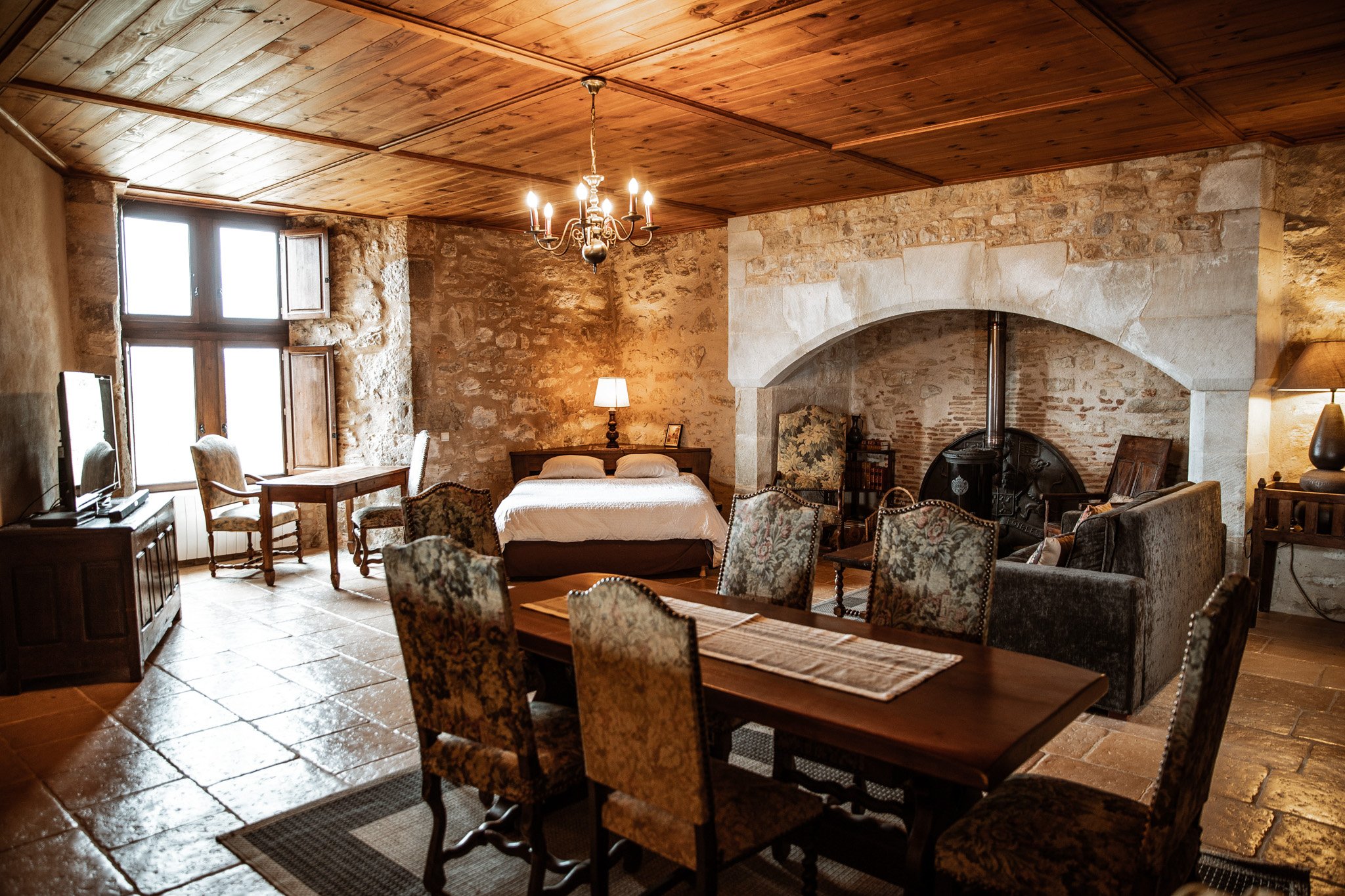
French wedding venues sit in a different accommodation landscape to British or American equivalents. There are rarely conference-style hotel blocks within walking distance. Instead, the surrounding area offers a mix of property types, each with its own character, capacity, and price point. Understanding the full range allows you to match accommodation to guest groups effectively. On-site venue accommodation. Most châteaux, domaines, and bastides in France include bedrooms as part of the venue rental. These range from 4 to 5 rooms at a small mas in Provence to 15 to 20 rooms at a large Loire Valley château. The quality varies from renovated suites with en-suite bathrooms to characterful rooms with shared facilities. On-site beds are the most coveted because guests wake up at the wedding venue, join the next morning's brunch without driving, and feel part of the inner circle. Reserve these for the couple, parents, grandparents, and the bridal party.
Gîtes. A gîte is a self-catering rural holiday house, typically a converted farmhouse, barn, or cottage. Gîtes sleep 6 to 12 people in multiple bedrooms with a shared kitchen, living space, and garden. They are ideal for friend groups, families with children, and guests who want a communal, relaxed base. Rates run €80 to €150 per night for the whole property during peak season, making them the most affordable per-person option. Many venues have 2 to 4 gîtes within a 10 to 15-minute drive that they recommend regularly.
Chambres d'hôtes. The French equivalent of a bed and breakfast. A chambre d'hôtes is a private room in someone's home, with breakfast included. Rooms cost €100 to €200 per night and offer a more intimate, personal experience than a hotel. Hosts are often locals who know the area well and can recommend restaurants and activities. Chambres d'hôtes work well for couples (two guests sharing a double room) and for older guests who prefer not to self-cater.
Hotels. In larger towns near wedding venues (Aix-en-Provence, Sarlat, Amboise, Beaune), hotels range from budget chains at €70 to €90 per night to boutique properties at €150 to €300. Hotels suit guests who want total independence, late check-in flexibility, and the amenities of a staffed property. They are the default for guests who are extending their trip with pre- or post-wedding tourism.
How Many Guests Can a French Venue Sleep?
On-site capacity varies enormously by venue type and region. Knowing the median gives couples a planning benchmark, but always confirm with your specific venue. For couples browsing château wedding venues across France, the on-site accommodation count is often the deciding factor between two otherwise similar properties. A venue sleeping 40 guests eliminates much of the off-site logistics headache. A venue sleeping 12 requires a comprehensive off-site plan. Ask your venue for their recommended accommodation list at the first site visit. Most established wedding venues maintain a curated list of nearby gîtes, chambres d'hôtes, and hotels that they have worked with for years. Book gîtes near your venue 6 to 9 months before the wedding. In popular regions like Provence and the Dordogne, the best properties within 15 minutes of established wedding venues book out a year ahead for July and August. Secure 2 to 3 gîtes early, then release any you do not need by the cancellation deadline.
| Venue Type | Typical On-Site Beds | Room Configuration |
|---|---|---|
| Château (large) | 30 to 50 | 10 to 20 rooms, often a mix of suites and standard doubles |
| Château (medium) | 15 to 30 | 6 to 12 rooms, en-suite or shared bathrooms |
| Domaine / Bastide | 15 to 25 | 5 to 10 rooms plus converted outbuildings |
| Mas (Provençal farmhouse) | 10 to 20 | 4 to 8 rooms, often with a separate guest cottage |
| Villa | 10 to 16 | 4 to 7 rooms, typically all en-suite |
| Wine estate | 8 to 20 | 3 to 8 rooms in the main house or guest wing |
What Are Gîtes and Chambres d'Hôtes?
International guests, particularly those from the US and Australia, are often unfamiliar with these accommodation types. A brief explanation on your wedding website prevents confusion and helps guests choose the right option for their needs. A gîte (pronounced "jeet") is a self-catering holiday rental. Think of it as a French Airbnb, but typically a standalone rural property rather than a city apartment. Gîtes are classified by Gîtes de France (the national network) on a 1 to 5 ear-of-wheat scale, similar to hotel star ratings. A 3-ear gîte sleeping 8 in the Dordogne costs €100 to €130 per night. Guests share a kitchen, living room, and garden. Bedrooms are private. Linens are provided. The self-catering element means guests can prepare simple meals, which reduces the cost of a multi-day wedding weekend. Search for gîtes at Gîtes de France or on major holiday rental platforms.
A chambre d'hôtes (pronounced "shom-bra doht") is a guest room in a private home with breakfast included. French regulations limit each property to 5 rooms and 15 guests. The host lives on site and serves breakfast, often homemade with local produce.
Chambres d'hôtes have a personal, boutique quality that larger hotels cannot match. They are registered and inspected by local authorities or by national networks like Clévacances. Rates of €100 to €200 per room per night include a breakfast that guests will remember: fresh bread, local cheese, fruit, pastries, and coffee. For couples marrying at countryside venues in France, a chambre d'hôtes within 10 minutes of the venue offers guests a genuinely French experience that a chain hotel cannot replicate.
Who Pays for Guest Accommodation?
The convention at French destination weddings is clear but worth stating explicitly, because it differs from some traditions. The couple pays for on-site venue accommodation. This is included in the venue hire fee in most cases, and the couple allocates rooms to family and the bridal party. Guests staying on site do not pay separately for their room. Off-site guests book and pay for their own accommodation. The couple provides a recommended list of options with direct booking links, price ranges, and driving distances. The couple does not pay for gîtes, chambres d'hôtes, or hotels that off-site guests book. This is the accepted norm at destination weddings in France, across UK, US, and Australian guest expectations. Guests understand that attending a destination wedding involves travel and accommodation costs on their side. The grey area is gîte block-bookings. Some couples pre-book 2 to 3 gîtes near the venue and offer them to guest groups at cost, handling the logistics but not subsidising the price. This is a practical service, not a financial obligation.
How Do You Communicate Options to International Guests?
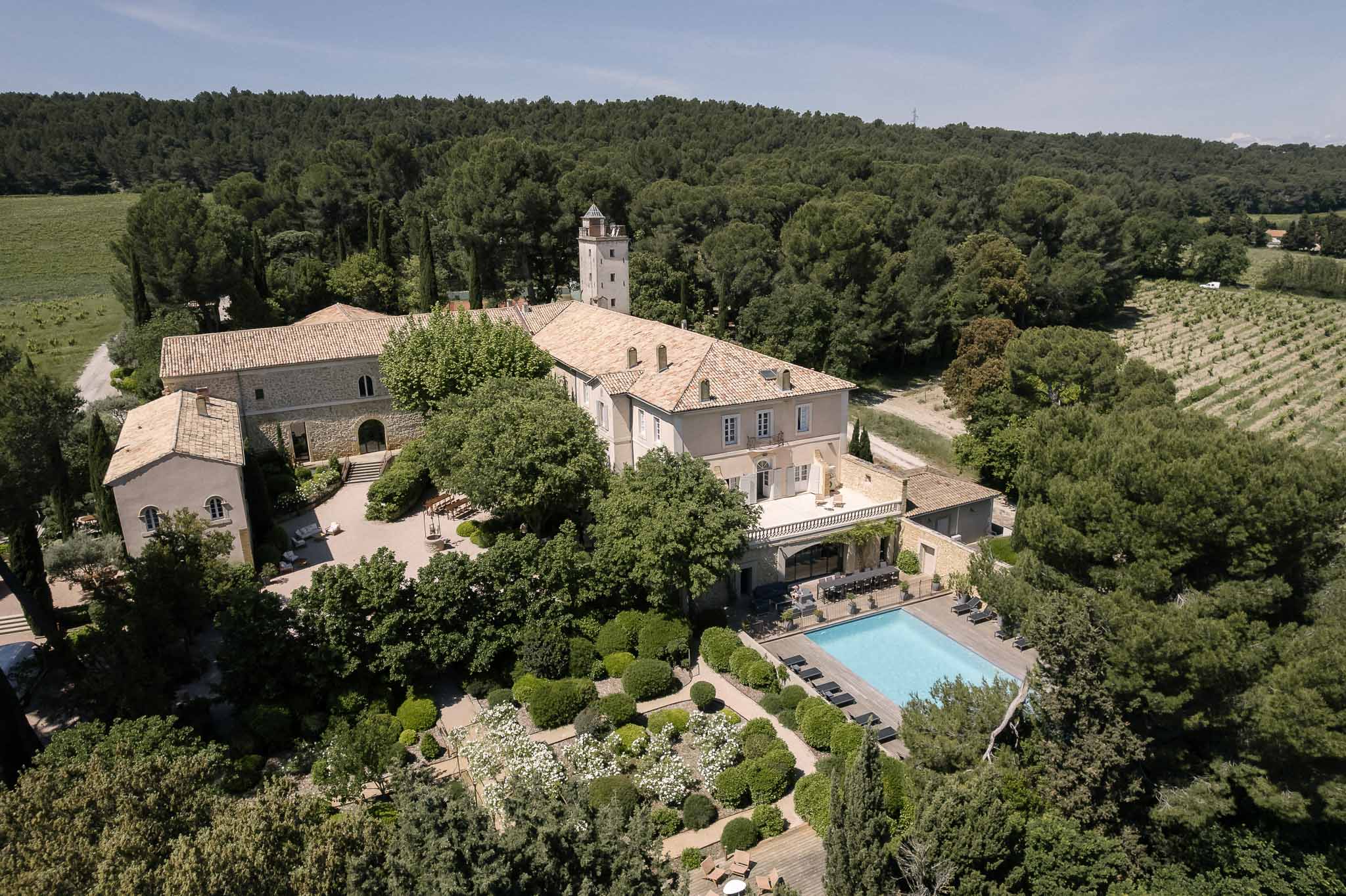
A dedicated accommodation page on your wedding website is the most effective tool. Build it 8 to 10 months before the wedding and include the following for each recommended property. Property name and type (gîte, chambre d'hôtes, hotel). Distance from venue in minutes by car, not kilometres. Price range per night. Capacity (how many guests it sleeps, how many bedrooms). Direct booking link or contact email. Brief description of the property and what makes it suitable (pool, parking, family-friendly, walking distance to village restaurants). Map showing all options relative to the venue. Group properties by budget tier. Budget-conscious guests want the gîte option with shared costs. Couples who prefer privacy want the chambre d'hôtes. Independent travellers want the hotel in town. Present all three clearly, without judgement about which is "better." Every option is valid. See how this couple brought this to life at Château Les Crostes in Provence.
For the nearest town with restaurants and shops, include a brief note. Guests staying in a rural gîte 20 minutes from the venue will want to know where to buy groceries, eat dinner on the non-wedding evenings, and find a pharmacy. We cover this in our guide to guest accommodation options by French wedding region. International guests do not automatically know that the nearest village may close its shops at noon and not reopen until 3pm. A sentence or two of context goes a long way.
Send the accommodation information alongside your save-the-dates or shortly after. The earlier guests start looking, the better the availability and prices. For guidance on the full communication timeline, see our save-the-dates and travel communication guide.
Related Articles
- Guest experience at a French wedding: the complete guide
- Guest travel logistics for a French wedding
- Planning the welcome dinner
- Structuring a multi-day wedding weekend
- Venue accommodation guide
- Wedding venues with accommodation in France
- Exclusive-use wedding venues in France
- Château wedding venues in France
- Wedding venues in the south of France
- Browse all wedding venues in France
Frequently Asked Questions
How far from the venue is too far for guest accommodation?
Keep all recommended accommodation within a 20-minute drive of the venue. Beyond that distance, guests spend too long in transit, shuttle logistics become complicated, and the communal feeling of a destination wedding weekend breaks down. In practice, most venues have strong options within 10 to 15 minutes.
Should we block-book hotel rooms for guests?
Block-booking works well when there is a suitable hotel within 15 minutes of the venue. Negotiate a group rate (typically 10 to 15 percent off the rack rate) and a release date (the point at which unbooked rooms return to the hotel's general inventory). Share the booking code and rate on your wedding website. You are not obligated to guarantee the rooms financially. The hotel holds them until the release date.
Can guests bring pets to gîtes in France?
Many gîtes accept dogs (chiens acceptés), but this varies by property and must be confirmed at booking. Hotels are generally pet-friendly in France, more so than in the UK. Chambres d'hôtes are at the host's discretion. Always check before booking and mention this on your accommodation page if you know several guests will be travelling with dogs.
What if the venue has limited on-site accommodation?
Prioritise the couple, both sets of parents, and grandparents for on-site rooms. The bridal party gets the next allocation. Everyone else stays off-site. This is normal and expected. Most French venues sleeping 15 to 20 guests on site host weddings of 80 to 120 people. The venue and its coordinator are experienced in managing the split and can provide tested accommodation recommendations.
Explore Every Guide in This Chapter
Deep-dive into each topic covered above.