
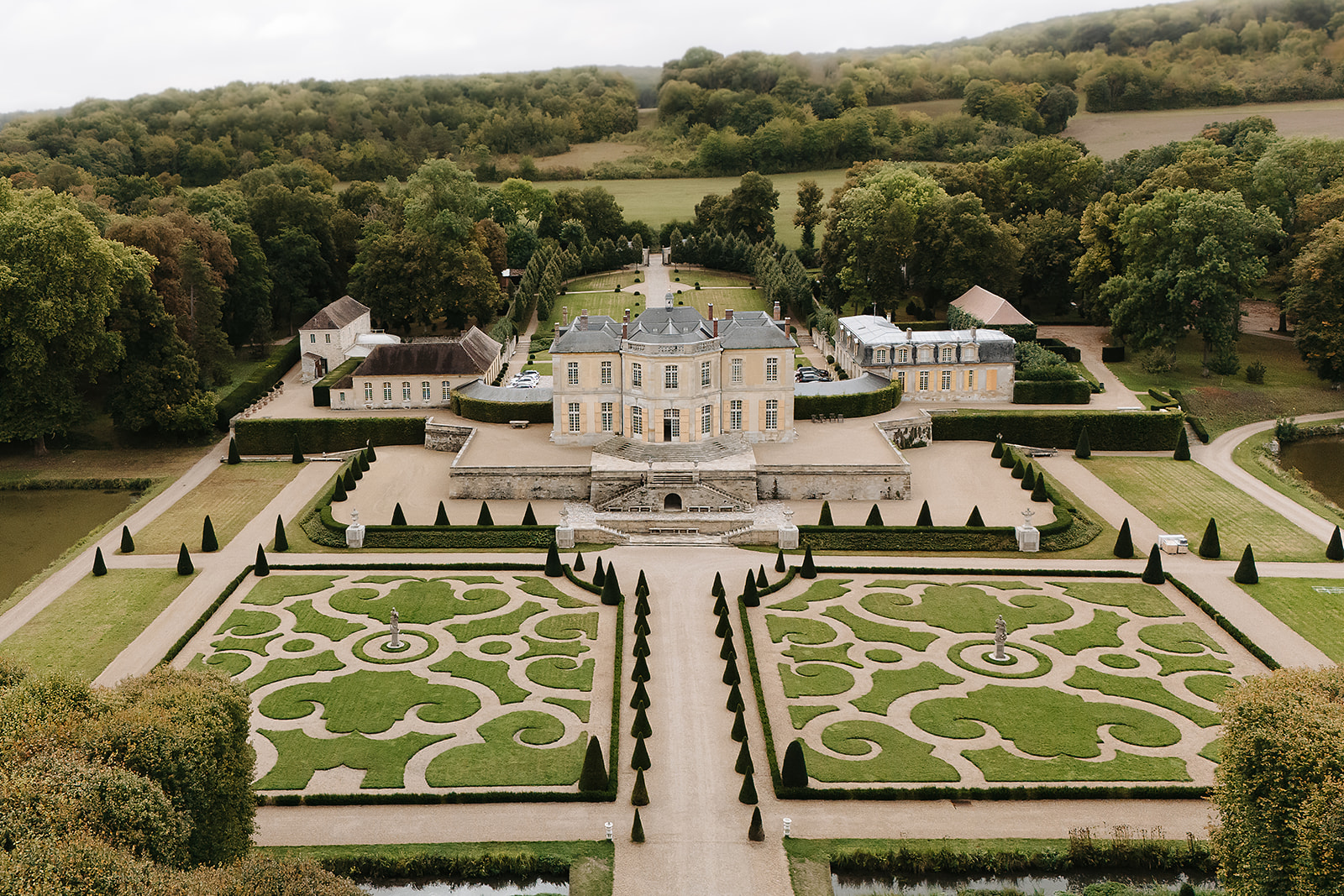
Why Guest Accommodation Changes Everything
Accommodation is the most underestimated factor in French wedding venue selection, and it shapes the celebration more fundamentally than décor, catering, or entertainment. The median venue on French Wedding Style sleeps 33 guests across 13 rooms.
For a wedding of 80 or more, that means roughly half your guests need accommodation elsewhere, and the logistics of where they sleep determine whether your wedding is a single Saturday evening or a full weekend celebration. How on-site capacity works at French venues, what overflow options exist in rural areas, who traditionally pays, and why the accommodation question should be one of the first you ask, not one of the last. For a broader view of every step involved, see our step-by-step destination wedding planning guide for France.
Key Takeaways
- The median French Wedding Style venue sleeps 33 guests in 13 rooms. Most weddings of 80 or more guests require overflow accommodation.
- 25% of French wedding venues require mandatory accommodation purchase as part of the venue booking.
- On-site accommodation transforms the wedding from a single evening into a Friday-to-Sunday celebration. Welcome dinner, pool afternoon, and Sunday brunch all become possible.
- Overflow options in rural France include gîtes (€80 to €150 per night), chambres d'hôtes (€100 to €200 per night), local hotels, and glamping (€3,000 to €8,000 for bell tent or safari tent setup).
- Who pays for guest accommodation varies by culture: UK norm is guests pay, US norm is couple pays or negotiates a group rate, French norm is hosts provide for close family while other guests pay their own way.
Why Is On-Site Accommodation the Most Underestimated Factor in Venue Selection?
International couples typically select a French venue based on its appearance, its location, its catering, and its price. Accommodation gets evaluated last, if at all. This ordering is backwards for destination weddings. When guests travel from the UK, US, Australia, or elsewhere to attend a wedding in rural France, they are committing to a journey, not just an evening. Where they sleep determines how much of the wedding weekend they experience. A guest staying on-site at the venue arrives on Friday, joins the welcome dinner, swims in the pool on Saturday afternoon, walks to the ceremony, dances until midnight, and sits down for Sunday brunch without ever needing a car, a taxi, or a designated driver. A guest staying at a hotel 20 minutes away arrives by shuttle for the ceremony, leaves when the last shuttle departs at midnight, and misses everything that happens before and after. The difference in experience is not marginal. It is the difference between a wedding and a weekend, between attendance and immersion.
How Many Guests Can a French Venue Realistically Sleep?
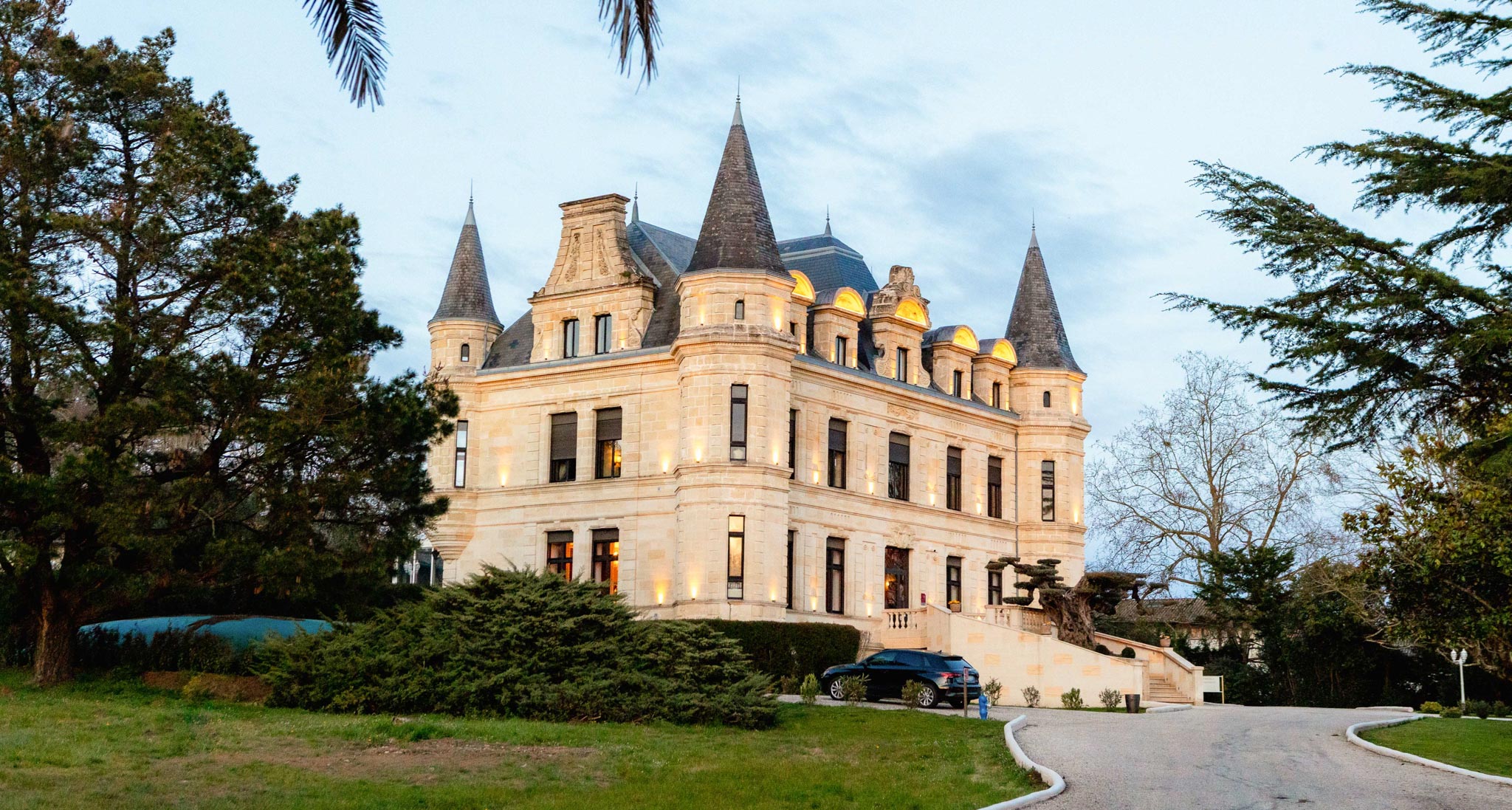
In the FWS database of French wedding properties, 90% have on-site accommodation. The median property offers 13 rooms sleeping 33 guests. That figure includes a wide range: a small bastide in Provence might have 5 rooms for 10 guests, while a large château in the Loire can accommodate 60 or more across suites, cottages, and converted outbuildings. The critical number is not total beds but usable rooms, because wedding guests generally arrive as couples or families, not as individuals willing to share dormitory-style. Thirteen rooms realistically accommodate 13 couples (26 adults) plus children in supplementary beds or cots. If your wedding has 80 adult guests, approximately 40 to 50 need accommodation elsewhere. The venue's quoted capacity may also include a mix of room standards. The main château might have 8 rooms with en-suite bathrooms, while 5 additional rooms in an annex or converted barn share facilities. Understand the breakdown before allocating rooms, because your parents will not thank you for a shared bathroom down the corridor while friends occupy the best suite.
What Are the Best Overflow Options in Rural France?
When on-site rooms are full, the overflow accommodation options in rural France are more varied and more charming than most international couples expect. Gites are self-catering holiday homes available by the night or week at €80 to €150 per night for a property sleeping four to eight people, and in popular wedding regions like the Dordogne and Provence, dozens sit within a 10 to 15 minute drive of most venues. Chambres d'hotes (the French equivalent of B&Bs) offer a room in a private home with breakfast included at €100 to €200 per night, with a typically high standard of hospitality. Local hotels in nearby towns run €80 to €180 per night depending on region and star rating, though in rural areas they may be 15 to 30 minutes from the venue, making shuttle transport essential. Glamping has also become a serious overflow option, with professional bell tent and safari tent setups on venue grounds costing €3,000 to €8,000 for 10 to 20 guests.
- Gîtes are self-catering holiday homes available by the night or week, typically costing €80 to €150 per night for a property sleeping four to eight people
- In popular wedding regions such as the Dordogne and Provence, dozens of gîtes sit within a 10 to 15 minute drive of most venues
- Groups of friends often rent a gîte together, splitting costs and creating their own pre- and post-wedding gathering
- Chambres d'hôtes are the French equivalent of B&Bs: a room in a private home with breakfast included, typically €100 to €200 per night for a double room
- The standard is generally high, the hosts are welcoming, and breakfast is a proper spread of local bread, pastries, cheese, and fruit
- Local hotels in nearby towns provide a familiar option at €80 to €180 per night depending on the region and star rating
- In rural areas, hotels may be 15 to 30 minutes from the venue, so shuttle transport becomes essential
- Glamping has become a serious overflow option at French weddings
- Bell tents, safari tents, and fully furnished tipis set up on the venue grounds provide on-site accommodation for guests who would otherwise stay off-site
- A professional glamping setup for 10 to 20 guests runs €3,000 to €8,000 and includes beds, linens, lighting, and a walkway
- Note that glamping requires a commune permit in some areas, so confirm with the venue and the mairie before booking
Scroll →
| Overflow Option | Typical Cost per Night | Best For | Key Consideration |
|---|---|---|---|
| Gîte (self-catering) | €80 to €150 (whole property) | Groups of friends, families with children | Book early: popular gîtes near wedding venues fill 6 to 12 months ahead |
| Chambre d'hôtes (B&B) | €100 to €200 (double room) | Couples, older guests, solo travellers | Breakfast included. Hosts may have a late-return curfew. |
| Local hotel | €80 to €180 (double room) | Guests wanting familiar standards | May be 15 to 30 minutes from venue. Shuttle transport essential. |
| Glamping on-site | €3,000 to €8,000 (full setup) | Adventurous guests, younger groups | Commune permit may be required. Weather-dependent comfort. |
| Camping municipal | €15 to €30 (pitch) | Budget-conscious guests with own equipment | Basic facilities. Works for self-sufficient travellers only. |
How Does On-Site Accommodation Change the Shape of the Weekend?
On-site accommodation does not simply provide beds. It creates a wedding weekend. Without it, the wedding is a single evening: guests arrive, attend the ceremony, eat dinner, dance, and leave. With it, the timeline expands to fill three days. Friday becomes a proper welcome. Guests arrive throughout the afternoon, settle into their rooms, explore the property, and gather for a relaxed dinner or drinks on the terrace. The social connections that make a wedding rewarding begin forming 24 hours before the ceremony, particularly at exclusive-use venues where the group has the run of the property. Saturday starts with a communal breakfast, which at a French venue typically means fresh bread, croissants, local charcuterie, cheese, and fruit laid out in the courtyard or dining room. The morning is unstructured. Some guests swim. Others walk the grounds. Children play. The bridal party prepares. There is no rush, because nobody needs to drive anywhere.
Who Pays for Guest Accommodation?
Accommodation payment customs vary significantly by culture, and navigating this question diplomatically is important for international weddings where guests come from different traditions. The British and Irish norm is that guests pay for their own accommodation. The couple may negotiate a group rate at nearby hotels or reserve a block of gîtes, but guests cover the cost themselves. This is well understood and generally accepted. The American norm is more generous: the couple often pays for at least some accommodation, particularly for the bridal party, or negotiates a heavily discounted group rate at a hotel block. For destination weddings, American couples sometimes cover a portion of guest accommodation as an acknowledgment that guests are making a significant financial commitment to attend. The French norm sits between the two. The hosts (often the couple's parents) provide accommodation for immediate family and the bridal party, typically in the on-site rooms. Extended family and friends arrange and pay for their own accommodation at nearby gîtes, chambres d'hôtes, or hotels.
What Should You Check About Accommodation Standard Before Booking?
French wedding venues, particularly historic châteaux and converted farmhouses, deliver an experience that modern hotels do not: character, history, and atmosphere. They also deliver some surprises that guests accustomed to hotel standards may not expect. Shared bathrooms are common in older châteaux. A property may have 15 bedrooms but only 8 en-suite bathrooms, with the remaining rooms sharing facilities on the landing. This is not a flaw. It is the reality of buildings that predate indoor plumbing by several centuries. Allocate en-suite rooms to guests who need them most (elderly relatives, guests with mobility limitations) and brief others in advance. Air conditioning is absent from many historic French properties, a factor covered in our seasonal climate guide. Thick stone walls keep interiors cool in moderate heat, but a July wedding in Provence during a canicule (heatwave) will test that principle.
Ask the venue whether rooms have AC, fans, or neither, and communicate this to guests so they can prepare. Hot water capacity is a practical concern when 30 or more people shower simultaneously on Saturday morning. Older properties may have a single chauffe-eau (water heater) that takes time to recover between uses. Ask whether the system can handle the full guest count and consider staggering shower times. Thin walls in converted properties mean that a late-night conversation in one room carries clearly to the next. Brief your guests, particularly younger groups, that sound travels in old buildings. Pool safety is a legal requirement in France. The loi Raffarin mandates that private pools must have an approved safety device: a barrier, an alarm, a cover, or a shelter. If children will be present, confirm that the venue's pool meets current safety standards and discuss supervision arrangements with the parents in your guest list.
The Mistakes That Cost Couples Time and Money on Guest Accommodation
Sleeping capacity belongs in your top three venue criteria. The number of guests you can sleep on-site determines the character of your wedding weekend. A venue that sleeps 50 of your 80 guests delivers a fundamentally different experience than one that sleeps 15. Make accommodation capacity a priority in your venue selection, not something you solve after the booking. Not all on-site rooms are equivalent. Request a room-by-room inventory before allocating: bed sizes, bathroom access, floor level, accessibility, and whether the room faces the courtyard (noisy after dinner) or the garden (quieter). Room allocation is a diplomatic exercise that benefits from early planning. Rural transport logistics are harder than you expect. In rural France, taxis are scarce and ride-hailing apps do not function reliably outside cities, one of many hidden costs that catch destination couples off guard. If guests are staying at hotels, gîtes, or chambres d'hôtes away from the venue, you need organised shuttle transport. See how this couple brought this to life at Château Les Crostes in Provence.
Mandatory accommodation purchase affects 25% of French venues. At these properties, the couple must book all on-site rooms as part of the venue contract regardless of whether guests fill them. This can add €5,000 to €15,000 to the venue cost, and it needs to be factored into the budget from the start. Read more in our venue pricing guide.
Check sleeping capacity before anything else. A venue with 40 on-site beds and three gîtes within a five-minute drive gives you a three-day celebration. A venue with 10 on-site beds and the nearest hotel 30 minutes away gives you a single evening. Our guide to guest travel logistics and transport between accommodation and your French wedding venue covers this in detail. Both can be wonderful, but they are fundamentally different events. Choose the one that matches the wedding you actually want.
Related Articles
- The best wedding venues in France with on-site accommodation
- How venue pricing works in France: site fees, packages, and hidden costs
- Exclusive-use vs shared wedding venues in France
- Hidden costs of a destination wedding in France
- All-inclusive vs dry-hire wedding venues in France
Frequently Asked Questions
What is mandatory accommodation purchase and how common is it?
Mandatory accommodation purchase means the couple must book all on-site rooms as part of the venue contract, regardless of occupancy. The cost of those rooms is bundled into the venue fee or added as a separate line item. This model is used by approximately 25% of French wedding venues, most commonly at exclusive-use properties where the entire estate is privatised for the weekend. The advantage is guaranteed privacy and full property access. The disadvantage is a higher upfront commitment, typically €5,000 to €15,000 for rooms that may not all be filled. Some venues allow the couple to resell unused rooms to guests at a set nightly rate, partially recovering the cost.
How far in advance should I book overflow accommodation?
Book overflow accommodation at the same time as the venue, ideally 9 to 12 months before the wedding for peak-season dates (June through September). Quality gîtes and chambres d'hôtes near popular wedding venues in the Dordogne, Provence, and the Loire Valley fill well in advance. Your wedding planner will know which properties are closest to the venue, which owners are accommodating to wedding guests, and which offer the best value. A recommended list of 5 to 8 overflow options at different price points is standard practice for destination weddings in France.
Are French wedding venues required to have pool safety barriers?
Yes. French law (loi Raffarin, in force since 2006) requires all private pools to have at least one of four approved safety devices: a physical barrier (barrière de protection), a pool alarm (alarme), a safety cover (couverture de sécurité), or a pool shelter (abri). Wedding venues must comply with this law. If children will attend the wedding, confirm which safety device is in place and discuss supervision arrangements with the parents. Note that 64% of French Wedding Style venues have pools, rising to 95% in the Dordogne, so this is a relevant consideration for most venue searches.
Can I add glamping to a venue that does not normally offer it?
Yes, provided the venue owner agrees and the commune does not prohibit temporary structures. Several specialist glamping companies in France provide full-service wedding setups: bell tents, safari tents, or furnished tipis erected on the venue grounds for the weekend and removed afterward. Costs range from €3,000 to €8,000 depending on the number of tents, furnishing level, and duration. The commune may require a déclaration préalable for temporary structures, particularly in areas with strict land-use regulations. Allow at least three months for planning and permits. Your venue coordinator or wedding planner can advise on local requirements and recommend reliable glamping suppliers.
Is it appropriate to ask guests to pay for on-site rooms at the venue?
Yes, and it is standard practice for British, Irish, and most European weddings. Provide your guests with the nightly room rate and booking instructions well in advance, typically 6 to 9 months before the wedding. For American weddings, where the couple traditionally covers or subsidises accommodation, a destination wedding in France justifies adjusting the expectation. Most guests understand that the cost of attending a destination wedding includes travel and accommodation. State the arrangement clearly on the wedding website and provide a range of price options so guests can choose what suits their budget. For more on what French weddings actually cost, see our venue pricing guide.
Start your venue search with accommodation as a primary filter. Browse French wedding venues with the strongest on-site accommodation, or return to the complete venue selection guide to weigh accommodation alongside every other factor in your decision.
Explore Every Guide in This Chapter
Deep-dive into each topic covered above.